
What is Freedom Conservatism?
How does it seek to apply the timeless principles of the American founding to today’s biggest challenges?
How can Freedom Conservatism nurture a new generation of leaders and build a winning political coalition?
And how can FreeCons lift up forgotten Americans and strengthen American culture from the ground up?
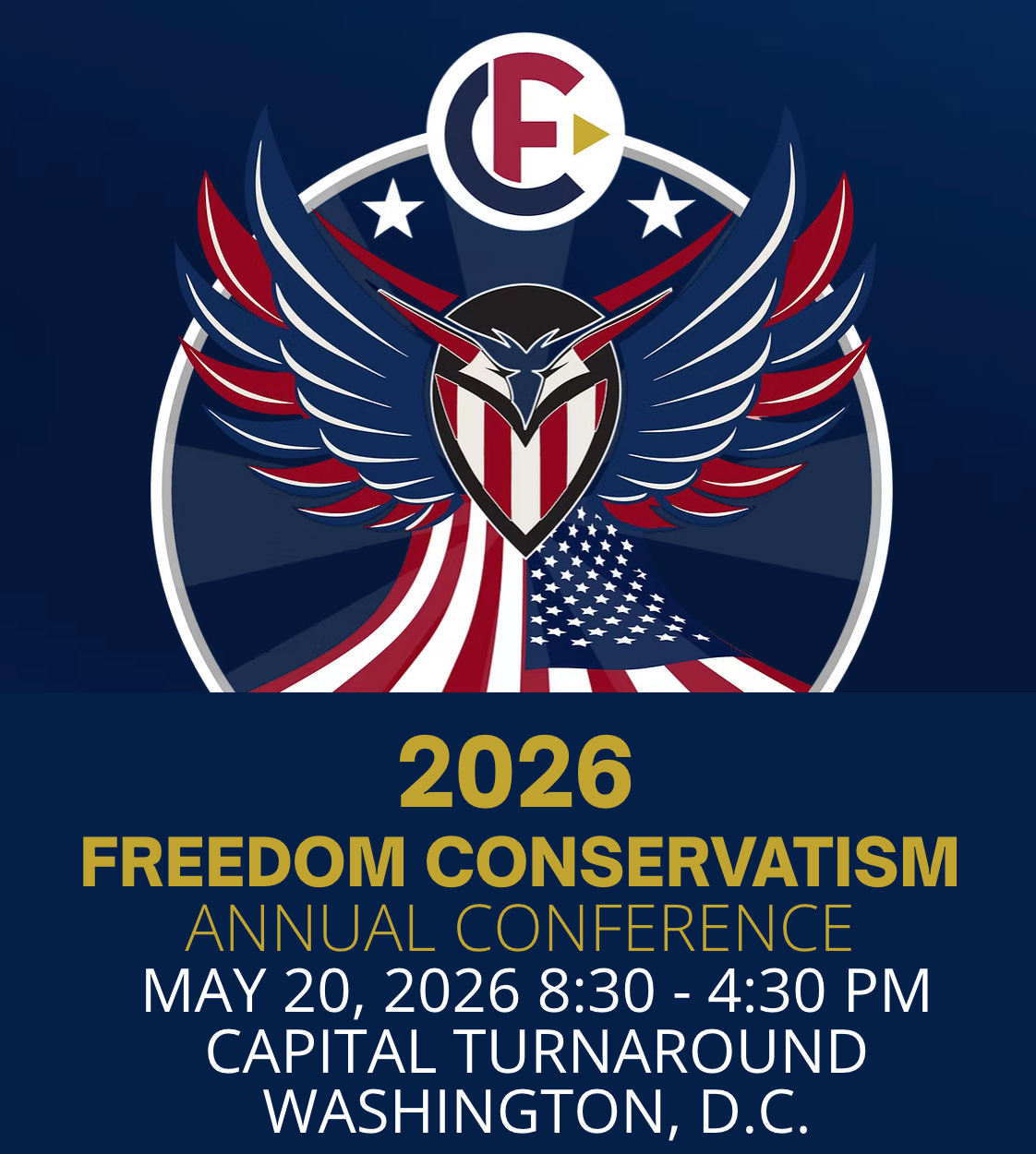
These are some of the questions we will answer at the 2026 Freedom Conservatism Conference. The daylong event will be held on May 20 at Capital Turnaround in Washington, D.C.
Among the speakers will be Freedom Conservatism co-founder Avik Roy, Washington Post writer Dominic Pino, Competitive Enterprise Institute executive Iain Murray, American Enterprise Institute scholar Scott Winship, Phil Magness of the Independent Institute, Tony Woodlief of State Policy Network‘s Center for Practical Federalism, and Stephanie Slade of Reason magazine.
We’ll announce keynote speakers later this week. In the meantime, click here to learn more about and register for FreeCon 2026.
Today we feature the work of other FreeCons who seek to build and advance a conception of American conservatism capable of achieving both electoral and policy victories.
Bravery for liberty

Linda Chavez chairs the board of the Center for Equal Opportunity. She is also a FreeCon signatory.
Having written for many newspapers across the country, Chavez is a longtime political commentator and the author of the three books: Out of the Barrio: Toward a New Politics of Hispanic Assimilation, An Unlikely Conservative: The Transformation of an Ex-Liberal, and Betrayal: How Union Bosses Shake Down Their Members and Corrupt American Politics.
During the Reagan administration she served as staff director of the U.S. Commission on Civil Rights (1983-1985), White House Director of Public Liaison (1985), and member of the Administrative Conference of the United States (1984-1986).
In a recent piece for the Washington Examiner, Chavez wrote about the women leading resistance to the tyrannical regime of Iran.
“Religious fascism, the kind that hangs women from cranes, executes children, and hijacks one of the world’s great faiths to justify medieval savagery, cannot be defeated by F-35s or sanctions alone,” she argued.
“It can only be defeated by a force that speaks its own spiritual language and proves, through sacrifice and example, that faith and freedom, Islam and democracy, devotion and dignity, are not contradictions.”
“I believe that the most important women’s movement in the world today is not happening in Washington or Brussels or Paris. It is happening inside Iran, led by Iranian women who are determined to bring down a ruthless regime for which misogyny is one of its hallmarks.”
Fusion and the Right
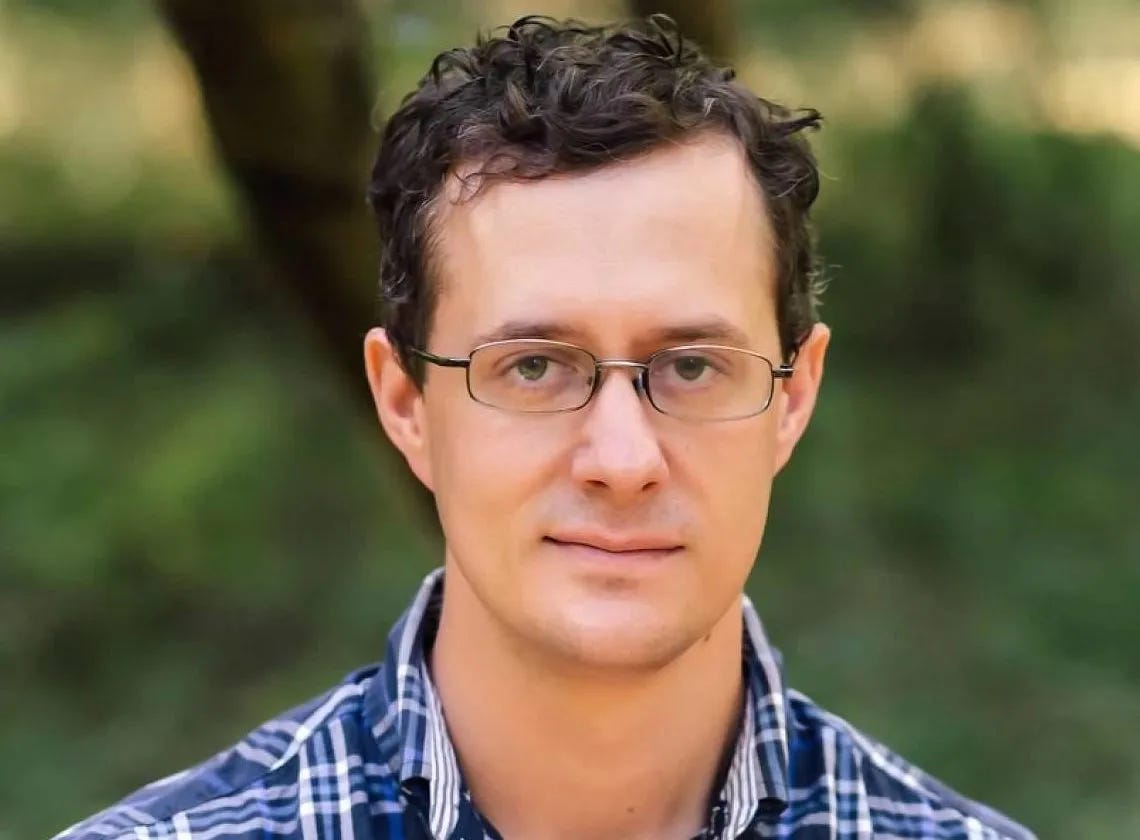
George Hawley is an associate professor of political science at the University of Alabama and a FreeCon signatory.
Among Hawley’s books are The Moderate Majority: Real GOP Voters and the Myth of Mass Republican Radicalization, Right-Wing Critics of American Conservatism and Conservatism in a Divided America: The Right and Identity Politics.
In a recent piece for The Dispatch, he related the history of the fusionist movement within American conservatism and its relevance to today’s rivalry between Freedom Conservatism and the nationalist-populist Right.
“In the age of MAGA,” he wrote, “a variety of insurgent factions — including new right populists, postliberals, national conservatives, and antisemitic groypers — compete for influence in a right united less by shared principles than by a common hostility to both the left and the conservative mainstream of the late 20th century.”
This is not the first time the American Right has encompassed a “jumble of ideological impulses,” he continued. During the 1950s and early 1960s, it took the leadership of William F. Buckley, Frank Meyer, and others to fashion a conservative movement capable of large-scale persuasion, electoral success, and effective governance.
Fusionism “emerged as the most successful effort to give the postwar right-wing movement coherence,” Hawley wrote.
“A free society depends both on individual liberty and individual virtue. Virtue requires genuine choice; a society that excessively polices private behavior is not virtuous but totalitarian. At the same time, liberty requires a populace capable of self-restraint.”
Today’s populist Right offers “not a refinement of conservative principles but an alternative to them,” he continued. Having obtained power in Washington, “it has shown a tendency to erode institutional norms, intensify polarization, and substitute personal loyalty for stable principle.
“These outcomes were predictable. They align with the critiques advanced by an earlier generation of fusionist conservative thinkers who understood that the rejection of principle in favor of mobilization carries predictable costs.”
Title match
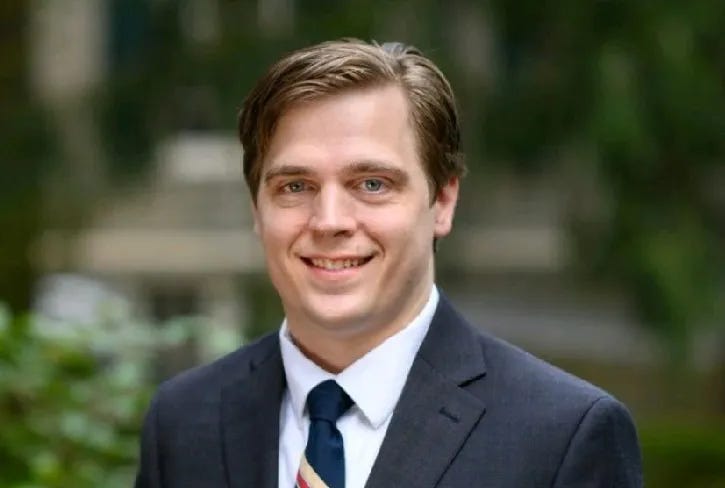
Thomas D. Howes is a member of the James Madison Society at Princeton University and a FreeCon signatory.
Co-host of the Reagan Caucus Podcast, Howes is also the co-author, with fellow FreeCon James Patterson, of the forthcoming book Why Postliberalism Failed.
In a recent article for Civitas Outlook, he described the title of his book with Patterson as prescient given Victor Orbán’s defeat in Hungary and the dismal results of populist policies here at home.
“Postliberals are a minority in American politics, but they punch well above their weight,” Howes wrote. “They are well organized, operate in lockstep, and are loyal to one another — they behave in many ways like the leftists who for decades carried out a strategy of a ‘long march through the institutions.’
“Like Joseph de Maistre, one of their intellectual forebears, they believe that social revolutions succeed from the top down, through strategically placed elites. The more transparent their unpopular project, the less successful it will be.
“They are willing to talk in popular fora about their movement as a populist one, about a fight against the ‘globalists’ and mass immigration, when it is far more about acquiring power for a much less popular social project.”
In the mix
• On Substack, FREOPP president Akash Chougule summarized the consequences of President Trump’s “Liberation Day” tariffs as “an abject failure by nearly every standard, including the administration’s own.”
Tariffs are “sold as a way to make foreigners pay,” wrote Chougule, one of the leaders of the FreeCon project and a speaker at the upcoming Freedom Conservatism Conference on May 20. “In practice, they are paid at the border by importers and then passed through into higher prices for American households.”
The policy is “doing political damage as well as economic damage,” he continued. “President Trump’s overall approval has fallen below 40%, and his standing has softened even in the working-class white electorate that has been central to his coalition.”
“Tariffs were never likely to be a motivating issue that would win an election. But once they start raising prices for the working class, they can become exactly the kind of economic burden that helps lose one.”
• At The Washington Post, FreeCon signatory George Will laid out the consequences of lower fertility and the resulting decline in America’s population.
For example, it “makes it imperative to reverse the decline of the labor force participation rate of Americans aged 15 to 64,” Will wrote. “This rate is now lower than in anti-workaholic Europe.”
Furthermore, “a depopulating society cannot thrive with the chronic dependence that accompanies the breakdown of family structure: Since 1960, the percentage of babies born to unmarried mothers has surged from 5% to almost 40%. By 2023, more than one-fifth of children were in one-parent homes.”
• At National Review, FreeCon signatory Charles C.W. Cooke described hard-left commentator Hasan Piker — a defender of Hamas, Hezbollah, and the murder of insurance company CEO Brian Thompson — as “disdainful toward the fundamental rules that keep our society together.”
“The central conservative insight,” wrote Cooke, senior editor at NR and host of an eponymous podcast, “is that civilizations are fragile and that it takes constant effort to sustain them.”
“Cretins” such as Hasan Piker “are free to emit their bilge without formal sanction, but they are not immune from the judgment of the sober.”
• In a recent feature for The Dispatch, FreeCon signatory Kevin Williamson argued that “the music popularized by Elvis Presley represents freedom the world over.”
“Americans are experiencing a great deal of social and political trouble right now because we do not know what we want, cannot agree about what we should want, and know only that what the other side wants must be the wrong thing,” wrote Williamson, the national correspondent at The Dispatch and a writer-in-residence at the Competitive Enterprise Institute.
“But if you travel around the rest of the world, it is easy to see what they want,” he continued. “They want choices and agency and fun and freedom that may not look exactly like our version of it but that is freedom nonetheless. They want to rock.”