
When Freedom Conservatives released our statement of principles in 2023, we pledged to defend “the distinctive creed that made America great: that individual liberty is essential to the moral and physical strength of the nation.”
In part, we were responding to the National Conservatism statement promulgated the previous year. “We emphasize the idea of the nation,” the NatCons wrote, “because we see a world of independent nations — each pursuing its own national interests and upholding national traditions that are its own — as the only genuine alternative to universalist ideologies now seeking to impose a homogenizing, locality-destroying imperium over the entire globe.”
Freedom Conservatives also affirm the value of independent nations and view the concept of a world-spanning government as preposterous and dangerous. In the FreeCon statement, we affirmed that “American foreign policy must be judged by one criterion above all: its service to the just interests of the United States” while pointing out that “Americans are safest and freest in a peaceful world, led by the United States, in which other nations uphold individual liberty and the sovereignty of their neighbors.”
What separates us from the NatCons isn’t our respective commitments to preserving and strengthening the American nation. It is how we define that nation.
As American conservatives, we reject any attempt to import from Europe or elsewhere conceptions of nationhood that are inconsistent with America’s history, founding documents, and civic traditions. Other nations may profess allegiance to a throne or altar, or define citizenship based on shared ethnicity or religious affiliation.
Here in America, however, those are foreign ideas.
At the outbreak of the Revolutionary War, the populations of the rebellious 13 colonies included people of English, Scottish, Welsh, Irish, Dutch, French, German, Scandinavian, African, and Native American ancestry. Most were Protestant but some professed other faiths or none at all.
Later additions to the union such as Florida, Texas, and New Mexico included people of Spanish and indigenous descent who possessed distinctive cultures and whose ancestors lived in America before the settlement of Jamestown and Massachusetts. The final two states admitted, Alaska and Hawaii, contain descendants of other ethnic groups living in those lands long before the 1500s.
Add in the descendants of generations of immigrants to the present-day United States, and you have a mix of cultures, folkways, and histories that renders incoherent and absurd the notion of “heritage Americans.”
How can we unify America? The same way our best leaders have done at the best moments of our history: by rallying Americans to embrace our founding principles, apply them wisely and consistently, and expand access to the American Dream.
Today, we feature the work of FreeCons who reject narrow conceptions of nationalism and expose the false promises of populism.
No turning back
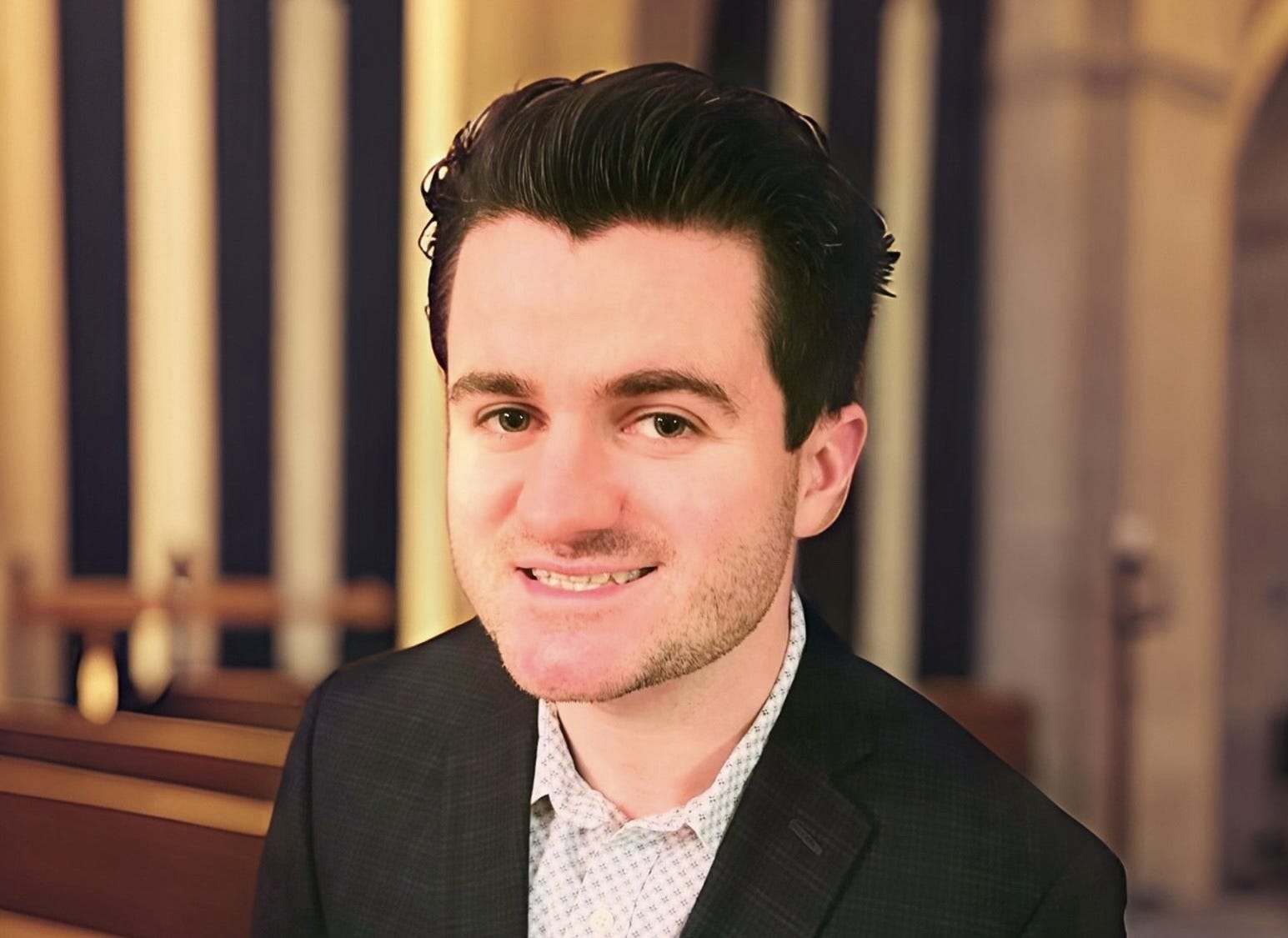
Aidan Grogan is donor communications manager at the American Institute for Economic Research. He’s also a FreeCon signatory.
A Ph.D. candidate in history at Liberty University, Grogan is a former newspaper reporter and development writer whose articles have appeared in such outlets as the Washington Examiner, The American Spectator, RealClearMarkets, and LifeSiteNews.
In a recent Civitas Outlook essay, he discussed the belief in “Red Caesarism” among young “Groypers” (followers of Nick Fuentes) and others on the populist Right.
“The Groypers are young, energetic, and proudly extreme,” Grogan wrote. “But they’re also nihilistic and deeply immature, exhibiting an alarming dearth of knowledge, prudence, and principle. In short, they want to burn everything down, have a good laugh doing so, and wage memetic warfare behind the anonymity of the internet.
“Aside from intellectual incoherence, there is pervasive ingratitude and ignorance in this form of grievance politics — uninformed by history, tradition, reverence for the tried and true, and respect for institutions and procedures that have stood the test of time.”
“It is a time for choosing on the Gen Z Right,” he concluded, “and we must steadfastly refuse to cross the Rubicon. Once liberty and the self-evident truths of the American founding are abandoned, there is no turning back.”
Civilizational calling
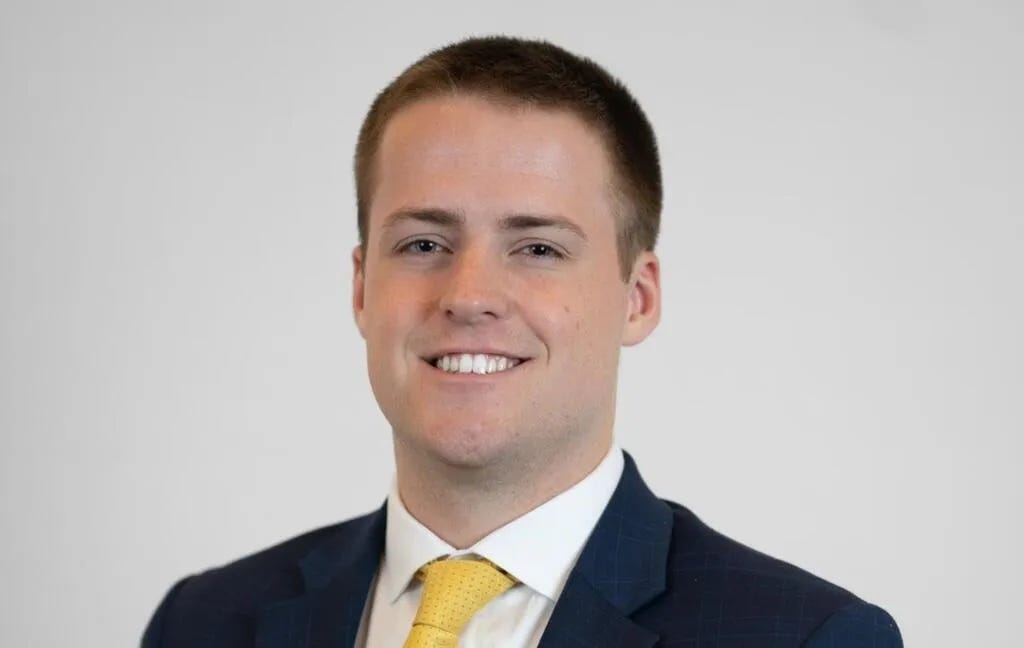
Tanner Nau is an editorial fellow in the Washington bureau of The Free Press. He is also a FreeCon signatory.
A former College Fix fellow at the Washington Free Beacon, Nau previously interned at the John Locke Foundation and in the office of U.S. Rep. Patrick McHenry.
In a recent article for National Affairs, he explored how longtime National Review “back of the book” editor Frank Meyer managed the tensions at the core of Western civilization — and why Meyer’s project remains critically important today.
“By connecting the American republic to the roots of the West,” Nau wrote, “Meyer reminded conservatives that the preservation of the United States is not just the conservation of a political order nearly 250 years old, but of a civilizational tradition of enduring tension between freedom and virtue that dates back thousands of years.
“Meyer's tensionism — rooted in the dual inheritance of Athens and Jerusalem, culminating in the Christian Incarnation, and driving our national story — positioned the individual as the nexus of an endless tug of war between freedom and virtue, the transcendent and the temporal. Meyer's recovery of this heritage was not a political endeavor but a civilizational calling.
“At a time when conservatives are again looking for an organizing principle for their intellectual and political projects, recovering Frank Meyer’s thought on his own terms is vital. Only through such a recovery might we see the real potential of a renewed conservatism — a potential not just to pursue a convenient fusion between libertarians and traditionalists, but to preserve the life-giving tension between freedom and virtue that defines the West and continues to shape America.”
Creedal nation

Richard Reinsch is editor in chief of the Civitas Institute’s Civitas Outlook. He is also a FreeCon signatory.
The founding editor of the online magazine Law & Liberty, Reinsch previously served as editor in chief and director of publications at the American Institute for Economic Research and as director of the B. Kenneth Simon Center for American Studies at the Heritage Foundation.
In a recent Law & Liberty piece, he criticized both progressives and populists for ignoring the creedal principles of the Declaration of Independence.
“We can recognize culture, history, memory, songs, and battles as vital to sustaining American identity, recognizing that for many, these will be their primary ties to the American founding,” Reinsch wrote.
“But what will this cultural memory and practice be if we lose the principles that gave rise to it, through misinformation, propaganda, and cultivated ignorance? Right now, we need understanding, and the more we explore the richness of our creedal principles, the more we should want to embrace them.”
When Americans no longer take seriously the notion that the government exists primarily to secure our rights, Reinsch continued, we come to “want it to give us everything. We struggle with comprehension, which ineluctably leads to poor practice.
“Those are the stakes for America at 250: understanding the deep wellspring of anthropological, natural, theological, rational, and legal truths that have shaped us as a constitutional people and formed the culture we cherish.”
In the mix
• At National Review, FreeCon signatory David Bahnsen labeled as “economic lunacy” four new policies of the Trump administration: 1) a ban on institutional purchase of single-family homes, 2) limits on executive compensation and buybacks at defense and aerospace companies, 3) expansion of credit by government-sponsored enterprises, and 4) a cap on credit-card interest rates.
“Being untethered to first principles leads to a slippery slope of abuse, distortion, malinvestment, and even corruption that undermines optimal conditions for human flourishing,” wrote Bahnsen, the managing partner of a wealth-management firm.
“But economic populism, as embodied in the aforementioned four policies, becomes a double whammy when it not only violates the principles of our American experiment but also woefully fails to deliver on its very own terms.”
• On Substack, Foundation for Research on Equal Opportunity president Akash Chougule labeled as “policy theater” recent progressive and populist responses to the challenge of making the American dream more affordable to more families.
“If Republicans want credibility on affordability, they should avoid imitating the class-war theatrics of the Left,” wrote Chougule, one of the leaders of the Freedom Conservatism project.
“If the goal is to make life more affordable for struggling Americans, Washington needs to swap the optics for supply, competition, and fiscal responsibility. Build more homes. Make hospitals compete. Reform entitlements. Keep markets open to trade. Do those things, and we’ll actually lower costs — not just score a 15-second sound bite that won’t even last until the midterm elections, anyway.”
• In a recent post, FreeCon signatory Jack Salmon updated his compilation of empirical research on the relationship between government debt and the public good.
“Higher public debt levels are associated with slower economic growth, particularly when debt ratios exceed a critical range,” concluded Salmon, a research fellow at the Mercatus Center.
“While the precise threshold varies across studies and contexts, the bulk of the evidence places it between 75% and 80% of GDP for advanced economies — a level that the United States has materially exceeded since 2020.”
• In a new research paper, FreeCon signatory Scott Winship confirmed that America’s middle class is shrinking, but explained that its cause deserves celebration, not concern.
“Using an absolute definition of the middle class, we find that the ‘core’ middle class has shrunk, but only because more families have become upper-middle class over time,” wrote Winship, director of the American Enterprise Institute’s Center on Opportunity and Social Mobility, along with coauthor Stephen J. Rose.
“The upper-middle class boomed from 10% of families in 1979 to 31% in 2024, and its share of income doubled. The share of families whose income left them short of the core middle class fell from 54% to 35%.”