
Over the past few weeks, reckless choices by leaders of the nationalist-populist Right have come back to bite them and the institutions entrusted to their care.
Heritage Foundation president Kevin Roberts’ decision to rush to the defense of the increasingly unhinged Tucker Carlson horrified many of the think tank’s employees, alumni, and supporters. Princeton professor and Heritage board member Robert George, having tried fruitlessly to get the institution back on track, resigned from the board.
Other institutions exhibited similar turmoil. News reports documented a worrying degree of interest among young Republicans in the “groyper” movement of Nick Fuentes, the white-nationalist rantings of Jared Taylor, and the authoritarianism of online agitator Curtis Yarvin and German philosopher Carl Schmitt, who embraced the rise of the Nazi Party in the 1930s.
Freedom Conservatives reject the “no enemies to our right” tactics of nationalists and populists. We are rebuilding a broad conservative movement that can both win elections and govern effectively afterward. That means competing with the progressive Left, of course, while also excluding from our ranks the bigots, edgelords, and conspiracy theorists who reject the very American experiment we seek to conserve and expand.
None of which is to suggest FreeCons favor limits on freedom of speech or spurn real opportunities for cross-ideological conversation. Indeed, we think it can even be prudent to “platform” extremists via media interviews or talk shows — provided the interviewer asks them tough questions and challenges their falsehoods instead of pandering to their audiences, as Carlson did during his notorious “interview” of Fuentes.
We think Professor George got it right. He has a well-earned reputation for engaging respectfully with people from across the political spectrum. But when it comes to governing a conservative institution such as Heritage, its leaders must exhibit “unbending and unflinching in its fidelity to its founding vision,” George wrote, which includes “the conviction that each and every member of the human family, irrespective of race, ethnicity, religion, or anything else, as a creature fashioned in the very image of God, is ‘created equal’ and ‘endowed by our Creator with certain unalienable rights.’”
Today we feature the work of FreeCon signatories who champion constructive engagement across political divides while also upholding the civic republicanism and classical liberalism of the American founding.
Wage peace
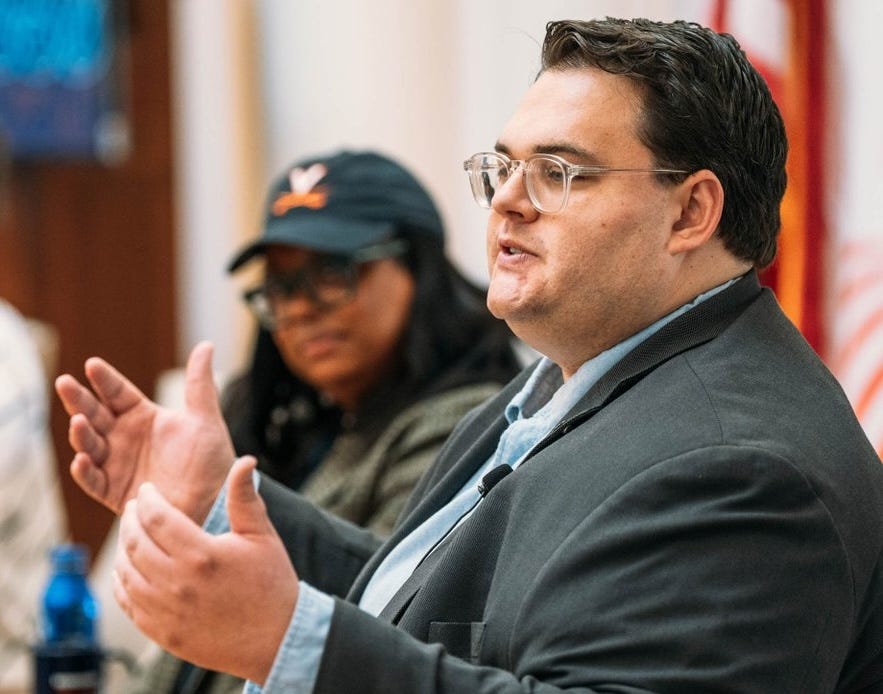
Reed Howard is a practitioner fellow in democracy at the University of Virginia’s Karsh Institute of Democracy, author of the Substack newsletter Maverick, and a FreeCon signatory.
As chief strategy officer at Future Caucus, Howard is helping a new generation of elected leaders in Congress and state legislatures govern effectively and build public trust in democracy. He also serves as a United Methodist minister at Georgetown University and has worked on presidential, state, and local campaigns as well as in the Virginia Senate.
At a recent Democracy360 conference in Charlottesville, Howard told the audience that for leaders to govern well, they must gain a deep understanding of all sides of controversial issues.
“You have to find time to talk to your colleagues across the aisle who you don’t agree with,” he said, “talk to your colleagues who you do agree with, and we’re going to look at everything that it takes to actually serve in this day and age.”
And in a recent Maverick post, Howard wrote that if Americans want to protect and revitalize democracy, “we have to practice it.”
“Show up in our communities, talk to our neighbors, play music with our friends, have family over for dinner. Join clubs and socialize. Volunteer for legal aid clinics and bring food to the local shelter. We must wage peace.”
Common-sense solutions
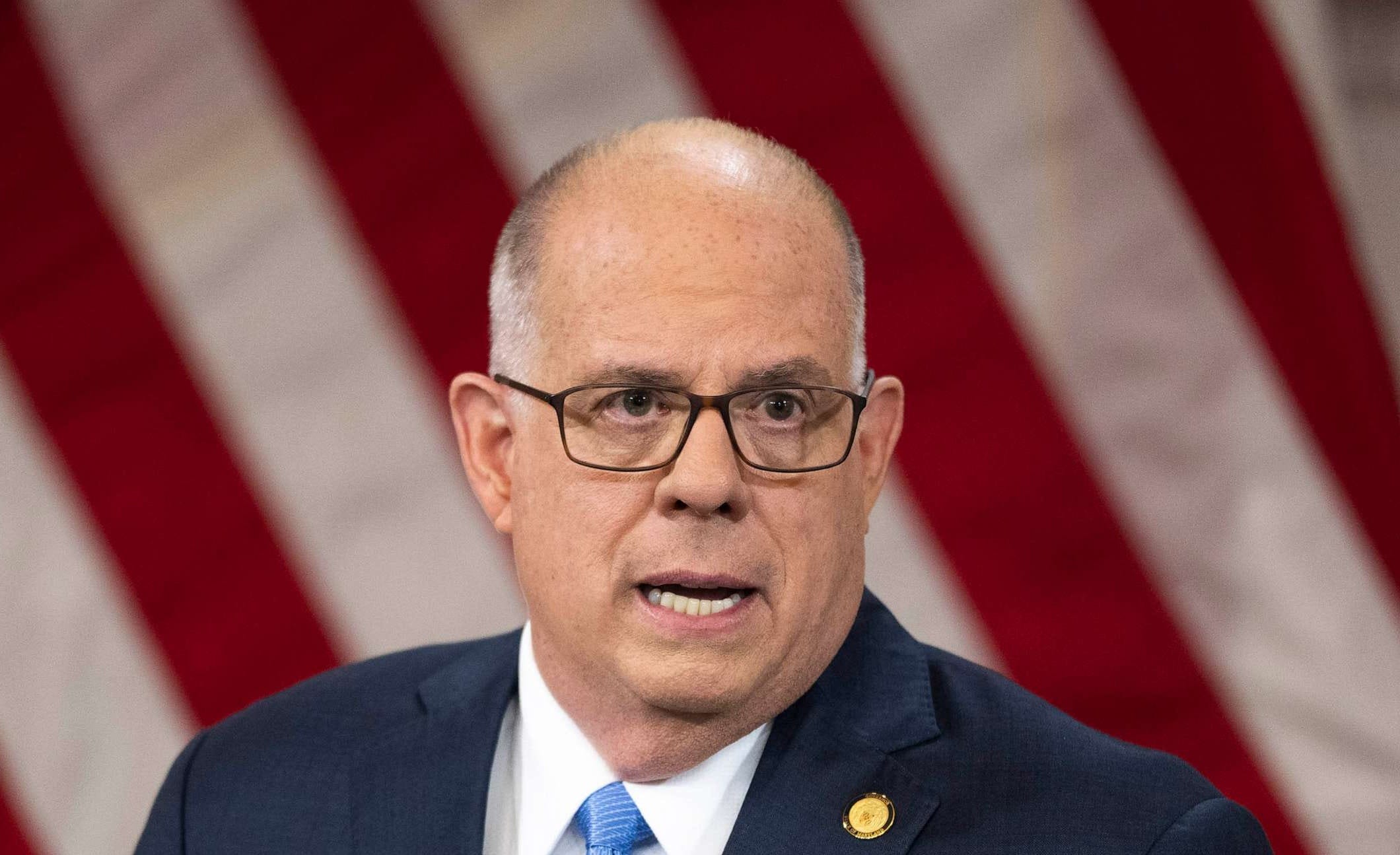
Larry Hogan is the former governor of Maryland and a FreeCon signatory.
A former Capitol Hill aide, campaign staffer, and real-estate developer and broker, Hogan served as secretary of appointments to a prior Republican governor of Maryland. He was the GOP nominee for U.S. Senate in 2024.
At a recent Pew Charitable Trusts forum in Washington, he observed that public officials can’t get anything done unless they’re willing to listen to the opinions of other officials, including those from different parties.
“When the partisan shouting stops is when you actually start to listen,” Hogan said. “People these days seem to be more interested in winning an argument than solving a problem.”
Facing a Democratic legislature during his two gubernatorial terms, Hogan found it necessary to pick his battles and accept partial victories.
“We didn’t always agree. But we disagreed without demonizing the other side, and we tried to find common sense, bipartisan solutions to every problem.”
Grace and respect

Alexandra Hudson is a bestselling author, the founder of Civic Renaissance, and a FreeCon signatory.
A former Novak Journalism Fellow at The Fund for American Studies, Hudson writes frequently for such publications as USA Today, Newsweek, Politico, and The Wall Street Journal.
Her book The Soul of Civility: Timeless Principles to Heal Society and Ourselves is “elegant and articulate,” wrote economist Tyler Cowen. Social psychologist Jonathan Haidt called it “beautifully written and meditative.” Mitch Daniels, the former Indiana governor and president of Purdue University, said that it “should be widely read, widely understood ― and its message taken to heart.”
In a recent Christianity Today piece, Hudson argued that America needs a rejuvenation of civility, mutual respect, and constructive dialogue.
“Today, some Christians seek to overcorrect for what they think of as a culture of suffocating politeness by supporting leaders and pundits who exhibit a brash delight in delivering hard truths and puncturing hypocrisy,” she wrote.
“Yet this approach often ends up fostering hostility and aggression and falls prey to the same dehumanizing attempt to control others that is evident with patronizing politeness.”
A better response is to argue passionately for one’s beliefs while resisting the “tempting impulse to see people or politicians as merely Republicans or Democrats. It means we recognize our mistakes or disagreements while being mindful of the basic respect we owe each other as fellow human beings with inherent dignity.”
“Let us navigate these divided times with grace, respect, and a renewed commitment to seeing the imago Dei in everyone around us.”
In the mix
• At Civitas Outlook, FreeCon signatory John Hood described the leadership-convening program he co-created a decade ago with a progressive friend, Leslie Winner.
“Our republic isn’t fragile,” wrote Winner, a former state senator and foundation president, and Hood, president of the John William Pope Foundation. “It’s weathered many storms. Independent thinking and divergent views are inevitable in a pluralistic society and do not threaten democracy. But what we’re witnessing today isn’t healthy skepticism. It’s pervasive cynicism.”
“The underlying problem isn’t disagreement. Americans have differed on political questions since our founding. Indeed, our system of government was expressly designed to transform factional disputes and philosophical differences into public dialogue and negotiation — punctuated by robust but peaceful competition for political power.”
• At National Review, FreeCon signatory Scott Winship cited economic facts to demolish widespread, pessimistic takes on American capitalism.
“Even as progressive Democrats and populist Republicans wage an apocalyptic culture war,” wrote Winship, senior fellow and director of the Center on Opportunity and Social Mobility at the American Enterprise Institute, “they largely agree that the economy is failing the American worker and that globalization has hollowed out the middle class.”
“However, these perceptions of long-run decline are at odds with the facts. Certainly, Americans’ consternation about higher grocery bills and gas prices is valid, as are mounting concerns about housing costs, but it doesn’t paint a full picture of how financial circumstances have changed in just a couple of generations.”
“Earnings trends over the past 50 years show that not only are middle-class earnings up significantly — by $23,000 among men working year-round and $34,000 among women — earnings growth among young men has been stronger during the past 35 years than in the previous 15.”
• At The Dispatch, FreeCon signatory Jessica Melugin related the history of antitrust regulation and a worrisome move away from the consumer-welfare standard by both progressives and populists.
“Aggressive antitrust enforcement seems unlikely to protect the interests of consumers and accomplish additional goals,” wrote Melugin, director of the Center for Technology and Innovation at the Competitive Enterprise Institute.
“For an admittedly simplified example, to protect a small artisan bread maker who must charge $8 a loaf in order to turn a profit against competition from large-scale bakeries that can charge $2 a loaf, the practical answer is that prices on the cheap bread will have to go up. A preference for the little guy has been served, but consumers have not.”
• At FUSION, FreeCon signatory Alex Salter reviewed a new book that demonstrates Orthodox Christianity “has something meaningful to say about markets, politics, and civil society.”
“Christians need both good economics and the Church’s moral teachings,” wrote Salter, an associate professor of economics in the Rawls College of Business at Texas Tech University. “These are complements, not substitutes.”
”Sound economics helps us understand how the world works — how incentives shape behavior, how markets coordinate activity, how policies produce unintended consequences. The Church’s teachings tell us what we should value and how we should treat each other.”