
In a pivotal ruling announced on February 20, the United States Supreme Court affirmed that the federal constitution assigns the power to tax to the legislative branch, not the executive branch.
For the time being, at least, the Trump administration’s reckless tariff policies have been severely curtailed, their costly burden lifted off the shoulders of American households and businesses.
It was never the judiciary’s job to determine what trade policies best advance America’s interests. That is a matter best left to the policymaking branch of the federal government. What the Supreme Court actually did was to affirm that, when it comes to federal taxation, the policymakers in question reside in Congress, not the White House. Any congressional authorization for the president to impose tariffs must be clear, specific, and limited in scope.
We offer our heartfelt thanks to the victorious plaintiffs and their counsel at the Liberty Justice Center — chaired by FreeCon signatory Sara Albrecht — as well as the many other Freedom Conservatives and allies who assisted, supported, or wrote about the litigation. You can read more takes on the tariff decision and its consequences from FreeCon signatories George Will, Ilya Shapiro, Bryan Riley, John Puri, and Judge Glock.
We also express our gratitude to Justice Neal Gorsuch, whose concurring opinion expressed so eloquently a core theme of Freedom Conservatism: that the principles that animated our country’s founding two and a half centuries ago remain relevant and essential today.
“Americans fought the Revolution in no small part because they believed that only their elected representatives (not the King, not even Parliament) possessed authority to tax them,” Gorsuch wrote.
Americans later codified these beliefs in the Constitution, and in the exercise of federal power over the ensuing decades. The justice‘s conclusion deserves full quotation:
“Yes, legislating can be hard and take time. And, yes, it can be tempting to bypass Congress when some pressing problem arises. But the deliberative nature of the legislative process was the whole point of its design.
“Through that process, the Nation can tap the combined wisdom of the people’s elected representatives, not just that of one faction or man. There, deliberation tempers impulse, and compromise hammers disagreements into workable solutions. And because laws must earn such broad support to survive the legislative process, they tend to endure, allowing ordinary people to plan their lives in ways they cannot when the rules shift from day to day.
“In all, the legislative process helps ensure each of us has a stake in the laws that govern us and in the Nation’s future. For some today, the weight of those virtues is apparent. For others, it may not seem so obvious.
“But if history is any guide, the tables will turn and the day will come when those disappointed by today’s result will appreciate the legislative process for the bulwark of liberty it is.”
Freedom Conservatives do, indeed, believe that history should be our guide. Today we feature other FreeCons who, during this semiquincentennial year of the Declaration of Independence, celebrate the genius of the American founding and seek to apply its timeless principles to the biggest challenges of the 21st century.
America’s brilliant light
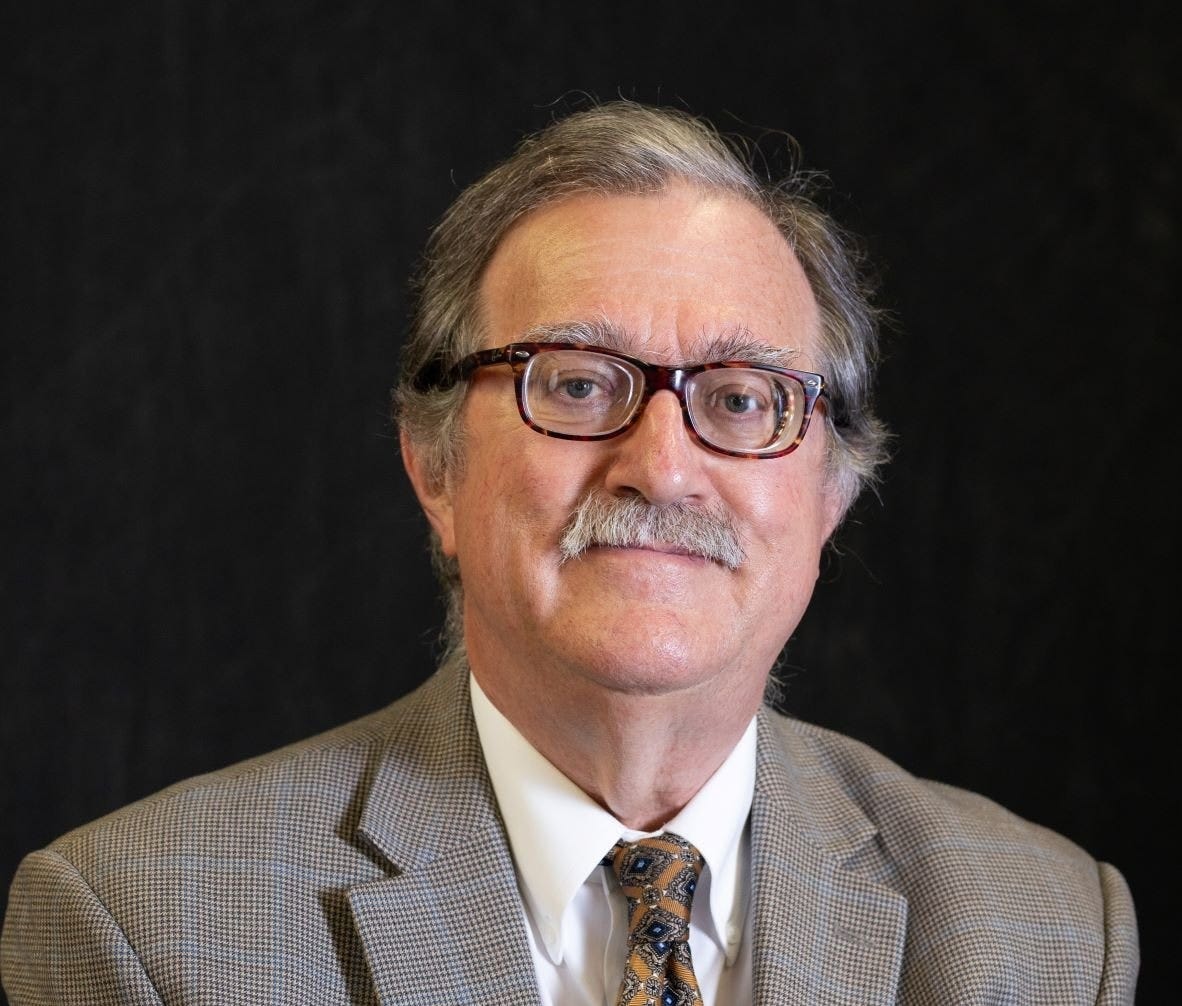
Wilfred McClay holds the Victor Davis Hanson Chair in Classical History and Western Civilization at Hillsdale College. He is also a FreeCon signatory.
A talented lecturer, McClay has taught students at Hillsdale, Johns Hopkins, Georgetown, Pepperdine, the University of Oklahoma, and the University of Tennessee at Chattanooga, among other campuses.
A prolific author, he’s written or edited books widely used in high school and college classrooms, including A Student’s Guide to U.S. History, the American Intellectual Culture series, and Land of Hope: An Invitation to the Great American Story.
In a recent essay for American Heritage, McClay warned that too many Americans are ignorant of who we are and where we came from.
“The fear that we Americans might lose our national soul” is nothing new, he wrote, but “in our own time, the problem takes the form of a strange paradox: while we ‘know’ more and more about the American past, due to the labors of many battalions of specialized professional historians, we actually know less, because we lack a grasp of the overarching meaning of our history, the kind of meaning that helps shape the way we live together.
“We lack an adequate perspective on our history, a perspective that allows us to see the great achievements of American history in their proper light, properly weighed against the admitted failings and shortcomings of that history.
“We lack a shared sense of how exceptional our pioneering experiment in self-rule has been. A sense of how full of darkness and despair and want and inequity most of human history has been by comparison. A sense of what a brilliant light came into the world with the events of the year 1776.
”
Good Americans
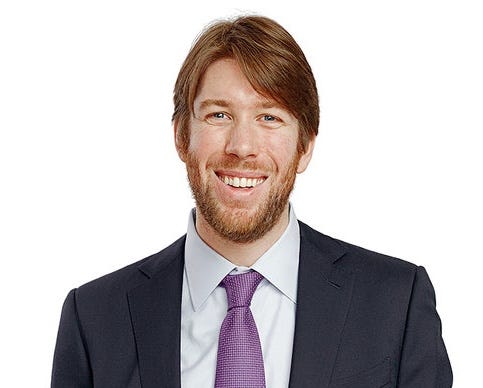
Charles C.W. Cooke is a podcast host and senior editor at National Review. He’s also a FreeCon signatory.
Cooke has written for such publications as the New York Times, The Washington Post, the New York Post, The Atlantic, and USA Today, and is the author of The Conservatarian Manifesto: Libertarians, Conservatives, and the Fight for the Right’s Future (2015).
In the most-recent issue of National Review, he contributed an essay on national identity that rejected the populist notion of “heritage Americans” while also embracing a rigorous process for earning citizenship.
“Immigration, among other things, is an audition,” wrote Cooke, an American citizen born in England.
“If the United States is, indeed, a creedal nation,” he continued, and “if its creed is identifiable and particular, then we must emphatically insist that all newcomers be well versed in that creed. The alternative to this — which involves the rejection of blood-and-soil claims and an indifference toward the national doctrine — is civilizational nihilism.
“Which is to say that it is neither diversity nor homogeneity that is ‘our strength,’ but assimilation. And assimilation necessitates judgment.”
Blurred distinctions
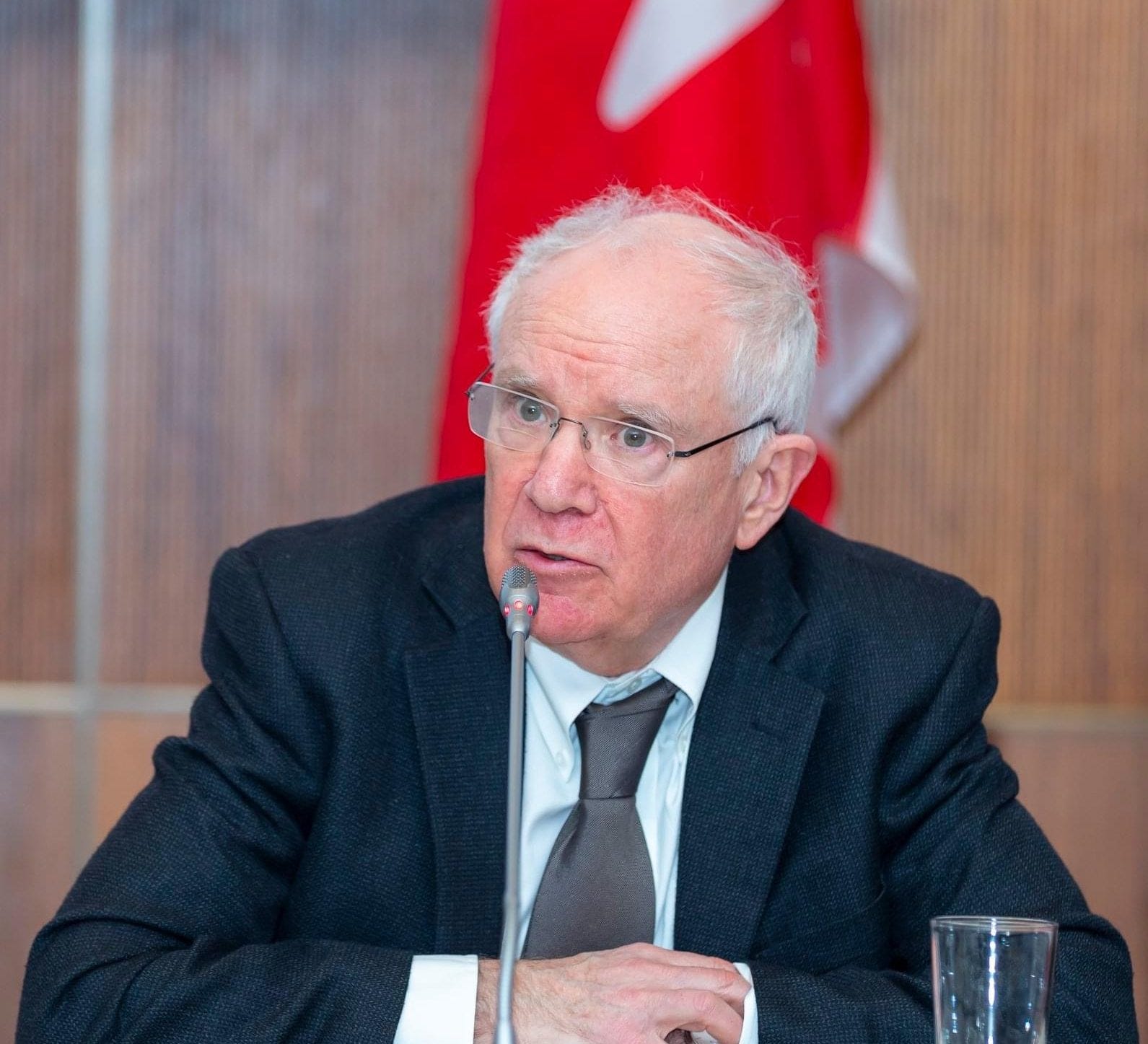
Aaron Rhodes is president of the Forum for Religious Freedom-Europe. He is also a FreeCon signatory.
Formerly the executive director of the International Helsinki Federation for Human Rights, Rhodes co-founded the Freedom Rights Project and the International Campaign for Human Rights in Iran.
His articles have appeared in such outlets as The Wall Street Journal, Newsweek, and National Review. He is also the author of The Debasement of Human Rights (2018).
In a recent article for Providence, Rhodes explored the influence of Hugo Grotius, John Locke, and natural-law theorists on the American Founders, including their approach to national defense and foreign policy.
“America’s strength has not been built on military power alone,” he wrote, “but on policies that, more often than not, demonstrated respect for the rights and dignity of other peoples. Many could cite counter-examples, but America has been widely admired as a superpower that used its influence to promote and defend liberty and democracy.”
In so doing, America’s best leaders “have been guided by moral standards from natural law traditions,” Rhodes continued. “With freedom increasingly challenged, and moral distinctions blurred by the contradictions of international law, attention to natural law is more important than ever.”
Public virtue
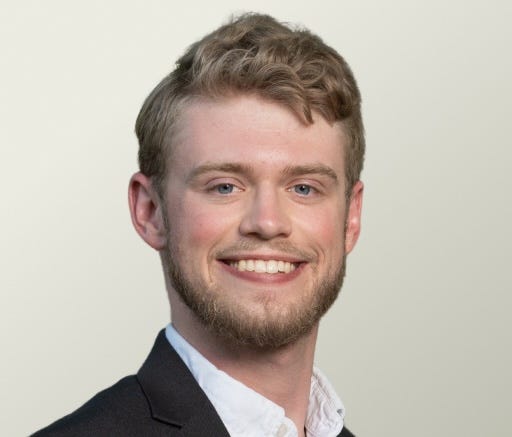
Caleb Franz is a writer, trainer, and author of The Conductor: The Story of Rev. John Rankin, Abolitionism’s Essential Founding Father. He’s also a FreeCon signatory.
His historical writing often highlights the forgotten people, places, and events that help define the American story and has been featured in such outlets as RealClearHistory, Washington Examiner, The Independent, and the Louisville Courier Journal.
Franz also serves as program manager at Young Voices, where he mentors young journalists and policy writers by sharpening their storytelling ability and accelerating their career trajectory. He previously served in the Ohio National Guard for six years, which included a tour in Kuwait.
In a recent Pivot essay, Franz argued that “for the American experiment to succeed in the next 250 years as it did in the first,” we need to rediscover the indispensability of “public virtue” in our national leaders.
“In contrast to both Washington and Lincoln,” he wrote, “the presidents of the modern age are routinely expanding their own power as a matter of first priority rather than last resort. This should come as little surprise. Strong or charismatic leaders rarely assume such authority without public clamoring and support.”
Public virtue, Franz continued, “is integral to the preservation of American liberty and the efficacy of the Constitution. Without it, power-hungry individuals can pray on the passions and lowest instincts of our humanity for their own gain.”
In the mix
• In The Washington Post, FreeCon signatory Jim Stergios reported on the continuing flight of Americans from high-tax states such as Massachusetts, New Jersey, New York, Illinois, and California to lower-tax states such as Texas, Florida and North Carolina.
“History shows that Massachusetts can responsibly reduce taxes and still support its residents,” wrote Stergios, executive director of the Boston-based Pioneer Institute, along with coauthor Christopher R. Anderson.
“The last time Massachusetts cut income taxes, state revenue bounced back within a year and ended up higher after adjusting for inflation,” they observed. “New research suggests cutting the current income tax from 5 percent to 4 percent over three years would deliver more money to taxpayers and benefit the state’s long-term economic growth.”
• At The Dispatch, FreeCon signatory Aidan Grogan observed that while Gen Z isn’t really the poorest generation of modern times, it may well be the loneliest.
“Zoomers aren’t suffering from a dearth of material opulence,” wrote Grogan, the donor communications manager at the American Institute for Economic Research, “but many seem dispossessed of the wealth that matters most and enriches one’s life with transcendent purpose.”
“At least one-third of zoomers were born to unwed mothers, and nearly one-quarter were living without fathers in the home. Many historic churches and fraternal lodges have become relics of a bygone era as fewer Americans attend religious services and volunteer in their communities.”