

If 2025 was a year of populist blunders in Washington and progressive victories in places such as New York City and Seattle, 2026 could well be the year that more constructive versions of the American Right and Left assert themselves in legislative debate, political organizing, and electoral contests across our country.
As Freedom Conservatives, we can have little role to play in rescuing the American Left from the likes of Zohran Mamdani, Alexandria Ocasio-Cortez, and Ilhan Omar. But we have committed ourselves to rescuing American conservatism from the nationalists, populists, and other radicals who seek to capture its institutions and dictate its future.
Over the course of 2026, you’ll see and hear a lot more from us. We’ll be announcing new signatories and collaborative projects. We’ll be holding FreeCon events in the nation’s capital and elsewhere. And we’ll be lifting up politicians, activists, scholars, litigators, and communicators who exemplify the best of American conservatism and are working together to build a brighter future for our movement and our country.
Today we feature some fascinating articles by FreeCon signatories that you may have missed over the holidays. We wish you — and the United States of America — a very happy new year.
Identity politics

During the last days of 2025 and first days of 2026, robust debate continued about American identity, the nation’s founding principles, and their relevance to today’s public concerns and controversies.
At The Wall Street Journal, for example, FreeCon signatory Jack Butler rejected the invented category of “heritage Americans” as a notion of national identity at odds with our country’s history and traditions.
“The Founders left us something unique in human history: a country with the ability to grow and incorporate new arrivals,” wrote Butler, deputy editor of the Journal’s new opinion newsletter Free Expression. “To restrict access to American identity to the direct descendants of those who got here first is inherently self-limiting. America wouldn’t have become truly great had this perception been allowed to dominate our national life.
“None of this means that being an American is the birthright of all the world’s people. Rising to the occasion of America’s experiment in self-government is hard, as it should be. But a rejection of aristocratic pretensions to hierarchy is at the heart of what it means to be an American. Claims of hereditary superiority resemble nothing so much as the feudal conceptions of life that generations of Americans — including the Founding generation — intentionally left behind.”
Over at the Washington Examiner, FreeCon signatory Thomas D. Howes described the origins of postliberalism and its manifestation within today’s populist Right.
Postliberals such as Patrick Deneen and Adrian Vermeule “draw on a preexisting Catholic reactionary tradition that went out of favor following the moral failures of Vichy France, Franco’s Spain, or Dollfuss’s Austria,” wrote Howes, editor-in-chief of The Vital Center and the founder of the Reagan Caucus and Reagan Caucus Action.
“Deneen believes that the Church needs to rethink its support for liberal democracy, expressed in the Second Vatican Council. The far more likely fate of this contemporary iteration of postliberalism, however, will not be that of Vichy France or Franco’s Spain. It is more likely to falter like integralist movements in Brazil and Argentina, outcompeted by other, more powerful factions within their coalition.”
And at The Washington Times, FreeCon signatory Randolph May urged Americans to think carefully about references to “the people” in our founding documents.
“In its very first sentence, the Declaration of Independence, issued 11 years before the Constitution was drafted, refers to ‘one People,’ not unlike the Constitution’s ‘We the People,’” wrote May, president of the Free State Foundation.
“The Declaration goes on to proclaim that governments derive ‘their just powers from the consent of the governed.’ This foundational precept at the core of individual liberty and a free society means that the exercise of ordinary politics, not force, threats of violence or government diktats, must be the way in which political differences among us are resolved.”
Emerging issues
Freedom Conservatives are also at the forefront of transforming general principles into actionable policies.
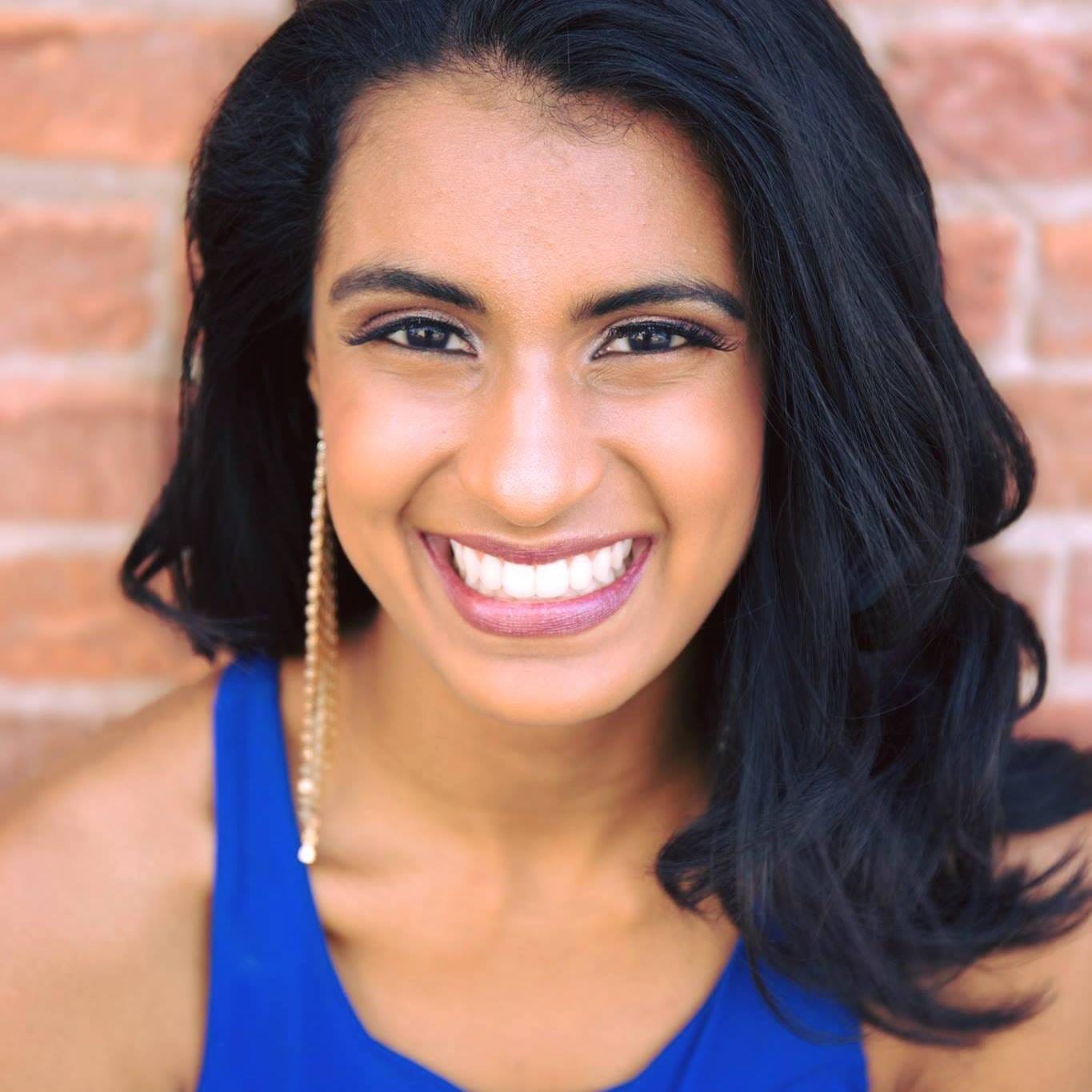
At City Journal, for example, FreeCon signatory Neetu Arnold reported on the remarkable success of school reforms in Mississippi, Louisiana, and Alabama — and the lessons they can teach other education policymakers.
Test-score gains and other indicators of school improvement in conservative-led states have “rightly been credited to a handful of commonsense reforms: early literacy laws that require the use of phonics, the tightening of retention and promotion policies, universal literacy screeners in early grades, and rigorous curricula,” wrote Arnold, a Paulson Policy Analyst at the Manhattan Institute, along with her coauthor Daniel Buck.
“But another factor may be these states’ strict disciplinary policies. The states seeing the greatest gains academically are also the ones doing the most to bring order and stability to their schools.
“A teacher can use the best curriculum, and states can make schools use the best instructional methods, but if classrooms are chaotic, then students will not learn. The presence of a misbehaving peer causes other students to act out, dilutes instruction, and drives down achievement for other students.”
Over at National Review, FreeCon signatory Paul Winfree offered a strategy of reforms to make the American dream more affordable for young families.
“The fundamental problem is that America is not producing enough of the things that make a nation prosperous,” wrote Winfree, president of the Economic Policy Innovation Center and White House staffer during the first Trump Administration.
“We do not build enough homes. We do not expand child care capacity fast enough. We do not permit new technologies to scale. We do not create enough high-productivity jobs that allow workers to produce more and earn more. A country that invented the modern economy now spends too much of its talent on complying with government requirements. This is one important reason why affordability has become a problem.
“The path out of the scarcity-mindset trap begins with recognizing that affordability depends on productivity, and productivity depends on innovation. Economic growth is not simply a matter of capital and labor. It requires that people have the skills and freedom to turn ideas into commercial products, and a culture willing to let changemakers disrupt the status quo.”
And at The Fulcrum, FreeCon signatory Lynn Schmidt wrote that the most effective response to medical misinformation — be it from leftist cranks or the secretary of health and human services — is to present facts calmly and respectfully.
“Heavy-handed censorship risks creating martyrs, driving misinformation underground where it becomes harder to counter, and eroding public trust in institutions,” wrote Schmidt, a columnist and editorial board member at the St. Louis Post-Dispatch. “But a completely hands-off approach allows falsehoods to proliferate with devastating consequences.
“Perhaps the answer lies not in choosing between these extremes but in pursuing a more nuanced approach. This might include: prominent placement of accurate information from credible sources without outright censorship of alternative views; transparency about content moderation decisions and clear, consistently applied standards; investment in digital literacy education that helps people evaluate health claims critically; and, perhaps most importantly, holding leaders to a higher standard when it comes to the dissemination of incorrect medical information.”
Electoral stakes
Freedom Conservatives recognize, of course, that principles can only become policy if conservative leaders win elections, secure and maintain majority coalitions, and wield power effectively. The primary and midterm elections of 2026, then, represent another potential inflection point for American politics and the conservative movement.
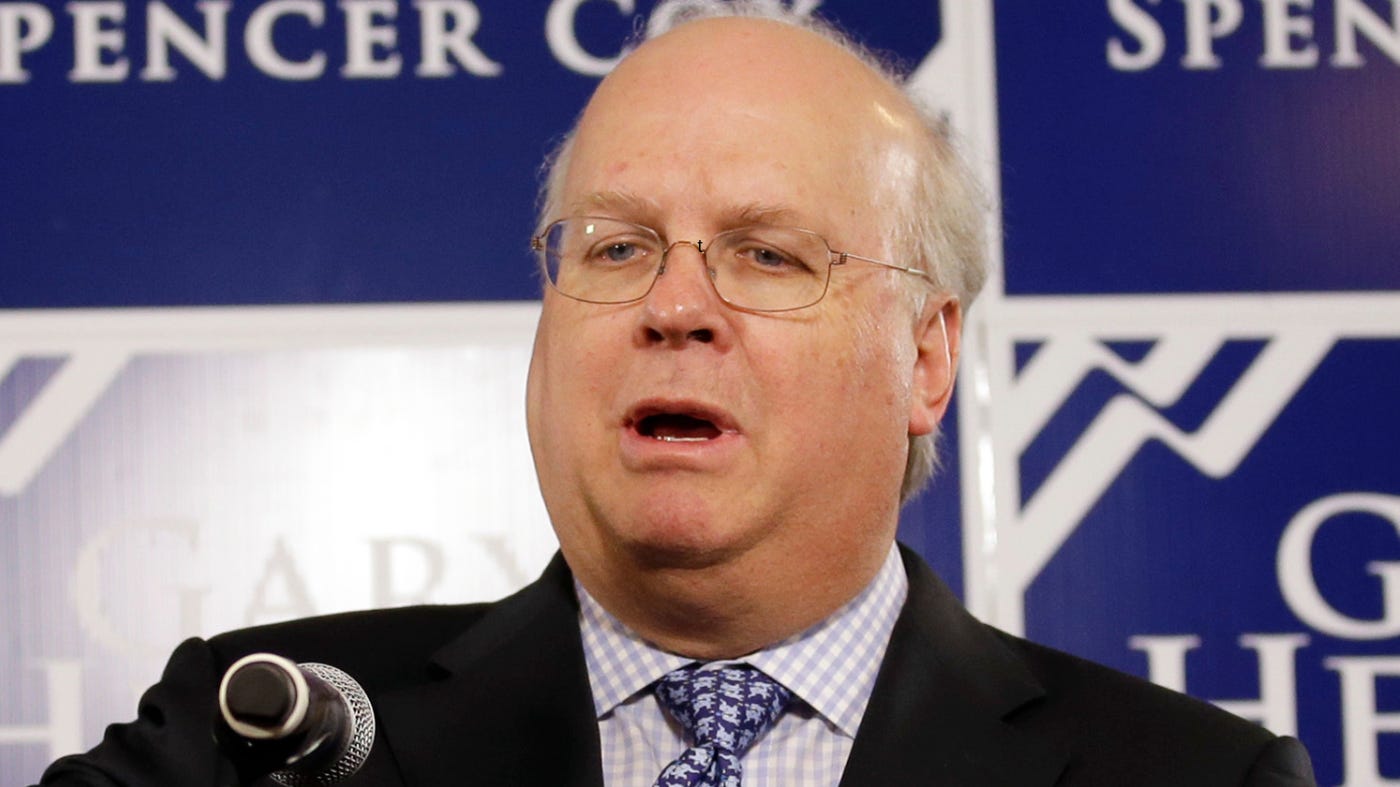
In The Wall Street Journal, FreeCon signatory Karl Rove surveyed the major political events of 2025 and pondered their implications for the future.
“MAGA is engaged in internecine warfare, with different people who claim to represent and lead the movement viciously attacking one another,” wrote Rove, senior adviser and deputy chief of staff to former President George W. Bush.
“Populists and traditional conservatives are increasingly at odds over important policy issues. The Democratic Party has its own internal battles, pitting socialists against moderates and liberals. These divisions are likely to intensify as 2028 approaches.
“The media, meanwhile, is changing in ways that seemed unimaginable a few years ago. Some in the legacy media are attempting to re-establish public trust. Bari Weiss at CBS is insisting the network return to calling balls and strikes. The Washington Post is trying to move toward the center. Only time will tell if these experiments pan out.
“The prevailing theme is the public’s pervasive distrust of virtually every institution in American life. There’s almost no authority figure or august body in our society in which most people have confidence. That’s dangerous for the country.”
At The Dispatch, FreeCon signatory Josh Lewis wrote about former Senator Ben Sasse’s cancer and the rhetorical example he set when announcing the news.
“Sasse’s note on his cancer diagnosis sounds like it was written for a different era,” wrote Lewis, a government auditor and host of the podcast Saving Elephants.
“It’s candid (‘death is a wicked thief, the bastard pursues us all’), rejects superficialities (‘not an abstract hope in fanciful human goodness; not hope in vague hallmark-sappy spirituality; not a bootstrapped hope in our own strength’), and unapologetically orthodox (‘We hope in a real Deliverer–a rescuing God, born at a real time, in a real place’).
“Missing from the post were any hints of vindictiveness or complaints about the unfairness of the world. There were no attempts to convince readers he had been right all along; there was no chest-thumping about all of his successes or his accomplishments.”
Lewis concluded that if hope “can buttress the spirit in the face of eternity, it can certainly provide the strength to fight for temporal reforms despite disheartening setbacks.”
“Without hope we might demand some assurance of success, or cling to the delusional vanity of short-term gains. Sasse points the way to a path not taken.”
And in The Hill, FreeCon signatory Merrill Matthews wrote that commitment to principle, even at personal or political cost, should be a defining characteristic of American conservatism.
“The time is coming, perhaps as soon as 2029, when a Democrat will be in the White House again,” wrote Matthews, co-author of On the Edge: America Faces the Entitlements Cliff.
“That person will almost surely follow Trump’s lead in expanding the role of government in business, doling out taxpayer money, imposing tariffs or other taxes at will, and ignoring constitutional restraints when inconvenient — and do much or all of it by executive order, bypassing Congress. Conservatives will certainly denounce any Democratic president for doing so.
“But that raises the question: If a person is only a strong defender of conservative principles when the other party is in power, is that individual really a principled conservative?”