
When the Freedom Conservatism project made its debut in mid-2023, it included dozens of signatories exhibiting a variety of backgrounds, disciplines, and roles within the conservative movement.
Today, as we approach 500 signatories, Freedom Conservatism represents an even-broader swath of the American Right. We are former elected and appointed officials, policy staffers, scholars, journalists, litigators, donors, educators, and grassroots activists. Some are generalists while others focus on discrete issues such as school choice, regulatory reform, foreign and defense policy, health care, federalism, and constitutional rights.
FreeCons don’t always agree on the particulars. But we all agree that, as our statement of principles put it, “to ensure that America’s best days are ahead, we must apply the timeless principles of liberty to the challenges of the 21st century.”
FreeCons also agree that American liberty and self-government will be impossible to sustain in the absence of strong private institutions that “inculcate virtue, deter corruption, foster community, comfort the afflicted, and nourish the soul.”
First on that list is the family. Our rivals on the nationalist-populist Right argue that only by curtailing liberty, markets, and limited government can policymakers strengthen the American family. FreeCons disagree. Today we feature some of their arguments.
Giving all a home

Carrie Lukas is the president of Independent Women, vice president of Independent Women’s Voice, and a member of Independent Women’s Network. She is also a FreeCon signatory.
The author of the Politically Incorrect Guide to Women, Sex, and Feminism, Checking Progressive Privilege, and Liberty Is No War on Women, Lukas has written for The Wall Street Journal, The Washington Post, and numerous other outlets.
In a recent op-ed for USA Today, she praised efforts to remove marriage penalties from welfare programs and the tax code but warned conservatives that alienating single women isn’t a recipe for political success.
“Conservative policies are fundamentally pro-woman,” Lukas wrote.
“Women thrive in a safe, secure society with a robust economy offering plentiful opportunities for people to pursue their own visions of happiness, whether that is to be a full-time parent, entrepreneur, CEO or any combination thereof. This policy vision needs to be communicated carefully, in a manner that shows that women – all women – can find a home in our movement.”

Too broad a brush
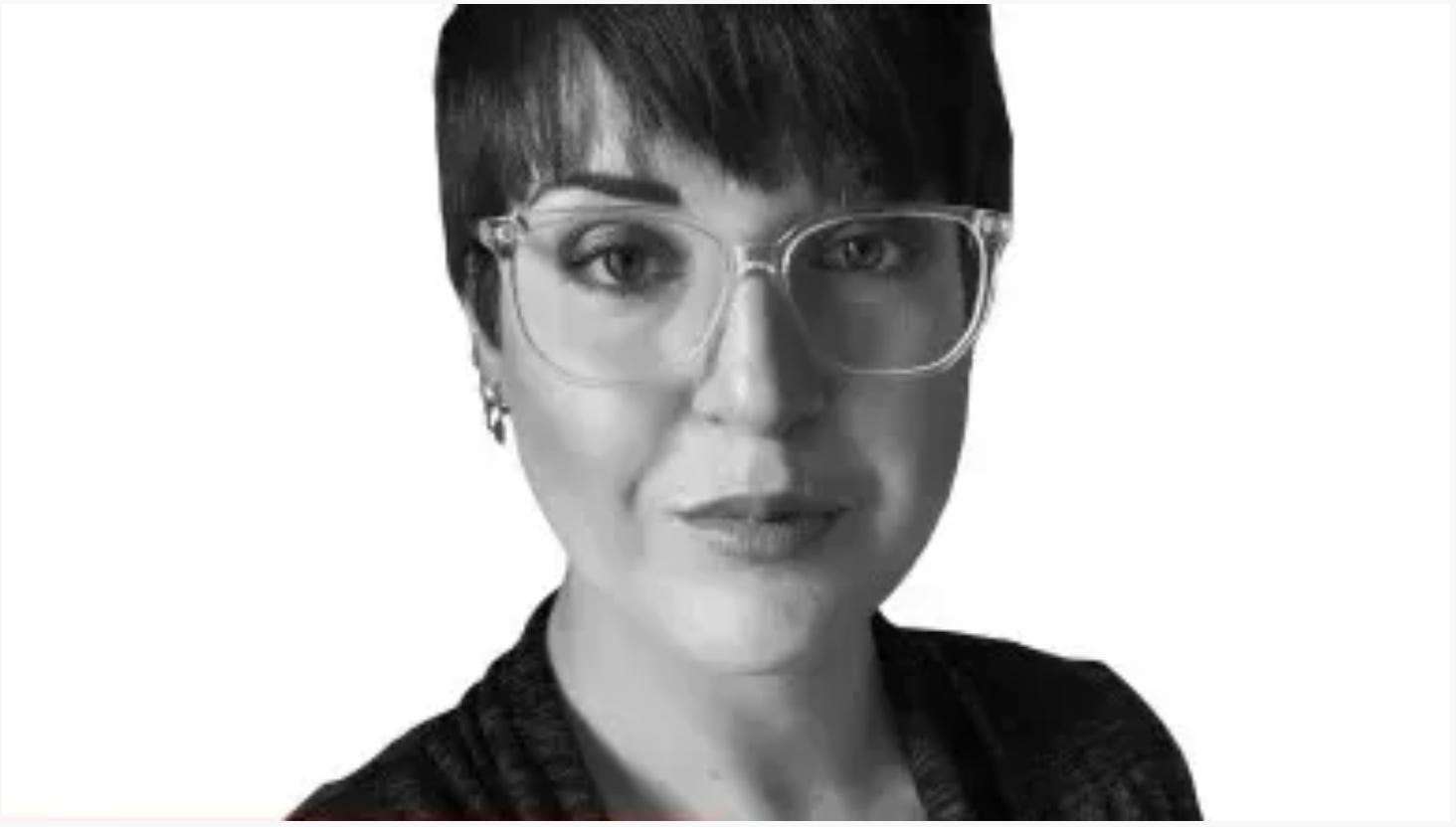
Kimberly Ross is a contributor to the Washington Examiner‘s Beltway Confidential blog, a regular columnist for the Examiner and the Magnolia Tribune, and a FreeCon signatory.
In a recent Examiner column, she pointed out that most American women aspire to be neither “girlbosses” nor “tradwives.”
Ross cited an Institute for Family Studies report showing that only 39% of married mothers with children under five say their ideal is full-time work while 40% prefer part-time work and 20% would prefer not to work for pay at all.
“The big flashing desire this data points to? A word called flexibility,” she wrote.
“It’s almost as if mothers have a complicated relationship with employment and what it looks like for them personally. And there is nothing in these figures to suggest mothers who do work want to abandon their biological duties as bearers and carers of children. Painting mothers with a broad brushstroke is never a good idea. It is a much more complex situation than culture warriors on either side of the political aisle will admit.”
“The competing camps of motherhood may look at the majority in the middle and say we are not achieving,” Ross concluded. “But most women are not failing to live up to an ideal. They are already living the real thing.”
Right to save
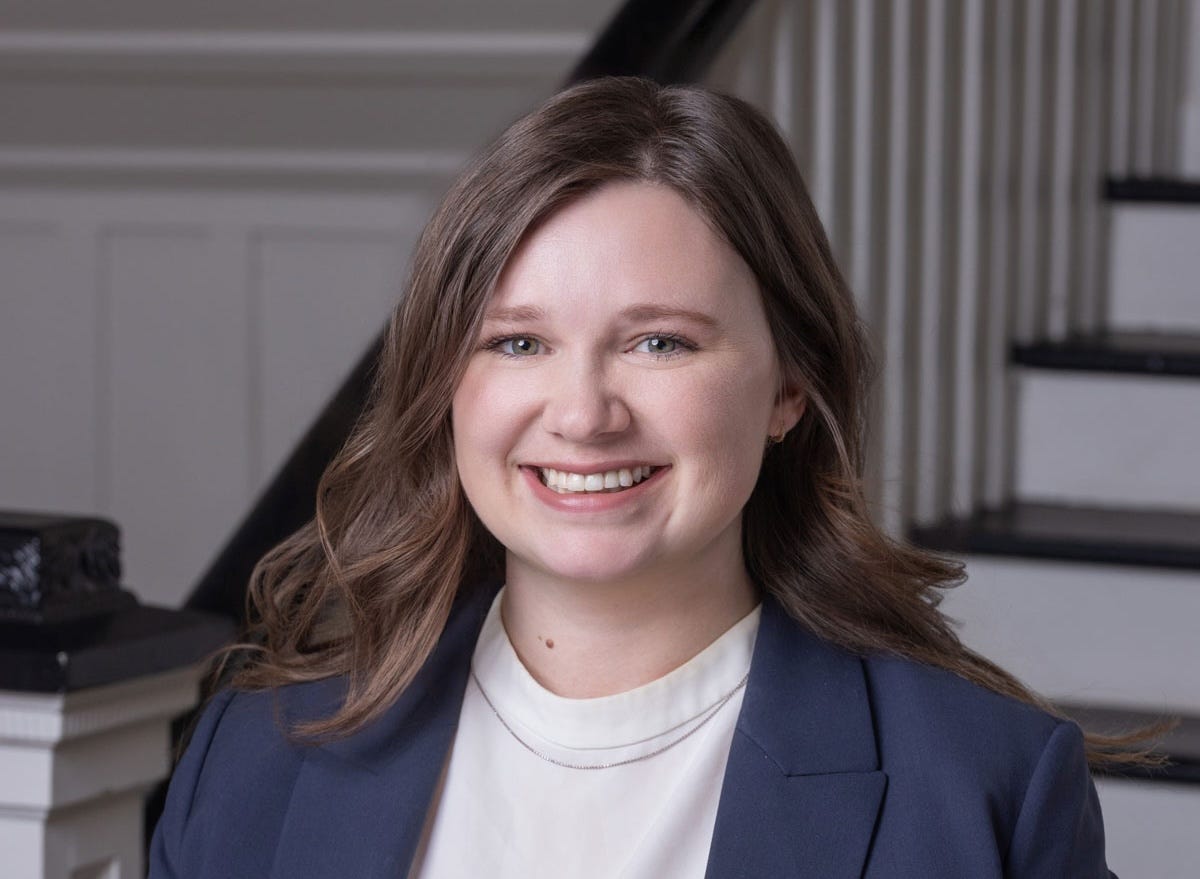
McKenzie Richards is a health policy fellow at the Cicero Institute and a FreeCon signatory.
A former policy associate at the Pacific Research Institute and policy analyst at the Freedom Foundation, Richards is a graduate of the Health Reformers Academy.
In a recent Forbes article, she warned that federal legislation intended to make childbirth “free” would worsen long-term health outcomes of mothers and children, not improve them, while ballooning the cost of healthcare for everyone.
Such policies “will not result in overall reduced costs,” wrote Richards and her coauthor, Josh Archambault, because insurers will “simply shift the costs to everyone in the form of higher premiums and deductibles.”
“So, the patient might not get a bill right after the birth, but everyone would be forced to pay higher rates for decades to come to make it appear free. Ironically, the greatest economic burden would fall on families since they comprise the largest demographic that pays for health insurance.”
A better alternative would be to employ financial incentives to “encourage patients to find less expensive care,” with savings returned to women and their families in the form of cash or savings deposits.
“Arizona, Maine, Oklahoma, and Virginia already have a Right to Save style program for their residents,” they observed, “and about a dozen states have one for their public employees.”
“Rewarding mothers for saving money empowers parents, drives down costs, and invests in children.”
Caricatures produce mistakes
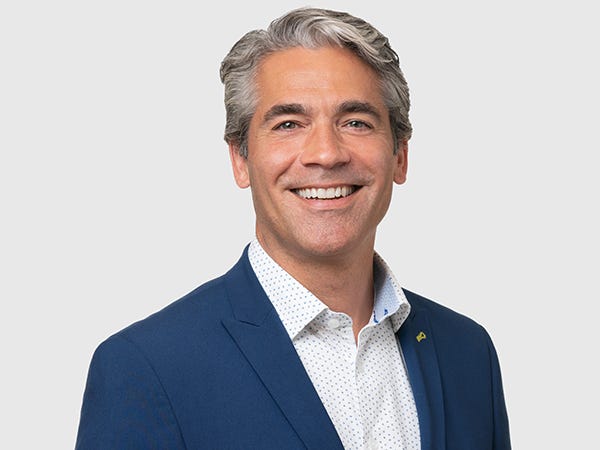
Ryan Streeter is executive director of the Civitas Institute and a FreeCon signatory.
A former director of domestic policy studies at the American Enterprise Institute, Streeter has also served as a senior fellow at the Legatum Institute in London and a research fellow at the Hudson Institute.
He was special assistant for domestic policy to President George W. Bush at the White House, deputy chief of staff for policy for Indiana Governor Mike Pence, and policy adviser to Indianapolis Mayor Stephen Goldsmith.
In a recent Law & Liberty review of a book by fellow FreeCon signatory George Hawley, Streeter argued that there is surprisingly little evidence for the proposition that Donald Trump voters “supported economic populist policy ideas.”
“In fact, working-class Trump voters were less interested in such ideas than those with college degrees and were more optimistic about their future,” he wrote. “They cared about what most Americans care about: living in a country where their kids could own a company or achieve whatever else they set their minds to.
“What united Trump voters, rather, was a strong anti-elitist, anti-leftist sentiment, which expressed itself more intensely the higher a Trump voter’s level of education and income.”
“Caricatures of Republican voters,” Streeter continued, “have led to policy ideas and political tactics that most Americans do not like, which is why a book like Hawley’s provides such a valuable service.”
In the mix
• At The American Spectator, FreeCon signatory David McGarry argued that a narrow focus on law enforcement, rather than broad-based regulation, is the best way to keep children safe when they go online.
“Private companies are no substitute for the men and women equipped with tremendous investigatory powers, guns, handcuffs, and the legal sanction to deploy force to stop predators and protect children,” wrote McGarry, research director at the Taxpayers Protection Alliance, and “the worst perpetrators often prove not to be lone perverts in the proverbial basement but sophisticated criminal organizations, often headquartered in foreign countries.”
“Social media platforms have proven unable to best this formidable adversary — and nobody ought to have expected otherwise. In no part of the economy are businesses expected to do the work of policemen: A grocery store or pharmacy hounded by gangs of shoplifters looks to the police, and not to its own management or employees, for assistance, protection, and justice.”
• At the Washington Examiner, FreeCon signatory Taylor Millard argued that the Trump administration’s proposed 10% cap on credit-card interest would likely cut off a vital lending line for millions of Americans.
Recently released studies show “roughly 75% of Americans with open credit cards would see their limits reduced or their accounts closed if an interest rate cap were enacted,” Millard wrote. “They said this would include at least 71% of borrowers with a credit score above 600.”
The interest rate cap could “also have negative effects on Americans with lower incomes and credit scores — potentially pushing them out of the mainstream credit market,” he continued, forcing them to “turn to riskier ways to get money, potentially dampening consumer spending.”
• At RealClearMarkets, FreeCon signatory Randolph May criticized Federal Communications Commission chairman Brendan Carr for moving his agency away from sound policymaking.
It was a mistake for Carr to employ, or threaten to employ, the agency’s standardless “public interest” authority to “involve the FCC more intrusively in regulating broadcast programming,” wrote May, president of the Maryland-based Free State Foundation.
Ronald Reagan's FCC had it right, he continued, when it determined that the Fairness Doctrine "chills speech and is not narrowly tailored to achieve a substantial government interest.” And when it concluded, at bottom, that “the Fairness Doctrine contravenes the First Amendment and thereby disserves the public interest.”