

When the voters of Hungary overwhelmingly rejected another term for Victor Orbán, the result wasn’t just a decisive turn in the history of a single nation, or of Europe more generally. It was a blow to the nationalist-populist Right here in America.
Or so many Freedom Conservatives have argued over the past few days.
Writing in National Review, FreeCon signatory John Puri observed that “large swaths” of the so-called New Right, including prominent postliberals and signatories to the National Conservatism Statement of Principles, saw in Orbán “a cathartic way of right-wing politics that wielded state power freely to make society behave.” The conservative politician who defeated him, Peter Magyar, “is on the other side, pledging to dismantle his predecessor’s state-control apparatus, advance national interests where appropriate, and otherwise leave civil society be.
“Who is the conservative, again?”
As FreeCon signatory Jack Butler pointed out in The Wall Street Journal, It was “always curious for the champions of America First” not to notice that Hungary under Orbán “became friendlier with China, Russia and Iran. It was likewise strange for American conservatives to elide Hungary’s deteriorating commitment to economic freedom — and diminishing economic returns.”
Far from being the “wave of the future,” wrote FreeCon signatory Jonah Goldberg in the Los Angeles Times, Orbánism proved to be “a tide of the past. And it’s good news that it’s receding.”
It wasn’t just that a foreign leader widely touted by American populists was decisively repudiated. It wasn’t just that Orbán’s governing model — combining political manipulation and rampant kleptocracy with excessive state involvement in economic life — failed so disastrously.
It was also that Victor Orbán has for years used Hungarian assets and tax dollars to subsidize American populists and the institutions they lead. FreeCon signatory James Patterson, an associate professor of public affairs at the Institute for American Civics at the University of Tennessee, calls the arrangement “The Grand Budapest Cartel.”
“With Orbán’s recent electoral defeat,” wrote Patterson in Providence magazine, “this entire apparatus of influence is likely to come crashing down. The Hungarian people were not only voting for themselves on April 12, but also for the fate of the American Right.”
What comes next? That’s the subject of the 2026 Freedom Conservatism Conference, to be held May 20 in Washington. Here are a couple of the panels:
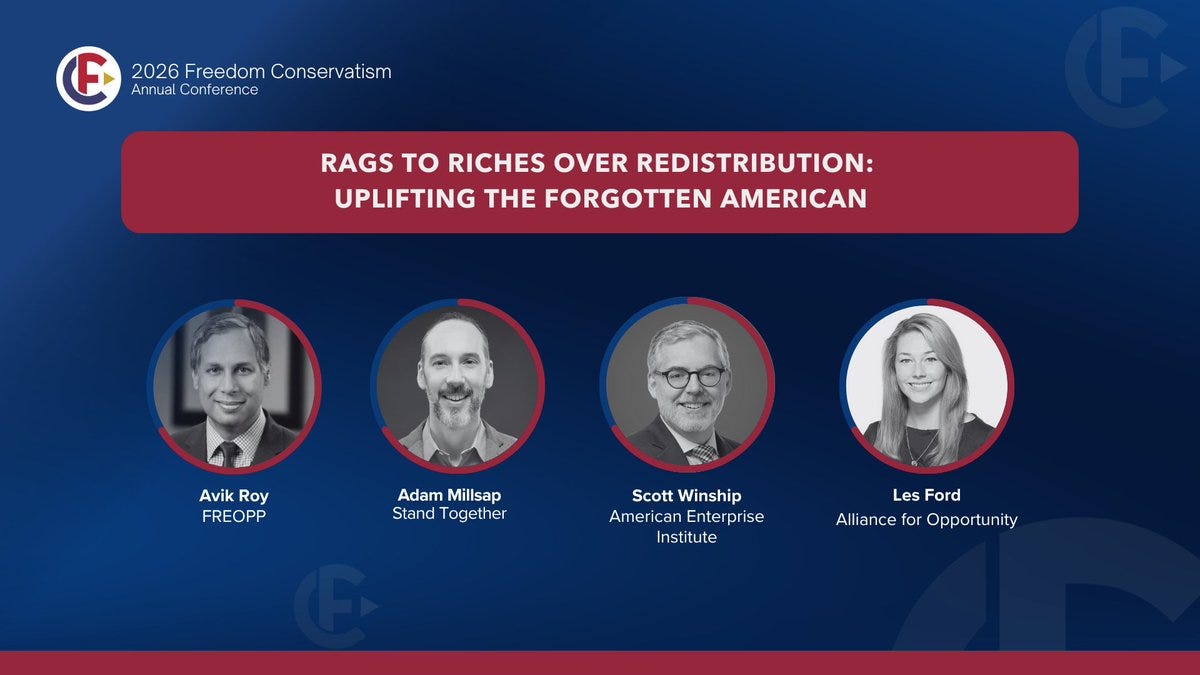
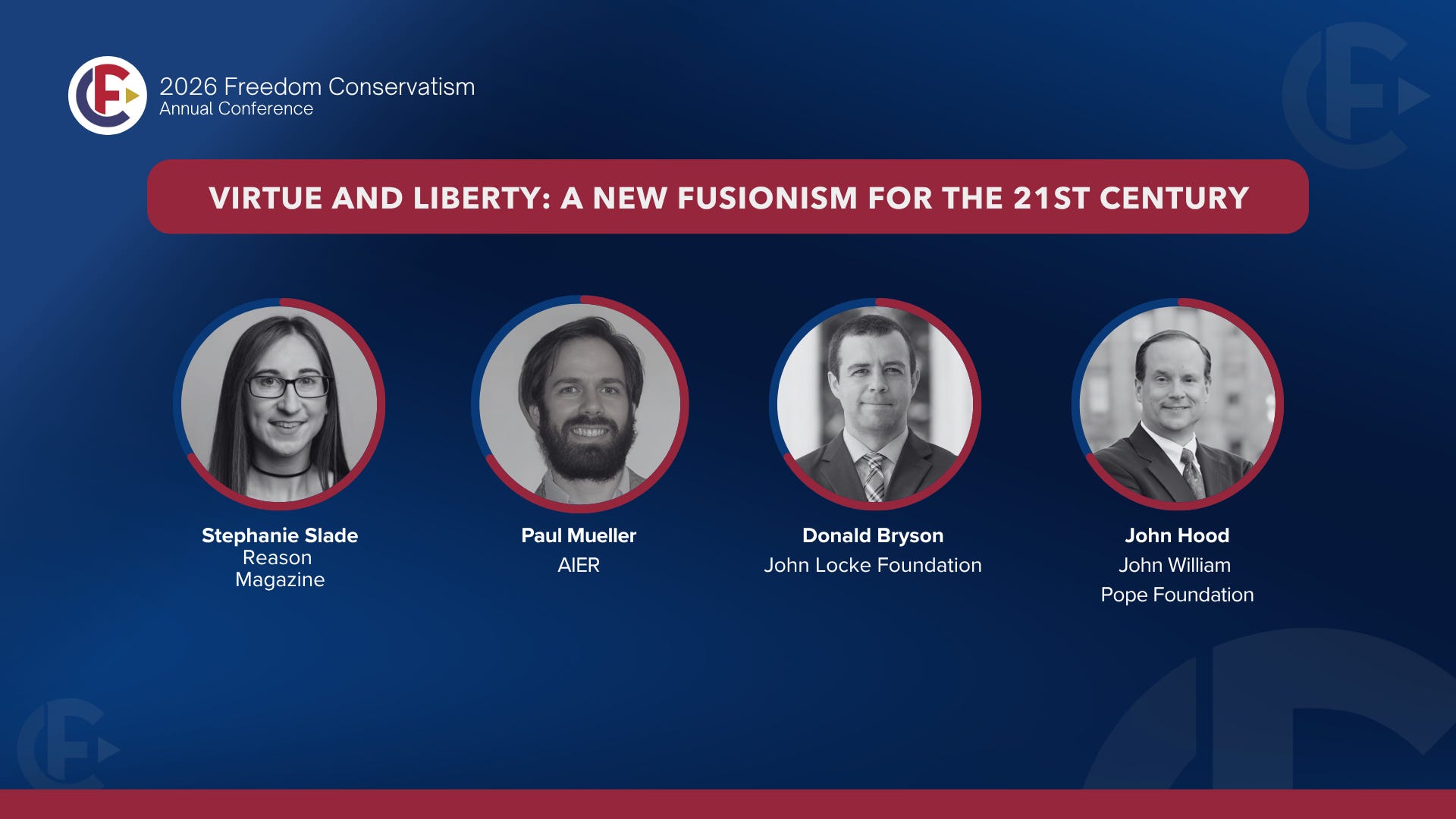
Today we feature the work of other FreeCons who use historical evidence and analogies to explain present-day realities and offer time-tested solutions to America’s toughest problems.
Kennedy centered
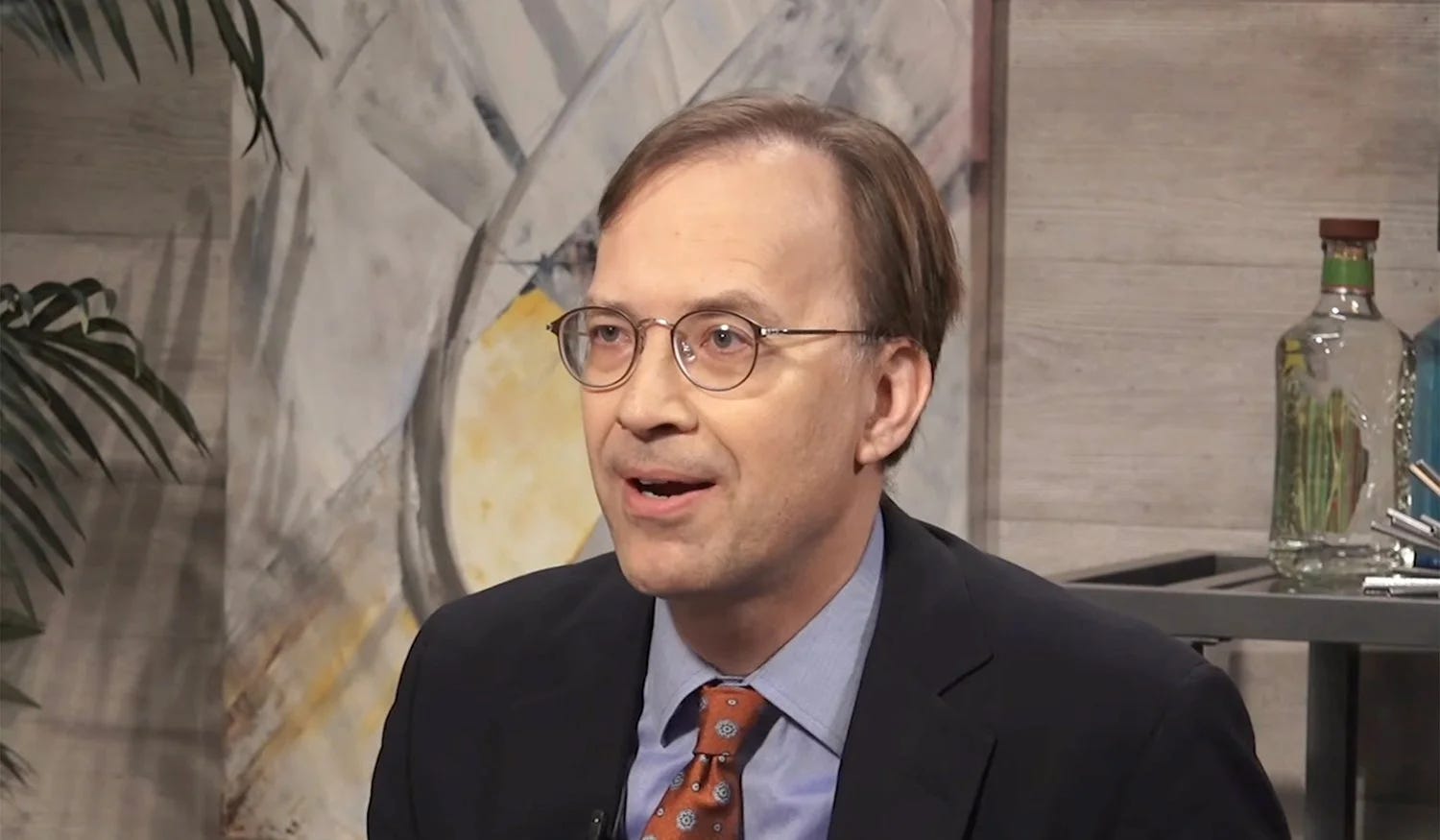
Brian Domitrovic is the Richard S. Strong Scholar at the Laffer Center and a FreeCon signatory.
As a former associate professor and chairman of the department of history at Sam Houston State University, Domitrovic has written for numerous scholarly and popular publications.
In a recent piece for the Coolidge Review, he dispelled enduring myths about the economic policies of President John F. Kennedy, who advocated sound money and pursued reductions in income tax rates.
“The common claim that the Kennedy tax-rate cut was Keynesian — a means primarily of increasing consumer purchases and demand, and thereby growth — finds little support in the evidence,” Domitrovic wrote. “All tax brackets benefited from Kennedy’s cuts. But of course, the effect was sharper the more money one made.
“Kennedy and his advisers understood that the highest earners had the greatest propensity to save or invest from marginal income, and to take risks to gain more such income. In short, stimulating consumer demand was not their primary objective. The Kennedy tax-rate cuts focused mostly on incentives, not consumption.”
No to political enterprise
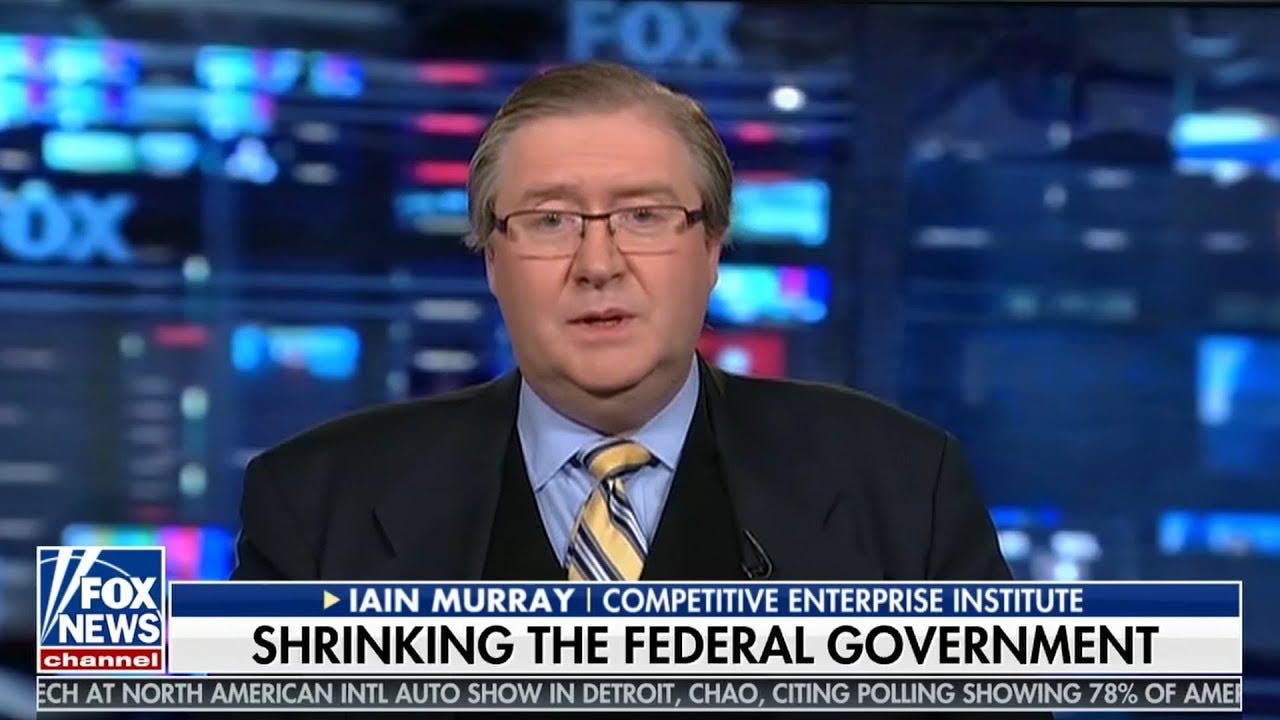
Iain Murray is vice president for strategy and senior fellow at the Competitive Enterprise Institute. He is also one of the organizers of the Freedom Conservatism project.
In a recent piece for The Daily Economy, Murray compared the pervasive “villainization” of corporations to the much more positive depiction of government actors.
“In the Progressive Era, corporations were portrayed as extractive engines of class power, tolerated only if constrained by supposedly impartial regulators and administrative oversight,” wrote Murray.
“Now the New Right has mounted its own indictment, charging corporate America with ‘woke’ cultural coercion, economic disloyalty, and an unhealthy intimacy with left-wing regulators and the administrative state.”
Rather than attempt to yoke business decisions to political whims, Left or Right, Murray wrote, we should embrace a “classical liberal theory of corporate virtue: firms exist to coordinate labor and capital for productive ends; their social contribution is wealth creation within the rule of law; profit signals value creation rather than moral failure; and business and politics should remain separate. Regulators should set stable, predictable rules — not direct outcomes — and market discipline should guide behavior.”
“The choice should be clear. A return to mission-focused enterprise depends on it. Free enterprise, not political enterprise, built America — and it remains the only path to sustaining it.”
Civic purpose
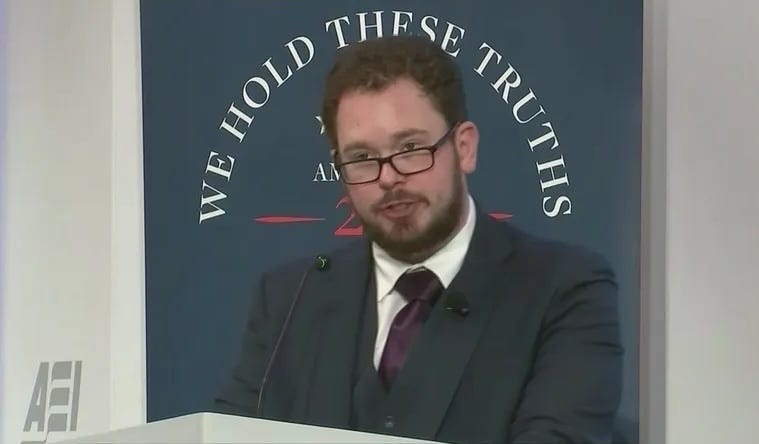
Jay Cost is the Gerald R. Ford nonresident senior fellow at the American Enterprise Institute, a visiting scholar at Grove City College, and a contributing editor at the Washington Examiner. He is also a FreeCon signatory.
In a recent AEI paper, Cost contrasted other provisions of the U.S. Constitution that protect personal and procedural rights with the First Amendment, which protects “relational activity — what Americans do with others.”
After discussing the influence of John Locke, Francis Hutcheson, and other thinkers on the American Founders, Cost explained their view that “state interference with religion corrupts religion by stifling the competition of ideas” and that “this kind of stultifying force could have widespread effects outside religion.”
The First Amendment reflects a “worshipful” and “civic” telos, he continued, that was “not the imposition of a philosophical elite but rather reflected a broad view of what the Jeffersonian pursuit of happiness looked like in practice.”
In the mix
• At The Dispatch, FreeCon signatory Todd Myers argued that Washington might well be the most embarrassing state in the union.
“Politicians and government bureaucracies across the country make decisions that are self-destructive,” wrote Myers, vice president for policy at the Washington Policy Center, but in the Evergreen State “we find a way to make mistakes that go beyond ordinary incompetence or political hackery.”
“The decision by our governor and legislature to impose a new income tax has received much attention. It is just the latest silly decision that is driving leading entrepreneurs like Jeff Bezos (Amazon) and Howard Schultz (Starbucks) out of the state.”
• At Law & Liberty, FreeCon signatory Thomas Savidge observed that while Adam Smith warned against the monetization of government debt 250 years ago, policymakers haven’t yet learned the lesson.
“The temptation to finance debt through monetization is a recurring feature of political systems that seek to deliver immediate benefits while postponing costs,” wrote Savidge, a research fellow at the American Institute for Economic Research. “History shows, however, that this strategy disguises default rather than prevents it.”
“If the United States is to avoid the failures Smith warned about, it must reinforce credible institutional boundaries between fiscal and monetary authorities. Without such constraints, the juggling trick will persist, gradually eroding purchasing power, distorting behavior, and undermining long-term prosperity.
“Sound money and disciplined fiscal policy remain essential safeguards for the future.”