
While both the populist Right and progressive Left want to strengthen Washington’s control over the nation’s economy, Freedom Conservatives believe in strengthening free enterprise, devolving power to states and localities, and subjecting regulation to careful scrutiny.
Unless a proposed rule addresses a legitimate health or safety concern and has a reasonable prospect of conferring benefits greater than its costs, wise policymakers will pursue other, less-restrictive means of accomplishing their ends.
“Americans can only prosper in an economy in which they can afford the basics of everyday life: food, shelter, health care, and energy,” we wrote in the FreeCon Statement of Principles. “A corrosive combination of government intervention and private cronyism is making these basics unaffordable to many Americans.”
“We commit to reducing the cost of living through competitive markets, greater individual choice, and free trade with free people, while upholding the rule of law, property rights, freedom of contract, and freedom of association.”
Today we feature the work of FreeCons who believe innovation, investment, and competitive markets offer the best chance of boosting opportunity and living standards across our great country.
Close the door
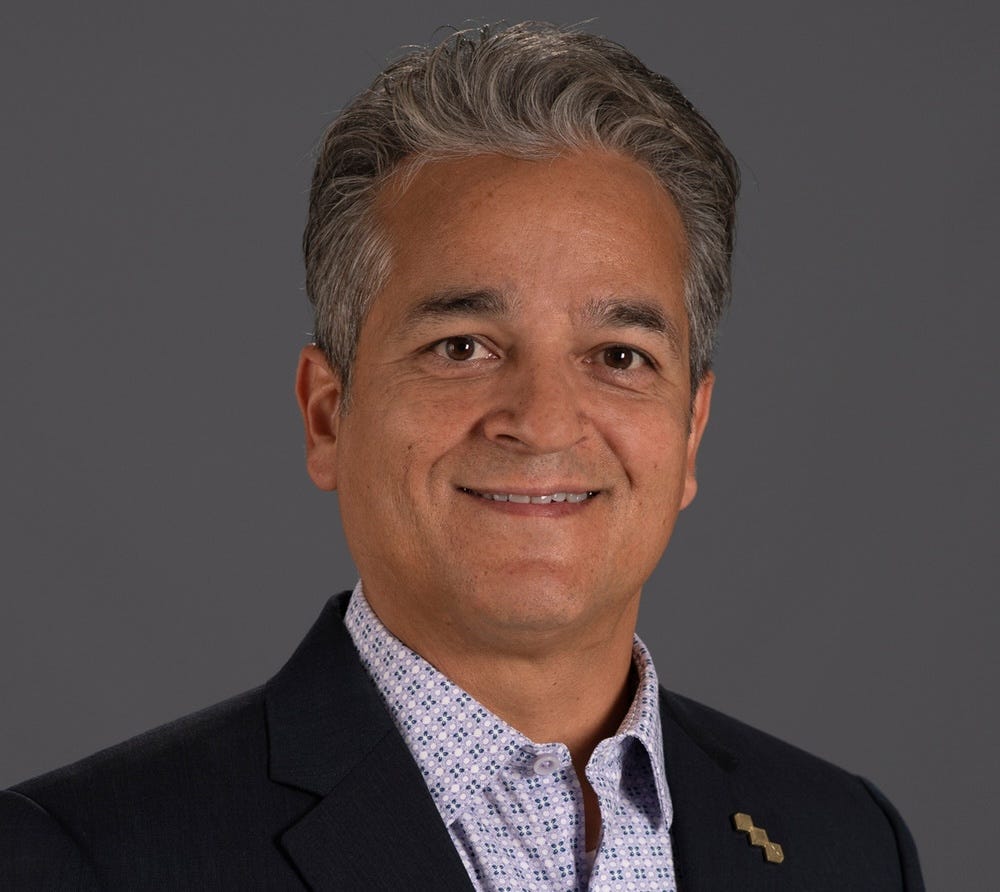
Edward J. Lopez is a professor of economics and BB&T Distinguished Professor of Capitalism at Western Carolina University. He is also a FreeCon signatory.
A scholar of institutional economics, law & economics, and political economy, Lopez is executive director and past president of the Public Choice Society. His books include Madmen, Intellectuals, and Academic Scribblers: The Economic Engine of Political Change (2012) and The Pursuit of Justice: Law and Economics of Legal Institutions (2010).
In a recent post for EconLog, he discussed the 20th anniversary of the U.S. Supreme Court decision in Kelo v. City of New London and the subsequent uses and abuses of the power of eminent domain.
While many states responded to Kelo with statutory or constitutional curbs on condemnation, public officials have proven to be skilled at evading the restrictions, a practice Lopez and his colleagues call “loophole mining.”
“Tighter restrictions may beget more creative forms of loophole-mining and necessitate ongoing regulatory adjustments, creating a cycle of regulation and circumvention,” Lopez wrote.
“Much simpler, and arguably more efficient as well, would be for the Court to abandon its rational basis deference and instead close the door to takings for economic development.”
Reform requires courage
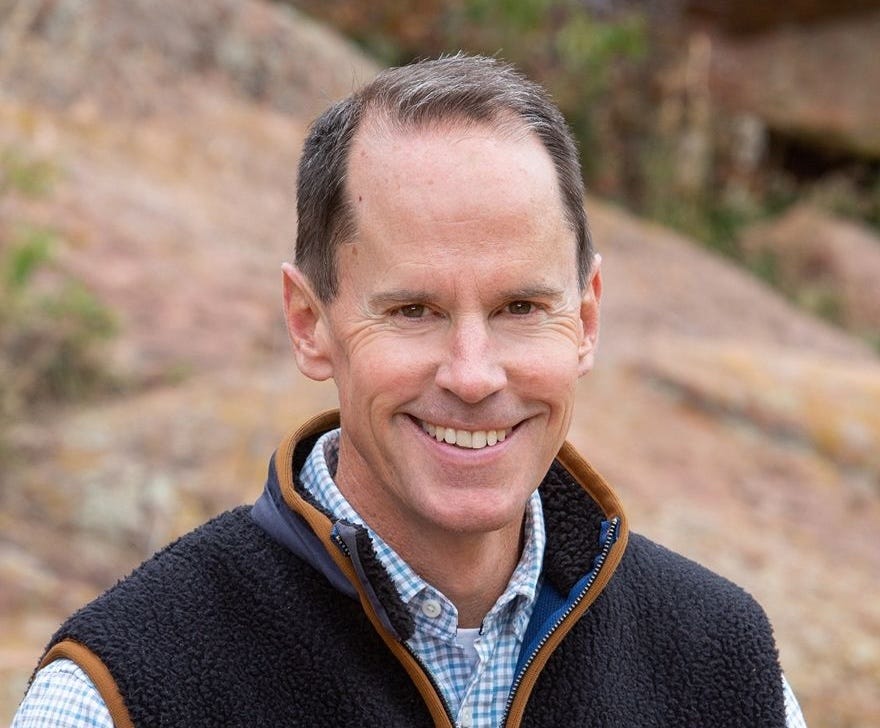
Mark Hillman is a former majority leader of the Colorado Senate, a former State Treasurer of Colorado, and a FreeCon signatory.
During his seven years in the state senate, Hillman was named National Legislator of the Year by both the American Legislative Exchange Council and the National Republican Legislators Association as well as Outstanding Senator by the Colorado Farm Bureau.
The operator of a family farm, he also writes occasional articles for such publications as the Wall Street Journal, Denver Post, and Colorado Springs Gazette.
In a recent piece for the Kiowa County Press, Hillman cited Colorado’s legal and regulatory climate as one of the drivers of the state’s soaring insurance costs.
“If lawmakers really wanted to reduce insurance premiums,” he wrote, they would reform laws that rig the system in favor of trial lawyers and allow “phantom damages” in personal injury lawsuits.
“Of course, doing so would incur fierce opposition from lawyers whose advertisements boast about delivering enormous judgments for clients. Meanwhile, every Coloradan pays more to insure our homes and vehicles.”
Painful tradeoffs
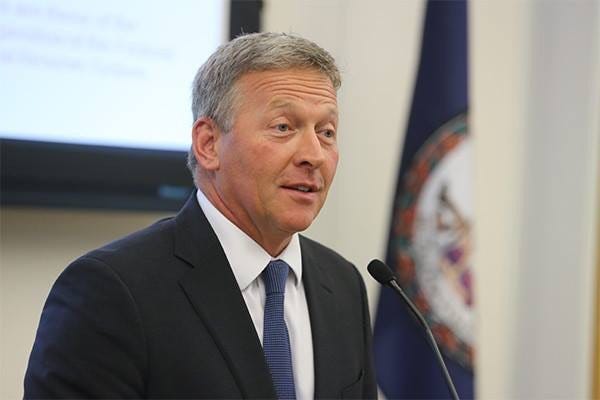
Chris Saxman is the Executive Director of Virginia FREE, a nonpartisan organization that advances free enterprise and responsible, pro-business government. He is also a FreeCon signatory.
A former member of the Virginia House of Delegates, Saxman has co-chaired presidential campaigns and gubernatorial transitions in his state. He previously led a family-owned business and chaired the board of directors for the International Bottled Water Association.
In a recent Substack post, Saxman warned that a new bill to raise Virginia’s mandated minimum wage to $15 an hour by 2028 would harm workers, small businesses, and the state’s competitive position.
“If the minimum wage goes from $10 to $15, a worker currently making $16/hour might successfully argue for a raise to $21/hour to maintain their premium over entry-level workers,” he explained.
“This escalator effect is why minimum wage increases can affect a much broader portion of the workforce than just those earning the minimum, and why the total impact on labor costs can exceed the direct effect on minimum wage workers alone.”
Premature retirement
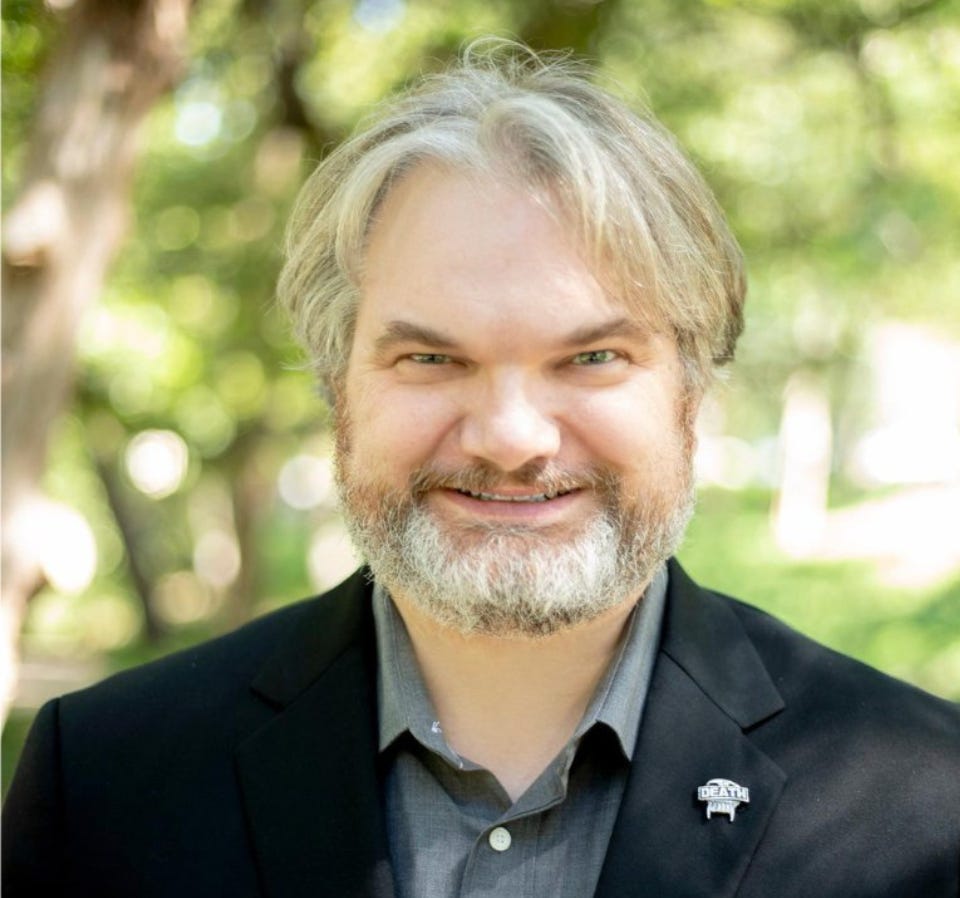
Taylor Millard is an contributor to such publications as Inside Sources, the Washington Examiner, and The Spectator. He is also a FreeCon signatory.
A former investigative reporter and radio correspondent, Millard is a graduate of the University of North Texas.
In a recent piece published by the Herald-Dispatch and other newspapers, he pointed out that electricity prices in 13 states are higher than they would have been had policymakers not shuttered coal-fired plants capable of producing less-expensive power.
One study estimated that “keeping existing coal plants online longer could save electricity customers between $3 billion and $4 billion annually,” Millard wrote.
“Wind turbines and solar panels are more expensive to maintain than existing coal plants,” he continued, in that “maintaining replacement solar capacity would cost $60 billion yearly, while wind turbines cost $11 billion. In contrast, coal plants cost $6 billion.”
“Other analysts, including the Institute for Energy Research, emphasized that regulatory delays and legal challenges prevent new power generation from connecting to the grid, reinforcing the need to maintain existing resources, including coal plants, for grid stability.”
In the mix
• At the Washington Examiner, FreeCon signatory Tiana Lowe Doescher urged the Trump administration to “return to principles that undergirded” the U.S. dollar’s gold-standard era, “the time when we became the world’s reserve currency in the first place.”
“If our trade deficit creates the flows of foreign investment that allow us to borrow indefinitely,” wrote Doescher, a columnist for the Examiner, “our trade deficit is a strength, not a weakness.
“When supply-side economics focuses on stability for the consumer, not protectionism for the producer, a rising tide of economic growth lifts all boats. For America to lead the world, King Dollar must not cede the throne.”
• At National Review, FreeCon signatory Jessica Melugin predicted that if a lawsuit in California succeeds in declaring online networks liable for the emotional distress of children, it will “open the floodgates for plaintiffs’ attorneys to sue big-pocketed social media companies regardless of whether they actually caused the alleged harms.”
“Conservatives used to agree that the plaintiffs’ bar was out of control,” wrote Melugin, director of the Center for Technology and Innovation at the Competitive Enterprise Institute, along with CEI colleague Alex Reinauer. But cracks have begun to appear in the Right’s “dam against tort abuse.”
“This trial may provide a real-world test of tolerance for trial lawyers’ self-interest, popular anxiety around children being online, and protecting the rights of some of America’s most successful companies.”
• At Townhall, FreeCon signatory Sam Raus questioned the logic behind a new congressional push to limit exports of the chips that power artificial intelligence.
“With AI technology rapidly developing,” wrote Raus, the Boaz Resident Writing Fellow at Young Voices, “these efforts are less about true national security than about control: who gets to decide the future of the most important technology of the 21st century.”
“Preserving American dominance in artificial intelligence requires confidence in markets, respect for constitutional roles, and trust in elected leadership — not another layer of regulation undermining all three.”
• At Real Clear Politics, FreeCon signatory Christian Josi argued that whichever party learns to appeal effectively to moderate voters will dominate American politics for years to come.
“Independent voters care about the cost of living, housing, taxes, and government spending — in other words, all the stuff that actually affects daily life,” wrote Josi, founder of a public affairs firm and former executive director of the American Conservative Union. “They are less interested in partisan food fights and more interested in whether anyone in power can manage the basics without lighting the room on fire.”
“Republicans can’t assume these voters will come back just because they’re unhappy with the Democratic Party. Disillusionment cuts both ways. Independents want less theatrics and more governing. Candidates who conflate outrage with leadership may win primaries, but they’ll lose the room eventually.”