
The hundreds of conservative leaders who’ve signed the Freedom Conservatism Statement of Principles have many disagreements with National Conservatives and other factions on the populist Right.
One key difference concerns the label “nationalism” and what it signifies.
FreeCons believe in American greatness, of course, and celebrate our nation’s founding principles, rich history, and cherished traditions. We are fiercely patriotic. FreeCons firmly reject the mythology embedded in the 1619 Project and other revisionist attempts to sully and delegitimize the American experiment.
But we also reject the abstract and ahistorical notion that nationalism per se is the foundational principle of America, or of Western civilization as a whole. We also reject the notion that addressing our country’s many challenges requires strengthening “the nation” at the expense of state governments, localities, and the private institutions of family, faith, community, and enterprise that form civil society.
As American conservatives, we embrace the federalist principle that places strict limits on Washington’s power and influence. Today we feature the work of FreeCons advancing liberty, order, and human flourishing at the state and local level.
Coin of the realm
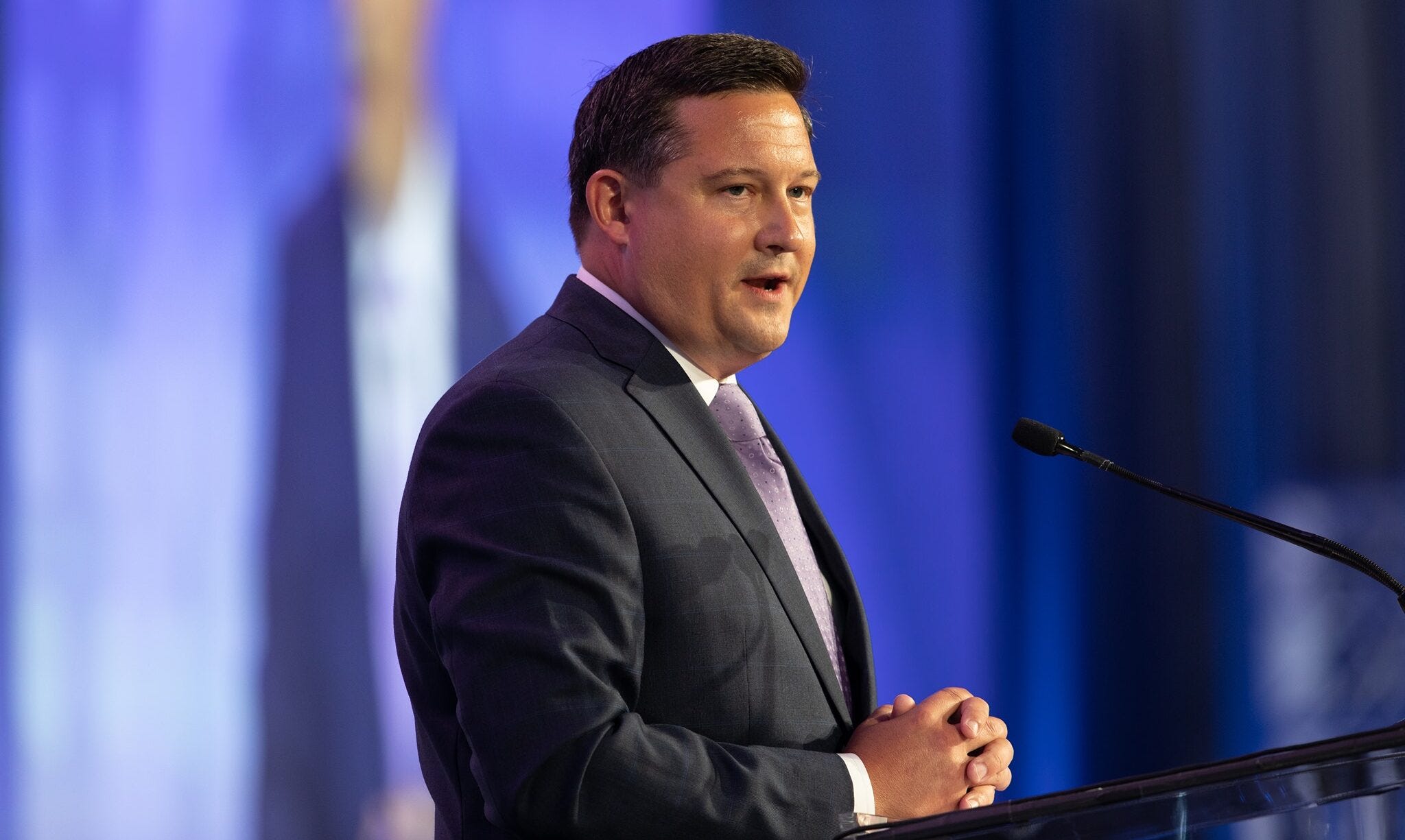
Michael J. Reitz is executive vice president of Michigan’s Mackinac Center for Public Policy and a FreeCon signatory.
A weekly columnist for the Detroit News, Reitz also chairs the Michigan Coalition for Open Government and serves on the board of the Detroit Prosperity Center.
He formerly served as general counsel and director of labor policy at the Freedom Foundation and frequently comments on public policy for such publications as The Wall Street Journal, the Los Angeles Times, and the Boston Globe.
In a recent Detroit News column, Reitz observed that if critics of the Trump administration really want to push back against what they perceive to be abuses of power, they ought to limit the scope of federal spending and allow states and localities to create and fund their own solutions to public problems.
“Americans should be concerned about the imperial presidency,” he wrote. “But there’s a problem: It’s hard to protest the king when you depend on the coin of the realm. Governors and state legislatures tolerate dictates from the federal government because of the billions available in federal funding.”
A recent report from State Policy Network’s Center for Practical Federalism found that nearly half of all states are more reliant on (borrowed) federal dollars than they were before the COVID-19 pandemic.
“When states rely on Washington, D.C., to fund programs,” Reitz concluded, “they give presidents immense leverage to dictate policy.”
Rural America’s best hope
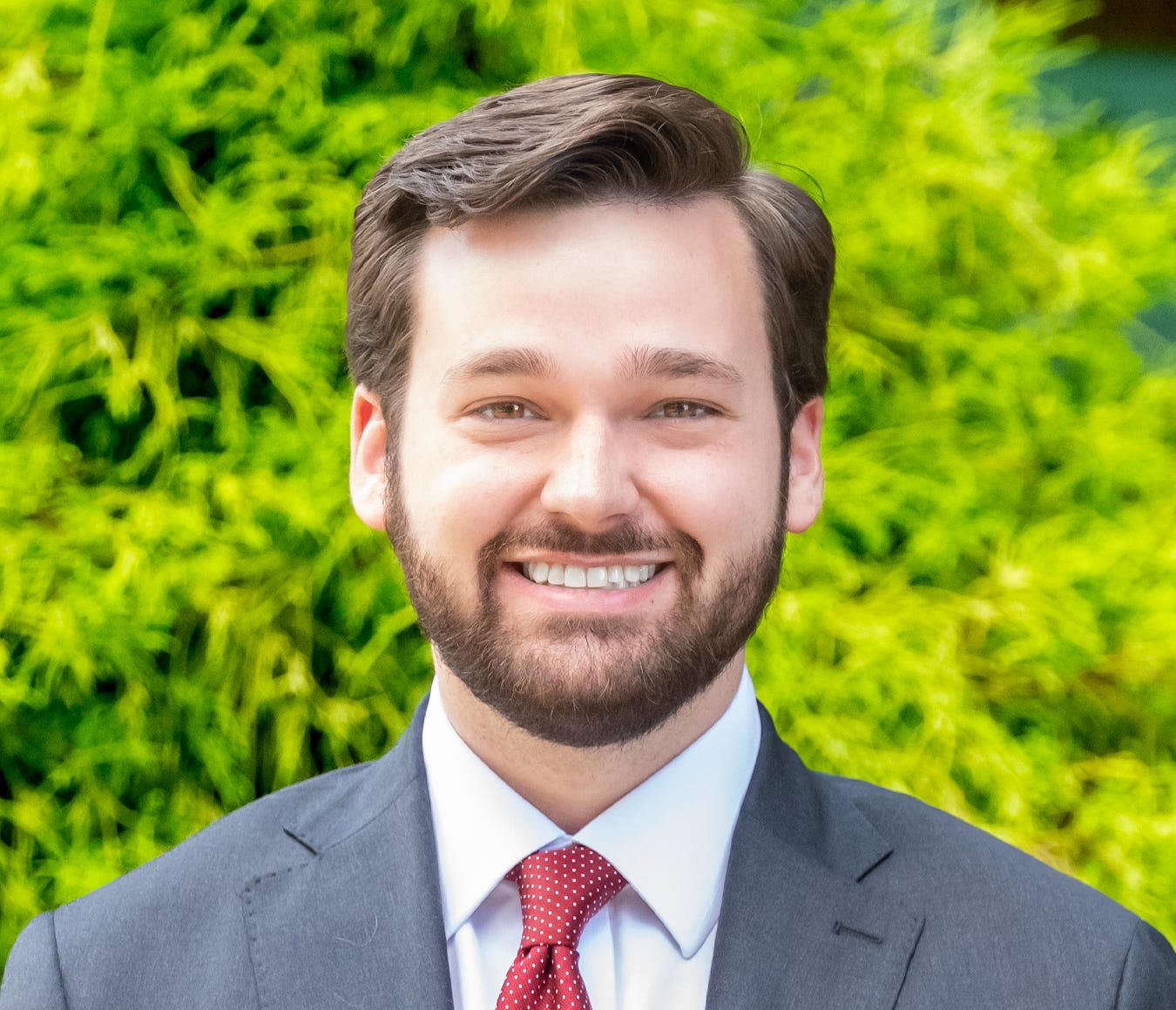
Jeffery Tyler Syck is an assistant professor of politics at Kentucky’s University of Pikeville. He’s also a FreeCon signatory.
Syck’s articles on politics, philosophy, and history have appeared in such publications as Law & Liberty, Carolina Journal, and the Louisville Courier-Journal.
In a recent piece for Persuasion, he argued that localism, not nationalism, offers the best cure for rural America’s ills.
“MAGA-style nationalism has proven itself incapable of stemming the tide of rural decline,” Syck wrote. “The past ten years have not seen a rejuvenation of rural America, nor do there seem to be any indications that the economic trends of the last half century are starting to reverse in these regions.”
“Champions of rural America must reject reactionary nationalist attempts to rewind the clock back to the 1950s,” he continued. “They need a totally new solution to rural malaise — one that combines the localism of the past with the values of the open society that will likely dominate the coming century.
“This is not an easy task; it asks us to combine two things that have not historically gone well together. Yet it is the only real hope for rural America.”
Don’t stifle innovation
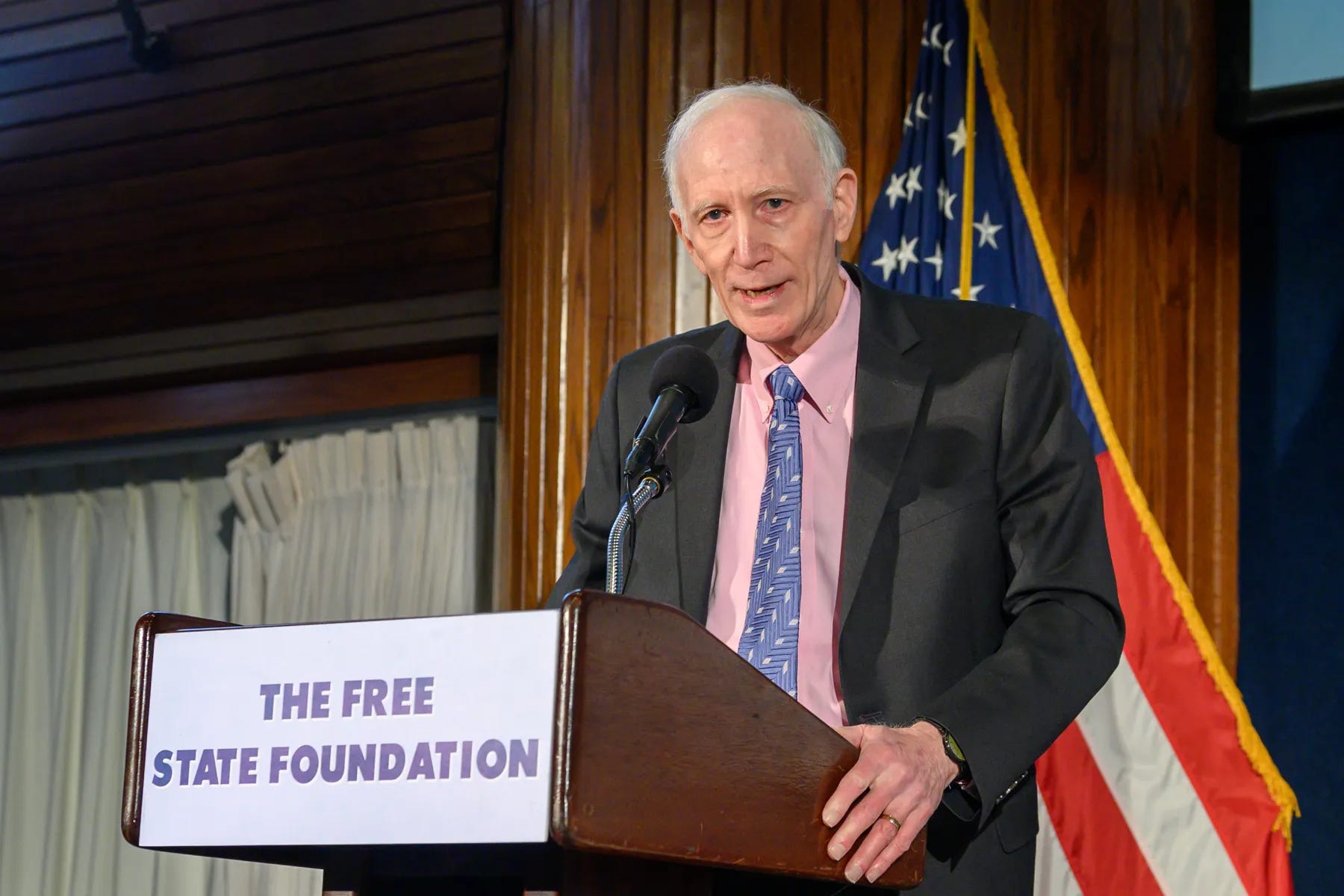
Randolph J. May is president of The Free State Foundation, a Maryland-based think tank. He’s also a FreeCon signatory.
Prior to founding The Free State Foundation, May served as associate general counsel at the Federal Communications Commission and as a senior fellow and director of communications policy studies at the Progress and Freedom Foundation.
He is a past chair of the American Bar Association’s Section of Administrative Law and Regulatory Practice, a fellow of the National Academy of Public Administration, and a senior fellow at the Administrative Conference of the United States.
In a recent post, May noted that America’s broadband providers have collectively spent some $2.2 trillion since 1996 on high-speed connections — but could have done even more in the absence of onerous regulations.
“It’s not news that it is very expensive — very capital intensive — to meet America's expanding need for fast, reliable, and secure broadband networks,” he wrote, which will be “essential to enabling and facilitating the burgeoning use of AI. America's economic security will depend on it.”
“Given the competitive environment that exist today,” May continued, “there certainly is no need for adoption of any heavy-handed regulatory mandates such as the now eliminated ‘Net Neutrality’ regulations. They stifle investment and innovation, rather than promoting it.
“And there is a need to remove permitting and other impediments, especially at the state and local level, that unduly delay infrastructure projects and render their costs unreasonable.”
Losing freedom with a shrug
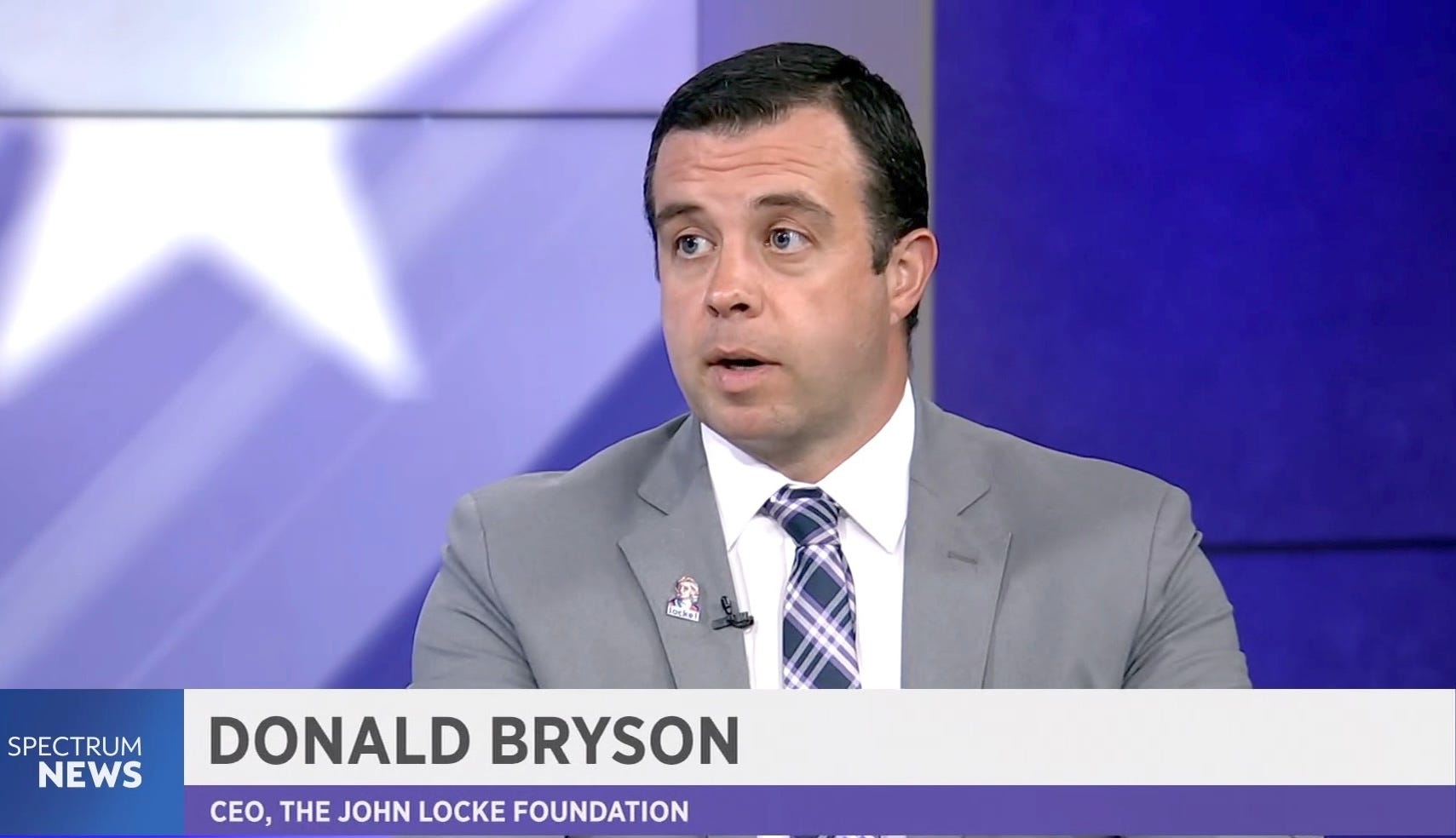
Donald Bryson is president and CEO of the John Locke Foundation, a North Carolina-based think tank. He’s also a FreeCon signatory.
Bryson previously served as the North Carolina State Director for Americans for Prosperity and is a .member of the American Enterprise Institute’s Leadership Network. He has written for National Review, the Wall Street Journal, Investor’s Business Daily, and FoxNews.com, among other outlets.
In a recent essay for RealClearMarkets, Bryson noted the upcoming anniversaries not only of the Declaration of Independence but also the publication of Adam Smith’s Wealth of Nations.
“A December 9 Economist/YouGov nationwide poll finds that only 41% of Americans say capitalism is the better economic system,” he wrote. “Just 21% choose socialism. But the most revealing figure is this: 38% say they are not sure what to think at all. Among young adults and independents, uncertainty rises even higher.
“That ideological softness should alarm anyone who cares about America’s future.”
The Trump administration’s deviations from free enterprise haven’t helped matters, he continued.
“When federal officials take equity stakes in private companies, that is not capitalism,” Bryson wrote. “When state and local governments offer targeted tax breaks and subsidies to favored firms and industries, that is not capitalism. And when success depends more on political connections than on serving customers, that is not capitalism either.”
“History shows that when societies lose confidence in the moral legitimacy of their economic system, they invite ever-greater government control to correct perceived injustices. Those interventions create new distortions that invite still further intervention. Freedom erodes not with a revolution, but with a shrug.”
In the mix
• In the Coolidge Review, FreeCon signatory Samuel Gregg wrote about Adam Smith and other Scottish thinkers who influenced the American Founding.
“Eighteenth-century Scotland produced many scholars from whom prominent American Revolutionaries absorbed the ideas of that movement of ideas which we call the Scottish Enlightenment,” wrote Gregg, president of the American Institute for Economic Research.
“Whether it was the philosophy articulated by Jefferson or the legal thought embraced and promoted by another signer, James Wilson (himself a Scot who probably attended Adam Smith’s lectures on jurisprudence), Scottish Enlightenment thinkers provided both style and content to the Revolutionary generation.
“The men of 1776 read the sermons and lectures of enlightened Scots like the Reverend Hugh Blair — close friend of Smith and David Hume, chair of rhetoric and belles lettres at the University of Edinburgh, and Sunday preacher to Scotland’s burgeoning merchant class.”
• In FUSION magazine, FreeCon signatory Russ Greene argued that Capitol Hill would be a better place for policy formations if congressional staffers were better compensated.
“Paying staffers more will not solve all of these problems,” wrote Greene, managing director at Prime Mover Institute. “Yet improved staffer compensation will attract more capable individuals, who have more in common with the average American. And it will help retain them longer.
“In addition, it will help build staffers’ attachment to Congress as an institution, making them more attentive to infringements upon its constitutional rights.”
• At The American Mind, FreeCon signatory Ilya Shapiro rebutted the notion that the conservative legal movement, championing originalism in American jurisprudence, has somehow lost its momentum.
“Contrary to the ‘dog that caught the car’ anxiety, originalism’s judicial project is nowhere near complete,” wrote Shapiro, director of constitutional studies at the Manhattan Institute.
“The overruling of Roe v. Wade, the restoration of the Second Amendment, the rejection of racial preferences, the skeptical turn in administrative law — all of these are foundational, not terminal, victories. They clear out some of the worst doctrinal underbrush, but the forest is still dense: whole swaths of administrative, civil rights, property, and remedies law still bear the marks of 20th-century judicial policymaking.”
“The state of the conservative legal movement is, in truth, remarkably strong,” he continued. “This isn’t a moment for existential despair or theoretical reinvention. It’s a moment for gratitude, patience, and continued work — on the bench, in the political branches, and in the culture that ultimately sustains our law.”