
When we released the Freedom Conservatism Statement of Principles nearly three years ago, we observed that authoritarianism was “on the rise both at home and abroad” and that too many on the Left and Right rejected “the distinctive creed that made America great: that individual liberty is essential to the moral and physical strength of the nation.”
Since then, FreeCons have won some victories. Especially at the state level, conservative policymakers continue to translate our nation’s founding principles into effective governance: cutting and reforming taxes, lifting regulations, expanding choice and competition in education and health care, removing obstacles to work and family formation, and championing the habits and virtues required for healthy communities and human flourishing.
Nevertheless, the future of the American Right remains uncertain. Nationalists, populists, and integralists — along with a smattering of reactionaries, cranks, and bigots — still dream of remaking and leading our movement.
Will they succeed? FreeCons certainly hope not, and will do everything in our power to prevent it. An American conservatism severed from its roots in civic republicanism and classical liberalism would be incapable of reliably winning and effectively wielding power in Washington, state capitals, and local communities. It would lose — and deserve to.
The future of the Right will be one of the main topics at this year’s Freedom Conservatism Conference, to be held May 20, 2026 at the historic Capital Turnaround event center in Washington. Here are some of the panel titles:
What Has Conservatism Ever Conserved?
America at 250: The Founding Principles and the Future of American Conservatism
How Can Freedom Conservatism Build a Winning Coalition?
Virtue and Liberty — A New Fusionism for the 21st Century
Over the next couple of weeks, we’ll announce the featured speakers and panelists at FreeCon 2026. To our surprise and delight, however, seats are already filling up fast. To secure your place at FreeCon 2026, click here.
Below, we feature the work of FreeCons helping to shape our movement’s future by offering new ideas and building new institutions.
A better pronatalism

Rachel Lu is a senior editor at Law & Liberty, a contributing writer at America magazine and National Review, and a FreeCon signatory.
In a recent piece for Law & Liberty, Lu outlined three ways that liberty-minded Americans can promote family formation and fertility without abandoning their limited-government principles.
For example, “entitlement reform is the best pronatalist policy there is,” she wrote.
“Birth rates have fallen for many reasons, but the entitlement state is clearly one. Elderly entitlements are the worst offenders: they socialize one of the major benefits of children while privatizing the cost. Over the longer run, entitlements also seem to erode family networks, and perhaps especially intergenerational dependence and closeness, teaching people to view the state as the presumptive caretaker instead of kith and kin.”
Another insight is to conceive of parents as creators and innovators, not potential victims or wards of the state.
“When the state becomes the presumptive source of support for families (not in extremis but simply as a matter of course), that will sap parents’ natural inclination to explore organic solutions to family challenges. They’re less likely to build mutually supportive communities, demand helpful products, or look for new ways to combine work and parenting constructively.”
Finally, policymakers should remember that “fiscal and human capital tend to support one another.”
“Prosperity and opportunity may compete with family life in certain ways, but ultimately, thriving and energetic societies tend to compensate for those competing demands with less-quantifiable goods. Hope is harder to measure than a child bonus, but it may ultimately matter far more.”

Imported NatCon
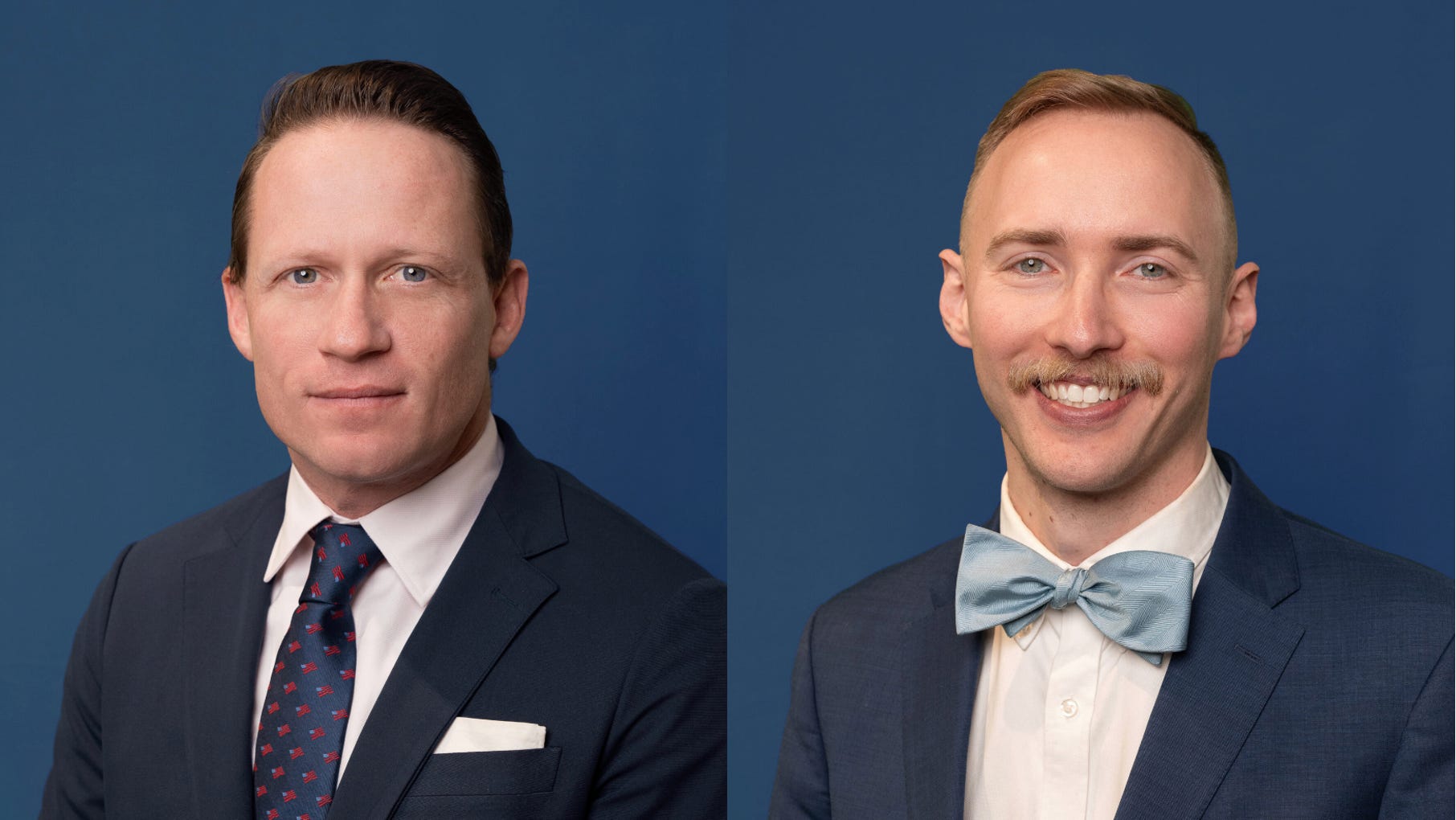
Tim Chapman is president of the think tank Advancing American Freedom. John Shelton is vice president for policy at AAF. Both are FreeCon signatories.
Chapman previously served as a principal at P2 Public Affairs, the executive director of Heritage Action, chief of staff at the Heritage Foundation, and an adviser and staffer to senators Jim DeMint, Don Nickles, and Asa Hutchinson. Shelton served as a policy advisor for offices in both the U.S. Senate and U.S. House.
In a recent article for First Things, Chapman and Shelton observed that the National Conservatism movement, far from being an organic outgrowth of the initial election of Donald Trump as president, was “imported from the United Kingdom half a decade earlier.”
“Getting the history right is essential to navigating the fast-approaching future of post-Trump conservatism.”
“The Right was already grappling with the social consequences of economic and cultural upheaval well before 2016,” they continued, “even if Donald Trump gave voice to those concerns with unmatched force.”
“The institutions that sustain fraternity cannot be engineered by the state. They grow from citizens who understand that liberty carries obligations as well as rights. If the conservative movement remembers that truth, it will find that the path forward is not a departure from its principles but a return to them.”
Populism vs. markets
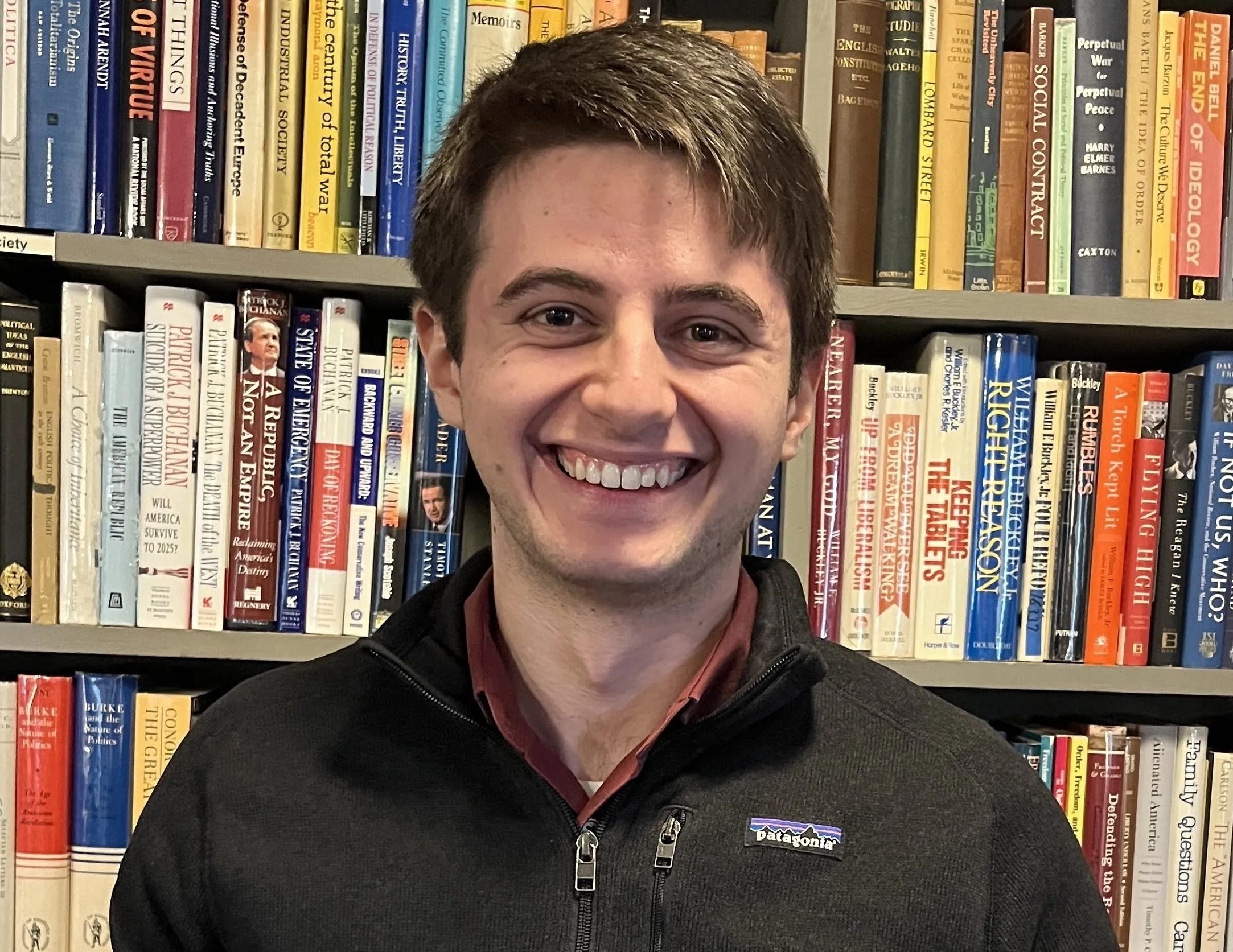
Charles Hilu is a D.C. reporter for The Dispatch, a former Collegiate Network Fellow at the Washington Free Beacon, and a former intern at National Review and the Washington Examiner. He is also a FreeCon signatory.
In a recent piece for The Dispatch, Hilu described a battle between populists and free-marketeers over housing policy, with the former borrowing bad ideas from left-wing Democrats such as Elizabeth Warren and the latter focusing on government-imposed constraints on housing supply.
The Senate’s version of a federal housing bill includes some deregulatory measures as well as “entirely new pieces that have proven to be the most controversial for market-minded members” such as restrictions on large institutional investors acquiring housing stock.
“Republicans have traditionally been against such restrictions,” Hilu observed, “and the party’s hardliners who often oppose government intervention into markets are not fans of the bill’s ban.”
By contrast, populist U.S. Sen. Josh Hawley supports it. Republican voters “want policy in this town that reflects their needs and interests,” Hawley told Hilu, “not Wall Street’s, not the giant foreign nationals.’’
“While the bill’s ban contradicts Republican free-market orthodoxy,” Hilu wrote, “it also tests the viability of a new movement among Democrats. Taking its name from a 2025 book by liberal writers Derek Thompson and Ezra Klein, the ‘Abundance’ movement prioritizes housing policies that can increase supply to bring down costs. Part of that agenda includes cutting red tape to make it easier to build housing.”
More releases
A couple of weeks ago, we spotlighted recently published and forthcoming books by FreeCon signatories. Here are some additional titles to look for:
Blood and Progress: A Century of Left-Wing Violence in America, by Noah Rothman (due out in May).
The Civilization of Commerce: Invisible Hands and the Pursuit of Happiness by Samuel Gregg (due out in October).
Thinking About Freedom and Tradition: Understanding the Philosophers Who Make the Case for Western Civilization, by Donald Devine (published in January).
In the mix
• At The Free Press, FreeCon signatory Judge Glock pointed out that frustrations with airport security long predate the recent budget dispute between Democrats in Congress and the Trump administration — and reflect a big-government approach America would be prudent to abandon.
“The idea of letting the private sector manage passenger security, air traffic control, and airports may seem far-fetched, but it is the norm in much of the world,” wrote Glock, director of research and senior fellow at the Manhattan Institute.
“The United States, supposedly home to ardent free marketeers, actually has one of the most socialized air travel sectors anywhere. Other countries have demonstrated the success of a private-sector model. America should learn from them.”
• At The Wall Street Journal, FreeCon signatory John Cochrane clarified that while there are some circumstantial parallels between the “oil shocks” of the 1970s and today’s crisis in the Persian Gulf, it was bad federal policy, not conflicts in the Middle East, that produced the gas lines and chronic stagflation of 50 years ago.
“Energy prices turn into recessions only if bad policies compound their effects,” wrote Cochrane, a senior fellow at the Hoover Institution. “Price controls, credit controls, windfall profits taxes, export controls, the 55-mph speed limit, corn ethanol, cardigan sweaters, malaise, and a slow-to-react Federal Reserve all fed the misery of the 1970s. They need not do so again.”
“What should government do about rising energy prices? Nothing. Or, more concretely, get out of the way, ease restrictions, and let the market work its magic of sending energy to the most economically important uses while encouraging others to save, substitute or provide new energy.”
• At the Daily Wire, FreeCon signatory Stephen Kent took NatCon signatory Jack Posobiec to task for the latter’s recent claim that J.R.R. Tolkien’s Lord of the Rings is “overtly pagan.”
“Posobiec mistakes the absence of overtly Christian imagery for the lack of Christian themes,” wrote Kent, host of the show Geeky Stoics. “But just because no one takes the Eucharist in Gondor does not mean Tolkien’s world must be pagan. Quite the contrary. Middle-earth in all its strangeness speaks to the imaginative hunger of people’s hearts, calling them to see with fresh eyes the Truth they so often take for granted.”
“Tolkien and [C.S.] Lewis both favored dressing stories in ways that lower the defenses of the reader and free our God-given imaginations to know Him in different contexts. It’s a beautiful idea.”