
When Freedom Conservatives released our Statement of Principles in 2023, we called out both progressives and populists for abandoning our country’s founding principles.
“More and more people on the Left and Right reject the distinctive creed that made America great,” we wrote, “that individual liberty is essential to the moral and physical strength of the nation.”
On the Right, our rivals include National Conservatives such as Yoram Hazony and Gladden Pappin, postliberal thinkers such as Patrick Deneen and Adrian Vermeule, and extremist influencers such as Steve Bannon and Tucker Carlson.
While disagreeing on many matters of substance and style, these and other populist voices want the American Right to abandon its longstanding commitments to free enterprise, limited government, and virtuous statesmanship.
As we FreeCons see it, they want conservatism to shift leftward. We refuse.
Consider the example of Yoram Hazony, one of the founders of National Conservatism. He is “a principal figure in the drive to undermine universalist Enlightenment values as the basis of the American founding,” wrote James Kirchick in a must-read Commentary column.
NatCons assert the real intellectual fathers of the American Revolution are “not John Locke and Thomas Jefferson, whose classical liberalism Hazony conflates with the antinomianism of the 1960s,” Kirchick wrote, “but rather the 15th-century English jurist John Fortescue and the 17th-century John Selden, whose writings he uses to endorse the concept of America having a state-backed religion (Christianity).
“If this fake history sounds like a right-wing version of the 1619 Project, that’s because it is.”
In the case of Patrick Deneen, wrote Jason Hart in a fascinating piece on Substack, the Notre Dame professor says explicitly that Americans “don’t need a return to the founding.”
“His underlying theme is always the same,” Hart continued. “Americans make bad choices, and postliberals will make us make better ones.”
Today we feature FreeCons who work to expose the philosophical and policy mistakes of populists and progressives — and espouse a bold agenda of reform that applies America’s founding principles to today’s biggest challenges.
Economic astrologers
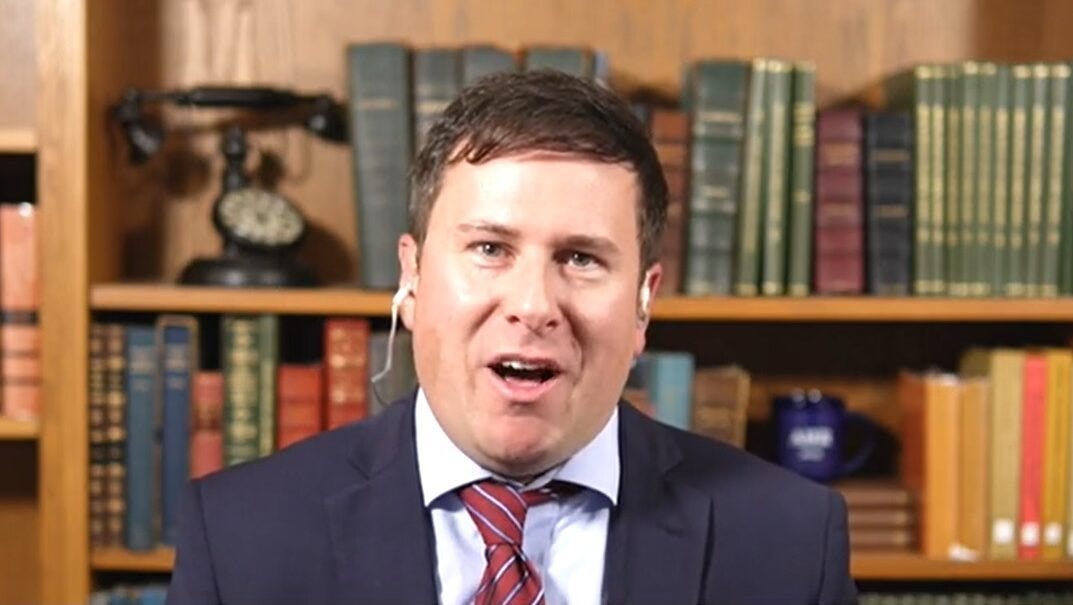
Phillip W. Magness is a senior fellow at the Independent Institute and the David J. Theroux Chair in Political Economy. He is also a FreeCon signatory.
A former senior research fellow at the American Institute for Economic Research, Magness served as academic program director at the Institute for Humane Studies and adjunct professor of public policy at George Mason University.
His books include The 1619 Project: A Critique, Colonization after Emancipation: Lincoln and the Movement for Black Resettlement, The Rules of the Game: How Government Works and Why it Sometimes Doesn’t, and Cracks in the Ivory Tower: The Moral Mess of Higher Education.
In a recent essay for The Argument, Magness called Notre Dame professor Patrick Deneen’s anti-market arguments little more than “bumbling aesthetic grievances, offered from a perch that neither understood economics at a basic level nor showed any interest in investigating it beyond the list of caricatures he had settled upon.”
Despite operating “well out of their depth” on such matters, Magness continued, Deneen and his allies “write as if they have exposed some devastating truth about the discipline — if only someone would listen.
“The situation is akin to the astrologer who chastises NASA for ignoring horoscope advice in advance of space launches, while also promising to lead the space agency’s course to Mars if only their fellow astrologers could be given a seat at the rocket scientists’ table.”
Forfeiting authority
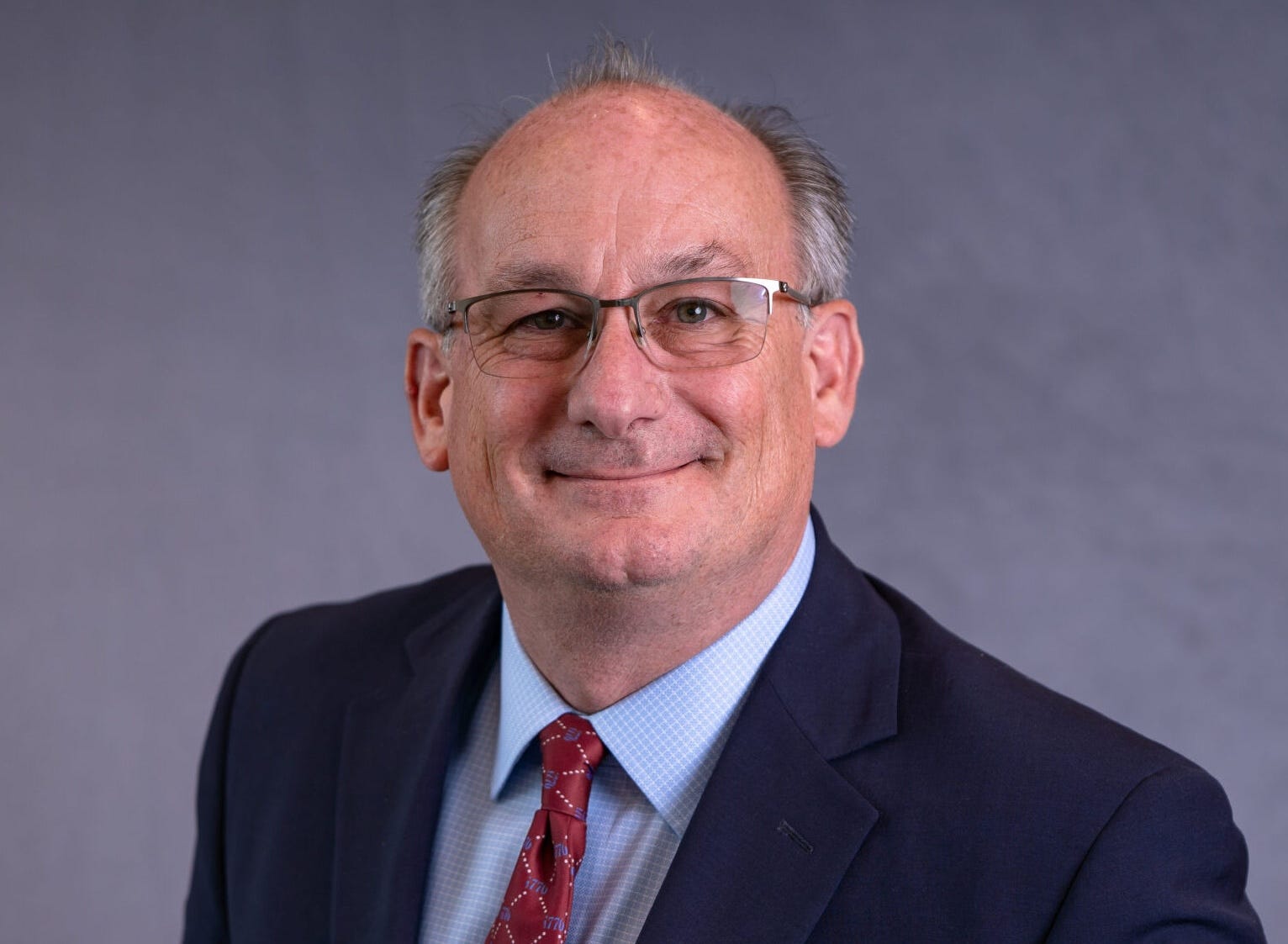
Greg Schaller is director of the Centennial Institute, a public policy think tank at Colorado Christian University. He is also a FreeCon signatory.
Schaller is past president of the John Jay Institute, a graduate fellowship program focused on preparing principled leaders for faith-informed public service, and previously taught at Villanova University and St. Joseph’s University.
In a recent piece for the Washington Examiner, he observed that American conservatism needs remembrance, not reinvention.
“Across the political spectrum today,” Schaller wrote, “support for policies is too often driven by partisan loyalty or personal allegiance rather than principled reasoning. This failure is especially damaging for conservatives because conservatism has historically defined itself by its commitment to enduring truths rather than transient passions.”
When politicians and activists on the populist Right “endorse national economic management, industrial policy, and sweeping protectionism,” he continued, “they are not merely adjusting tactics; they are abandoning first principles.
“In doing so, they forfeit the moral and intellectual authority to critique the progressive Left for pursuing the very same approaches. Selective principle is no principle at all.”
Reagan‘s city still shines
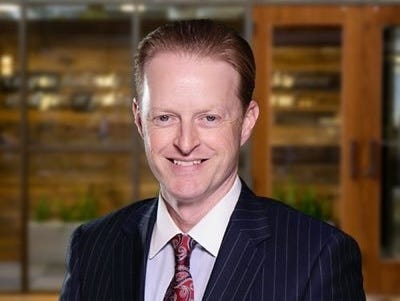
Lathan Watts is vice president of public affairs at Alliance Defending Freedom. He is also a FreeCon signatory.
Watts previously spent nearly 20 years in various roles within the political, public policy, and non-profit sectors, including campaign and staff positions for U.S. Rep. Jeb Hensarling, U.S. Sen. John Cornyn, and Texas Governor Rick Perry.
In a recent column for Townhall, he commemorated the 115th birthday of Ronald Reagan and proclaimed that the former president’s “shining city on a hill” is still shining.
As people of all faiths can agree, Watts wrote, the right of conscience — to live and speak truth — must always be vigilantly guarded. He quoted Reagan’s admonition that “freedom is never more than one generation away from extinction.”
After describing some of Alliance Defending Freedom’s recent cases, Watts argued that the courage of its clients “emboldens others to bravely take a stand, there is hope that freedom will be secured for yet another generation.
“And whether they realize it or not, these ordinary Americans of extraordinary perseverance are winning one more for the Gipper.”
Rule of law
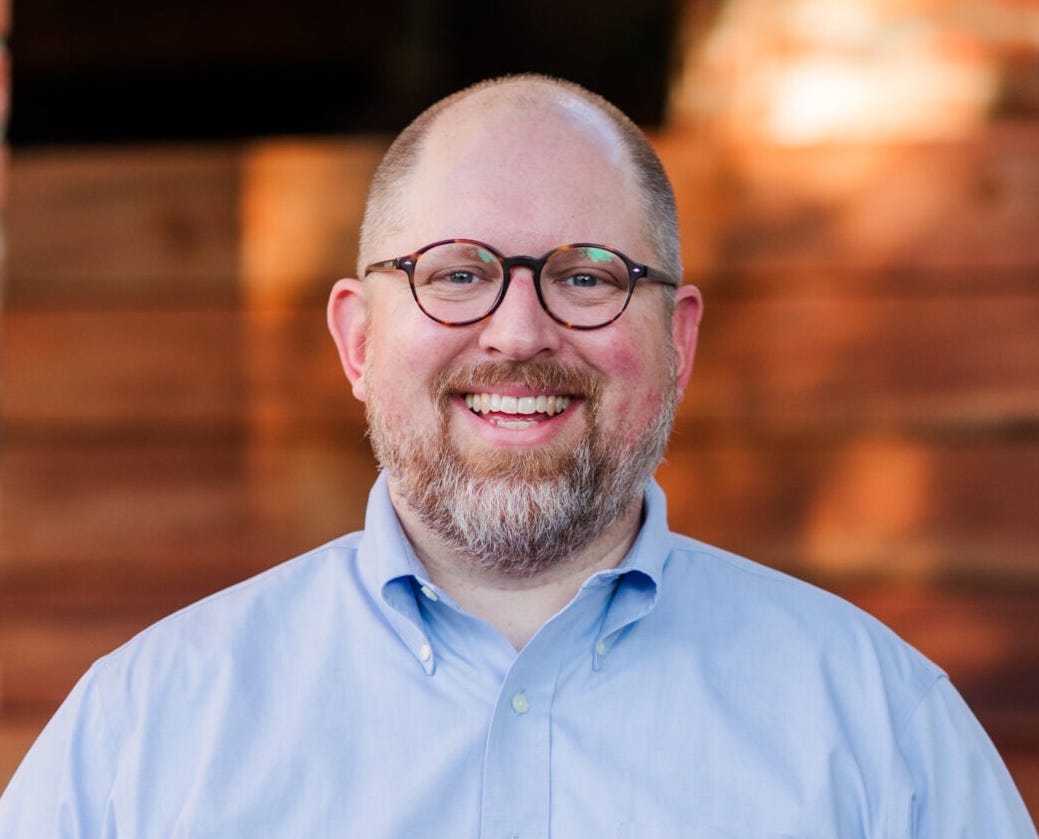
Allen Fuller is president of the Henry Knox Institute, which promotes proven solutions to reignite the American Dream and restore freedom and opportunity as hallmarks of our society. He is also a FreeCon signatory.
A digital communications consultant with experience in political campaigns and on Capitol Hill, Fuller is a graduate of the University of Alabama and the Leadership Program of the Rockies.
In a recent piece for the Detroit News, he argued that outbreaks of political violence in Minneapolis and other American cities represent a diminishing respect for the rule of law.
While often misunderstood as a cold or inflexible concept, the rule of law is actually a “framework that allows diverse people to live together peacefully despite deep disagreements,” he wrote. “It ensures that power is constrained, that disputes are resolved through institutions rather than force, and that accountability is applied consistently ― regardless of ideology, status or political alignment.”
The best path forward, Fuller continued, “is neither mysterious nor radical. It requires independent, transparent investigations into the use of deadly force.
“It requires clear boundaries for protest that protect free expression while rejecting intimidation and obstruction. It requires restraint from public officials whose words can either calm or inflame already tense situations. And it requires the humility to allow institutions ― courts, inspectors general and juries ― to do their work.”
In the mix
• At The Washington Post, FreeCon signatory George Will predicted that the rapid rise of federal indebtedness, if left unchecked, will produce a series of financial and political crises.
“‘Dystopian’ is the antonym of ‘utopian,’” wrote Will, whose recent books include The Conservative Sensibility and American Happiness and Discontents: The Unruly Torrent.
“‘Utopia’ was derived from Greek roots to denote something imaginary — ‘nowhere.’ The dystopian consequences of U.S. debt could someday be everywhere.”
• At Civitas Outlook, FreeCon signatory Michael Munger argued that the regulatory agenda of populist-Right activist Oren Cass is precisely the wrong policy response to Wall Street‘s excesses.
Cass advocates transaction taxes, changes to bankruptcy priority rules, ceilings on executive compensation, and a ban on buybacks.
“Such an approach assumes a regulator standing outside the industry, neutrally constraining it,” wrote Munger, a professor of political science and economics at Duke University. “But the post-2008 experience points uncomfortably in the opposite direction: Congress and the agencies were thickly lobbied throughout the Dodd-Frank legislative and rulemaking process, with predictable advantages for incumbent firms that can afford influence and compliance at scale.”
In another recent piece, published in The University Bookman, Munger reviewed a new book from John O. McGinnis entitled Why Democracy Needs the Rich.
“The book’s ultimate claim is not that the rich are virtuous,” he wrote, “but that a democracy hostile to wealth will not become more equal — it will become more centralized, more bureaucratic, and less free.
“In that sense, McGinnis’s argument is less a defense of inequality than a defense of constitutional humility.”
• In a post on the Foundation for Research on Equal Opportunity Substack, FREOPP president Akash Chougule explained that the American Dream is more than a paycheck, so restoring it will take more than transfers of cash.
“The country’s falling optimism and growing loneliness are two sides of the same problem,” wrote Chougule, one of the leaders of the FreeCon project. “When people feel disconnected — when they lack close friends, stable family ties, or civic anchors — they are more likely to struggle economically, to suffer worse health, and to withdraw from institutions that sustain community life and add happiness.
“Two-parent families, more stable marriages, and vibrant civic institutions are not mere moral posturing; they are engines of prosperity and fulfillment. They provide supervision, social capital, and networks that connect young people to mentors, employers, and civic life.
“Strengthening these institutions — culturally and through policies that remove barriers to family stability and encourage local community engagement — should be central to any serious agenda for opportunity.”