
As Freedom Conservatives and our nationalist-populist rivals compete to offer a compelling vision for a 21st-century American Right, we should not make the mistake of assuming our philosophical differences are new, our political rupture sudden, or that our contest depends on the success or failure of any particular politician or program.
FreeCon signatory Richard M. Reinsch II, editor of Civitas Outlook and founding editor of Law & Liberty, pointed out in a recent piece for Commentary that the American Right has gone through similar conflicts before.
Consider what happened during the administration of Richard Nixon, who won the election of 1968 with a blend of conservative and populist messages, then lurched leftward on economic and social policy before resigning under the cloud of Watergate.
What came next was neither a continuation of Nixonian policies nor a permanent pro-Democratic realignment but rather a newly energized conservatism that championed economic opportunity and self-government.
What the Reagan-era conservative movement “brought to the forefront after the Nixon and Ford presidencies,” Reinsch wrote, “was the belief that core principles had to be front and center if the Right was to achieve its aims.”
“This was necessary not only to speak honestly to voters; it also allowed politicians and the movement to offer new answers and solutions to problems in American life and governance — both of which seemed to have gone off the rails.”
Freedom Conservatives aren’t expecting a precise replay of the politics of the 1970s. But we do believe that the next four years — encompassing two midterm elections, a presidential election, and multiple congressional and legislative sessions — will come to be seen as another “hinge point” (Reinsch‘s term) in the history of our nation.
Will it be a period of rejuvenation, resurgence, and effective conservative governance? Or will American politics devolve into a nasty war between the progressive Left and populist Right, with neither offering constructive solutions to our country‘s biggest problems?
Today we feature the work of FreeCons seeking to bring out the first outcome to fruition.
Powerful coalition

Paul Mueller is a senior research fellow at the American Institute for Economic Research, host of “The Economist Next Door” podcast, and a FreeCon signatory.
A research fellow and associate director of the Religious Liberty in the States project at the Center for Culture, Religion, and Democracy, Mueller has contributed academic papers to such journals as The Journal of Economic Behavior and Organization, The Journal of Private Enterprise, and The Quarterly Journal of Austrian Economics.
He has also written articles for USA Today, Fox News, The Intercollegiate Review, and Religion and Liberty, among other outlets, and is the author of Ten Years Later: Why the Conventional Wisdom about the 2008 Financial Crisis is Still Wrong (2018).
In a recent AIER paper, Mueller explored the past, present, and future of fusionism as a unifying theme for the American Right.
The fusionist project of reconciling liberty and virtue “not only in a political coalition, but in a philosophical one” is “not unlike efforts towards ecumenism among Christian denominations,” Mueller argued.
“Although there are distinctions between Baptists, Presbyterians, and Anglicans, for example, they share a great deal of theology. And what they share is often more important than their disagreements. So too, fusionists would say, with most conservatives and libertarians.”
A “reinvigorated” fusionism — emphasizing “limited government, free enterprise, and a transcendent moral order” — may “offer the best hope at reconciling a broad array of communities and values to live peacefully together,” Mueller concluded.
“It also serves as a bulwark against authoritarian tendencies. A new fusionism might also form a powerful coalition to counter the radical collectivist bent in academia and on the political left more broadly.”
Friendly fusion
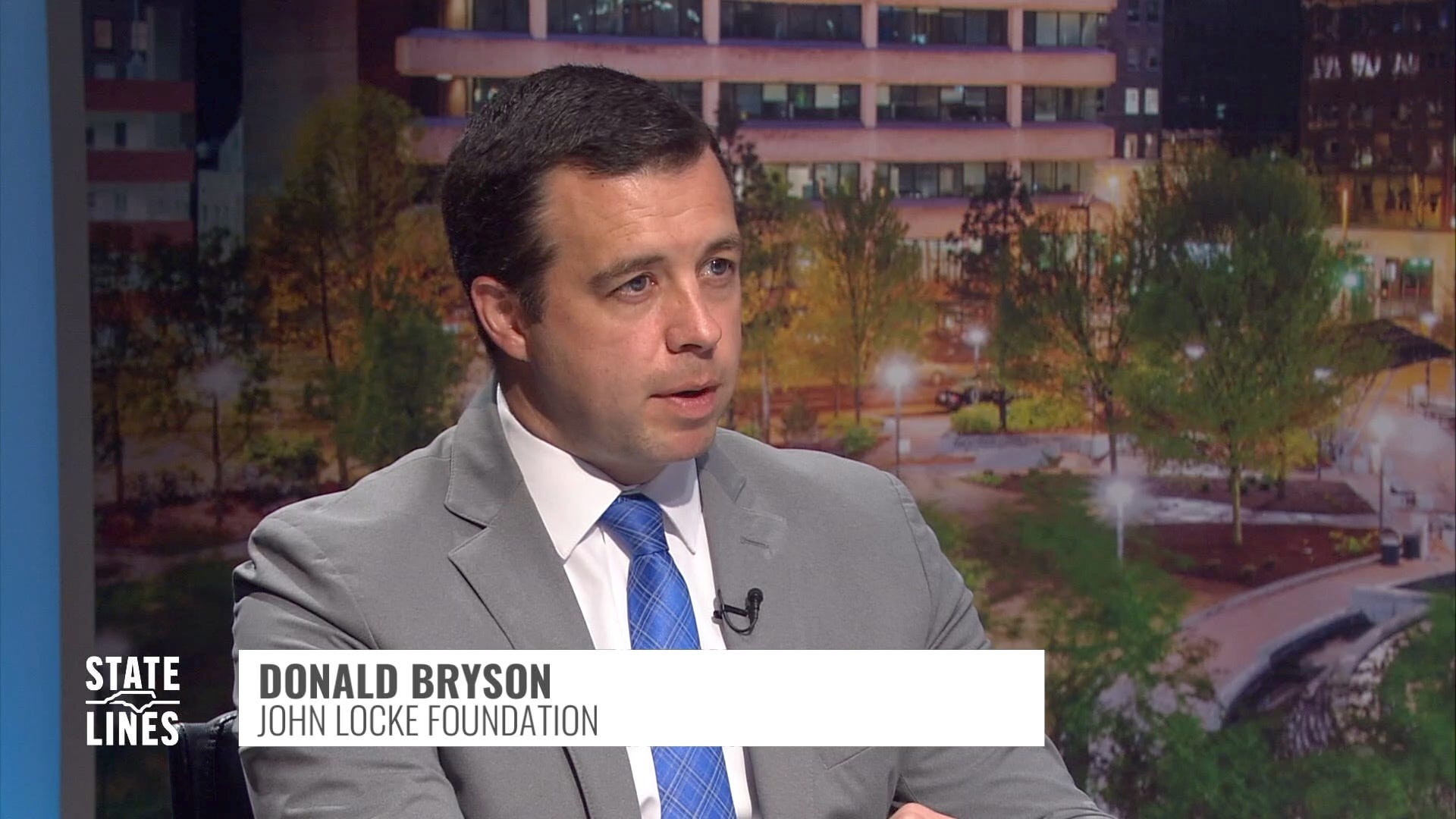
Donald Bryson is president and CEO of the John Locke Foundation, a North Carolina-based think tank. He’s also a FreeCon signatory.
Bryson previously served as the North Carolina State Director for Americans for Prosperity and is a member of the American Enterprise Institute’s Leadership Network. He has written for National Review, the Wall Street Journal, Investor’s Business Daily, and FoxNews.com, among other outlets.
In a recent essay, Bryson observed that “the American Right’s current fractures are not merely ideological — they reflect a breakdown in ‘political friendship,’ the shared understanding of what is just and advantageous that once unified the conservative coalition.”
Citing Aristotle’s discussion of friendship in the Nicomachean Ethics, he argued that political movements do not hold together through power alone.
“For much of the postwar era, American conservatism was held together by fusionism,” Bryson wrote, which was “not a philosophical synthesis so much as a moral and political settlement. It presupposed that liberty and virtue were mutually reinforcing and that political power must be constrained by constitutional form even when deployed for morally serious ends.”
The current divide within the American Right came about “not simply because conservatives disagree about policy or priorities,” he continued, “but because the once-sacred agreement to resist centralized power has eroded. Increasingly, the political vehicles of the Right and the Left differ less in kind than in degree — each tempted, and at times eager, to use the coercive power of the state to secure its preferred ends.”
Inept defense
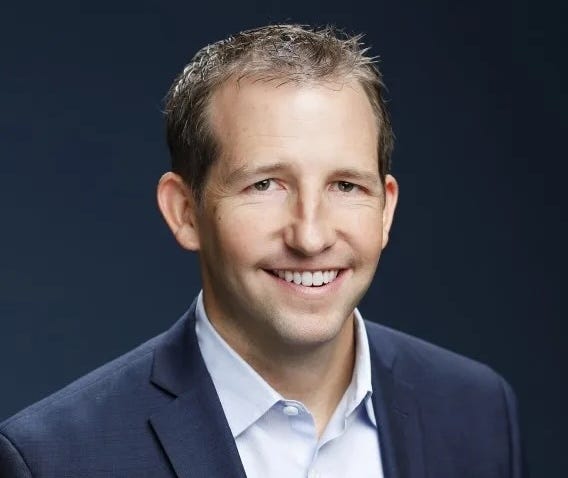
Matthew Mitchell is a senior fellow in the Centre for Human Freedom at the Fraser Institute. He is also a FreeCon signatory.
Prior to joining Fraser Institute, Mitchell was a senior fellow at the Mercatus Center at George Mason University, where he remains an affiliated scholar.
He has testified before the U.S. Congress and advised federal, state, and local government policymakers on both fiscal and regulatory policy. Mitchell’s research has been featured in numerous media outlets, including The New York Times, The Wall Street Journal, The Washington Post, and National Public Radio.
In a recent article for The Dispatch, he described Donald Trump’s response to losing his tariff case at the U.S. Supreme Court — which was simply to propose other questionable legal authority for stiff import taxes — and its likely consequences.
Mitchell observed that “two centuries of trade research have shown Adam Smith to have been correct when he declared, ‘Nothing, however, can be more absurd than this whole doctrine of the balance of trade.’ Trump has evidently weighed this research and rejected it. And he’s already shown that he’s not inclined to wait for Congress to delegate tariff powers to him.”
When Republicans on Capitol Hill and elsewhere reflexively defend President Trump’s usurpation of legislative power, after condemning similar behavior by Democratic presidents, they destroy their credibility and weaken our institutions.
“The system works only if we take the Constitution and our commitment to republican government seriously,” Mitchell wrote. “The Constitution is not, as progressives in the Wilsonian mold assert, an antiquated document. Nor is it, as some Republicans seem to think, a prop.
“We may yet keep our republic if we can resist the urge to get cute.”
Where does it end?
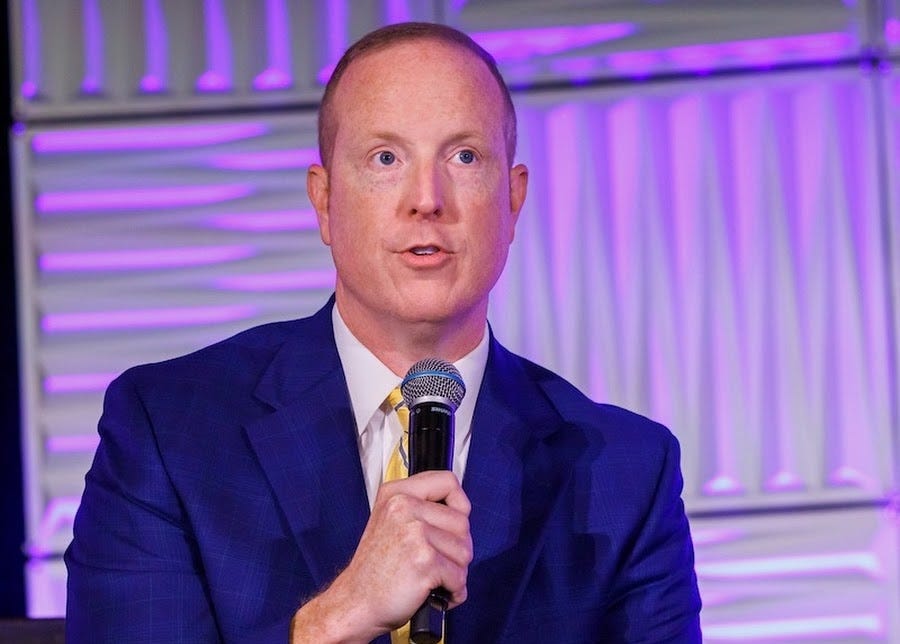
Vance Ginn is an economic consultant, staff economist at Americans for Tax Reform, and a FreeCon signatory.
A White House associate director for economic policy during the first Trump administration, Ginn hosts the Let People Prosper Show and supplies economic analysis for such organizations as the American Energy Institute, the Club for Growth Foundation, NetChoice, and a number of state-based think tanks.
Interviewed in a recent New York Times story about the second Trump administration’s policy miscues on trade and industrial policy, Ginn advocated an end to government equity stakes in private companies and a return to sound economic principles.
“When companies are more dependent on the government, on taxpayer money fueling them, they’re less interested in the profit and loss motive,” he said. “That doesn’t work well throughout history.”
And “when you start picking winners and losers like this, it’s like, where does it end?” Ginn added. “We’re far away from capitalism in my view.”
In the mix
• At National Review, FreeCon signatory Noah Rothman described a recent “shot across the bow” of the Democratic Party by a consortium of left-wing groups called the Black Opposition Project.
In response to “young black men” not taking “steps to resist President Donald Trump at the same levels they did in 2020,” the organization demanded that Democrats adopt a more strident “message of both economic and racial justice.”
“To summarize,“ wrote Rothman, “the Democratic Party should not hammer Trump relentlessly with criticisms of his record on economics, which polling indicates is almost every voter’s foremost concern and Trump’s biggest political vulnerability. Rather, it should mute the economic message and emphasize the very ‘racial justice’ themes that had become a millstone around the Democratic Party’s neck by 2024.”
• At The Hill, FreeCon signatory Alex Salter argued that the Federal Reserve was never set up to address the “affordability crisis” in housing, health care and education.
“High prices in these areas are the result of non-monetary policy choices that restrict supply, subsidize demand, or both,” wrote Salter, a research fellow at the Independent Institute and economics professor at Texas Tech University. “Treating them as monetary problems invites a response that is ineffective at best and counterproductive at worst.”
“A free-market approach, which is the only kind that will work,” he continued, “starts from a different premise: Affordability comes from supply, competition and price discovery, not from suppressing demand.”
• At City Journal, FreeCon signatory Neetu Arnold discussed the risk that artificial intelligence poses to the educational progress and proposed a solution: more in-class testing.
“If AI cheating continues to rise, we can expect to see further declines in math and reading skills as students offload thinking to automated tools,” wrote Arnold, a Paulson Policy Analyst at the Manhattan Institute and Young Voices Contributor.
“To combat this, schools need to approach in-person assessment more seriously. This could involve offering smaller, more frequent tests, fewer but larger ones with heavier weighting on final grades, or weighing in-person assignments more than homework.
“Students might still use generative AI to complete homework or other assignments, but their grades on in-person tests or classwork would suffer as a result. The key is to ensure that stakes are attached to graded work.”