
Freedom Conservatives believe our movement should be defined by what we are for, not merely what we are against.
When we announced our project two and a half years ago, it was in the form of a FreeCon Statement of Principles initially signed by 83 leaders. “To ensure that America’s best days are ahead,” we wrote, American conservatives must “apply the timeless principles of liberty to the challenges of the 21st century.”
Today, our signatory list is approaching 400 names, representing a broad range of disciplines, careers, and expertise. FreeCons work at every level of government, in boardrooms and courts, on campuses and editorial boards, and with elected officials, policy professionals, donors, students, and grassroots activists.
While our respective roles in the movement differ, we share an ambitious agenda of reform and renewal even as we disagree on some matters of policy design and timing.
FreeCons believe in free enterprise, free trade, free speech, strong families, balanced budgets, and the rule of law. We champion equal protection and equal opportunity. We think Washington has too much power and our states, communities, private associations, and household have too little. We believe Americans are safest and freest in a peaceful world that is led by a United States committed to pursuing its just interests.
It is true, however, that we don’t focus solely on our own agenda. FreeCons have rivals on both the populist Right and progressive Left — and we aren’t shy about challenging their bad ideas, rebutting their false claims, and highlighting the harms their policies produce.
Today, we feature signatories who think deeply about the future of the American Right and work diligently to shape it along the lines of Freedom Conservatism.
Reason and revelation
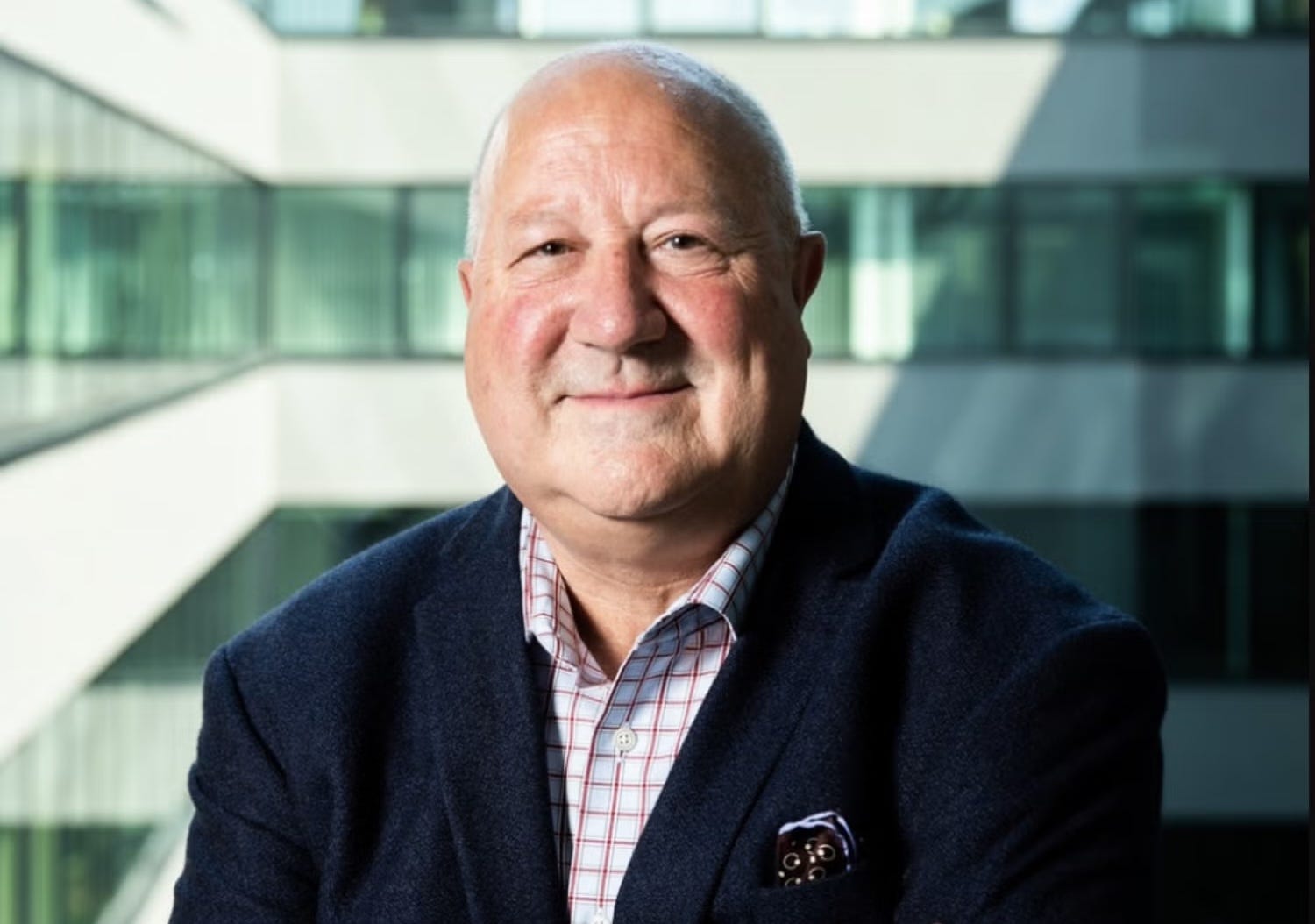
Steve Hayward is a visiting professor at Pepperdine University’s School of Public Policy, and writes the Political Questions Substack. He‘s also a FreeCon signatory.
Hayward’s books include The Age of Reagan: The Fall of the Old Liberal Order, 1964-1980 and The Age of Reagan: The Conservative Counter-Revolution, 1980-1989, as well as works on environmental policy, Straussian political science, Winston Churchill, and M. Stanton Evans.
In a recent essay for Civitas Outlook, he explored the history of fusionism on the American Right and, more broadly, the adaptation of conservatism to changing circumstances.
“To suggest that conservatism changes in necessary reaction to new and more precarious circumstances is not to say it is reactionary,” Hayward wrote. “What changes is the ordering of the hierarchy of core conservative principles and the vocabulary of argument in new circumstances. But whatever the issue map or the rhetorical needs of the moment, at its heart, conservatism is above all dedicated to defending Western Civilization itself against its enemies.”
“The tension between reason and revelation — between Athens and Jerusalem — that has been a part of the West’s vitality for two millennia has been overtaken by the Left’s assault on both traditions. What those two rival traditions have in common now looms more important than what has divided them, which may, oddly enough, be a cause for optimism.”
Part of the problem
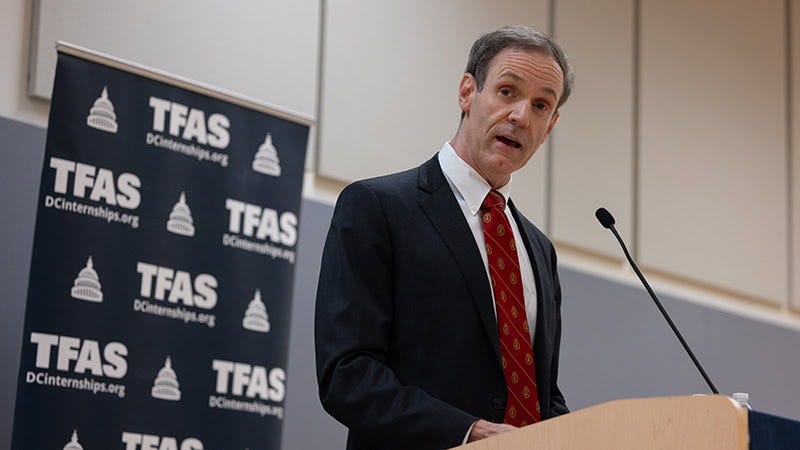
Samuel Gregg is president and Friedrich Hayek Chair in Economics and Economic History at the American Institute for Economic Research. He is also a FreeCon signatory.
The author of 17 books and more than 700 essays, Gregg is an affiliate scholar at the Acton Institute and the recipient of a Bradley Prize for his work to restore, strengthen, and protect the principles and institutions of American exceptionalism.
In a recent Law & Liberty piece, he reviewed Philip Pilkington’s The Collapse of Liberalism and described the “despair” exhibited by many on the populist Right and Left.
Pilkington’s willingness to provide some details of what a postliberal future might look like “is to be commended,” Gregg wrote. “But this should not distract us from the fact that his postliberal world would be less free, substantially poorer, riddled with the cronyism that unavoidably accompanies measures like industrial policy, and less committed to the rule of law.”
Postliberalism exhibits “unconvincing accounts of the history of ideas, dubious economic arguments, suspect cause-and-effect claims, and tendencies to ignore or demagogue anyone who questions the postliberal agenda’s underlying coherence,” he continued.
“These features also cripple postliberals’ capacity to accurately diagnose — let alone resolve — the very real social, cultural, and economic challenges we face. Indeed, they further accelerate the decline that postliberals lament. Postliberalism, it turns out, is not a solution. It is, in fact, part of our problem.”
Nationalist contradictions
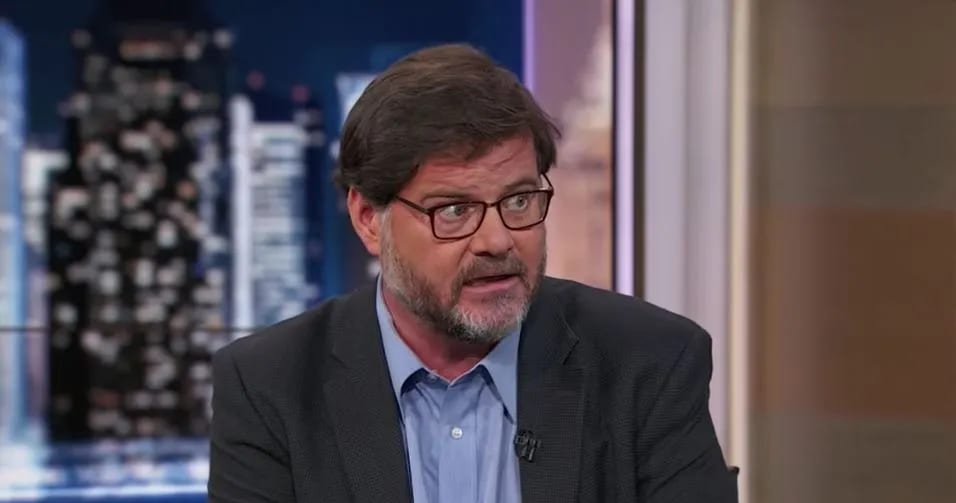
Jonah Goldberg is editor-in-chief of the Dispatch and a CNN contributor. He is also a FreeCon signatory.
Goldberg holds the Asness Chair in Applied Liberty at the American Enterprise Institute. The author of such books as Liberal Fascism and Suicide of the West, Goldberg has written a syndicated column since 2000 and a Los Angeles Times column since 2005.
In a recent Dispatch piece, he pointed out that the reaction of National Conservatives to controversies about Greenland, Canada, and Greenland demonstrates the limits of “a nationalism that has no respect for actual nations.”
“Whether, where, and how America should intervene is an entirely legitimate and difficult question, the answer to which depends on all manner of specifics,” Goldberg wrote. “But if you’re an intellectual who claims to want to live in some postliberal global order of sovereign and independent states, I can’t take you very seriously if you don’t condemn actual violent violations of these principles while spending all of your time pounding the table about how the World Health Organization or the EU is an existential threat to them.”
The Trump administration has “beclowned intellectual nationalism,” he concluded, “because it demonstrates that in a world where America only thinks about itself, transnational alliances that harm America’s interests become more attractive even as America becomes uglier.
“When America ceases to think of itself as the good guy, it gives bad guys more room to maneuver.”
Cheap and tawdry thrills
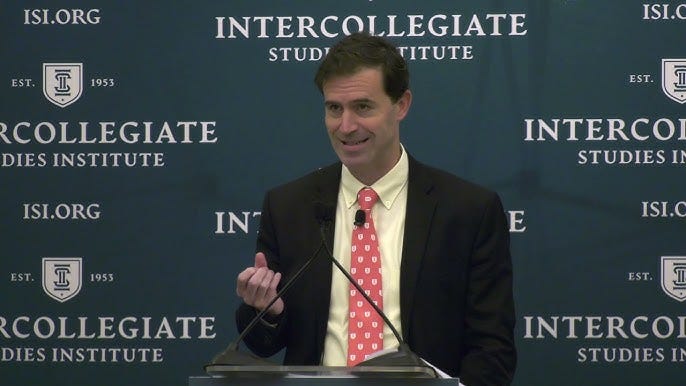
Richard Reinsch is editor-in-chief of Civitas Outlook, published by the Civitas Institute at the University of Texas in Austin. He is also a FreeCon signatory.
The founding editor of the online magazine Law & Liberty, Reinsch previously served as editor-in-chief and director of publications at the American Institute for Economic Research and as director of the B. Kenneth Simon Center for American Studies at the Heritage Foundation.
In a recent essay for FUSION magazine, he discussed possible futures for post-Trump conservatism in America. “Any serious study of populist movements,” he wrote, will conclude “that they tend to rise and fall with the personalities of their leaders.”
Conservatism in America “is more akin to a church than a sect,” Reinsch continued. “A church comprises members who hold related but unfolding understandings, that is, a gradual comprehension over time and experience of the revelation it believes it has received. Different theological schools come to appreciate others without fully grasping their knowledge or seeking to expunge what they do not know.”
The “cheap and tawdry thrills provided by characters like Tucker Carlson and Nick Fuentes” are inconsistent with this conception of healthy American conservatism, he argued.
“Their hatred and tribalism break not only with decency and goodness, but with the principles of citizenship. To be a church and not a sect, conservatism must rebuild a society of goodwill, freedom, and responsibility, one that will allow Americans to pursue happiness untrammeled by arbitrary authority. But to do that will also require that our own house is in order.
“We have a rich history to draw from in righting our ship — and America’s.”
In the mix
• At The Wall Street Journal, FreeCon signatory Jack Butler observed that the Trump administration hasn’t “drained the swamp” in the nation’s capital.
“Thirteen of the 20 largest lobbying firms enjoyed revenue growth of 10% or more in 2025,” wrote Butler, deputy editor of the Journal’s new Free Expression newsletter.
“The biggest beneficiaries were well-connected firms. Ballard Partners, where Attorney General Pam Bondi and White House chief of staff Susie Wiles both once worked, earned more in one quarter of 2025 than it had in all of 2024.”
“Accepting the trappings of comfortably corrupt life in D.C. necessarily rules out the possibility of restoring a limited, constitutional government,” he concluded. “It’s also bad politics. The last time Republicans got too swampy, during George W. Bush’s presidency, it precipitated their devastating midterm wipeout in 2006.”
• In a recent column published in the Lubbock Avalanche-Journal, Front Porch Politics, and other outlets, FreeCon signatory Alex Salter argued that “very online candidates” are “quickly overpopulating the public square, apparently lacking a natural predator.”
“Politics is not a lifestyle brand, and governing is not performance art,” wrote Salter, professor at Texas Tech University and a researcher at its Free Market Institute. “Very Online Candidates offer the illusion of participation without the substance of leadership.”
“Voters should demand better — not because seriousness is fashionable, but because the work of governing real people in the real world requires it.”
• At The Public Discourse, FreeCon signatory Kevin Kosar explained how Congress has lost its way and offered proposals for restoring the legislative branch’s proper role across a broad swath of policymaking.
“There is the Toxic Congress filled with raging partisans who trash-talk one another, reflexively support or oppose whomever is president, and cannot pass policy on major issues, like immigration,” wrote Kosar, a senior fellow at the American Enterprise Institute.
“Then there is the Secret Congress of lawmakers who move myriad bills and gently curb the executive branch’s errors and excesses. It is little noticed by the public and undercovered by the media.”
“Our national legislature’s split into a functional Secret Congress and a dysfunctional Toxic Congress is a recent development in our political history and a deviation from the norm,” he concluded. “It does not have to be this way. Congress can reform itself. Article I of the U.S. Constitution gives our national legislature near-plenary authority to organize itself, design its workflows, and fund its operations.”