
With Election Day still weeks away, we cannot say for sure what American voters will do in the 2026 midterms. Dozens of key federal, state, and local races remain too close to call. Still, Democrats appear likely to take the U.S. House as well as several state governorships and legislative chambers. Republican control of the U.S. Senate is also endangered.
Among the hundreds of signatories to the Freedom Conservatism Statement of Principles are campaign professionals, political activists, and former elected officials — including mayors, school-board members, state and federal lawmakers, governors, and even a former vice president. Most have a rooting interest in partisan politics. Some remain personally involved in campaigns.
But the FreeCon project itself is nonpartisan. Our goals extend far beyond one election cycle or the fate of any particular candidate.
We believe that unless there is a healthy, vibrant American Right committed to individual liberty, federalism, free enterprise, free speech, free trade, civic virtue, equal opportunity, and the rule of law, any hard-won electoral victories will prove fleeting. And if our movement tolerates cranks, bigots, and other reactionaries, fewer such victories will occur in the first place.
Unless conservatives offer real solutions to the problems voters care about most — such as affordability, fiscal responsibility, family formation, and broad access to the American Dream — voters will seek them elsewhere. That voters are destined to be disappointed by populists, progressives, and socialists is true but beside the point. You can’t beat something with nothing.
And American greatness is impossible without American freedom.
That will be one of the themes explored at three post-election events in battleground states: FreeCon Phoenix on November 16, FreeCon Philadelphia on November 17, and FreeCon Raleigh on November 18. At each summit, FreeCon signatories and allies will discuss the lessons of the midterms, the challenges and opportunities we will face in 2027 and beyond, and how a rejuvenated American Right can meet those challenges and seize those opportunities.
Please join us! More details follow.
FreeCon Phoenix
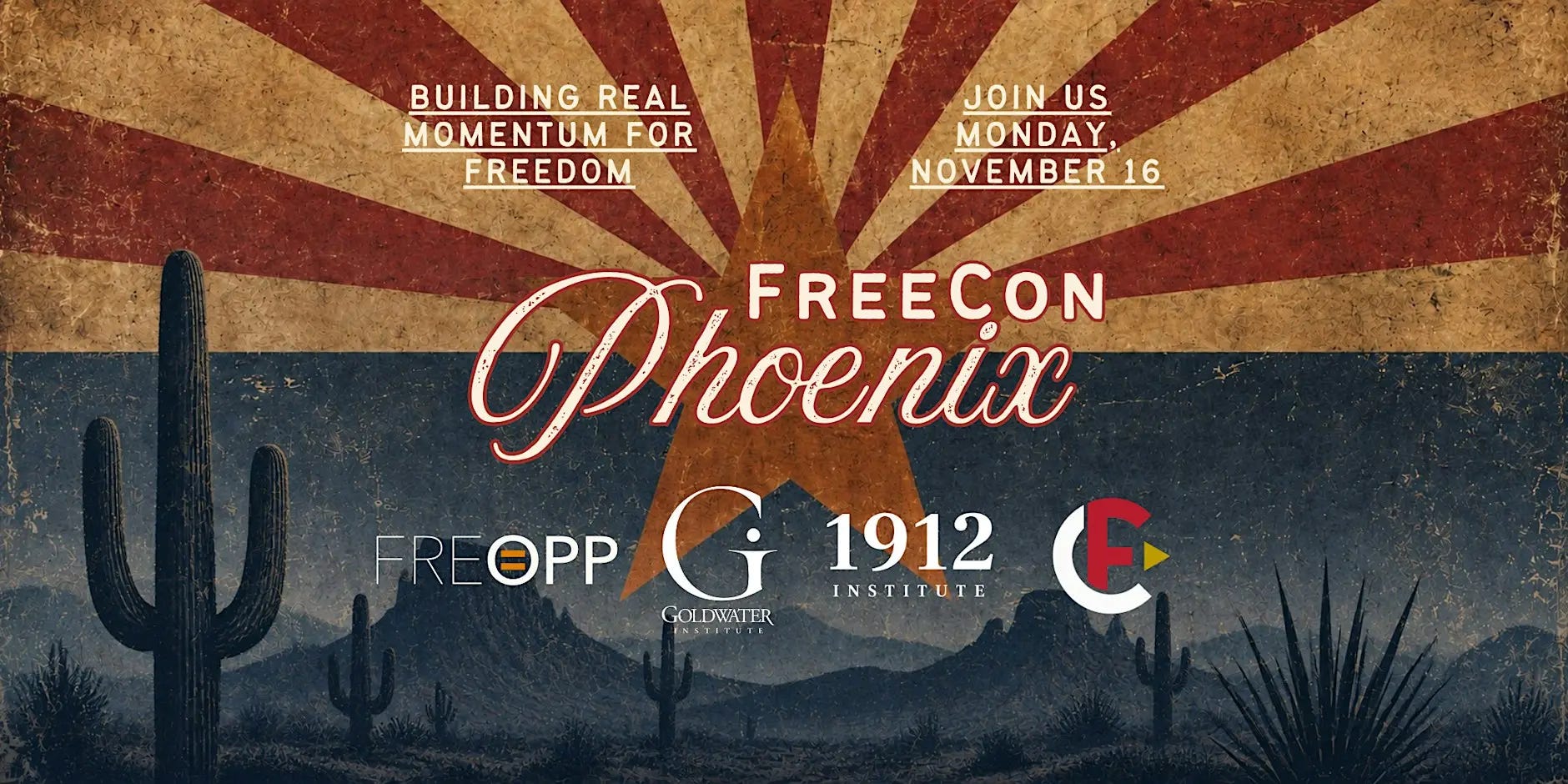
The Goldwater Institute, the 1912 Institute, and other partners will host FreeCon Phoenix on Monday, November 16 from 8am to 5pm at the Westin Phoenix Downtown. Clint Bolick, justice on the Arizona Supreme Court and co-founder of the Institute for Justice, will deliver the keynote address.
Other speakers include Victor Riches, Christina Sandefur, Timothy Sandefur, Matt Beienburg, Jon Riches, and Jenna Bentley from the Goldwater Institute as well as Rebecca Painter (The Policy Circle), Joe Pitts (1912 Institute), Danny Seiden (Arizona Chamber of Commerce & Industry), Jason Huang (Abundance Law Society at Arizona State), Jackson Moll (Home Builders Association of Central Arizona), Tessa Dysart (University of Arizona), Jenny Clark (Love Your School), Jason Bedrick (Heritage Foundation), and Betsy Sanz (Institute for Justice).
Click here to find out more about FreeCon Phoenix and RSVP for the November 16 event.
FreeCon Philadelphia
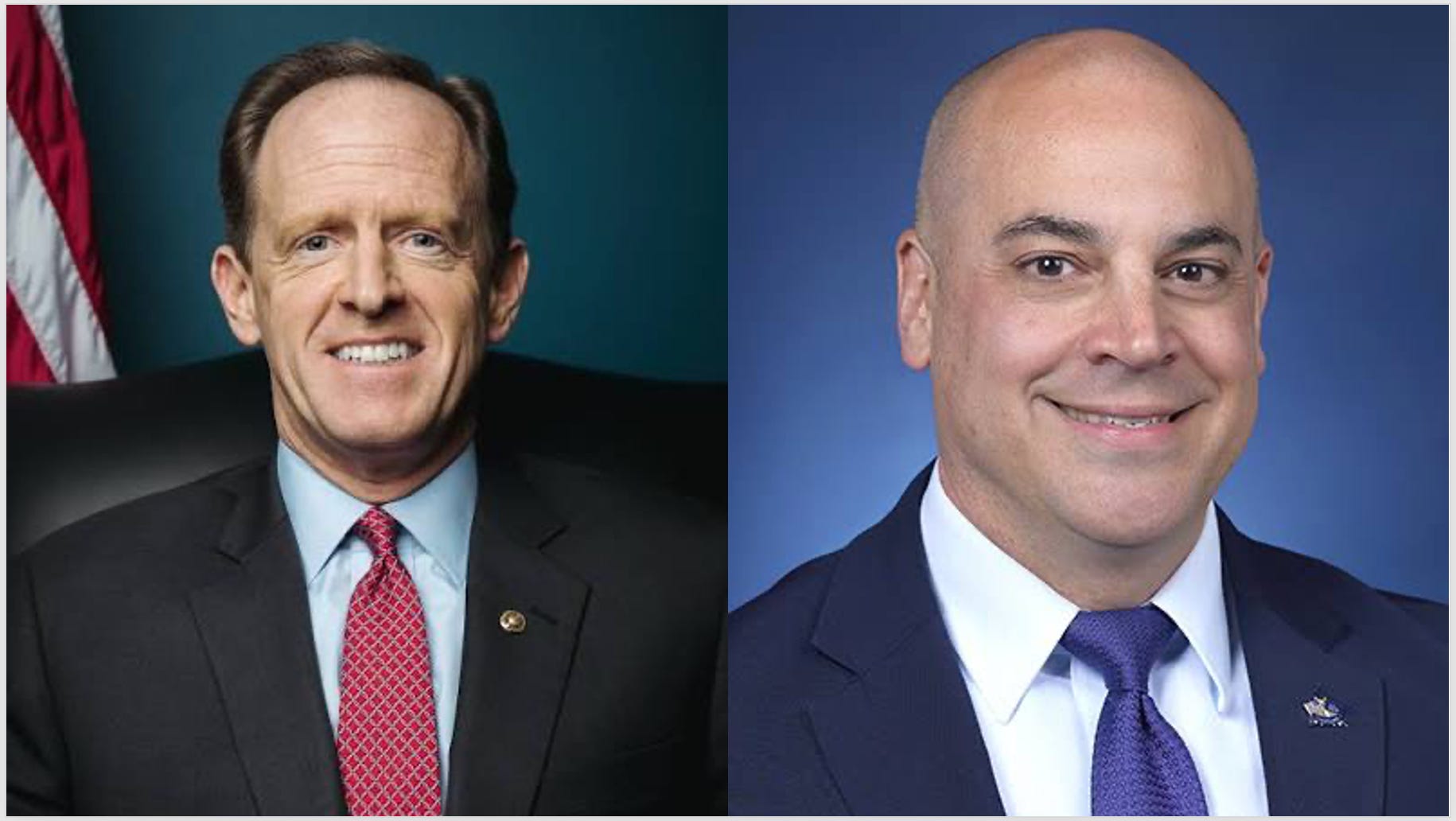
The National Review Institute, the Commonwealth Foundation, and other partners will host FreeCon Philadelphia on Tuesday, November 17 from 3pm to 7pm. Former U.S. Sen Pat Toomey and Pennsylvania Attorney General Dave Sunday will deliver remarks at the event, which will be held at at the Union League in Philadelphia.
Other speakers include Rich Lowry, John Puri, and Andrew Stuttaford from National Review as well as Andrew Lewis from the Commonwealth Foundation, Emily Brey from Americans for Prosperity, and Caleb Fuller from Pennsylvania’s Grove City College.
Click here to find out more about FreeCon Philadelphia and RSVP for the November 17 event.
FreeCon Raleigh
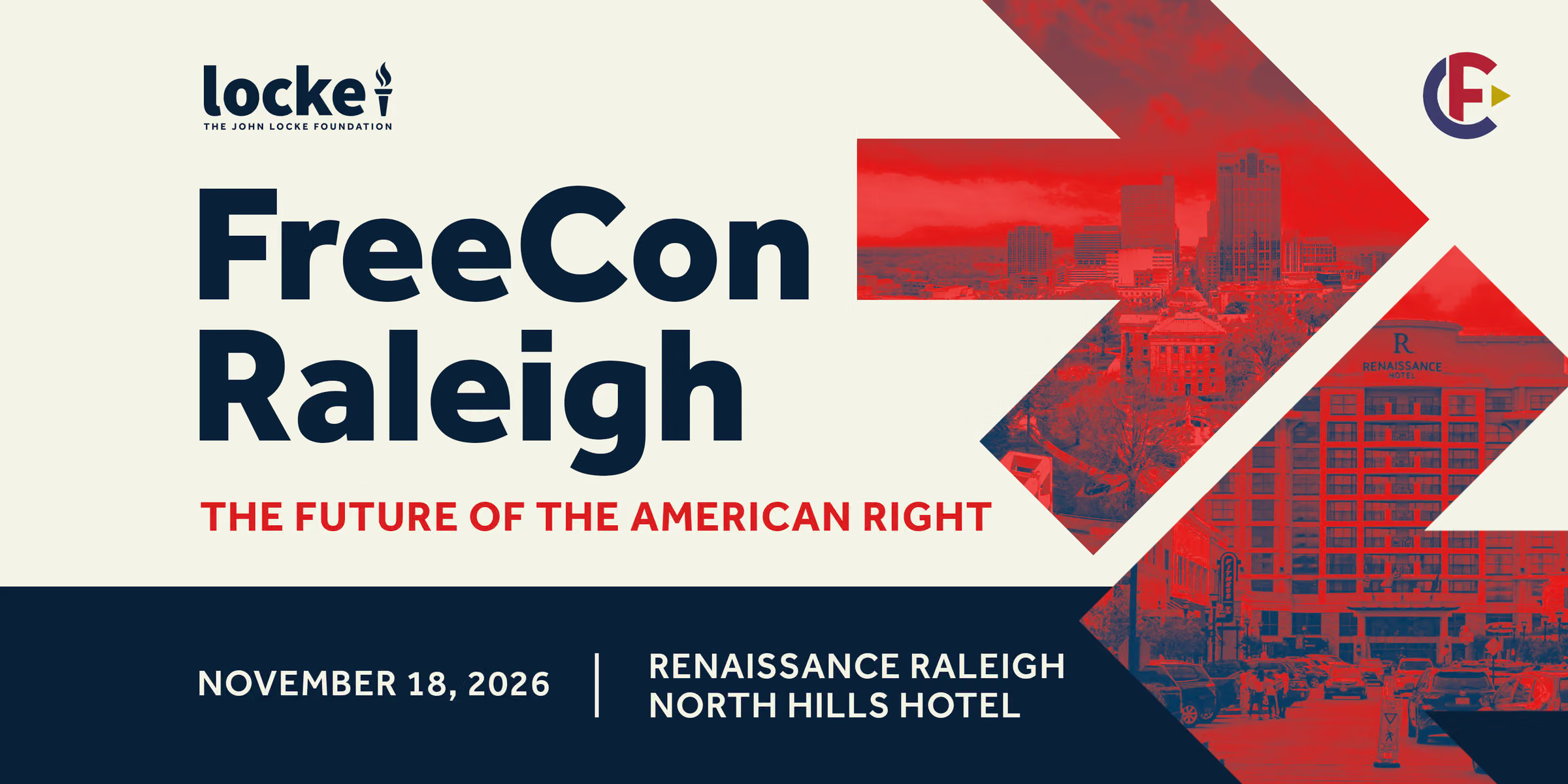
The John Locke Foundation, Carolina Journal, and other partners will host FreeCon Raleigh on Wednesday, November 18 from 4pm to 8pm at the Renaissance Raleigh North Hills Hotel. Delivering the keynote address will be Stephanie Slade, senior editor at Reason magazine and author of the new book Fusionism: Liberty, Virtue, and the Future of the American Right.
Other speakers at the event include Donald Bryson (John Locke Foundation), Donna King (John Locke Foundation), Kent Lassman (Competitive Enterprise Institute), Scott Lincicome (Cato Institute), and Jenna Robinson (Martin Center for Academic Renewal).
During an initial panel, Carolina Journal editor David Larson, Locke political analyst Mitch Kokai, and Harper Polling’s Brock McCleary will present the results of a post-election Carolina Journal Poll.
Click her to find out more about FreeCon Raleigh and RSVP for the November 18 event.
In the mix
• At Law & Liberty, FreeCon signatory George Hawley argued that “right-wing elites are considerably more radical than their base.”
“Despite the continuous efforts of right-wing identitarians calling for more racial solidarity,” wrote Hawley, a professor at the University of Alabama, “feelings of white identity have not increased among most Republican voters. In fact, we see the opposite.”
It is “important to remember,” he continued, that “the far-right voices that have been ascendant over the last decade do not speak for most voters, including most Republicans. The future of the American right remains in play.”
• At National Affairs, FreeCon signatory Andrew Taylor analyzed claims commonly made by progressives about “democratic backsliding” and found them wanting.
Americans' “understanding of the democratic way of doing politics is one of competitive parties, robust public participation, and open and free debate about the paths their communities should take,” wrote Taylor, a professor at North Carolina State University. “They see it differently from Democratic elites and progressive activists.”
Most voters, he continued, believe that “rules like the precise number of early-voting days their state holds are inconsequential” and that “procedures like voter ID and referenda enhance, rather than weaken, democracy.”
“Most Americans simply don't think unelected experts, whether they run bureaucratic agencies, preside over courts, lead public universities, or manage huge media companies, should be unaccountable for their decisions.”
• At National Review, FreeCon signatory James Patterson described the history of the post-liberalism movement and how earlier iterations of its governing philosophy, including Francisco Franco’s dictatorship in Spain, did not deliver the goods, literally or figuratively.
“After the Spanish Civil War, Franco pursued autarky — or the complete closing of Spanish markets to global trade,” wrote Patterson, a professor at the University of Tennessee. “The result was los años del hambre, or ‘the hunger years,’ during which hundreds of thousands of Spaniards died of starvation.”
“This is the post-liberal vision for the United States. Whatever problems one might have had with MAGA are nothing compared with what might replace it.”