
We Freedom Conservatives are certainly explicit about what we oppose.
“Much of the discord in America today comes from the fact that too many decisions are made for us by centralized authorities,” we argued in the FreeCon Statement of Principles.
We also wrote that a “corrosive combination of government intervention and private cronyism” is blocking too many of our fellow citizens from achieving the American Dream, that enormous federal deficits represent “an existential threat to the future prosperity, liberty, and happiness of Americans,” and that we “oppose racial discrimination in all its forms, either against or for any person or group of people.”
But Freedom Conservatism is more than a bundle of objections. We are promoting an ambitious agenda of reforms to expand liberty and opportunity, enhance the cost-effectiveness of public services, foster economic growth and technological innovation, strengthen American families and communities, and promote human flourishing.
In no policy arena are FreeCons more active than in education. Our signatories have helped expand parental choice and competition, raise academic standards, improve the governance of colleges and universities, and champion free speech and equal opportunity. (You can learn more about these and other FreeCon priorities at the 2026 Freedom Conservatism Conference, to be held May 20 in Washington.)
Today, we feature FreeCon signatories fighting for vital education reforms across the United States.
Nimble reformers
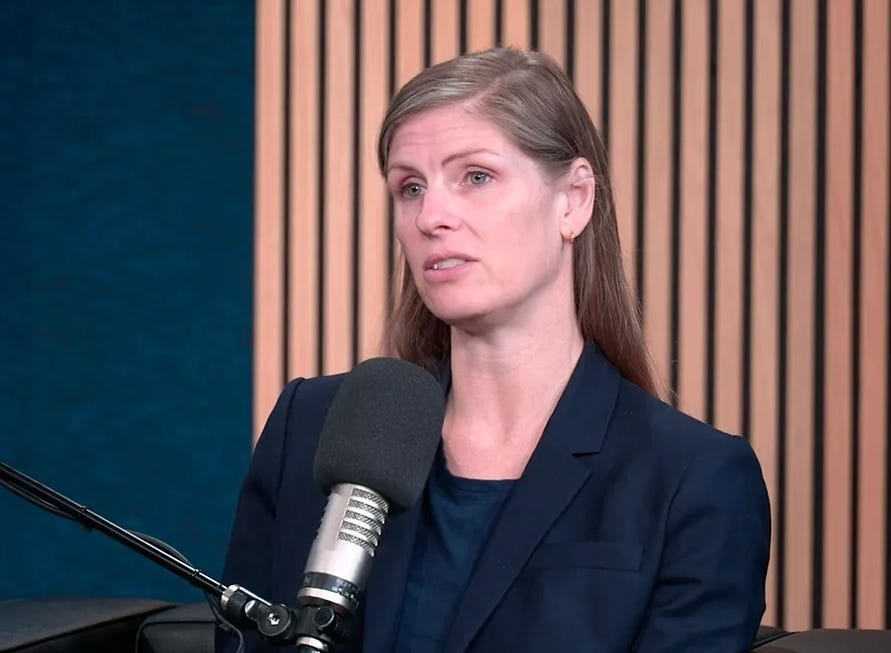
Jenna Robinson is president of the James G. Martin Center for Academic Renewal and a FreeCon signatory.
Robinson serves on the board of the Alumni Free Speech Alliance and UNC Alumni Free Speech Alliance, and on the Board of Visitors at the University of North Carolina at Chapel Hill. Her work has appeared in Investor’s Business Daily, Roll Call, Forbes, American Thinker, Human Events, and Carolina Journal, among other publications.
In a recent Martin Center piece, Robinson urged state leaders to take the lead on higher-education reform.
Public universities, where the vast majority of American students are educated, are “creatures of state law,” she observed, “and their governing boards derive authority directly from state legislatures. By contrast, the federal government’s influence on higher education is largely indirect.”
“While federal policy matters, state legislators and university trustees have the local knowledge and authority to make an outsized difference — from the classroom to the chancellor’s office. Lasting reform in higher education is far more likely to originate in statehouses than in Washington.
“What’s more, state reform efforts are often more nimble than federal policymaking. Federal rulemaking can take months of notice-and-comment procedures and is often tied up in litigation. What might take years in Washington can be done much more quickly and effectively at the local level.”

Full spectrum
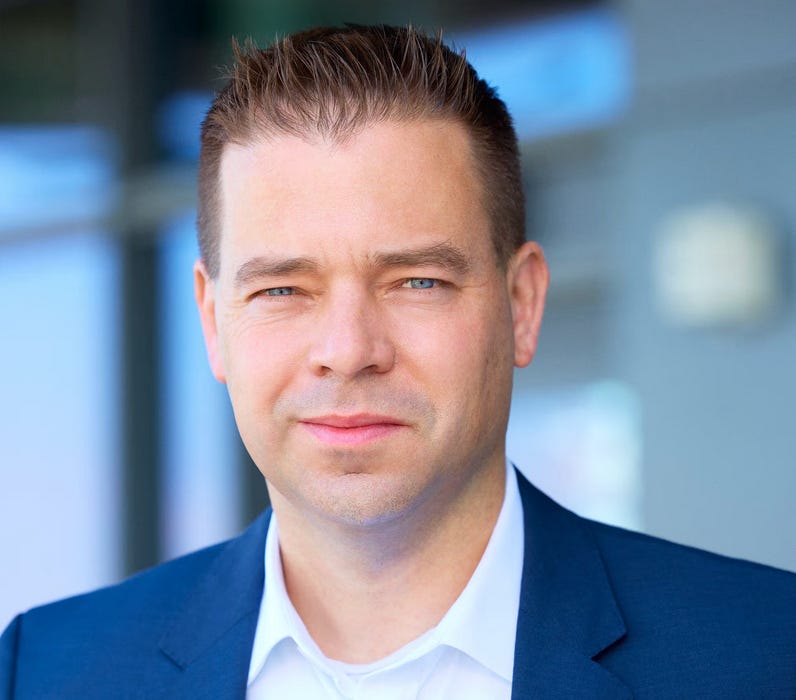
Dan Lips is head of policy and a senior fellow at the Foundation for American Innovation, a senior fellow at the Foundation for Research on Equal Opportunity (FREOPP), and a FreeCon signatory.
Lips has spent decades working in public policy, including stints with the Federal Bureau of Investigation, the Heritage Foundation, the Cato Institute, and the Senate Homeland Security and Governmental Affairs Committee. He also helped birth the concept of ESAs.
In a recent National Affairs piece coauthored with Michael Toth, Lips presented an agenda for “full-spectrum school choice” that includes expanded child-savings accounts, job training programs, lifelong-learning accounts, and other reforms.
Giving parents and students a wide range of options “creates new opportunities for teachers, school leaders, and entrepreneurs to provide high-quality instruction, learning models, and other services that have the potential to dramatically increase the return on taxpayers' investment in public schooling,” Lips and Toth wrote.
“And as vehicles for administering public benefits, education accounts have the further potential to achieve broader public-policy goals, including promoting lifelong learning, encouraging job training, and even reducing wealth inequality and promoting retirement security.
“In the future, these accounts may serve as the primary policy lever for promoting the development of human capital and intergenerational social mobility.”
Real fairness
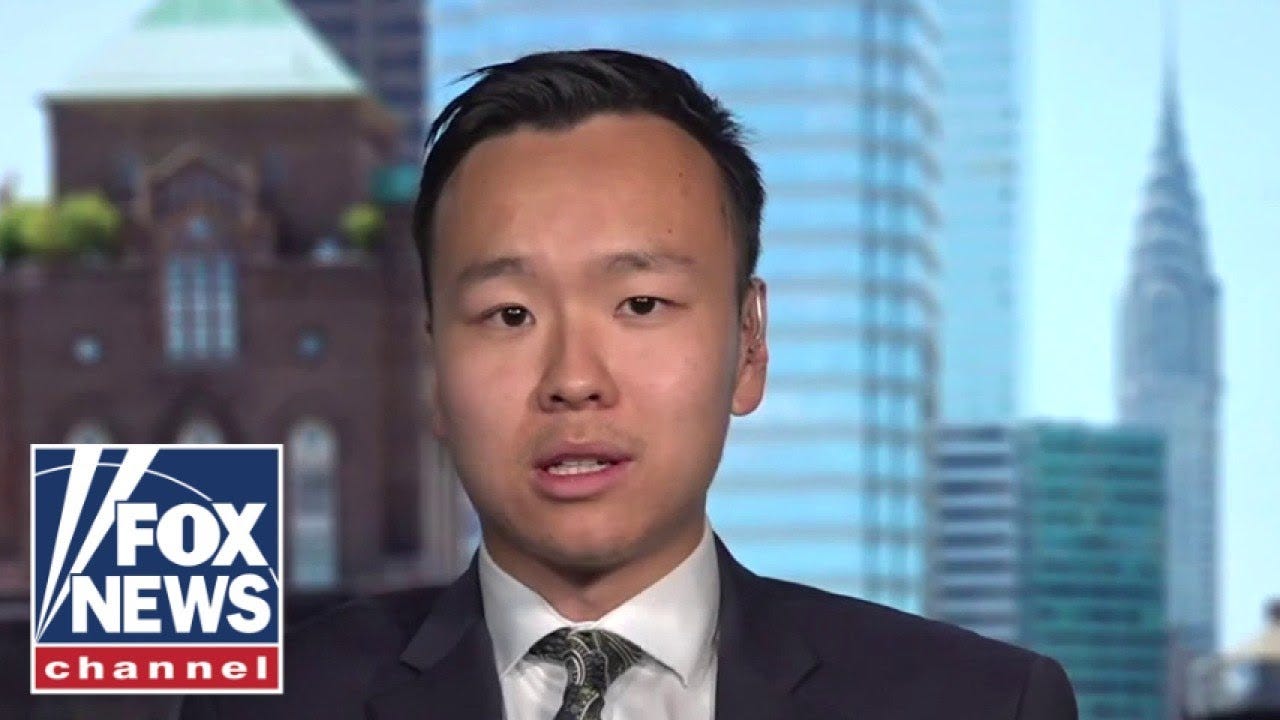
Kenny Xu is the author of two books: An Inconvenient Minority and School of Woke. He is also a FreeCon signatory.
Host of the “Inconvenient Truths” podcast, Xu has written for The Wall Street Journal, Newsweek, and The Federalist, among other outlets.
In a recent piece for The Free Press, Xu reacted to the news that a federal judge has ruled public universities in 17 states don’t have to turn over their records to administration officials tasked with enforcing equal opportunity in admissions.
“Racial preferences are going to die hard,” he predicted. “Rates of admission at most schools still suggest that blacks and Hispanics are getting a leg up — and it isn’t too hard for admissions officers to guess the applicants’ race based on name, location, and other details, even if they aren’t checking a box. Applicants can continue to put their race on the surface by talking all about it in their personal essays.”
“Real fairness in college admissions would allow millions of students to dream big while ensuring they work hard to achieve those dreams. We shouldn’t allow honest strivers to be thwarted by an overengineered system built around a flawed definition of social justice.”
Conversation, not expression

Wilfred McClay holds the Victor Davis Hanson Chair in Classical History and Western Civilization at Hillsdale College. He is also a FreeCon signatory.
A prolific author, he’s written or edited books widely used in high school and college classrooms, including A Student’s Guide to U.S. History, the American Intellectual Culture series, and Land of Hope: An Invitation to the Great American Story.
In a recent City Journal piece, McClay argued that freedom of speech on campus isn’t meaningful if “we aren’t willing to listen.”
“Many of the methods we long took for granted — lectures, laboratories, textbooks, term papers, take-home examinations, and the close reading of long and demanding texts — now seem increasingly obsolete, or at least ill-suited to the crucial task of student assessment,” he wrote.
“This is a genuine crisis. But it is also a genuine opportunity to reconsider what we are doing, what we want our schools and universities to achieve.”
McClay credited philosopher Michael Oakeshott with the observation that the central task of education is to provide an “initiation into the skill and partnership” of conversation.
“If he is right, and if that is the goal we ought to set for ourselves, the implications would be profound.”
In the mix
• In the Washington Examiner, FreeCon signatory Kimberly Ross celebrated the successful Artemis II mission, which reminds Americans “never to stop looking up.”
“The pictures from Artemis II showing the lunar surface and our beautiful, blue planet are the result of decades of hard work,” wrote Ross, a columnist for the Examiner and the Magnolia Tribune.
“But in an instant, we are struck by the beauty of the heavens. We are reminded that we all, as diverse and troubled peoples, inhabit this place. We are astonished at our privilege. No, it doesn’t fix our problems or serve as a compromise to conflicts, but it functions as a sort of warm admonition. We should be filled with both thankfulness and wonderment.”
• In the Los Angeles Times, FreeCon signatory Jonah Goldberg argued that biologist and constant predictor of Malthusian doom Paul Ehrlich, who died last month at age 93, remained influential for decades despite being “wrong about everything.”
“Perhaps the most remarkable thing is not that Ehrlich turned out to be so wildly wrong, but that he was so obviously wrong from the beginning,” wrote Goldberg, a CNN contributor and editor-in-chief of The Dispatch.
“My old boss Ben Wattenberg battled Ehrlich throughout the 1970s and 1980s. His feud began with a 1970 article for The New Republic titled, ‘The Nonsense Explosion,’ in which Wattenberg explained that even as Ehrlich was writing about soaring birthrates, birthrates were already declining.”
• In The Washington Post, FreeCon signatory Carrie Sheffield endorsed a proposed Labor Department rule clarifying the legality of offering private-market investments within 401(k) plans.
“The retirement security crisis facing middle-class Americans is real, even if the inequality narrative is overdrawn,” wrote Sheffield, director of the Center for AI and Technology at Independent Women. “Fixing it requires giving workers access to the same tool kit available to public-sector pension managers and wealthy investors.”
“The wealthy have long understood that diversification means owning a piece of the whole economy, not just the sliver that happens to be publicly listed. Let’s extend that understanding — and that opportunity — to everyone.”