
Later this week, Americans and other other lovers of liberty will celebrate the 250th anniversary of the Declaration of Independence.
Freedom Conservatives aren’t late to this party. Our movement has for many months been discussing the Declaration, the timeless principles that formed its foundation, and its continuing influence on our culture, politics, and government. Indeed, some FreeCons have devoted much of their professional careers and scholarship to the American Founding.
Moreover, FreeCons recognize that while the Declaration itself can have a birthday, the founding of the United States was not accomplished in a single day. It was the culmination of many years of statesmanship and struggle, and the work of many generations of Americans who lived before and after July 4, 1776.
Our country’s semiquincentennial will encompass not just this week‘s commemorations but many others, extending all the way to the 250th anniversaries of the Treaty of Paris ending the War of Independence (in 2033), the creation of the U.S. Constitution (2037), its ratification (2038), and the addition of the Bill of Rights (2041).
The prospect suits us just fine. We enjoy celebrating — and defending — American liberty. We love to get our FreeCon!
Today we feature Freedom Conservatives who connect the American colonists’ concerns about economic liberty and the separation of powers to modern-day policy challenges.
No to unchecked power
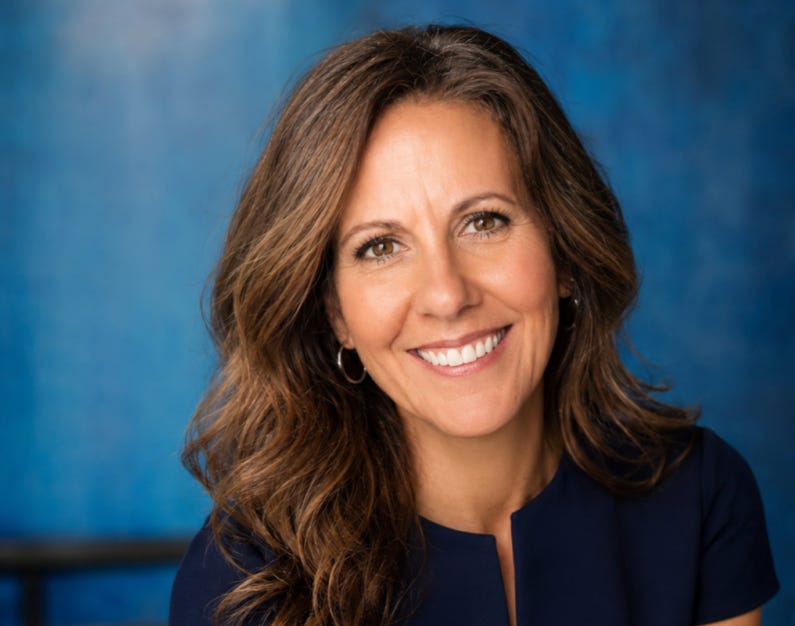
Sara Albrecht is chairman and CEO of the Liberty Justice Center, which represented the small businesses that successfully challenged the executive's unlawful emergency tariffs before the Supreme Court. She is also a FreeCon signatory.
In a recent National Review piece, Albrecht argued that the tariff decision ratified the wisdom of the Founders about the taxing power, the separation of powers, and the rule of law.
The lesson “feels especially important as Americans prepare to celebrate the 250th anniversary of the Declaration of Independence,” she wrote. “The Declaration was a complaint not simply about taxes but about unchecked power. The colonists objected to a system in which one man could exercise authority without meaningful limits and without accountability to the people whom he governed.
“The Constitution that followed was designed to ensure that no American president, judge, legislator, or bureaucrat would ever possess that kind of power.”
“The American experiment has never depended on perfect leaders but on institutions that are strong enough to restrain imperfect ones,” Albrecht concluded. “And despite the doubt and cynicism that often dominate our politics, the past year offered a reassuring reminder that the system still works.”
Freedom to trade
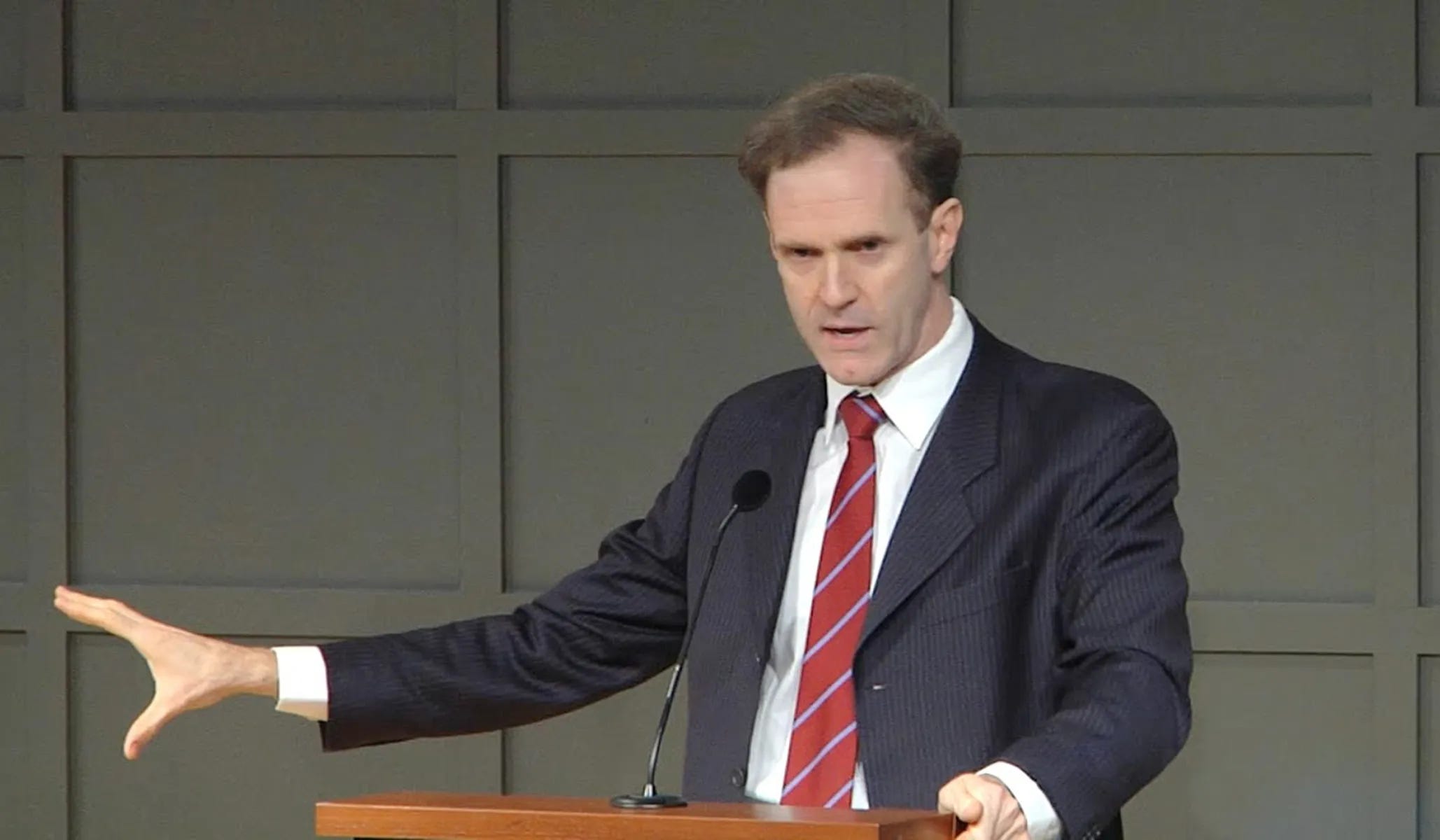
Samuel Gregg is the President and Friedrich Hayek Chair in Economics and Economic History at the American Institute for Economic Research. He is also a FreeCon signatory.
In a recent piece for Civitas Outlook, he described the American colonists’ struggle against British tyranny as an “anti-mercantilist revolution.”
Among the Americans’ specific complaints listed in the Declaration of Independence was “that King George III should be condemned for ’cutting off our Trade with all parts of the world,’” Gregg wrote.
“On one level, this was an indictment of the Royal Navy’s attempts, with mixed success, to impose a blockade on the rebellious American colonies. But it also hints at long-standing British efforts to restrict American colonists’ ability to trade with whomever they wished, throughout the British Empire and, more generally, the world.”
There is “little question,” he continued, “that mercantilism’s restrictions on economic liberty played a significant role in the American colonies’ decision to declare their independence.”
The country forged by the resulting Revolutionary War was “one that, for all its desire to remain free of foreign entanglements, was full of merchants anxious to trade with the rest of the world,” Gregg concluded. “That included Britain, which would remain America’s biggest trading partner for decades to come.
“It also began an unravelling of mercantilist restrictions upon much of the world that continued throughout the nineteenth century. In that sense, the Declaration of Independence proved to be liberating for more than one nation.”
Equity fail
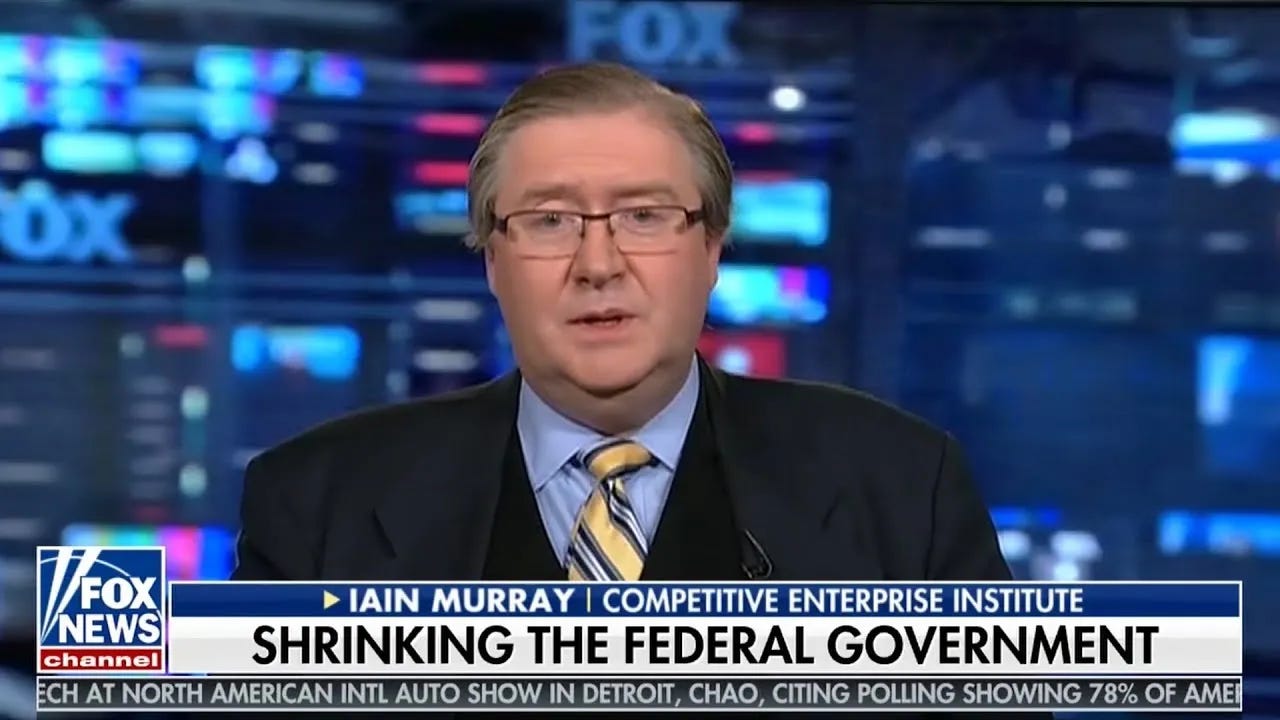
Iain Murray is vice president for strategy and senior fellow at the Competitive Enterprise Institute. He is also a FreeCon signatory.
In a recent piece for The Daily Economy, Murray drew a parallel between British attempts to prop up the East India Company before the American Revolution and modern-day attempts by progressives and populists to involve American government more directly in private companies by taking equity stakes or controlling their operations.
“It was the Company’s monopoly on legal tea imports to the colonies,” he pointed out, that spark the American Revolution.
The East India Company was so entangled with the British government that it was deemed “too big to fail,” Murray wrote.
“Its bailout by the government in 1773 included the infamous Tea Act, which sought to facilitate repayment of its £1.4 million government loan by granting the Company a monopoly on selling its vast stockpile of tea in the American colonies without paying duty in Britain. This undercut colonial merchants and helped provoke the Boston Tea Party and everything that followed.”
“America does not need its own version of the Company with better marketing.”
Spirit of ’76

Quin Hillyer is a columnist for the New Orleans Advocate and the Times Picayune. He is also a FreeCon signatory.
In a recent column, Hillyer argued that as the Declaration of Independence turns 250 years old, Americans desperately need to recapture the Spirit of ’76.
“Nowhere else in the world back then, not even in England itself, was there such a sense (if any sense at all) of humans as self-governing, rights-owning individuals, not mere subjects,” he wrote. “This was, to apply [John] Adams’ words, a new, unique, and heroic ‘learning [and] spirit.’”
“Freedom is both our heritage and our gift to the world,” Hillyer concluded. “That heritage and gift are wondrous blessings. We must sustain them and consecrate them forever.”
In the mix
• At National Affairs, FreeCon signatory Judge Glock discussed the issue of “state capacity,” the ability of governments to accomplish their goals efficiently.
One reason for the “atrophy” of state capacity, he wrote, is that the federal government “has placed many mandates on its own operations that it could never impose on society at large, from compulsory unionized workforces to affirmative-action goals to ‘Buy American’ requirements. Whatever the value of such mandates, there is no principled reason the government should force more of them on itself than it does on private citizens and companies.”
Glock, senior fellow and director of research at the Manhattan Institute, concluded that adopting “a political norm against government as social vanguard would go a long way toward enabling our public officials to do the jobs their constituents elected them to do.”
• At The Dispatch, FreeCon signatory Gregg Nunziata discussed whether the Democratic Party can seize the opportunity presented by the Trump administration’s faltering fortunes to form a new electoral majority.
“Any Democratic candidate for president who truly wishes to heal our republic must be ready to put our democracy ahead of his or her party,” wrote Nunziata, executive director of the Society for the Rule of Law.
“And that means embracing a system that has a meaningful place for the voices of those who lose the next presidential election. Such a president would inevitably disappoint the Left, but generations to come would owe them a debt of gratitude.”
• At the Washington Examiner, FreeCon signatory David Harsanyi listed the many contributions to human well-being conferred by the pharmaceutical industry.
“Doomsdayers and cynical partisans are endlessly depicting our country as a spent force that doesn’t ‘make’ anything useful anymore,” wrote Harsanyi. “By every metric, the U.S. pharmaceutical industry dominates the world.”
“Whenever I praise Big Pharma, people accuse me of being in the pocket of the industry. Really, it’s much worse. I praise Big Pharma gratis. Because no business, save perhaps Big Agriculture, has done more to improve our lives.”
• At The Washington Post, FreeCon signatory George Will clarified that Arthur Miller’s classic work Death of a Salesman is not an anti-capitalist screed but rather a “shattering depiction of something timeless, not context-dependent: the pathos of a despairing individual whose dreams exceed his capacities.”
Will Loman’s “unquiet, raving, finally fatal desperation is not ‘tragic,’ as tragedy is often understood: a great flaw dooming a great person,” wrote Will, a longtime Post columnist. “Loman is nevertheless a movingly sad figure eliciting pathos. We go to the theater to be moved, not to be lectured.”