
Is there any more beautiful song in the musical corpus of American patriotism than “My Country, ‘Tis of Thee”?
Sure, the melody was borrowed from Great Britain’s national anthem “God Save the King/Queen.” But this only serves to underline the hybrid nature of the United States. Formed from what had been 13 colonies within the British empire, our republic retains its language, its common law, and other traditions of undeniably English, Scottish, Welsh, or Irish origin.
Still, the birth of the United States 250 years ago also represented something truly novel in the world — “a new nation,” as Abraham Lincoln put it in the Gettysburg Address, “conceived in liberty, and dedicated to the proposition that all men are created equal.”
The song’s lyrics underline the point:
My country, 'tis of thee,
sweet land of liberty,
of thee I sing:
land where my fathers died,
land of the pilgrims' pride,
from every mountainside
let freedom ring!
Freedom Conservatives have pledged ourselves to preserving our “sweet land of liberty” and extending its promise to an ever-wider swath of our fellow Americans. Today, we feature the efforts of FreeCons to defend the American Founding from its skeptics, be they on the Left or Right.
Song of freedom
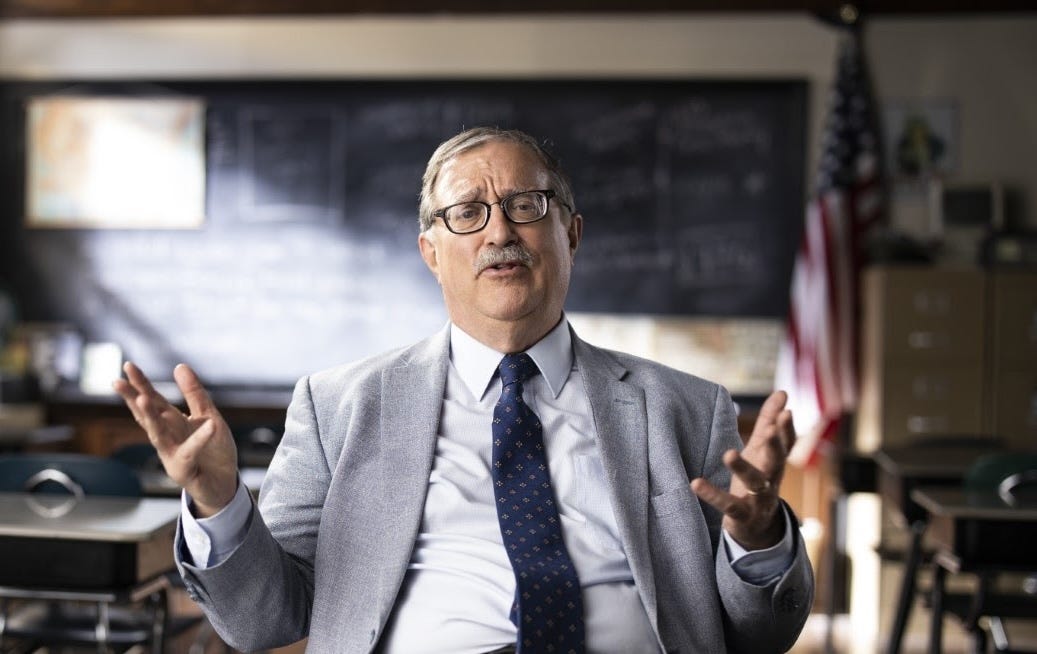
Wilfred McClay is a professor of history at Hillsdale College, where he holds the Victor Davis Hanson Chair of Classical History and Western Civilization. He is also a FreeCon signatory.
In a recent piece for Civitas Outlook, McClay argued that America is both an idea and a home — and patriotism withers if it loses its roots in shared memory, history, and love of an actually existing place.
These experiential roots are clearly visible in “popular culture, songs and stories,” he wrote, “where one can find the more primal aspects of American patriotism expressed with directness and vividness.” His examples include “The Star-Spangled Banner” and “God Bless America” as well as “This Land is Your Land” and “Brother, Can You Spare a Dime?”
“The debate between America defined as an idea and America defined as a home should not be based on the false premise that it is possible to be entirely one or the other,” McClay concluded.
“Instead, there is a vital and living tension in the makeup of American patriotism, a tension between its universalizing ideals, which so often form the propulsive force behind our aspirations and reforms, and its particularizing sentiments, with their emphasis upon memory, history, tradition, culture, and the land.”
Sound theology
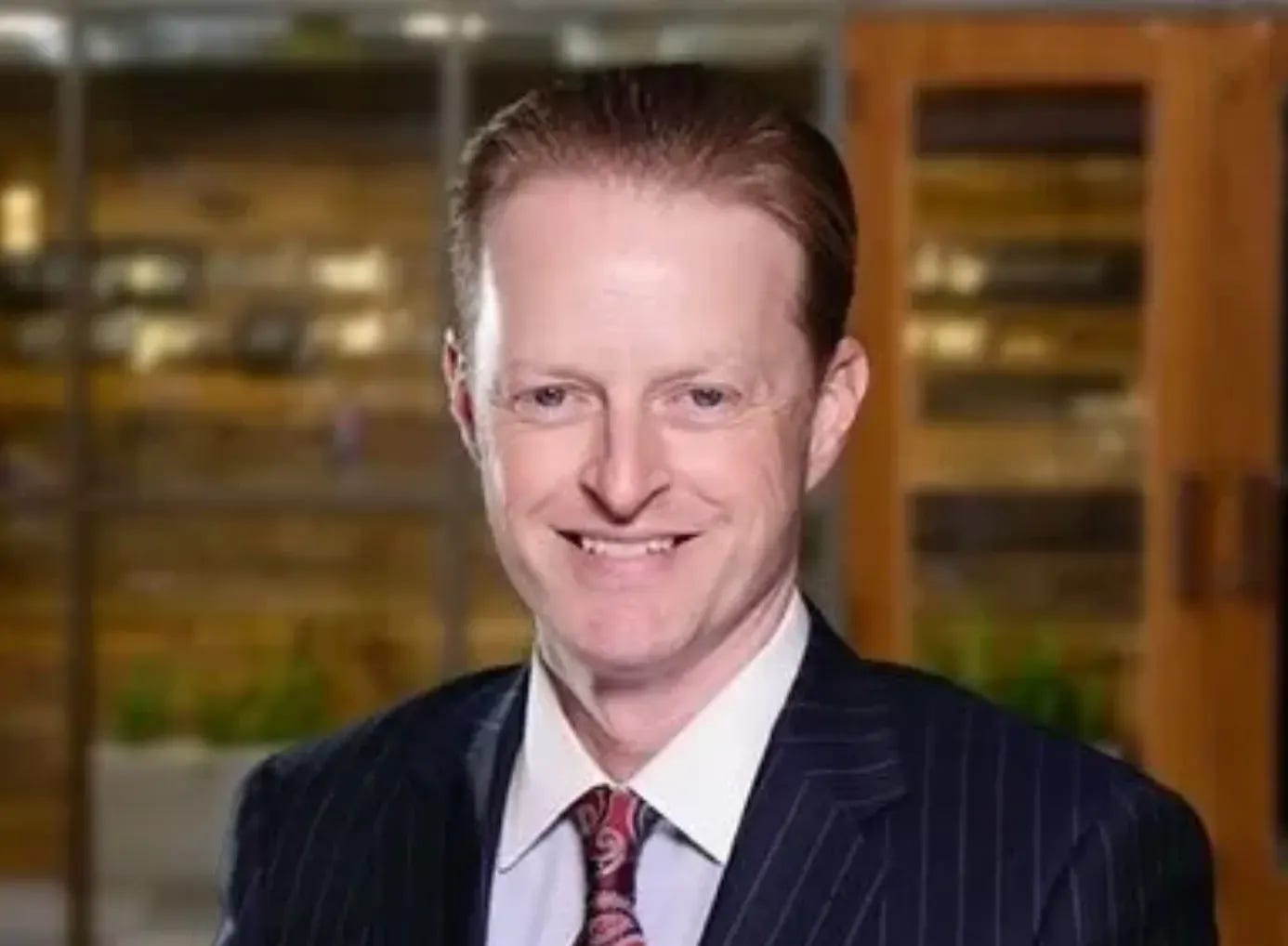
Lathan Watts is vice president of public affairs at Alliance Defending Freedom, a columnist for Townhall, and a FreeCon signatory.
In a recent National Review piece, he argued that the American Founders understood freedom and morality to be inextricably linked.
Watts pointed out that the first sentence of the Declaration begins with the phrase “When in the course of human events . . . ” which “presupposes the existence of human events.”
“Human beings with free will, balanced and aided by divine providence, can influence and even shape the world around them. This is a distinctly Judeo–Christian view of the co-laborer relationship between man and God and a departure from Greek, Roman, or Eastern religion.”
Thomas Jefferson’s personal theology “is still debated and puzzled over to this day,” Watts continued, yet “two and a half centuries after he penned it, the theology of the Declaration of Independence is sound.”
“In a letter to Henry Lee, Jefferson referred to his work as an ‘expression of the American mind.’ More importantly, it was the annunciation of the American heart and soul. It is worthy of commemoration and every effort to persevere toward the high calling set forth in it.”
Right this wrong
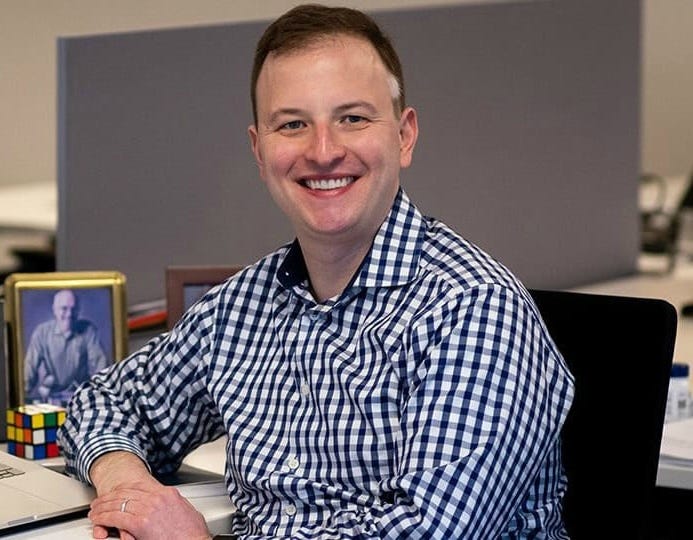
Richard Lorenc is president and CEO of Lexandria, an education nonprofit that seeks to reignite the American spirit through innovative classroom content and tools. He is also a FreeCon signatory.
In The Washington Times, Lorenc wrote that the 250th anniversary of the Declaration of Independence should spark renewed teaching on freedom, capitalism and constitutional government.
“Why are so many young Americans down on their country?” he asked. “Why did a 2025 national survey show that nearly two-thirds of U.S. adults younger than 30 have a ‘favorable’ view of socialism and one-third have a favorable view of communism?”
“The sad truth is that many Americans, especially younger ones, do not understand their country. As a result, they neither appreciate nor love it, putting them at risk of losing it. America’s teachers have a responsibility to right this wrong.”
Below basic
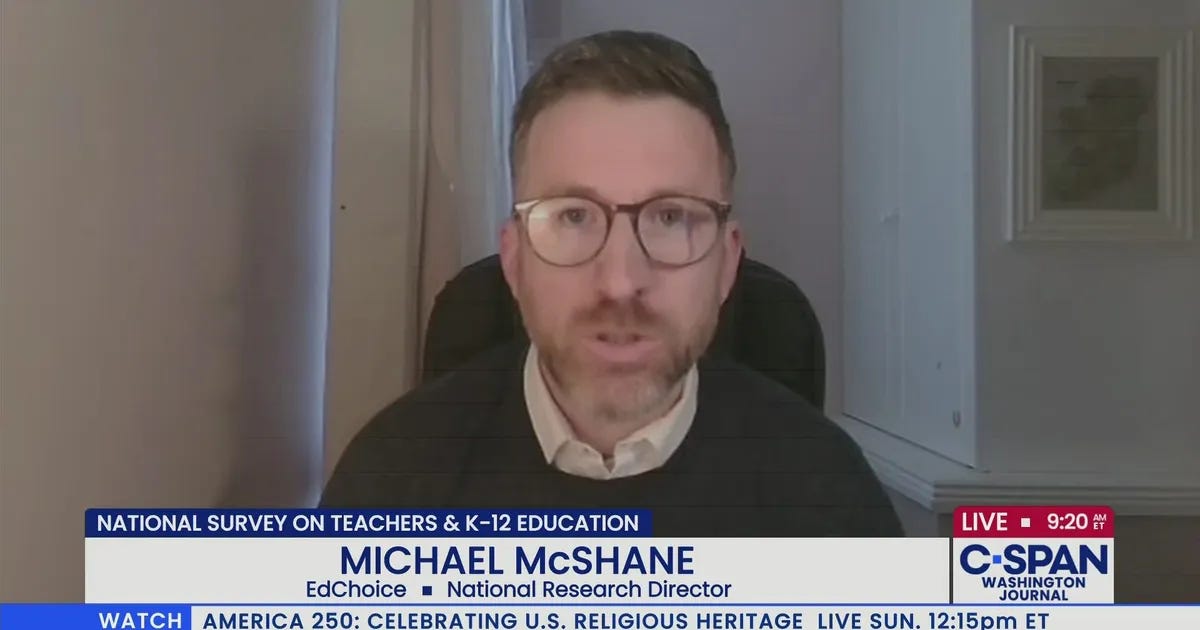
Michael McShane is director of National Research at EdChoice and a FreeCon signatory.
In a recent piece for National Review, McShane reported that nearly a third of U.S. students have a “below basic” understanding of American civics.
“Low levels of civic awareness persist into adulthood,” he continued. “More than 70% of respondents failed a basic civics quiz on topics like the three branches of government, the number of Supreme Court justices, and other basic functions of our democracy.”
A EdChoice survey found that more than seven in 10 parents said schools should “teach the rights and responsibilities of citizens, the U.S. Constitution, the three branches of government, major events in U.S. history, the Declaration of Independence and other founding documents, state and local government, elections and voting, civil rights history in the U.S., how to evaluate news and information sources, and how to discuss political or social issues respectfully.”
“If we want our nation to endure for another 250 years,” McShane concluded, “we have to cultivate virtue in our citizens and demand it from our leaders. Virtue is shaped through education, and learning about the history of our nation and that of other nations can give ample examples of both virtuous and vicious leadership.
“Really engaging with that history and asking the tough questions is the only way to instill in young people the knowledge and disposition to participate in representative democracy.”
In the mix
• At The Center Square, FreeCon signatory Ashley Baker chronicled the European Union’s continuing efforts to undermine American tech companies and the competitive markets that facilitate their creation and growth.
Over many years, EU digital policies have “prioritized investigating, regulating, and punishing a small group of American technology companies while insulating domestic competitors,” wrote Baker, executive director of the Committee for Justice.
“These policies are not only unfair and out of step with what one would expect from an ally, but also strategically counterproductive. They have increased transatlantic tension and undermined American technological innovation at a moment when it is vital to Western economic strength and national security.
“Policies that consistently disadvantage U.S. firms carry serious consequences for the broader alliance, including opening the door for Chinese companies that pose significant security threats to European digital infrastructure.”
• At The Wall Street Journal, FreeCon signatory Phil Magness revealed the deceptive statistics used by left-wing professors to defend soak-the-rich tax schemes.
Emmanuel Saez of UC Berkeley and Gabriel Zucman of the Paris School of Economics claim that the ultrarich pay a combined federal, state, and local tax rate of only 23%, supposedly lower than the 24% working-class Americans pay.
“Both figures are manipulated,” explained Magness, who holds a chair in political economy at the Independent Institute. “In fact, Messrs. Saez and Zucman’s own earlier research told a very different story. In a 2018 paper published in the Quarterly Journal of Economics, their own data files showed that the top 0.001% pay an average combined tax rate of roughly 41%.”
“The billionaire-tax movement depends heavily on stoking public outrage fueled by misleading statistics. Americans should be skeptical anytime activist academics present enormously complicated tax calculations as simple moral certainties.”
• At City Journal, FreeCon signatory Thomas Savidge described the dodges used by state governments to evade their balanced-budget requirements.
One “particularly pernicious” tactic, wrote Savidge, a research fellow at the American Institute for Economic Research, is the use of off-budget enterprises (OBEs) — “nominally private entities that provide public services and are funded by compulsory, government-created revenue streams.”
“On paper, such entities are financially independent, avoiding ordinary scrutiny and authorized to issue revenue bonds without direct voter approval,” he explained. “But many are subsidized by other government units when user charges fail to cover costs.”
Such abuses illustrate why “fiscal rules must be paired with limits on government’s ability to shift costs outside the budget,” Savidge concluded. “Otherwise, politicians will substitute regulations, fees, mandates, and assessments for taxes and appropriations.”
• In the Chicago Tribune, FreeCon signatory Robert Lawson argued that while Elon Musk may be a trillionaire, members of Congress exercise more power over the American economy.
“This joint assembly of just 535 individuals — less than 0.00016% of the U.S. population — spends approximately $7 trillion every year, accounting for about 23% of the more than $31 trillion U.S. economy,” wrote Lawson, who holds the Jerome M. Fullinwider Centennial Chair in Economic Freedom at Southern Methodist University.
“Everyone who thinks the rich should do more to solve our social and economic problems should instead be asking why Congress, with 17.5 times as much money to spend every single year, hasn’t yet solved any of these problems.”