
Since the inception of the Freedom Conservatism project more than three years ago, our signatories and allies have made abundantly clear that we consider attacks on free markets, free trade, and property rights to be attacks on the very foundations of American power, dynamism, and happiness.
“Liberty is indivisible,” we wrote in the FreeCon Statement of Principles, “and political freedom cannot long exist without economic freedom.”
Neither the Progressive Left nor the Populist Right accepts this basic truth. They pretend that government management of an economy can occur without undermining enterprise, squandering resources, supplanting families and civil society, and corrupting the very politicians and institutions attempting to dictate the daily decisions of millions of producers and consumers.
“The free enterprise system is the foundation of prosperity,” we observed. “Americans can only prosper in an economy in which they can afford the basics of everyday life: food, shelter, health care, and energy.”
Voters this fall are likely to punish candidates of either party who dismiss concerns about affordability. That doesn’t make voters excessively materialistic or oblivious to social and spiritual concerns. What they understand — and what far too many National Conservatives and other populists don’t — is that strong families and healthy communities are difficult to form and sustain in the absence of robust economic growth and the dynamic innovation it requires.
Today we feature the work of Freedom Conservatives who emphasize the relationship between free enterprise and human flourishing.
A fight we must win

Jordan Ballor is executive director of First Liberty’s Center for Religion, Culture & Democracy. He is also a senior research fellow at the Henry Institute for the Study of Christianity and Politics at Calvin University and a FreeCon signatory.
In a recent piece for World magazine, Ballor argued that the fight to preserve free enterprise in America is essential to defending political and religious liberty, as well.
“John Witherspoon, exploring causes of the advocacy for American independence in 1776, pointed to the interrelationship of political, religious, and economic liberties,” Ballor wrote, citing Witherspoon’s observation that there was “not a single instance in history in which civil liberty was lost, and religious liberty preserved entire. If therefore we yield up our temporal property, we at the same time deliver the conscience into bondage.”
Disputes over the role of government in society and markets are nothing new, he continued, and are clearly present on the American Right today. “These divides will only continue to sharpen and deepen as Trump enters the end of his final presidential term and the jockeying for leadership of a post-Trump GOP becomes more aggressive.”
“In many ways, this is the natural continuation of disputes that have erupted over the past decade of Trump’s ascendancy, which galvanized populist and nationalist sentiments among many of the president’s supporters. As the National Conservatism, or NatCon, movement grew, it was answered by the FreeCon, or Freedom Conservative, project (of which I am a signatory).”
“Never in American history has a fiscal situation so dire been paired with public attention to the challenge as attenuated as it is today,” Ballor concluded. “The need to address our public debt is absolutely urgent. And the single most important element of addressing our broader economic challenges effectively is the re-ignition and revival of American ingenuity, dynamism, and growth.”
“The central importance of political and religious liberty is certainly among the key lessons to take from America’s 250th birthday and apply to the future. But we must also recognize that economic freedom and prosperity are likewise foundational for our civic flourishing. And that means that the fight for free enterprise remains as important as ever—and it’s a fight we must win.”
Crowding out civil society
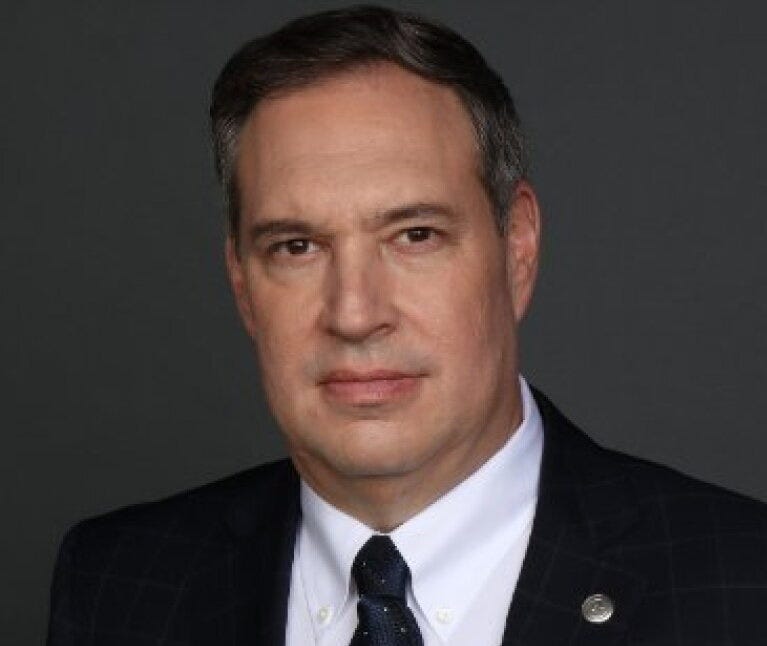
Andrew Langer is the president of the Institute for Liberty, a frequent host on Baltimore’s WBAL and other stations, and a FreeCon signatory.
In a recent piece for The Wall Street Journal, Langer described how Vice President J.D. Vance has misinterpreted the ideas and legacy of Alexander Hamilton in a misguided attempt to turn the American Right away from free-market principles.
“Hamilton’s prescriptions responded to the unique circumstances of a new nation burdened by Revolutionary War debt, dependent on foreign manufactures and lacking other reliable sources of federal revenue,” Langer wrote. “His tariffs were generally moderate and principally intended to raise revenue without suppressing imports—a far cry from President Trump’s sweeping protectionism.”
Vance has argued that free markets made sense decades ago in a culture dominated by “a very rich and powerful institutional Christianity” that imposed guardrails but that they no longer serve America well.
“That claim confuses the moral freedom of individuals with a particular religious or institutional order,” Langer wrote. “Markets don’t require comprehensive Christian guardrails. They require individual liberty, property rights, honest dealing, enforceable contracts and equal rules against force and fraud. These principles are compatible with Christianity, but they aren’t exclusively Christian. They allow people of different faiths—and no faith—to cooperate peacefully without agreeing on theology or a common conception of the good.”
Vance has the causation at least partially backward, Langer concluded. “Laissez-faire economics didn’t create the welfare state. It didn’t transfer responsibility for human needs from local communities to Washington. Over several generations, government programs assumed functions previously performed by families, churches, mutual-aid societies, fraternal organizations and local charities.”
“Government expansion didn’t single-handedly cause the decline of religious participation or civic life. But public provision frequently displaced voluntary provision. Americans increasingly looked to bureaucracies rather than to neighbors and communities for assistance.”
“Industrial policy, corporate subsidies, protective tariffs and government equity stakes won’t restore the habits of voluntary association. They will transfer additional power to the political institutions that crowded out civil society in the first place.”
Not our fate

David McGarry is research director at the Taxpayers Protection Alliance and a FreeCon signatory.
In a recent piece for the Acton Institute’s Religion & Liberty, McGarry placed current fears about artificial intelligence and other innovations into a historical context. “Anxiety over technological development and its corollary, industrialization” have been “a routine feature in American history,” he observed.
“Americans strive to operate on and improve their world; innovation foments anxiety; anxiety is overcome as society and the law adjust sensibly to new conditions, preserving liberty, the seedbed of technological progress. In other words, previous bouts of innovation did not turn Americans toward socialism.”
Might today’s reactions to AI and the digital revolution turn out differently?
“Man does not, of course, live by GDP alone,” McGarry argued, and “homo economicus is a mythical creature in which no respectable economist believes. Indeed, many have become anxious because they believe artificial intelligence will create a new breed of human being—will bring about a de-evolutionary process, so to speak.”
But this need not be our fate. “Technological advance can be reversed only by the fall of civilization itself, but what is to be done with technology is a matter to be determined,” he concluded.
“Technological facts—and, for that matter, economic, geographic, climatic facts—mark us, even form us to some degree. But those who say such facts remove all choice, all agency, from individuals or nations or humanity itself” essentially “transform man into little more than a victim of time, place, and chance. What AI makes of us will largely be determined by what we choose to make of AI.”
In the mix
• At Civitas Outlook, FreeCon signatory Juliana Geran Pilon asked whether the Democratic Socialists of America will succeed in overturning the country’s founding principles.
“DSA’s very name is a decoy,” wrote Pilon, a senior fellow at the Alexander Hamilton Institute for the Study of Western Civilization and the author of such books as The Utopian Conceit and the War on Freedom and An Idea Betrayed: Jews, Liberalism, and the American Left.
“Rolling in money and victorious in many cases at the ballot box, DSA is basking in its recent primary wins, effectively obliterating the Democratic Party, thereby unwittingly energizing Republicans who think they can win by default in November,” she wrote. “That optimism, however, may be premature.”
We can no longer afford to ignore “the cancer gnawing at America’s core,” she concluded. “Both socialism and antisemitism have started infecting the Republican Party. Blaming Democrats and specifically the DSA misses the point. The real question is whether America will turn against itself.”
• At National Review, FreeCon signatory John Puri reported the dismaying news that the Trump administration is considering a new round of import taxes on semiconductors that would severely hamper the capacity of American companies to compete in artificial intelligence.
“The proposed tariffs, as they so often are under this administration, will be used as a cudgel for government to funnel capital into favored pockets of the economy,” wrote Puri, the Thomas L. Rhodes Fellow at the magazine.
“Is there a word for this?”
• At the Foundation for American Innovation, FreeCon signatory Soren Dayton urged Congress to follow up on the Supreme Court’s 2024 Loper Bright decision by reclaiming the legislative branch’s authority.
Each congressional committee should “establish clear, templated language that signals the fact of a regulation, what it is for, and what its boundaries are,” wrote Dayton, director of the American Governance Policy Team at FAI. “Second, it should include in the committee report for a bill an inventory of what regulations the committee understands to be authorized by the bill.”
“In Congress, the doctrine, templates, and precedents are all sitting on the table. What the courts and the drafting offices cannot supply is the first committee willing to pick them up. Action comes first.”