
Our second Freedom Conservatism Conference is just four days away!
Hundreds of FreeCon signatories and allies will convene May 20 in the nation’s capital to discuss the past, present, and future of American conservatism.
The daylong event at Capital Turnaround will feature such speakers as Sen. Rand Paul (R-KY), National Review editor Ramesh Ponnuru, and Stand Together CEO Brian Hooks.
Topics for discussion include economic opportunity, family formation, talent pipelines, electoral coalitions, and the fusionist tradition informed by the politics of liberty and the ethics of virtue.
You can read the full agenda here and register for the May 20 conference here.
Today we feature the work of other FreeCon 2026 speakers on such issues as technology, polarization, fiscal policy, and the extremist rhetoric endemic to clickbait media and online fever swamps.
Manufactured crisis
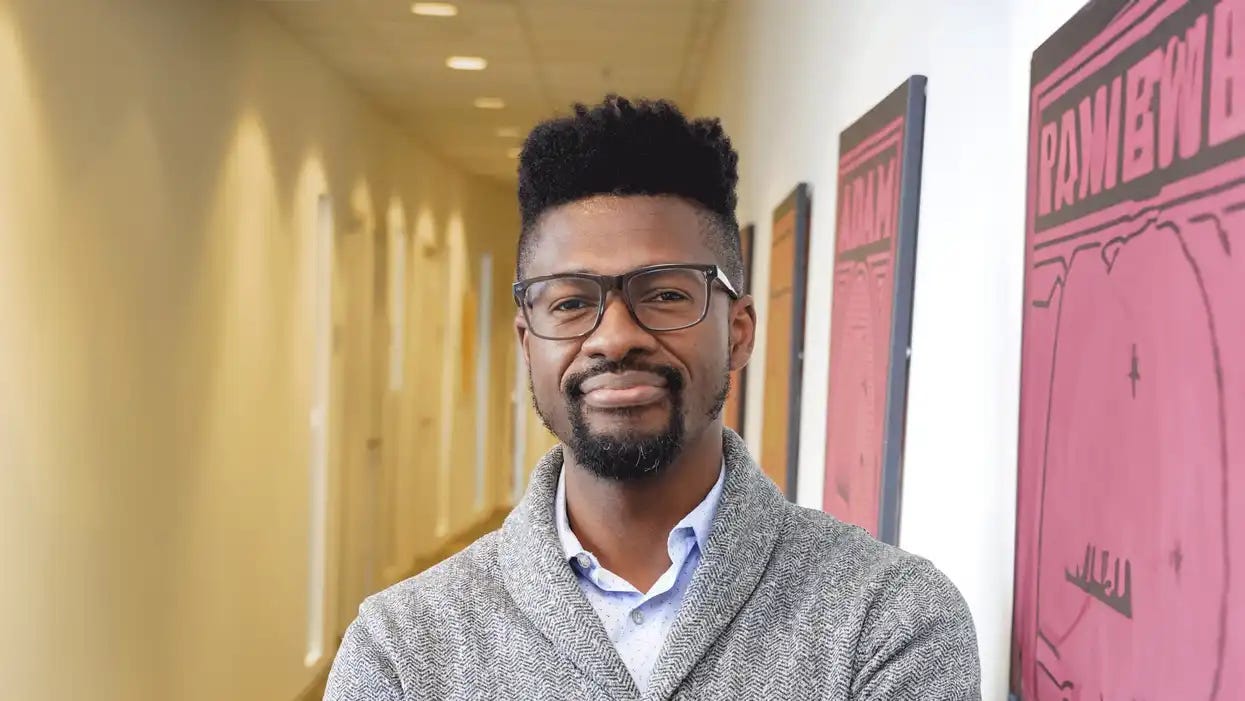
Ben Klutsey is executive director of the Mercatus Center at George Mason University. He is also a featured speaker at the 2026 Freedom Conservatism Conference, to be held May 20 at Capital Turnaround in Washington.
A former policy assistant at the Institute of International Finance and research fellow and policy director at Mercatus, he is a native of Ghana who earned his undergraduate degree at Lawrence University and his graduate degree at George Mason.
In an interview with Fulcum, Klutsey distinguished between political polarization, most evident among partisan elites, and affective polarization, reflecting mutual suspicion and animosity.
“Affective polarization is a big, big, big challenge right now,” he said. “Our views on the issues haven't changed that much over the past several decades. If anything, we’ve moved a little bit closer to each other. But the way we feel about each other has changed over time.”
Affective polarization is “driven by all kinds of things, including social media and the way that Congress functions,” Klutsey continued. “So we feel worse about each other.”
“And then you have the media environment where the incentives are to show the sensational and the outrageous. This gives people this impression that we are in an existential crisis.”
Stick to principle
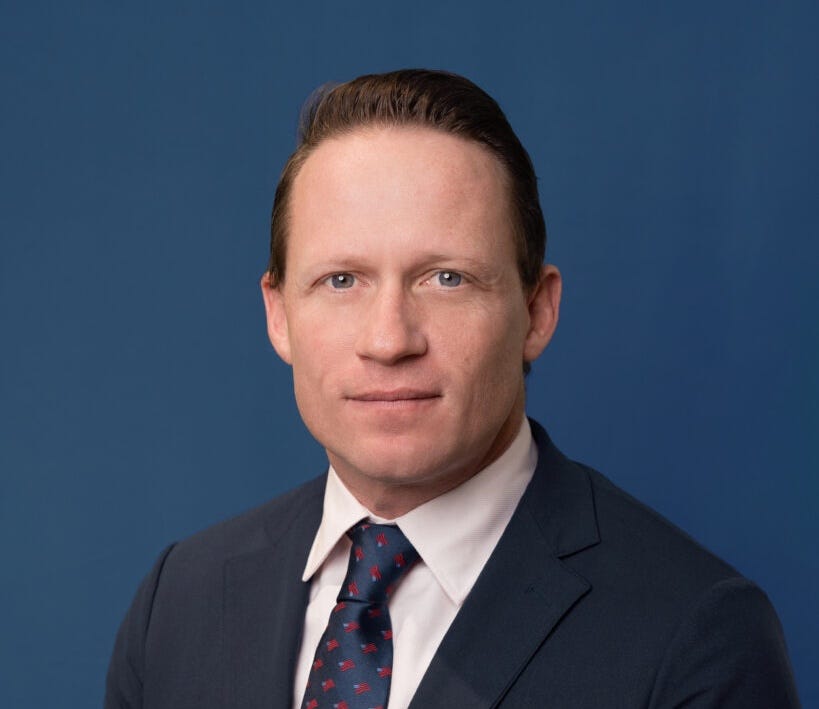
Tim Chapman is president of Advancing American Freedom and a featured speaker at the 2026 Freedom Conservatism Conference, coming up on May 20 in Washington.
Chapman has served as a principal at P2 Public Affairs, executive director of Heritage Action, chief of staff at the Heritage Foundation, and adviser and staffer to former U.S. senators Jim DeMint, Don Nickles, and Asa Hutchinson.
In a recent interview with the Washington Examiner, he argued that American conservatism is most effective when focused not on personalities but on timeless principles such as limited government, free markets, and institutional checks to constrain power.
When economic confidence falters, and policy missteps go unchallenged, electoral consequences follow, he added.
And in a separate interview with The Hill, Chapman urged conservatives to apply American’s founding principles consistently and build a movement capable of driving policy reform not just in the short term but over the coming years and decades.
“The last year has been about conservatives quietly getting to work on a post-Trump future,” he said. “Trump delivered some genuine wins and some genuine losses, and the task ahead is building a movement rooted in time-tested principles — one that learns from the Trump era without being trapped by it.”
Next-gen energy
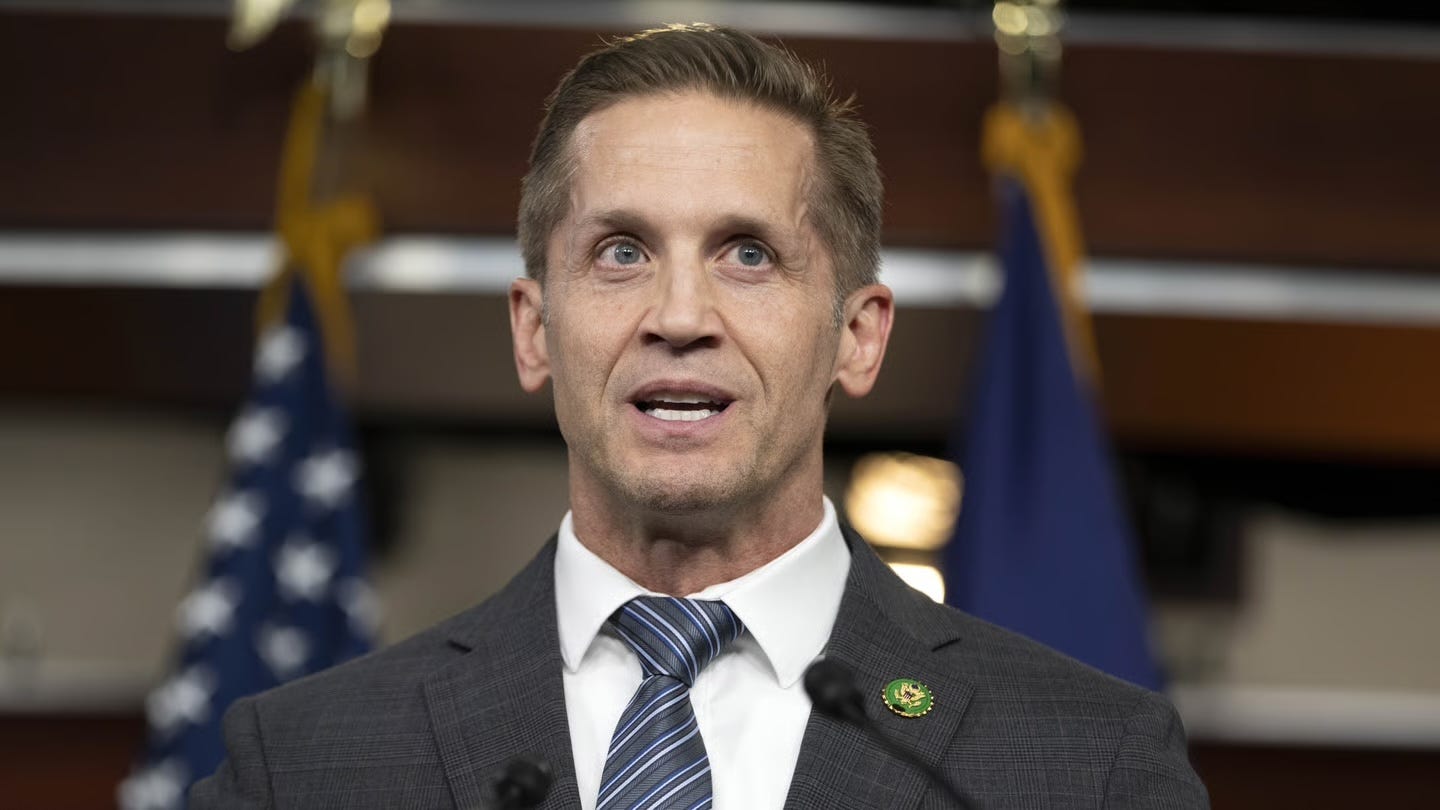
Rich McCormick represents Georgia’s 7th District in the U.S. House of Representatives, where he serves on the Armed Services, Foreign Affairs, and Science, Space, and Technology committees. He is also a featured speaker at the 2026 Freedom Conservatism Conference, to be held May 20 in the nation’s capital.
McCormick served for more than two decades in the U.S. Marine Corps and U.S. Navy, piloting the CH-53E Super Stallion Helicopter and serving as an officer in the Medical Corps. He also served as an emergency-department physician at Gwinnett Medical Center.
In a recent Washington Times op-ed, McCormick argued that the U.S. is “in an intense global race with China for technological dominance” and the victory depends on which side “can build power plants, supply transmission lines and generate enough energy to keep data centers running.”
“America risks falling behind not because we lack talent or innovation,” he continued, “but because red tape is painfully slowing the process and, too often, stopping projects before they ever break ground.”
“If we want to beat China and keep AI leadership at home, we must fix the problems that make it so hard to build in America. That means advancing next-generation technologies, such as small modular reactors, while supporting existing sources, such as natural gas and renewables.
“It means pursuing an ‘all-of-the-above’ approach that allows America to build more energy more quickly and at lower cost.”
Algorithms aren’t reality

Erick Erickson hosts a nationally syndicated program for Atlanta radio station WSB, writes a column distributed by Creators Syndicate, and will be a featured speaker at the 2026 Freedom Conservatism Conference on May 20 in Washington.
A former editor-in-chief of RedState.com, practicing attorney, and commentator at CNN and Fox News, Erickson served for nearly four years on the city council of Macon, Georgia.
In a recent syndicated column, he decried the antisemitism and other forms of extremism “infecting the American mainstream.”
Whether it be Candace Owens and Theo Von on the Right or Graham Platner and Hasan Piker on the Left, such cranks draw lots of clicks because social media algorithms are designed to amplify transgressive voices, Erickson wrote.
“Unfortunately, the vice president of the United States and many of his supporters — and the Democratic Party — have all embraced varying forms of antisemites, conspiracists and extremists because they have interpreted the algorithm as reality.
“The sickness is spreading.”
In the mix
• At The Dispatch, FreeCon signatory Jessica Riedl argued that “surging government debt is harming the economy and our fiscal priorities — and its rapid growth poses an existential threat to the long-term American economy.”
“Indulging in escalating debt is like indulging in a lifestyle of fast food, cigarettes, and no exercise,” wrote Riedl, a fellow at the Brookings Institution.
“It may be occasionally manageable — and one may avoid feeling the effects for years or even decades — but the damage accumulates until a day of reckoning becomes virtually inevitable. With government debt, the effects are already being felt, and the U.S. is approaching a point at which reversing course will require substantially painful reforms.”
• At The Wall Street Journal, FreeCon signatory Judge Glock detailed the COVID-era use of federal funds to aid shuttered theaters and the $10 billion in improper payments that resulted, often to well-off talent agents and celebrities.
The law was “written broadly enough to include touring companies and other companies tied directly to musicians, who could pay themselves money with little documentation,” wrote Glock, director of research at the Manhattan Institute.
Rapper Lil Wayne “spent more than $1.3 million in grant money on private-jet flights and nearly half a million more on clothes and accessories. Rapper Chris Brown’s touring company received the $10 million maximum, of which $5 million went directly to Mr. Brown.”
“When politicians and the press push the government to hand out more cash without strings, ordinary Americans pay for it.”
• At USA Today, FreeCon signatory Merrill Matthews predicted that if Republicans fail to take the lead on health-care reform, Americans may once again be left with “Democrats’ same failed formula: more bureaucracy, more complexity and less control.”
“Today’s sprawling, vertically integrated insurance giants did not emerge by accident,” wrote Matthews, Texas state chair of Our Republican Legacy. “Democratic policy, particularly Obamacare, created powerful incentives for insurers to grow larger, consolidate and control more of the health care system.
“Obamacare’s architects believed American health care was too fragmented. Their answer was greater integration: bringing insurers, doctors and hospitals closer together in hopes of reducing waste, improving efficiency and delivering better outcomes.
“Instead, it unleashed a wave of consolidation that reshaped the industry for the worse.”