
Fox News contributor Guy Benson. National Review editor Ramesh Ponnuru. U.S. Sen. Rand Paul. Talk-show host Erick Erickson.
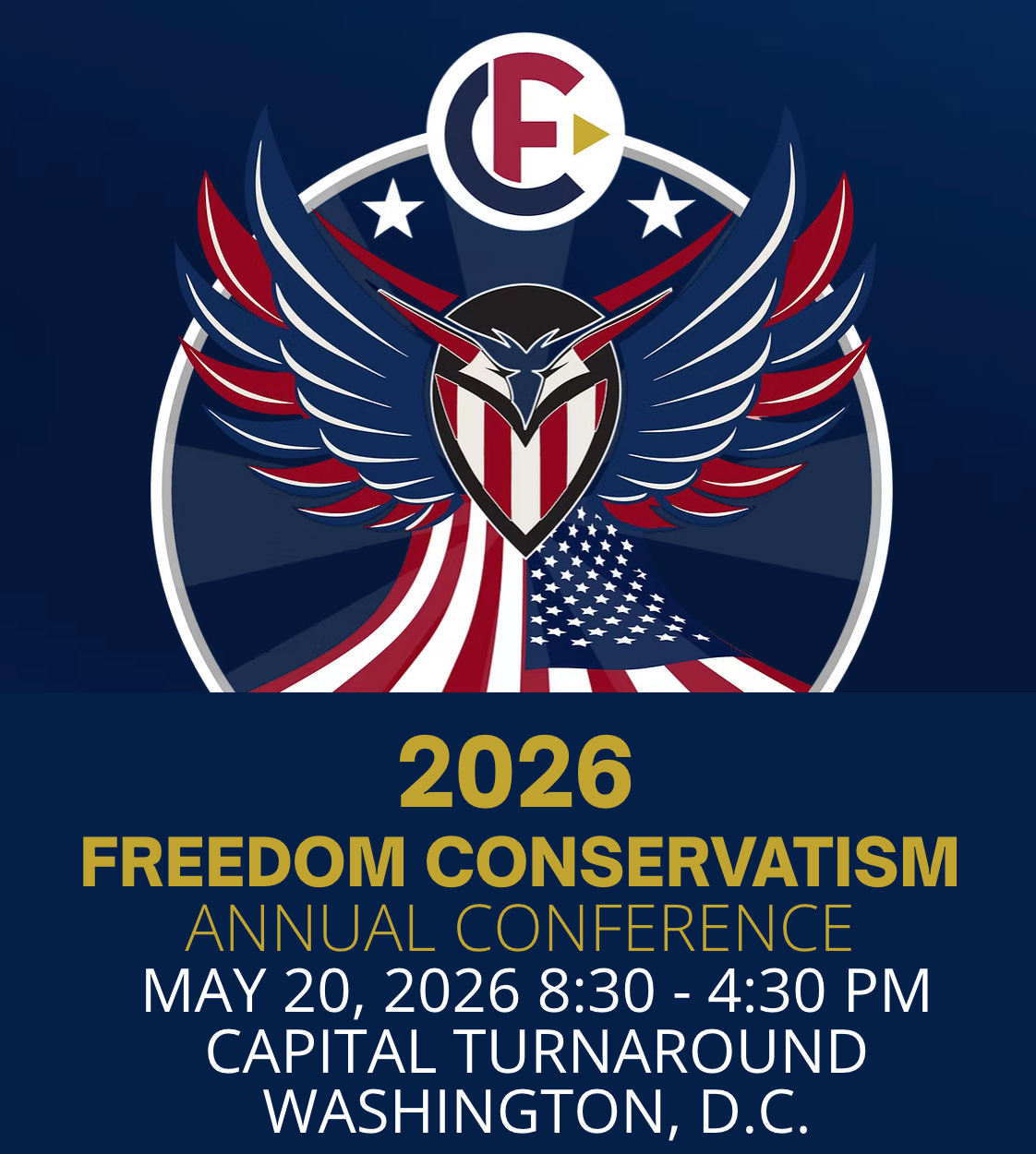
These are just some of the FreeCon signatories and allies speaking at our next Freedom Conservatism Conference, to be held May 20 at Capital Turnaround in Washington, D.C.
The daylong event will begin with remarks by Avik Roy, co-founder of the Freedom Conservatism project. Next up are two panels:
• “Virtue and Liberty: A New Fusionism for the 21st Century,” featuring Reason magazine writer Stephanie Slade, John Locke Foundation president Donald Bryson, and Paul Mueller from the American Institute for Economic Research.
• “How Can Freedom Conservatism Build a Winning Coalition?” featuring LIBRE Initiative president Daniel Garza, Washington Free Beacon politics editor Zack Kessel, and Kate Carney, deputy director of More in Common.
After a fireside chat with Guy Benson and Brian Hooks, chairman & CEO of Stand Together, FreeCon 2026 will continue with these panels:
• “What Has Conservatism Ever Conserved?” featuring Iain Murray from the Competitive Enterprise Institute, Phil Magness from the Independent Institute, Washington Post writer Dominic Pino, and Tony Woodlief from State Policy Network.
• “Rags to Riches Over Redistribution: Uplifting the Forgotten American,” featuring Scott Winship from the American Enterprise Institute, Adam Millsap from Stand Together Trust, and Les Ford from the Alliance for Opportunity.
• “Faith, Family, Freedom: Strengthening America’s Culture from the Ground Up,” featuring Lathan Watts from Alliance Defending Freedom, Carrie Sheffield from Independent Women, John Shelton from Advancing American Freedom, and Tim Carney, Washington Examiner columnist and AEI senior fellow.
• “Turning Ideas Into Action: Strengthening FreeCon Infrastructure and Building the Next Generation of Leaders,” featuring Dan Rothschild from the Ronald Reagan Presidential Foundation and Institute, Reformers Academy president Josh Archambault, Advancing American Freedom president Tim Chapman, and Roger Ream, president & CEO of The Fund for American Studies.
• “America at 250: The Founding Principles and the Future of American Conservatism,” featuring Beth Anne Mumford from Americans for Prosperity, Competitive Enterprise Institute president Kent Lassman, Mercatus Center executive director Ben Klutsey, and Mark Strand, former president of the Congressional Institute.
Interspersed throughout the day will be keynote speeches by Paul, Erickson, Ponnuru, and U.S. Rep. Rich McCormick (R-GA). You can learn more about FreeCon 2026 and register by clicking here.
Today we feature recent work by Freedom Conservatives on the past, present, and future of the American economy.
Threat to productivity
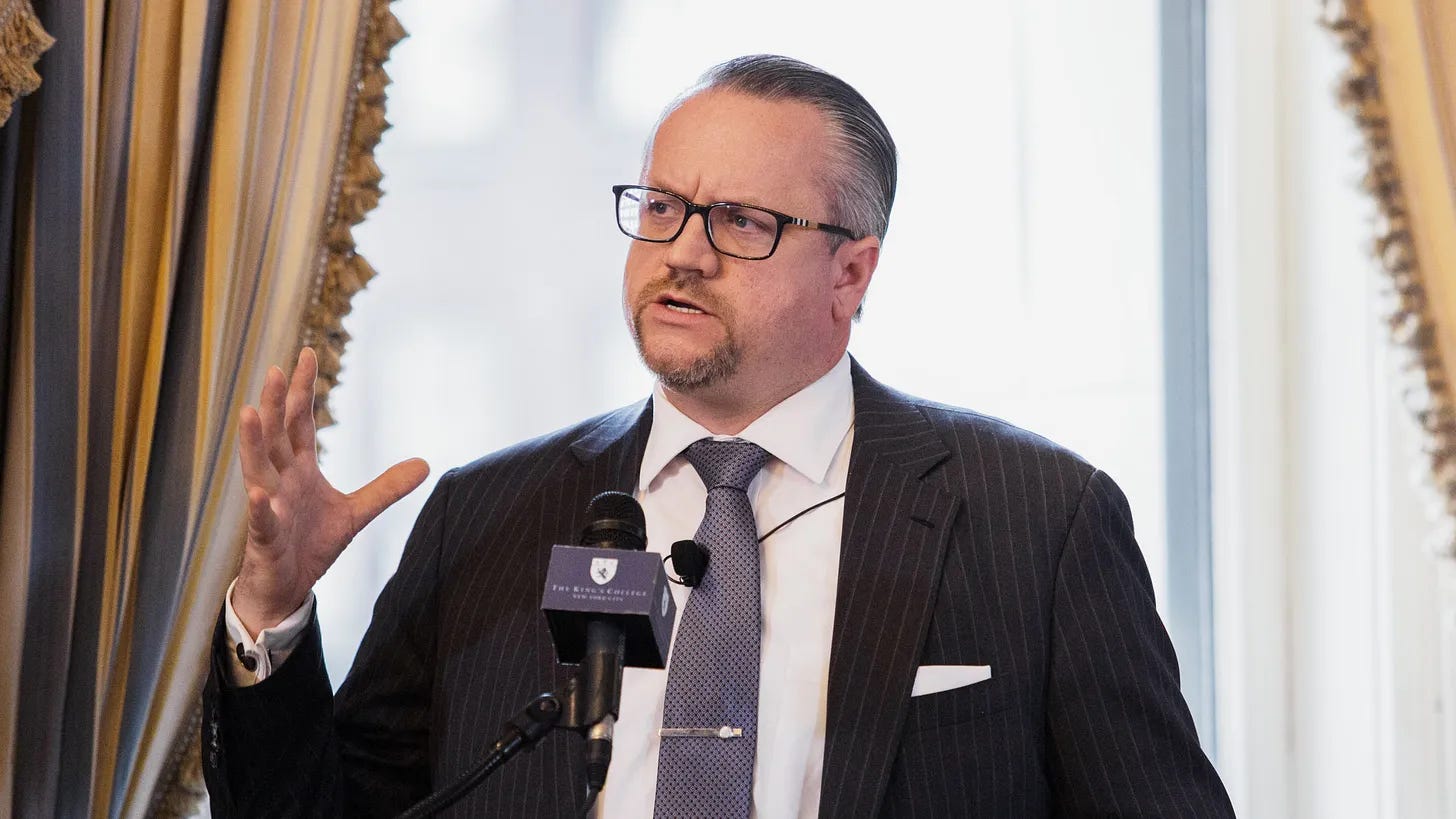
David L. Bahnsen is founder, managing partner, and chief investment officer of the Bahnsen Group, where he oversees the management of more than $4.5 billion in client assets. He is also a FreeCon signatory.
Bahnsen is a frequent guest on CNBC, Bloomberg, Fox News, and Fox Business, and is a regular contributor to National Review. He hosts the popular weekly podcast, Capital Record, dedicated to a defense of free enterprise and capital markets.
In a recent National Review column, Bahnsen designated reform of America’s legal system as “the next supply-side battle.”
“The supply-side movement, rightly understood, doesn’t simply support tax cuts,” he wrote. “It champions the production of goods and services as the foundation of a flourishing economy, and it should take on forces that oppose this cause.
“Today, the greatest threat to economic productivity is America’s noxious legal environment. Excessive legal costs, the prevalence of frivolous lawsuits, and the fear of legal action all massively impede pro-growth decision-making. Legal reform must become the next cause of the supply-side movement. Our economic well-being depends on it.”
Capital idea
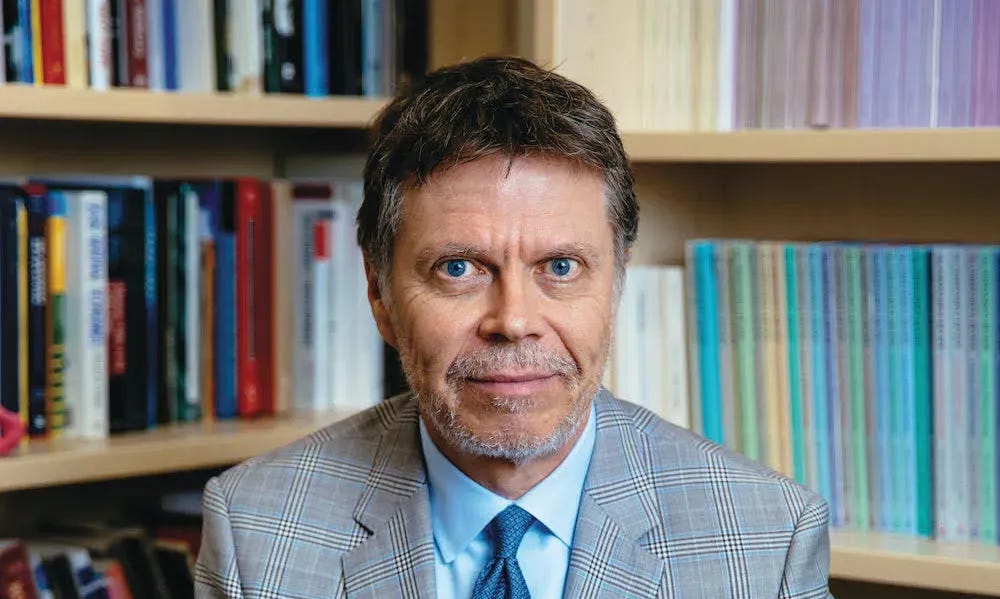
Donald J. Boudreaux is a research fellow at the Independent Institute and professor of economics at George Mason University. He is also a FreeCon signatory.
In a recent Washington Post piece co-written with economist Mark J. Perry, Boudreaux challenged the conventional wisdom that trade deficits are economically harmful.
“If trade deficits drain wealth from a country, Americans’ average real net worth would have fallen over the past half-century,” they wrote. “Instead, even after accounting for growing government debt, it has risen significantly.”
Boudreaux and Perry pointed out that “U.S. trade deficits reflect rising investment in America, not necessarily excessive consumption.” Because of the way international economic accounting works, a net inflow of investment into a country — a surplus in the capital account — is typically accompanied by a corresponding deficit in the current account, which reflects trade in goods and services.
“Fifty years of trade deficits have not drained the United States of wealth or mortgaged its future to foreigners,” they concluded. “Rather, by bringing trillions of dollars of foreign investment capital to the nation’s shores, they have enriched it. That’s an economic outcome to celebrate, not one to condemn or correct.”
Bad news for Team Blue
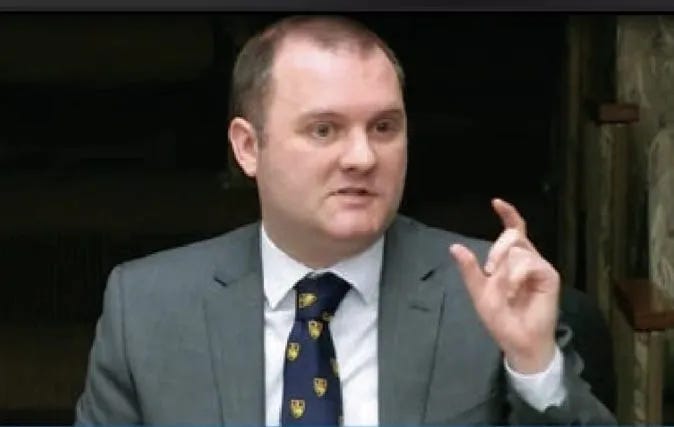
John Phelan is an economist at the Minnesota-based Center of the American Experiment and a FreeCon signatory.
In a recent piece for The Daily Economy, Phelan contrasted the economic performance of conservatively governed states with those administered by left-wing governors and legislatures.
“When they vote with their feet, Americans make it abundantly clear which of these models they prefer,” he wrote. From 2020 to 2025, 3.5 million Americans left “Blue” states for elsewhere in the U.S. while “Red” states gained 3.2 million residents.
“These movements will have political consequences which Democrats are unlikely to appreciate,” including shifts in congressional representation and the Electoral College. “In politics, economic policy is destiny.”
In the mix
• At his Let People Prosper Substack, FreeCon signatory and former White House economist Vance Ginn contrasted the principles and policies offered by Freedom Conservatives from those of rival movements such as Christian nationalism and National Conservatism.
“Christian nationalism is right to worry about moral decay, family breakdown, and cultural drift,” Ginn allowed, but “once the state is asked to enforce a thicker religious or national identity, the line between moral witness and coercive politics gets blurry fast. The government is not and shouldn’t be the church. It is not a good shepherd.”
And National Conservatism is “often right to criticize elite detachment, institutional rot, and the failures of global managerialism. But it too often drifts toward tariffs, industrial policy, centralized favoritism, and the idea that national strength requires more state direction.”
• At The Free Press, FreeCon signatory Jonas Du explained how Dartmouth College president Sian Beilock’s response to campus protests and controversies differed dramatically from that of other Ivy League institutions.
“While other university presidents were preoccupied with campus agitators and either fending off or capitulating to investigations by the Trump administration, Beilock used her power to keep the peace at Dartmouth,” wrote Du. “That has given her the credibility to articulate a vision of reform for American colleges and universities that she hopes will restore the public’s trust in them.”
“If we as leaders can’t take responsibility for what we’re doing and be held accountable for outcomes,” Beilock told Du, “I worry someone else will try and do it for us.”