
The FreeCon project began as a statement of principles. To “ensure that America’s best days are ahead,” signatories pledged to defend individual liberty, limited government, free enterprise, free trade, free speech, equal opportunity, the rule of law, and the vital institutions of civil society.
But Freedom Conservatism is more than just a set of public commitments. It is a strong network of leaders who are working together to build an effective American Right for the 21st century.
We hold regular FreeCon briefings on Capitol Hill and in legislatures across the country. We advise public officials and candidates. We train students and young professionals for key roles in government, business, journalism, advocacy, academia, and the law. We hold public events such as the Freedom Conservatism Conference (the 2026 meeting is coming up on May 20 at Capital Turnaround in Washington).
In addition, FreeCons communicate constantly with policymakers, political activists, and the general public through video, audio, and the printed word. Among our most effective communicators are those who write regularly for national, regional, and local news outlets. Today we feature some of their recent work.
National gallery
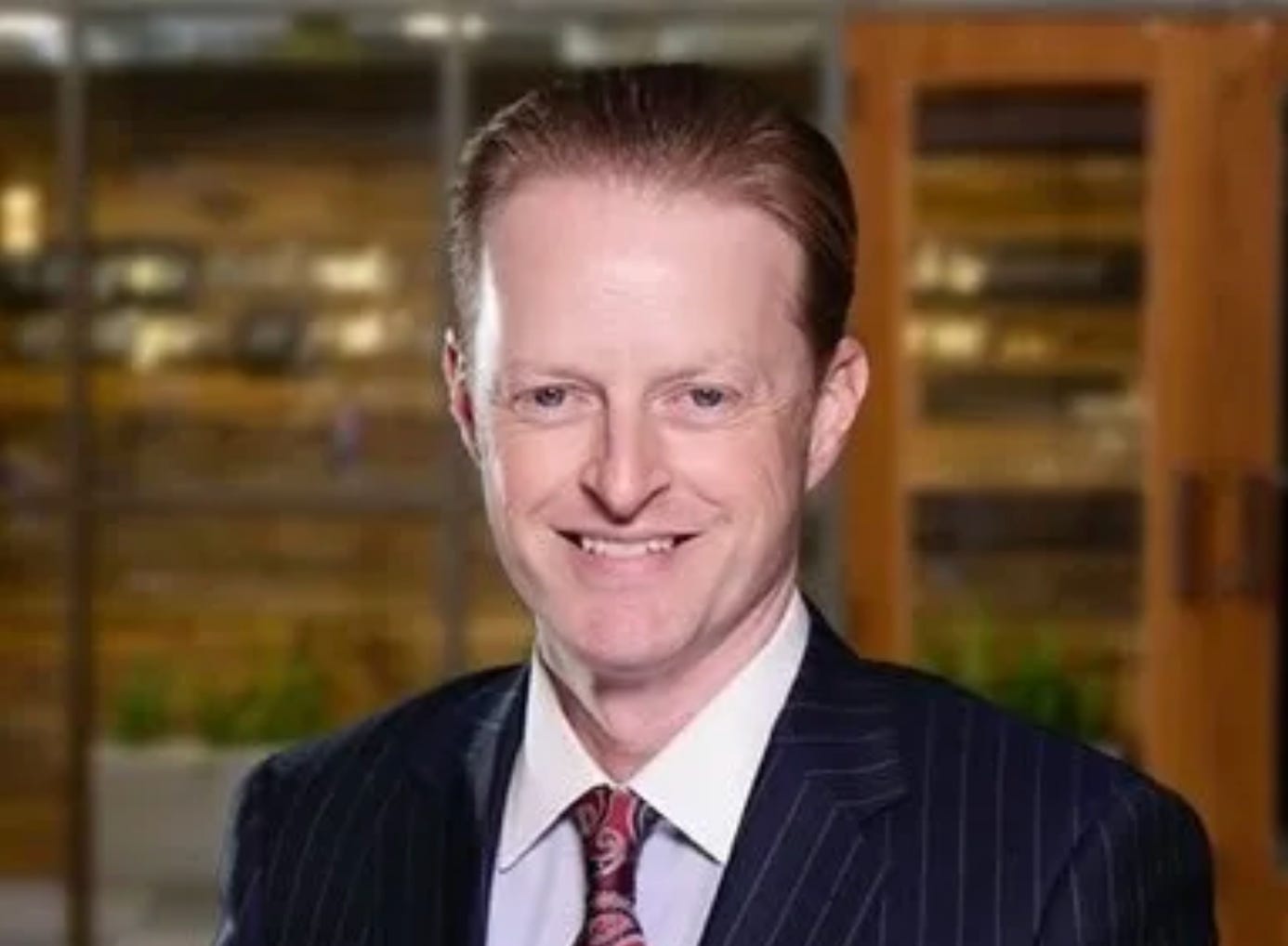
FreeCon signatory Lathan Watts is a columnist for Townhall and vice president of public affairs for Alliance Defending Freedom and its sister organization ADF Action.
In a recent column, Watts described the “haunting beauty” of former U.S. Sen. Ben Sasse’s “swan song.”
During an appearance on the show “Uncommon Knowledge,” the terminally ill Sasse “evoked Cincinnatus as the inspiration for George Washington to return to Mt. Vernon after two terms. He spoke admiringly of federalism, republican government, our founding fathers, and the Constitution.
“He did so without the seemingly requisite, modern-day genuflecting caveats about their personal failings or the document’s imperfections. These failings and imperfections seem to be the only common knowledge among many Americans, regardless of their educational credentials.”
• FreeCon signatory George Will is a longtime columnist for The Washington Post and author of, most recently, American Happiness and Discontents.
In a recent Post column, Will argued that California governor and would-be presidential nominee Gavin Newsom has a “hold-a-wolf-by-the-ears problem.”
“Immigration is the sincerest form of disparagement of the place fled from,” he wrote. “California, which has gained congressional seats after every decennial census since attaining statehood in 1850, probably will lose four after 2030. Texas probably will gain four, thanks partly to disgust with the continuity of Newsom’s governance with California’s ‘blue state model’ of subservience to public-employee unions.”
“For any Democrat with national aspirations, coping with the party’s progressive wing is like holding a wolf by the ears: Can you let go without being mauled? Newsom is either going to find out, or be mauled by the national electorate for not letting go.”
• FreeCon signatory Karl Rove is a former White House deputy chief of staff and a weekly columnist for The Wall Street Journal.
In a recent Journal column, Rove warned Democrats not to count on a “Texas blue wave” in 2026. While more Democrats than Republicans turned out for the first balloting of the cycle, “primary turnout isn’t a reliable predictor of general-election outcomes.”
“To gauge Democratic chances for a statewide victory in Texas, it’s best to wait for the Republican Senate runoff,” he continued. “The nomination of the scandal-ridden Attorney General Ken Paxton instead of Mr. Cornyn could let Democrats repeat in Texas what they did in a 2017 Alabama Senate special election. That’s when Democrat Doug Jones beat a baggage-laden Republican candidate, Roy Moore.”
Other FreeCons who write regular columns for national outlets include Ramesh Ponnuru and Marc Thiessen in The Washington Post, Jack Butler in The Wall Street Journal, Kevin Williamson in The Dispatch, Noah Rothman and Charles C.W. Cooke in National Review, Merrill Matthews in The Hill, Stephen Moore in The Washington Times, and Donald Devine in The American Spectator.

Byline local
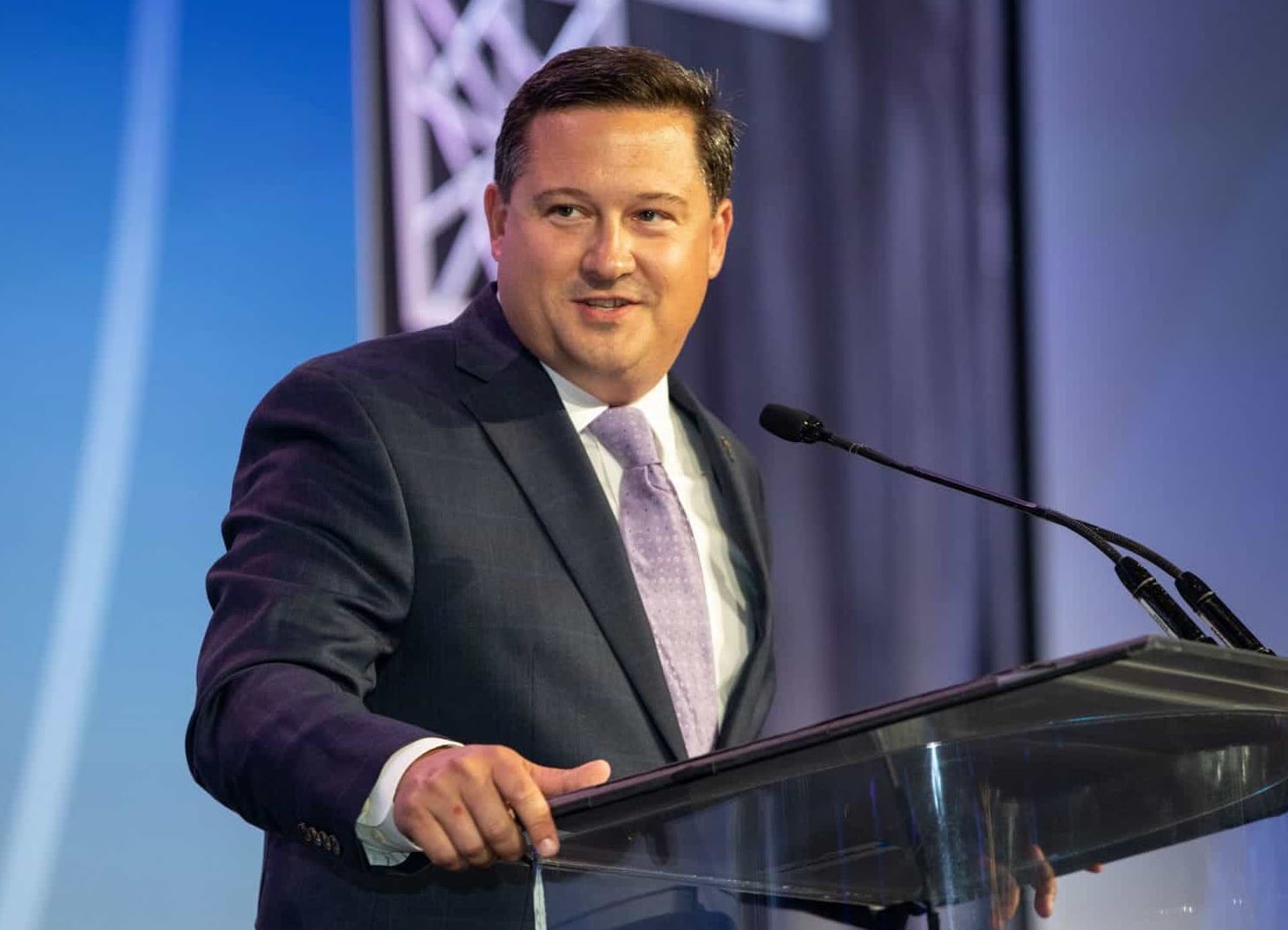
FreeCon signatory Michael Reitz is a columnist for the Detroit News and executive vice president of the Mackinac Center for Public Policy.
In a recent column for the News, Reitz summarized the Freedom Conservatism project and argued that it is “useful to restate the foundational ideas that enabled America to be the shining city on a hill for 250 years.”
“Repetition is important,” he added. “Ronald Reagan warned that we must not take America for granted: ‘Freedom is a fragile thing and it’s never more than one generation away from extinction.’”
“We have not always lived out our values as a people, but major national milestones moved us closer to them. The Bill of Rights. The Emancipation Proclamation. Women’s suffrage. The civil rights movement. In those moments, America did not radically change herself as much as she further embraced her founding principles.”
• FreeCon signatory Jeff Jacoby is a longtime columnist and associate editor at the Boston Globe. In a recent Globe column, he condemned a Tennessee representative for proclaiming that “Muslims don’t belong in American society” and “pluralism is a lie.”
“The United States was not built as a homeland for any single tribe, creed, or ethnic stock,” Jacoby wrote. “It was built on the radical proposition that people of every background and faith could become, and remain, fully American.
“There have always been boors and demagogues to claim that some minorities are so alien, or their beliefs so malignant, that they can never become true Americans. But there have also always been other Americans — better Americans — to prove them wrong.”
“During the debate on independence in 1776,” he continued, “Richard Henry Lee of Virginia declared that the promise of America had no religious barrier, and would extend to ‘the Mahomitan’ no less than to adherents of any other creed. George Washington wrote to assure religious minorities that the blessings of America were meant for them, too.
“They understood that pluralism is no lie. It is what makes America worth loving, and even dying for.”
• FreeCon signatory David Mastio is a national columnist for the Kansas City Star and editor of McClatchy’s The Point.
In a recent column for the Star, Mastio praised the Democrats rushing to the defense of freedom of speech. “What Donald Trump has done is a five-alarm fire for free speech,” he wrote.
But he pointed out that these same progressives were noticeably silent when prior Democratic administrations and congresses were doing their own damage to the First Amendment.
“Donald Trump was not the first person to use a law to try to shut down a political video he didn’t like, the Democrats were,” he wrote.
And “it wasn’t fascist Donald Trump who erected a Ministry of Truth controlled by the White House to silence millions of everyday Americans who had critical things to say about him. It was Joe Biden.”
Other FreeCons with regular columns in regional and local newspapers include Jonah Goldberg in the Los Angeles Times, Quin Hillyer in the New Orleans Times-Picayune and New Orleans Advocate, Andy Brehm in the Minnesota Star-Tribune, Krista Kafer in The Denver Post, Lynn Schmidt in the St. Louis Post-Dispatch, Andrew Dunn in the Raleigh News & Observer, Matt Wylie in The Charlotte Observer, Cecil Bohanon in the Indianapolis Business Journal, and John Hood in Carolina Journal.
In the mix
• At the Washington Examiner, FreeCon signatory Tim Chapman urged Congress and the Trump administration to embrace a “proven and tested affordability agenda that delivers real results for the public ahead of the midterm elections.”
That means abandoning “tariffs, credit card interest rate caps, and 50-year mortgages” as “nonstarters,” wrote Chapman, president of Advancing American Freedom. Instead, alternatives such as “deregulation, freeing federal lands for housing development, and cutting government spending” are “proven ways to tame the affordability crisis.”
“Affordability isn’t a Democratic hoax or media conspiracy to take down the president,” he continued. “It’s a lived reality for the millions of American families who check their receipts when leaving the grocery store with a slight panic, review their bank and credit card statements with anxiety, or have given up on eating out due to higher costs.”
• At the Chicago Tribune, FreeCon signatory Sara Albrecht argued that the Trump administration should immediately refund its illegally levied taxes on imports — and to do so the “right way.”
“Tariff refunds should follow the legal payment trail,” wrote Albrecht, who chairs a public-interest legal firm, the Liberty Justice Center, that represented plaintiffs in the tariff case.
“They should be returned to the importer of record — whether that is a small business directly or a customs broker or carrier clearing goods on its behalf. Those intermediaries can then reconcile accounts with their customers under the contracts that governed those transactions. And then businesses should be trusted to decide what comes next.”
• In a recent Substack post, FreeCon signatory Jack Salmon explained that nearly all of the federal government’s projected deficits are attributable to spending growth, not tax cuts.
“As federal revenues are forecast to be notably higher than the point of neutral budget balance by 2055,” wrote Salmon, a research fellow at the Mercatus Center, “98% of the long-term structural deficit can be attributed to spending policy decisions, while just 2% is attributed to tax policy.
“Specifically, 67% of the long-term structural deficit is attributed to growth in net interest payments on the debt, while the remaining 31% is attributed to growth in mandatory spending programs” — with Medicare the primary driver.