
We will know soon enough how the 2026 midterms turned out. But we don’t need to wait for the election returns to form a conclusion on the efforts of nationalists, postliberals, and reactionaries to take over America’s conservative movement and shift it away from America’s founding principles of individual liberty, limited government, decentralization, and civic republicanism.
They have failed.
When their populist ideas are translated into wrongheaded policies such as punitive tariffs and government stakes in private companies, they prove economically calamitous and fiscally irresponsible. And when these voices of the Dissident Right embrace bigots, cranks, and conspiracy theorists, they injure the cause of conservatism and shrink rather than expand its ranks of adherents.
Freedom Conservatives will talk about these and other matters at four post-election events: FreeCon Phoenix on November 16, FreeCon Philadelphia on November 17, FreeCon Raleigh on November 18, and the 2026 Freedom & Progress Conference, also on November 18 in Washington, D.C. Today we spotlight the work of FreeCons and allies who are featured speakers at these events.
Fusion menu
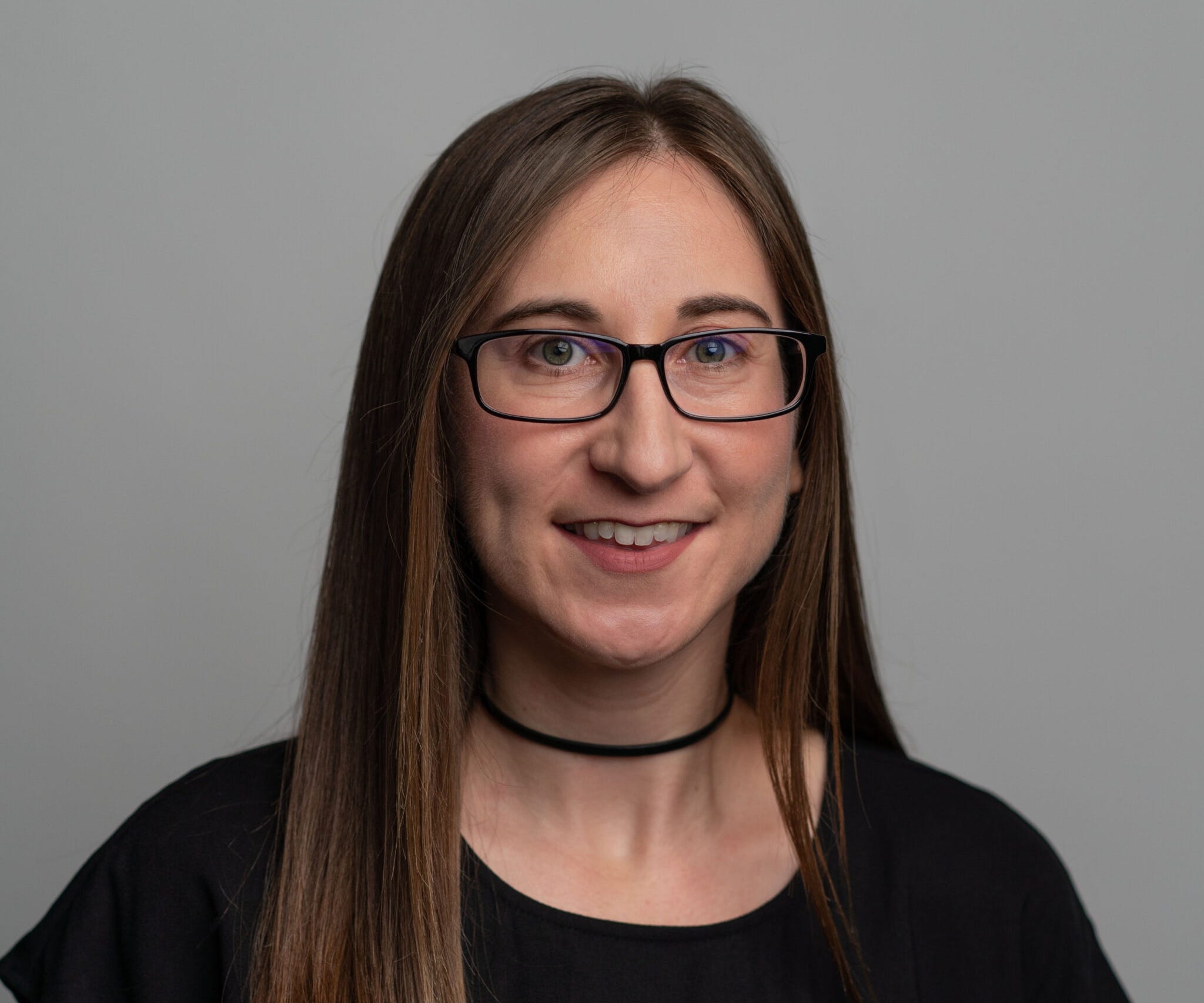
The publication of Stephanie Slade’s new book Fusionism: Liberty, Virtue, and the Future of the American Right has prompted a spate of reviews, articles, and assessments of her thesis that the American Right should champion both the cause of individual freedom and the tradition of moral virtue.
Fusionism, she wrote, is “rooted in the idea that human beings were created by God for a purpose and that fulfilling that purpose requires cultivating good habits. Not every fusionist has the same religious views, but all share a common appreciation for the timeless wisdom of their patrimony. And unlike many on both the Left and the Right today, they know that freedom is an integral part of Judeo-Christian moral thought.”
FreeCon signatory Thomas Howes agrees. In a Law & Liberty review of what he called Slade’s “fantastic new book,” Howes endorsed her argument that “fusionism, rather than a mere coalition that only made sense in the Cold War but not afterward, is a coherent philosophy.
“Not only is it a philosophy, but it is also the philosophy of the Founding Fathers. It is the philosophy of liberty and virtue, and even a claim that liberty and virtue are mutually reinforcing.”
Also writing in Law & Liberty, FreeCon signatory and Hillsdale College professor Bradley Birzer wrote that “Fusionism is one of the most important books not only of 2026, but of the first third of the twenty-first century. It is an able retelling of the past, but also a guide to the future.”
In a Civitas Outlook forum about the book, FreeCon signatory Richard Morrison observed that over the past decade, “right-wing political rhetoric has begun to tilt away from the traditional equilibrium of small government, economic freedom, and personal virtue — what we generally call fusionist ideas.”
“For Slade and many of her fellow critics, this is a time for choosing as serious as any in modern history,” wrote Morrison, a senior fellow at the Competitive Enterprise Institute, for “action must be taken to defend the governmental restraint and commitment to due process that were once the hallmarks of principled conservatism in the American political system.”
And in The American Spectator, FreeCon signatory Donald Devine defended Slade’s book from critics on the Dissident Right. “Fusionism’s freedom synthesis is anchored not on an abstract ‘virtue,’ as many traditionalists would have it, but on a real history anchored on a time-tested tradition,” wrote Devine, a senior scholar at The Fund for American Studies. “Reagan indeed followed that tradition, and it is still conservatism’s best bet for a moral and free future.”
Freedom Conservatives and all others interested in the future of the American Right should read the book. Slade will also be the keynote speaker at one of Freedom Conservatism’s three post-election regional summits: FreeCon Raleigh on November 18. Find out more here.
Keep it simple
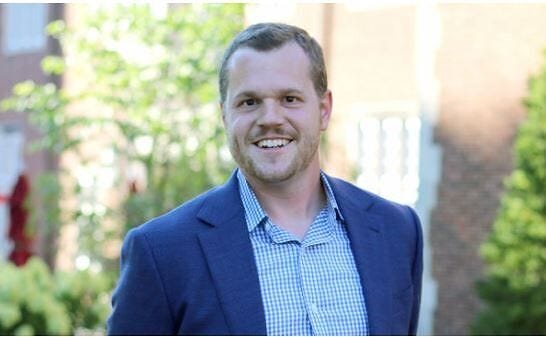
Caleb Fuller is an associate professor of economics in the Winklevoss School of Business at Grove City College, a research fellow at the Independent Institute, and a FreeCon signatory.
In a recent piece for The Daily Economy, Fuller and coauthor Scott Burns urged opponents of heavy-handed government intervention to keep their case for free trade simple.
“Think of it this way,” they wrote. “Each side of the ocean works for the other while the other is asleep. While you were sleeping, countless people on the other side of the globe toiled away on products you’ll soon enjoy, letting the dollars you earn stretch much further. You’ll have a chance to do the same for them when you wake up. Isn’t that the dream? To have people working to meet your needs while you… sleep? Yet that is precisely what free trade makes available to each of us.”
In another article, this one in The Independent Review, Fuller and Burns demolished the populist claim that America’s economic development during the 19th and early 20th centuries was fostered by protectionist tariffs.
“Many of the manufacturing industries that protectionists often claim arose in this era actually arose in the relatively free trade antebellum era rather than the more protectionist postbellum era,” they pointed out. “The main industry that tariffs stimulated during this period was lobbying and rent-seeking in Washington, D.C., as special interest groups flocked to the nation’s capital to lobby for tariffs on foreign competitors.”
“Today’s tariff defenders should be credited for looking to history to justify their proposals. Wise men should try to learn from history. Alas, their interpretation of the historical record is dead wrong.”
Fuller will be a featured speaker at FreeCon Philadelphia on November 17. Find out more here.
Shell game
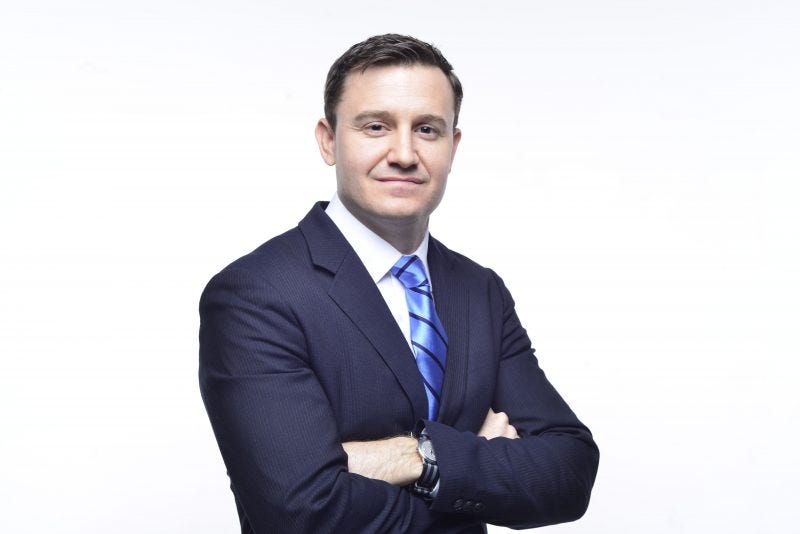
Jon Riches is Vice President for Litigation at the Goldwater Institute’s Scharf-Norton Center for Constitutional Litigation.
In a recent piece for Arizona Talks, Riches focused on regulatory impediments to affordability and economic opportunity, including a rule that raises the cost of eggs in his state.
The Arizona legislature never enacted such a law, yet an administrative agency is attempting to enforce the policy. That’s not how the process is supposed to work, Riches argued.
“Legislators introduce bills. Citizens testify. Competing interests make their case. Elected representatives cast recorded votes. And if Arizonans dislike the result, they can vote those lawmakers out of office.”
“Arizona’s founders divided government power for a reason,” he concluded, “and courts have a vital role in ensuring that each branch remains within its lawful boundaries. Courts should not relax those boundaries simply because the constitutional process may be time-consuming or inconvenient.”
Riches will be a feature speaker at FreeCon Phoenix on November 16. Find out more here.
Break up monopolies
The 2026 Freedom & Progress Conference, the flagship event of the Foundation for Research on Equal Opportunity, will be held on Wednesday, November 18 from 8am to 4:30pm at Le Méridien Washington, D.C., The Madison.
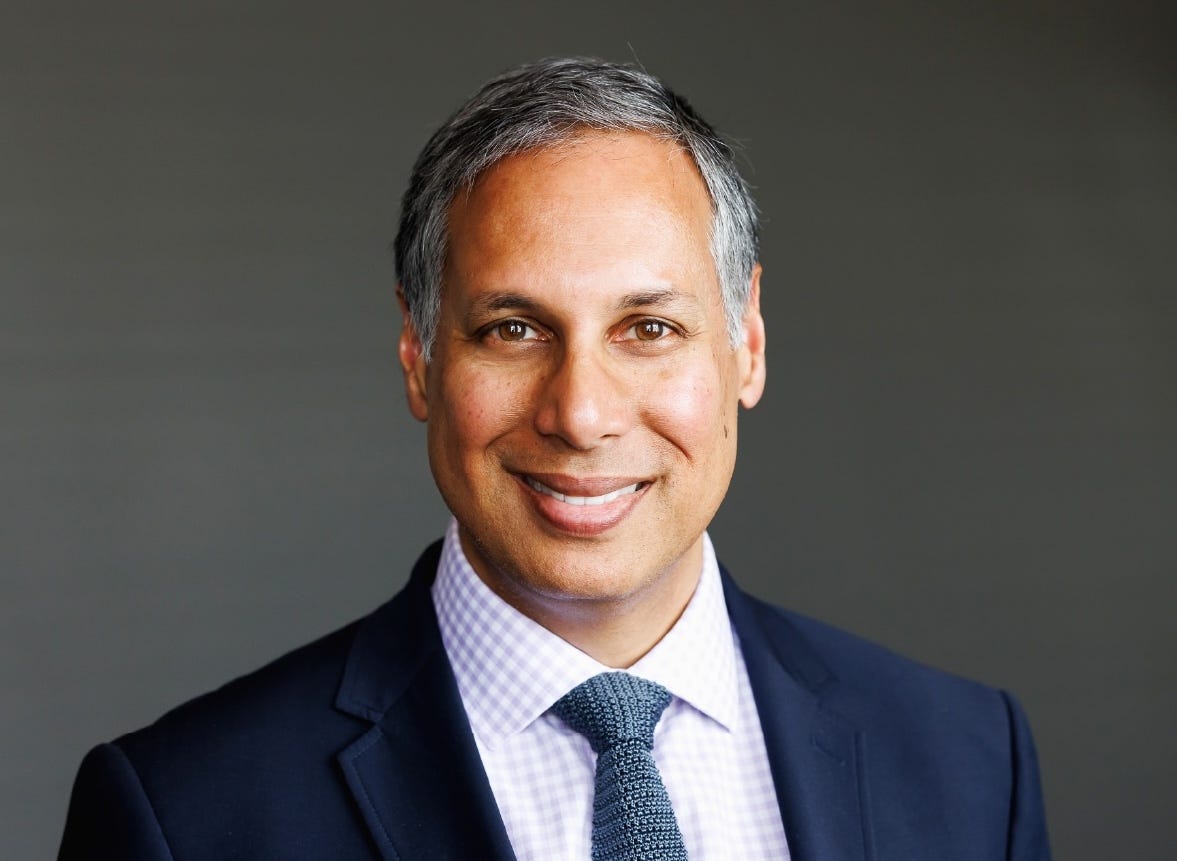
Among this year’s speakers are FreeCon signatories Tim Chapman, Iain Murray, Ilya Shapiro, Dan Lips, Kurt Couchman, Casey Mattox, Laura Maristany, Gregg Girvan, Brent Orrell, Scott Winship, and Avik Roy, founder of FREOPP and co-founder of the Freedom Conservatism project.
In a recent interview with the pro-federalism journal American Habits, Roy explained why states should take action to break up healthcare monopolies. “The hospital lobby is incredibly powerful, and many state attorneys general are reluctant to challenge it,” he said. “They look in the mirror and see a future senator or governor, knowing that taking on hospitals could end that future. So, the problem persists.”
To find out more about Avik Roy and other speakers at the 2026 Freedom & Progress Conference, and to register for the event, click here.
In the mix
• In the Dallas Morning News, FreeCon signatory Tom Giovanetti explained why he’s voting this year on the positions and records of the candidates, not their self-descriptions or party labels.
“Too many who called themselves conservatives found it easy to discard long-held beliefs in order to secure victory for Republican candidates, even when those candidates offended or even scorned their values,” wrote Giovanetti, president of the Institute for Policy Innovation.
“I have no idea how the election is going to turn out,” he concluded, but if the election goes badly for Republicans, “it won’t be because people like me weren’t sufficiently loyal. It will be because the party, at least as represented by its primary voters and elected officials, has lost people like me by abandoning its heritage. This one isn’t on me — this one is on you.”
• At Civitas Outlook, FreeCon signatory Juliana Geran Pilon reviewed a new book by Axel Kaiser Barents von Hohenhagen arguing that “Marx, Lenin, and Hitler were beasts of the same feather: hawks in wolf’s clothing.”
“The allure of oneness at the heart of the collectivist, anti-individualist impulse” had great appeal “to both Mussolini and Lenin,” wrote Pilon, senior fellow at the Alexander Hamilton Institute for the Study of Western Civilization. “They similarly claimed to advocate on behalf of the toiling masses, the have-nots, against rich capitalists, bankers, and owners—i.e., capitalists—who did not work but greedily and mercilessly exploited their workers.”
“Kaiser’s observation that ‘the enormous influence Marx had on fascism is often overlooked’ understates the problem with characteristic restraint.”
• At his Substack First Principles, FreeCon signatory John Hart speculated about the possibility of American voters staging a revolt against corruption.
“Our system was designed to run on the consent of the governed and a social contract,” wrote Hart, CEO and founder at Mars Hill Strategies. So “when policymakers seem more interested in making themselves rich than in the voters who put them in office, the public’s disgust rightly overwhelms everything else.”
“It doesn’t matter what politicians say about gas prices or affordability if the public believes policymakers aren’t showing up for work to serve the people who put them in office.”
“Voters are desperate for a return to first principles, which produce far more winning than ramping up the favor factory and indulging in Bacchanalian self-dealing spending orgies.”