
When Freedom Conservatives released our statement of principles in 2023, we championed such traditional causes as limited government, individual liberty, free enterprise, fiscal responsibility, and equal protection under the law. “To ensure that America’s best days are ahead,” FreeCons proclaimed, “we must apply the timeless principles of liberty to the challenges of the 21st century.”
Among those timeless commitments is free speech. “Essential to a free society is the freedom to say and think what one believes to be true,” we wrote.
One element of American culture that distinguishes it from other political cultures is our commitment to free speech, as FreeCon signatory Casey Mattox explained in a recent essay. “The fundamental difference between Americans and Europeans — other than access to air conditioning and our preferred form of football — is that the American Constitution protects rights that precede any government.”
“A functioning free speech culture requires more than judges enforcing constitutional doctrine,” Mattox concluded. “It requires citizens willing to defend the right of people they profoundly disagree with.”
Among the hundreds of signatories to the Freedom Conservatism statement are journalists and commentators exercising freedom of speech, professors teaching students to venerate and practice it, and litigators defending the principle in state and federal courts. And at our regional events next month — FreeCon Phoenix, FreeCon Philadelphia, and FreeCon Raleigh — our featured speakers include passionate defenders of free speech. Today we feature some of their recent work.
All or none
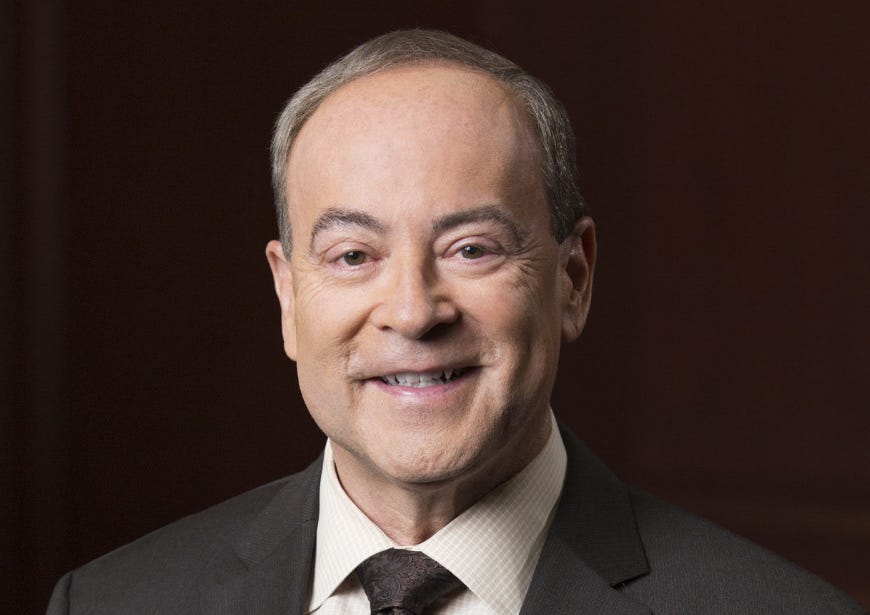
Clint Bolick is a justice on the Arizona Supreme Court, former vice president for litigation at the Goldwater Institute, and co-founder and former vice president for litigation of the Institute for Justice. On November 16, Bolick will be the keynote speaker at FreeCon Phoenix, hosted by Goldwater, the 1912 Institute, and other partners.
In a broadcast interview discussing the public reaction to Charlie Kirk’s murder, he bemoaned the use of government power to punish or discourage freedom of speech. “I think Charlie Kirk himself had said it best: There is no such thing as legal hate speech that can be regulated or curtailed,” Bolick said. “It is speech, and all speech is protected.”
When the FCC subsequently threatened the broadcast licenses of ABC stations after Jimmy Kimmel’s comments about Kirk, it exceeded its legal role, he explained. “The moment that the government puts its fingers on the scale and coerces speech, that is clearly improper.”
One of most critical protections of the First Amendment is the U.S. government’s separation of powers, especially the exertion of authority between the legislative and executive branches, he argued. “We either have universal free speech rights that apply to all of us, or we do not have free speech rights at all.”
Click here to learn more about and register for the FreeCon Phoenix event on November 16.
Red light, green light
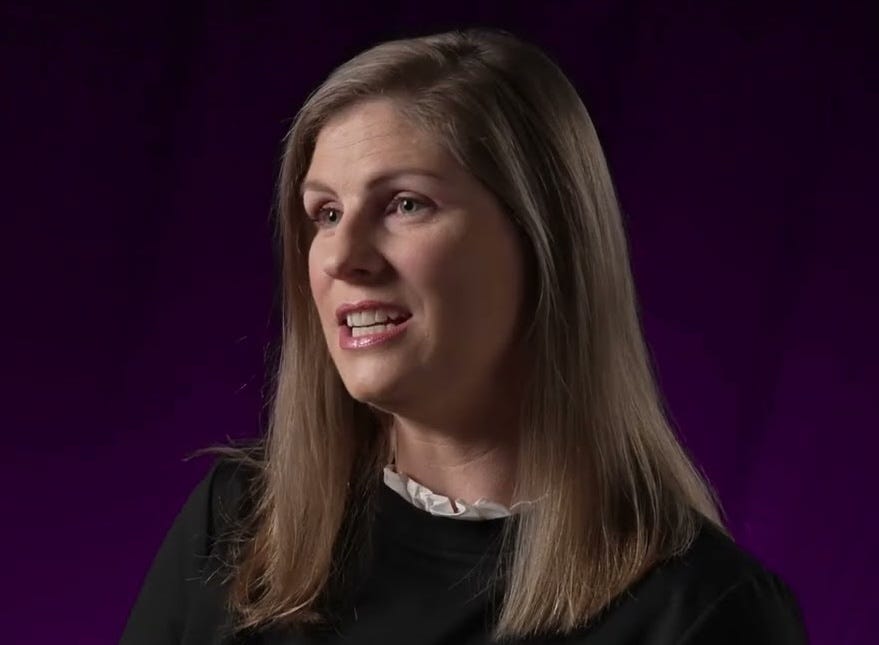
Jenna Robinson is president of the James G. Martin Center for Academic Renewal, a Freedom Conservatism signatory, and a featured speaker at FreeCon Raleigh, to be co-hosted on November 18 by the John Locke Foundation, Carolina Journal, and the Competitive Enterprise Institute.
During a recent podcast appearance with the Furman Free Speech Alliance, she discussed the expansion of free-speech protections on campuses in her home state. “North Carolina has more green-light schools than any other state in the nation,” Robinson said, citing ratings by the Foundation for Individual Rights and Expression, but where universities are still “lagging” is “free speech culture.”
“Policies are absolutely necessary to get right, and that’s what I spend most of my time working on. But culture is also necessary. Policy alone will not do all the work of free speech reform.”
As for academic freedom, Robinson said that it “governs what a faculty member can research and what they teach in their courses. It’s not the purview of a board or a state to say, ‘You can’t research race relations’ or ‘You can’t research LGBT issues.’ That would be a violation of academic freedom. But to say, ‘You have to teach the course we are paying you to teach’ — that’s an entirely legitimate limit. You cannot say you’re going to teach Physics 101 and then go in and rant about President Trump. That would be an abuse of academic freedom.”
“There’s also a difference between academic freedom and free speech. If a faculty member mouths off on Twitter, that’s a free speech question. What they say in class is an academic freedom question. They intersect, but they’re not the same.”
Click here to learn more about and register for the FreeCon Raleigh event on November 18.
Anti-Trust
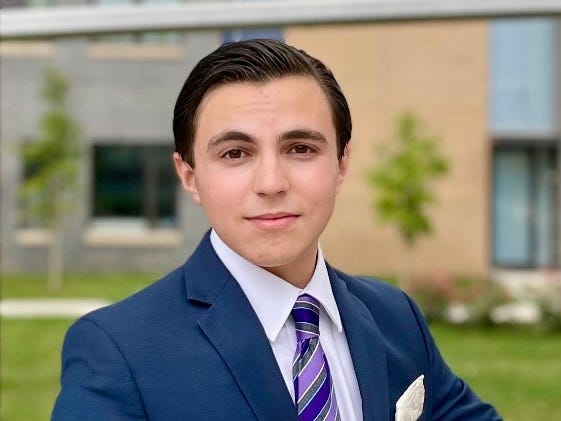
John Puri is the Thomas L. Rhodes Fellow at National Review, a Freedom Conservatism signatory, and a featured speaker at FreeCon Philadelphia, to be co-hosted on November 17 by National Review Institute and the Commonwealth Foundation.
In a recent magazine feature, Puri criticized the Trump administration use of antitrust enforcement and other regulatory tools to impose the president’s personal and political preferences on private companies.
Right before the 2024 election, for example, Trump sued the television network CBS over a 60 Minutes interview with Kamala Harris that he said was deceptively edited to conceal her vacuity. Making Harris sound coherent, Trump’s lawyers alleged, was a “brazen attempt to interfere in the 2024 U.S. Presidential Election.”
“Preposterously, they demanded that CBS pay $10 billion in damages,” Puri wrote. “The network was defiant at first, affirming that the lawsuit ‘is completely without merit’ and that it will ‘vigorously defend against it.’ Its parent company, however, faced a dilemma. CBS was owned by Paramount, which was then attempting to merge with another media company, Skydance. Because the transaction would change the ownership of CBS broadcast licenses, it required FCC approval. After the election results came in, Paramount realized that the next FCC chairman would be appointed by Trump.
“A quid pro quo was never made explicit. But, as FCC review of the deal dragged on for months, Paramount sought to speed up the process. The company’s controlling stakeholder, Shari Redstone, pushed CBS to settle Trump’s lawsuit, as executives believed it was holding up the sale to Skydance. Paramount decided on July 1 to give in, settling with the president for $16 million. The payment was nothing compared with the $8 billion merger at stake.”
Click here to learn more about and register for the FreeCon Philadelphia event on November 17.
In the mix
• In an op-ed that appeared in multiple newspapers across the country, including The Daily Republic, FreeCon signatories Robert Lawson and Matthew Mitchell reported the latest rankings of the Economic Freedom of the World index.
“The evidence is overwhelming that economically free people are prosperous people,” wrote Lawson, the Fullinwider Chair in Economic Freedom at Southern Methodist University, and Mitchell, a senior fellow in the Centre for Human Freedom at the Fraser Institute. “Those who live in more economically free societies enjoy higher incomes and less poverty. They work fewer hours and are more satisfied with their lives. They even live longer, are less likely to die in infancy, and seem to be better stewards of the natural environment.”
Unfortunately, United States fell in the rankings in 2025. “Trump’s second term was supposed to portend the dawn of a new era,” they wrote, but instead “government is bigger, property rights and the rule of law are weaker, and trade is more restricted.”
• At Law & Liberty, FreeCon signatory Richard Reinsch encouraged Congress to reclaim its constitutional power over the use of American military force.
“Past measures can’t be undone, nor can all future uses of war powers be seamlessly rationalized with the proposed program,” wrote Reinsch, the editor-in-chief of Civitas Outlook, “but Congress can pass laws that firmly and transparently proclaim and bind future presidents’ actions regarding the use of force. The first measure should be Congress’s insistence that all military expenditures used to begin an offensive war receive Congress’s approval before the expenditure.”
• At The Wall Street Journal, FreeCon signatory Christian Schneider warned that American consumers may be in a “toxic relationship” with their retailers.
“Today, digital transactions leave a trail businesses use to follow you around the world,” wrote Schneider, who publishes the Anti-Knowledge newsletter and is co-host of the “Wasn’t That Special: 50 Years of SNL” podcast.
“Perhaps we will someday return to a world that doesn’t make my underwear purchases a matter of public record. Until then, those looking to buy dog treats without being spammed by emails for all eternity will have to arrange clandestine meetings in pet store parking lots.
“Mark Twain once boasted that he could remember anything, whether it had happened or not. Amazon has him beat. It will remember everything, whether we’d like it to or not.”