
As formerly conservative institutions drift towards populism and nationalism, Freedom Conservatives are fighting to rebuild an American Right capable of persuasion, electoral success, and effective governance.
“Authoritarianism is on the rise both at home and abroad,” we wrote in the FreeCon Statement of Principles. “More and more people on the Left and Right reject the distinctive creed that made America great: that individual liberty is essential to the moral and physical strength of the nation.”
While NatCons and other critics claim our focus on liberty elevates “mere process” above human flourishing, we recognize that only by treating all people with respect, as free and equal before the law, can American greatness be achieved and sustained.
Writing in Law & Liberty, Dan Rothschild, director of the Center for Civics, Education, and Opportunity at the Ronald Reagan Presidential Foundation and Institute, aptly described the nationalist-populist Right as “awash with intellectual energy” that is “almost entirely placed into service of revanchist efforts to re-popularize old bad ideas, or in the American context, to take various strains of foreign conservatism that have never had purchase in the United States and bring them to our shores.”
“Tariffs, industrial policy, welfare statism, clientalism, protecting incumbent firms and favored sectors, and nostalgia-based grievance rhetoric all have significant purchase” among elected officials aligned with the populist Right, Rothschild continued, but “all are ideas that have been tried and failed.”
Today we feature the work of FreeCons articulating a more robust and relevant conception of American conservatism, one seeking to conserve the practical wisdom and moral foundations of a free and just society.
Rules of evidence
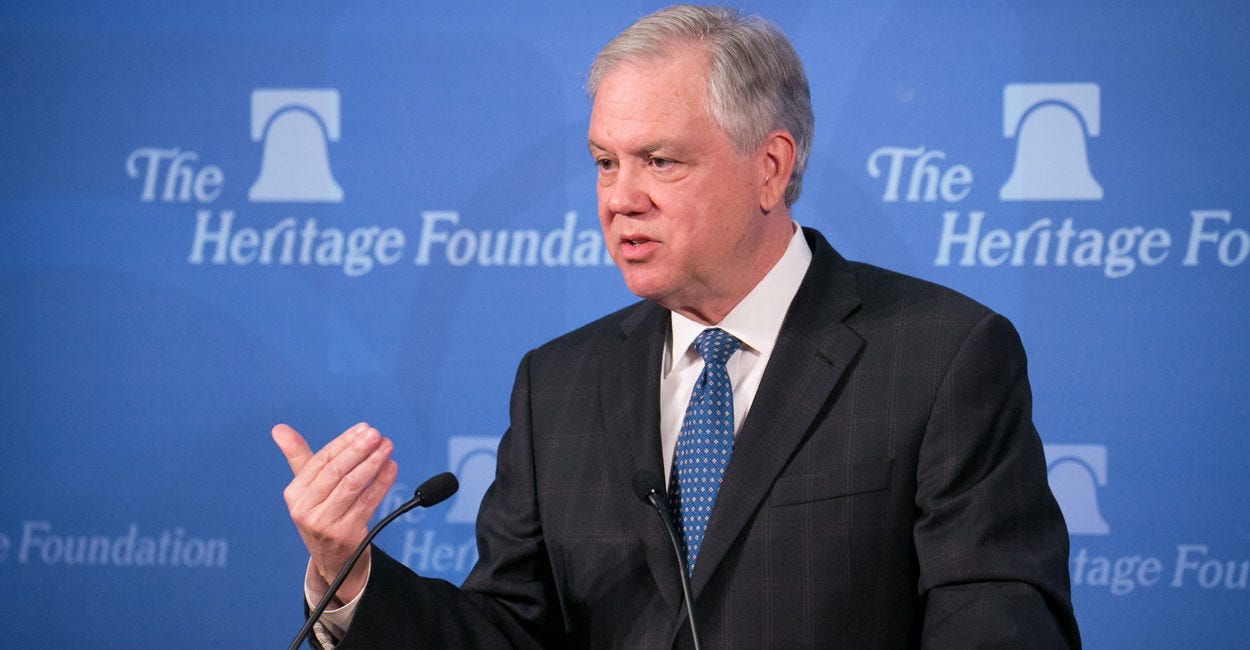
Kim Holmes is a former executive vice president at the Heritage Foundation and served as assistant secretary of state for international organization affairs from 2002 to 2005. He’s also a FreeCon signatory.
In a recent piece for The Dispatch, Holmes chronicled the devolution of his former think tank from a principled organization devoted to conservative ideas to a political organization devoted to clicks and conflict.
“Any policy research organization worth its salt will respect the rules of evidence and argumentation and avoid sensationalist rhetoric and ad hominem attacks,” he wrote. “And it should certainly avoid besmirching the think tank’s reputation by flirting with toxic and vile media personalities.”
“The fusionist conservatism that Heritage once pursued may not have been perfectly unified in theory,” he continued, but “it still reflected a coherent worldview. It was an American tradition inspired by the American founding and confirmed by two and a half centuries of American history.”
“A major reason once-proud conservative think tanks — like Heritage, the Intercollegiate Studies Institute, and the Claremont Institute — have lost their way is that they have bought into the notion that traditional conservatism is dead and that its purveyors failed to stop the rise of progressivism.”
“But this idea isn’t just unprincipled; it has little basis in reality.”
Moral commitments

Tal Fortgang is a legal policy fellow at the Manhattan Institute and a FreeCon signatory.
A writer for such publications as City Journal, Commentary, National Affairs, National Review, and the Wall Street Journal, Fortgang has also published legal scholarship in the NYU Journal of Law & Liberty and the Texas Review of Law & Politics.
In a recent Civitas Outlook essay, he rebutted the accusation that those seeking to conserve the classical liberalism of the American Founding are fixated on neutral rules at the expense of moral order and human flourishing.
“This ‘dead consensus’ of liberal proceduralism, critics insisted, was an incomplete politics,” wrote Fortgang. “A conservatism incapable of distinguishing between good and evil, only between legal and illegal, was inadequate and sowed the seeds of the republic’s demise.”
“The Heritage Foundation is, in many ways, the institutional home of this New Right sensibility. Under Kevin Roberts’s leadership, it positioned itself as the voice of a conservatism unafraid to abandon older pieties in favor of a more combative, moralized, and openly substantive approach to political and cultural conflict.”
But when Roberts attempted to defend Heritage’s ongoing relationship with the increasingly unhinged Tucker Carlson, he resorted to familiar arguments.
“Cutting through the bravado and putting aside the bizarre script, Roberts’s actual position was neutral — everyone should have a right to express their views freely, regardless of how odious — and procedural, emphasizing that if you don’t like someone’s views, you should debate them. No guidelines delineating the acceptable moral limits were in place. As long as everyone retains their ability to speak, all was as it should be.”
“This is precisely the formulation that New Right intellectuals have spent years attacking when deployed by establishment conservatives.”
In reality, Fortgang pointed out, the classical-liberal principles championed by American conservatives are “concrete expressions of profound moral commitments. When we speak of constitutional limits on government power, we insist that human beings possess an inherent dignity that precedes state authority. Freedom of religion acknowledges that the individual mind and soul possess a sacred quality that no political power may violate. Equal treatment under law affirms the equal moral worth of every person.”
No to charlatans
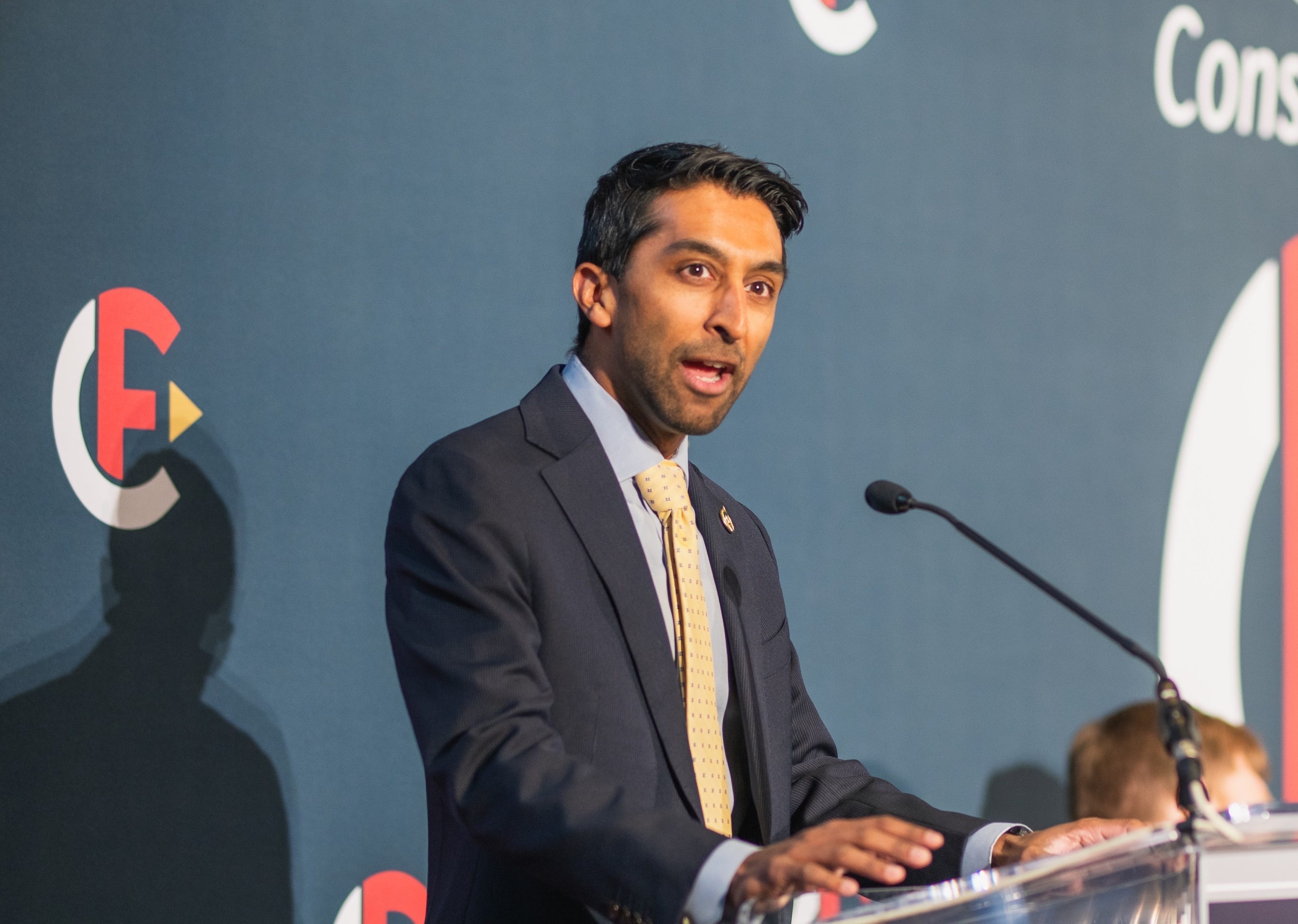
Akash Chougule is president of the Foundation for Research on Equal Opportunity (FREOPP) and one of the leaders of the FreeCon project.
Chougule’s previous positions include vice president at Americans for Prosperity, vice president of the Economic Opportunity Initiative at the Stand Together Chamber of Commerce, and policy staffer on the U.S. House of Representatives Education and Labor Committee.
Freedom Conservatives were featured prominently at FREOPP’s recent Freedom & Progress conference in the nation’s capital. During his opening remarks, reported in The Hill, Chougule contrasted FreeCon ideas with those offered by the nationalist-populist Right.
“Americans who are being drawn to bad ideas because they are struggling — like discarding free markets and pluralism for socialism or racism or antisemitism — do not need to be coddled,” he said.
“And the charlatans who push those bad ideas onto them do not need to be embraced as part of our movement. For those of us here in Washington, that includes lawmakers, media personalities, heads of esteemed think tanks, and anyone else who contributes to public policy and our public discourse.”
In the mix
• At National Review, FreeCon signatory Noah Rothman argued that the Trump administration’s rollback of rollback of electric-vehicle mandates and unrealistic miles-per-gallon standards will increase efficiency in the car market.
“Consumers will once again have the liberty to reward the firms that are the best performers in that sector, not just the best connected — keeping more of their own money in the process, which they can subsequently use to patronize other high-performing and efficient businesses,” wrote Rothman, a senior writer at NR.
“That’s how the market keeps prices low, and it’s good to see the Trump administration embracing the logic of consumer capitalism.”
• In The National Interest, FreeCon signatory Sam Raus argued that saving money in America’s defense budget need not mean a reduction in military strength.
“The defense budget has grown too large and complex to be managed with superficial tweaks or partisan talking points,” wrote Raus, the David Boaz Resident Writing Fellow at Young Voices.
“Cost savings should not be viewed as a threat to readiness but as a strategic advantage — a way to redirect funds toward emerging threats such as AI, drones, and quantum communication. Every dollar reclaimed from waste could be a dollar invested in keeping America safer and more technologically competitive.”
• At Civitas Outlook, FreeCon signatory Steve Hayward observed that the era of apocalyptic environmentalism is fading, and its recycled doomsday warnings now sound more desperate than dire.
“Bill Gates’s that he has changed his mind about climate change and no longer views it as a serious threat to the future of humanity is not just a major blow to the “climate crisis” camp,” wrote Hayward, the Edward Gaylord Distinguished Visiting Professor at Pepperdine University’s School of Public Policy, “but likely signals the end of a 50-year cycle of Malthusian catastrophism that has hobbled liberalism for the last several decades.”
“There will be many death rattles, such as the newest alarm that climate change will deliver a new ice age rather than boiling oceans and endless heat waves. This was the leading climate scenario back in the 1970s, proving that everything old is new again. But it smacks of desperation. The ghost of Thomas Malthus can rest in peace.”
• In the Chicago Sun-Times, FreeCon signatory Mona Charen argued that the biggest “reveal” in the released Epstein files wasn’t the late sex-trafficker’s past ties to former Harvard president Larry Summers but instead his ongoing relationship with populist-Right propagandist Steve Bannon.
Bannon had even filmed 15 hours of footage for a documentary in an attempt to redeem Jeffrey Epstein’s reputation.
“The released emails show that one of those who was working most closely with Epstein, up to and including attempting to scrub his public image, was Bannon himself,” wrote Charen. “Whatever else Summers may be, he is not one of the principal authors of the MAGA movement who stoked conspiracies about the ‘deep state’ and gave oxygen to the most unhinged beliefs in circulation.”
“Bannon, the man millions of MAGA fans trust to tell it like it is, stands revealed as one of the most cynical liars ever to mar this country.”