
It isn’t going to work.
Now that the Democrats have won their biggest midterm victory since the post-Watergate debacle of 1974, National Conservatives, postliberals, and other voices of the Dissident Right are attempting to shift the blame away from the populist economics, centralizing policies, and rank demagoguery they encouraged Republicans and the Trump administration to adopt.
Some are attempting to attribute the GOP’s drubbing solely to the president’s decision earlier this year to go back to war in the Persian Gulf. Although many FreeCons have also criticized the policy, either in concept or in execution, we reject entirely the notion that American voters would have given Republican another two years of power in Washington — or even rapped them mildly on the knuckles with modest Democratic gains — had the war never happened.
President Trump’s approval ratings began to drop like a stone when he imposed his so-called Liberation Day tariffs on imports from dozens of countries, including some of America’s closest allies and trading partners. In virtually every pre- and post-election poll, affordability concerns ranked far above foreign policy as a voting issue — and went beyond gas and diesel prices to include housing, electricity, groceries, and other household goods.
Exacerbating the decline in support for Trump and Republicans were not only unpopular military actions but also public revulsion to corruption, over-the-top immigration enforcement, and racially tinged rhetoric from Republican candidates and their online boosters.
In our 2023 statement of principles, Freedom Conservatives opposed crony capitalism, attacks on free enterprise, and efforts to draw power to the nation’s capital, all risk factors for political corruption. We urged policymakers to strike a balance between securing the border and welcoming immigrants ready and willing to work, set down roots, and embrace America’s founding principles. And we strongly condemned “racial discrimination in all its forms” while arguing for a new commitment to equal opportunity.
We were right. But our job now is not to wag fingers. It is to rebuild an American Right capable of inspiring longtime conservatives while attracting new people to our movement, winning durable electoral majorities, and governing effectively during a period of rapid economic and social change.
Freedom Conservatives and friends, old and new, will talk about these and other matters at a series of FreeCon-themed events later this month. Today we feature some of the speakers at FreeCon Phoenix on Nov. 16, FreeCon Philadelphia on Nov. 17, FreeCon Raleigh on Nov. 18, and the 2026 Freedom & Progress Conference on Nov. 18 in Washington.
Time bomb
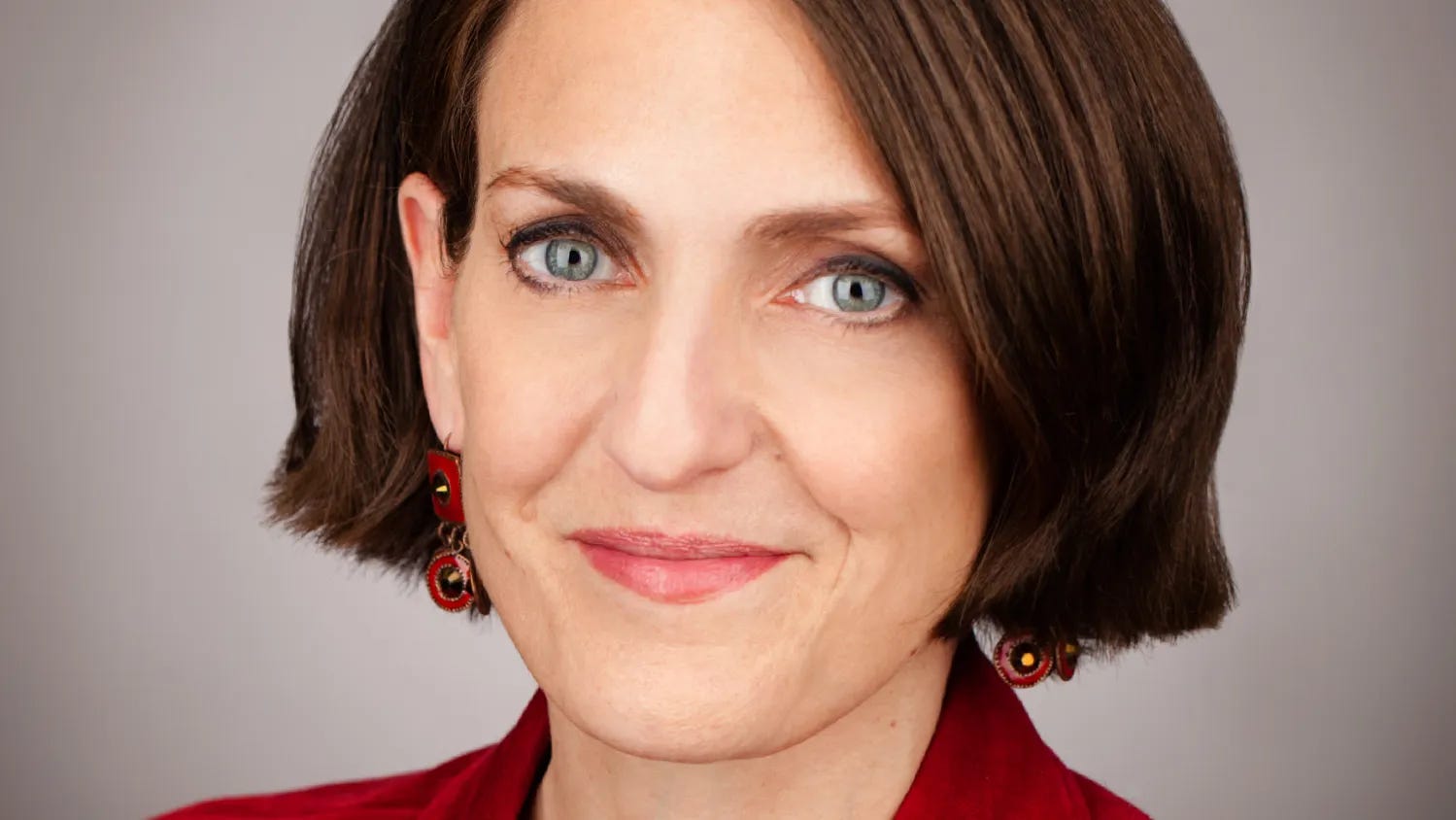
Veronique de Rugy is the George Gibbs Chair in Political Economy and senior research fellow at George Mason University’s Mercatus Center and a nationally syndicated columnist. She will also be one of the featured speakers at the Foundation for Research on Equal Opportunity’s Freedom & Progress Conference on Nov. 18 in Washington.
In a recent syndicated column that appeared in the New York Sun and other publications, de Rugy explained that during the six-year terms of the U.S. senators elected last week, Social Security’s so-called trust fund will run out.
“Fiscal sustainability was remarkably absent all election season,” she wrote. “During the 2010s, powerful politicians openly championed ‘austerity.’ As late as 2018, according to AdImpact data reported by The Wall Street Journal, 140 political ads mentioned the debt or budget deficit. During this cycle, only 30 did, putting the subject 52nd among campaign topics.”
To address Social Security’s woes and shrink federal deficits, “many of the new legislators will think raising taxes is the way to go,” de Rugy continued. “However, it’s really hard to solve this problem on the revenue side. Revenue collection has hovered around 17% of GDP for the last half-century (including when income-tax rates were much higher than today). Meanwhile, spending has climbed from about 18% of GDP in the 1960s to more than 23%, with this growth concentrated in programs for the elderly.
“Closing the tax code’s carve-outs to special interests would help, but there is no path to sustainability that avoids cutting (or slowing the growth of) benefits, raising eligibility ages to reflect longer lives and putting Medicare on a budget.
“The new class of senators must now deal with reality. I wish more voters had asked them how they’ll do it.”
For more information about the November 18 conference and its panels on fiscal responsibility, economic opportunity, and Freedom Conservatism, click here.
Next up: 2028
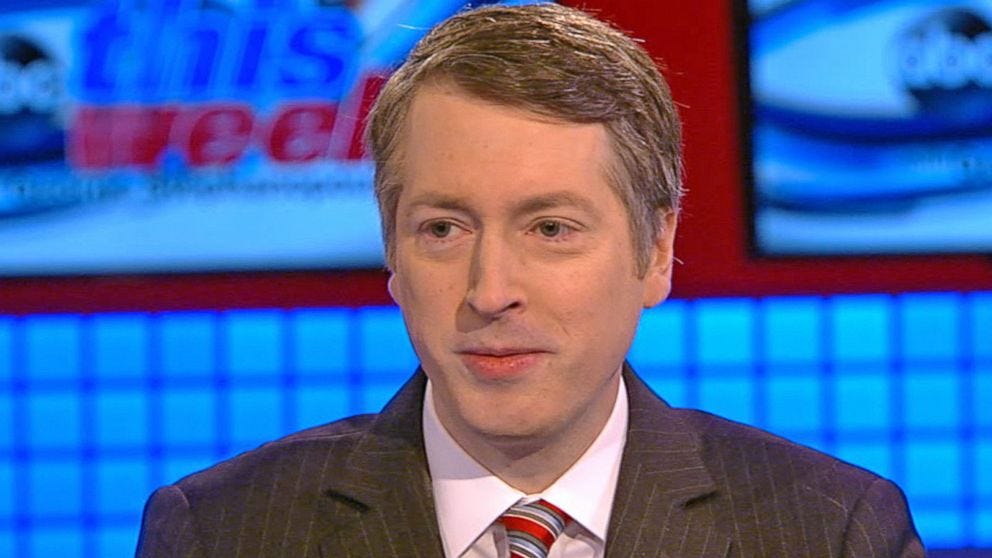
Rich Lowry is the editor-in-chief of National Review, a frequent panelist on NBC’s “Meet the Press” and other programs, and a featured speaker at FreeCon Philadelphia, to be held November 17 at the Union League.
In a recent New York Post column, Lowry wrote that “Republicans have a lot of things to worry about after their catastrophic 2026 midterm, and one of them might be Jon Ossoff, the newly reelected Democratic senator from Georgia.”
“The presidential buzz had begun even before Ossoff won reelection by 18 points in purplish Georgia, and will get more intense now,” he observed. “Perhaps he doesn’t run — and the odds are probably against it — but Ossoff is exactly the kind of vehicle and message that Democrats should be looking for.”
“It will be a massive Democratic field for a 2028 nomination that looks like it’s worth having, and Ossoff has said he’s going to serve out his term. So, maybe he sits this one out on the almost always mistaken assumption that he can wait. Even if he ran, he might fizzle, but Republicans should prefer not to find out.”
To learn more about the November 17 Freedom Conservatism event in Philadelphia, hosted by National Review and the Commonwealth Foundation, click here.
Endangered freedom
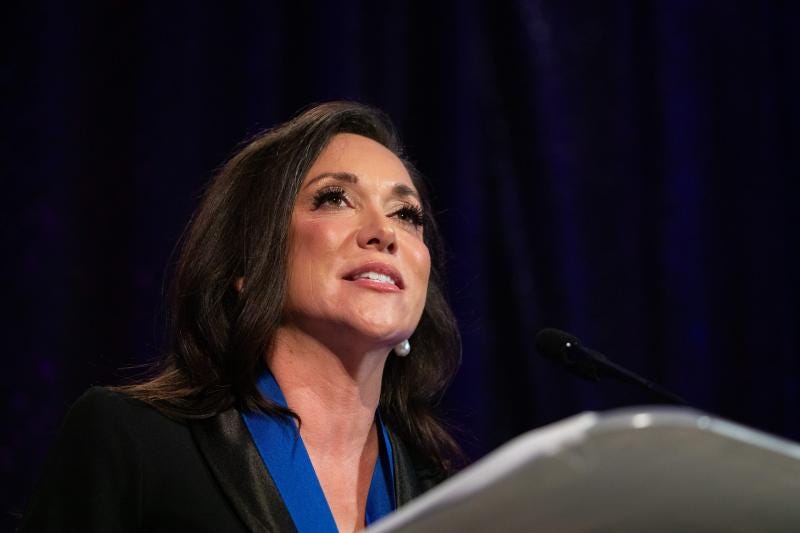
Jenny Clark is the founder of Love Your School, a former member of the Arizona Board of Education, and a featured speaker at FreeCon Phoenix, to be held November 16 at The Westin Phoenix Downtown.
Clark first became involved in the school choice movement after her oldest son was evaluated for dyslexia and she learned her local school district didn’t offer any special programs for such students.
“I found out about the state’s ESA program,” which provides parents with funding to customize their child’s education, Clark said. “I thought, this program is so amazing, it’s so incredible. More families need to have access to an ESA.”
At the time, the ESA program was only available to select student populations, including students with special needs. Clark became an advocate for expanding the ESA program to make every student eligible.
In 2022, Arizona became the first state to enact a fully universal school choice program. “Jenny was a huge part of that,” said Jenna Bentley, the Goldwater Institute’s director of government affairs and another featured speaker at FreeCon Phoenix. “It truly was a full-circle moment.”
Now that critics of educational freedom control the governorship and both chambers of the Arizona legislature, this pivotal conservative accomplishment is endangered, as Clark, Bentley, and other FreeCon Phoenix speakers will discuss. To learn more about the event on November 16, click here.
Costly mistakes
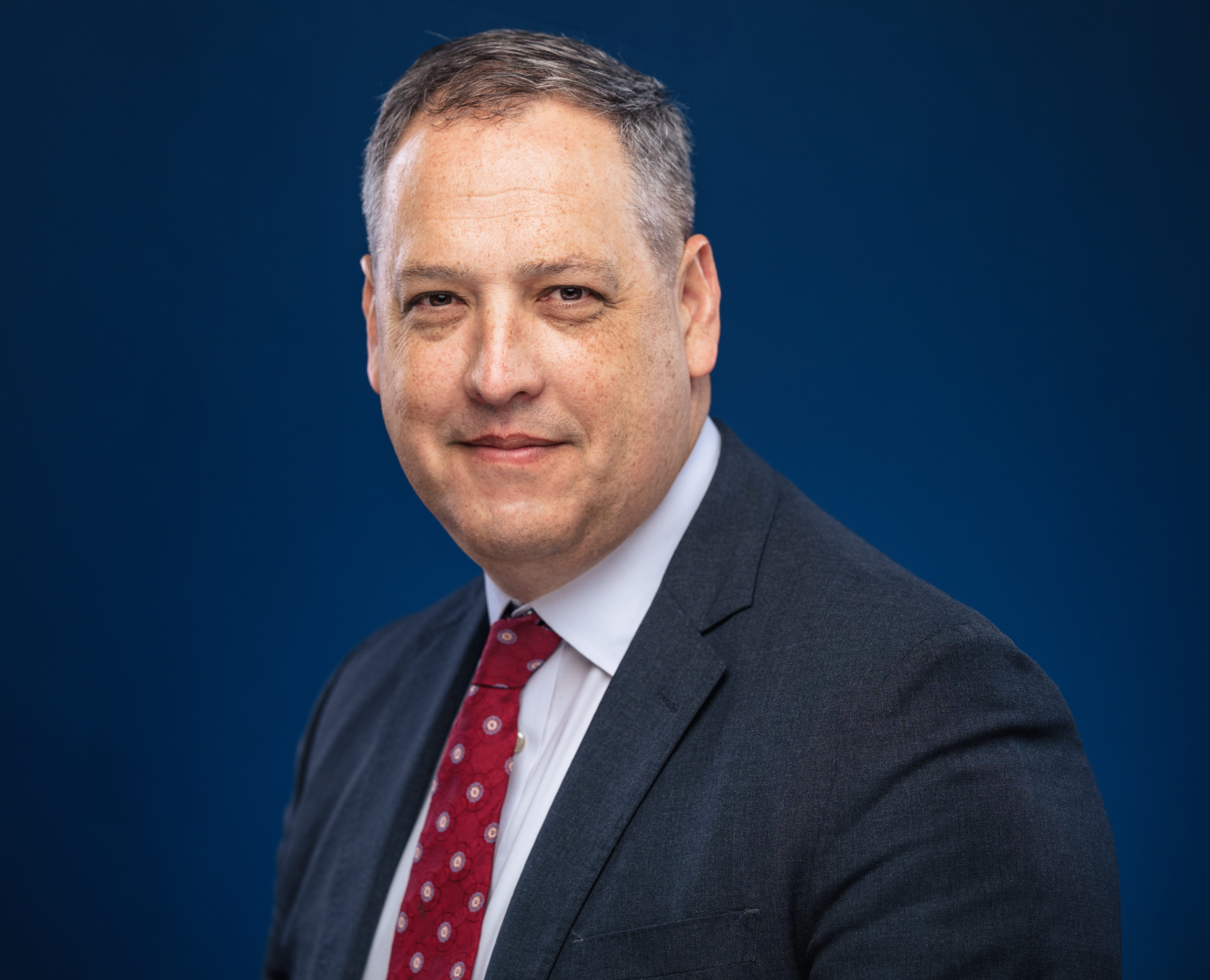
Kent Lassman is president and CEO of the Competitive Enterprise Institute, the founding director of the Institute for Regulatory Law & Economics, and a FreeCon signatory. He will also be a featured speaker at FreeCon Raleigh on November 18, hosted by the John Locke Foundation, Carolina Journal, and CEI.
In a recent op-ed for The Daily Wire, Lassman discussed proposed regulations on artificial intelligence and urged lawmakers not to repeat the the errors they committed in another sector: energy.
“Two decades ago, in 2005 and more ambitiously in 2007, Congress decided it knew how to fix America’s energy problems,” he wrote. “With the country at war and gasoline prices climbing, families were feeling the squeeze at the pump. New laws required billions of gallons of ethanol to be blended into our fuels. Corn that once fed people and livestock went into gas tanks.
“Food prices soared. One World Bank economist estimated that biofuels in the United States and Europe drove roughly three-quarters of the global increase. A law sold as making fuel affordable and assuaging consumers’ fear made food unaffordable. The bill hit the world’s poorest households hardest.”
“As Washington prepares to repeat its costly ethanol mistakes on the frontier of artificial intelligence,” Lassman concluded, “it risks trading real, unearned fear for unseen, generational loss. To avoid the tragic, invisible human costs of the past, Congress must let the courts apply time-tested doctrines and have the patience to regulate with clear objectives, or once again, we risk starving the world of tomorrow to ease today’s political anxieties.”
Lassman is one of the featured speakers at FreeCon Raleigh, to be held on November 18. Click here for more information about the event.
In the mix
• At Fox News, FreeCon signatory Andrea Picciotti-Bayer explained the background of the Colorado preschool case now being considered by the U.S. Supreme Court.
The state’s "universal" preschool program requires participating schools to adopt policies on sexual orientation and gender identity that Catholic schools cannot agree to without abandoning church teaching.
“In Masterpiece Cakeshop (2018), 303 Creative (2023) and Chiles (2026), the Supreme Court rebuked Colorado for its intolerance,” wrote Picciotti-Bayer, director of the Conscience Project. “The justices should tell the state again that the guarantees of the Constitution don’t collapse under the pressure of ideology. A state that offers families support for private education must not close the doors to Catholic schools committed to being Catholic.”
• At City Journal, FreeCon signatory Bradley Thompson described his new Lyceum department at Clemson University as a project to “revolutionize American higher education.”
“The Lyceum will use a Great Books approach to studying the history of liberty, capitalism, the American Founding, and the principles of moral character,” wrote Thompson, author of such books as America’s Revolutionary Mind: A Moral History of the American Revolution and the Declaration That Defined It.
“Together, our faculty and students will explore the relationship between ideas and action; the history of human accomplishment; the political and cultural architecture of free societies; the economic principles and institutions of the free-enterprise system; and the requirements of character formation.”
• In The Washington Times, FreeCon signatory Randolph May reminded Americans to include an appreciation of the Mayflower Compact in their Thanksgiving plans.
“The foundational document helped lay the groundwork for the American democratic experiment,” wrote May, president of the Maryland-based Free State Foundation.
“During this semiquincentennial year celebrating America’s independence, our politics — not for the first time in our history — are roiled by deep philosophical divisions over the country’s direction. The continuation or deepening of these divisions, with strident extremes on both ends of the political spectrum hollowing out the center, could presage America’s decline.
‘Yet I remain optimistic about our future as the ‘shining city upon a hill’ that President Reagan, harking back to Puritan leader John Winthrop’s 1630 sermon, invoked during his Farewell Address.”