
While affordability, war in the Middle East, and other discrete policy issues were clearly on the minds of many voters in the disastrous 2026 midterms, surveys before and on Election Day also revealed public corruption to be a widespread concern.
Some politicians, activists, and analysts found this surprising. Freedom Conservatives did not.
From the start, FreeCons have warned that an American Right deficient in republican virtue cannot hope to govern wisely, and that the public would recognize and punish that deficiency. In our FreeCon Statement of Principles, we criticized a “corrosive combination of government intervention and private cronyism” for raising the cost of living and eroding America’s founding principles. And we observed that “neither individual liberty nor human flourishing is sustainable outside a civil society of strong institutions that inculcate virtue, deter corruption, foster community, comfort the afflicted, and nourish the soul.”
Not all Freedom Conservatives see our project in explicitly fusionist terms, as a formal philosophical synthesis of freedom and order, liberty and virtue. But all FreeCons do believe that unless we take virtue seriously, demand it of our leaders, and transmit it to future generations, the American experiment in self-government will not be sustainable.
Today we feature the work of FreeCons who consider virtue, family, community, and institutions of faith as indispensable elements of a healthy American Right and thriving American society.
Twin deficits
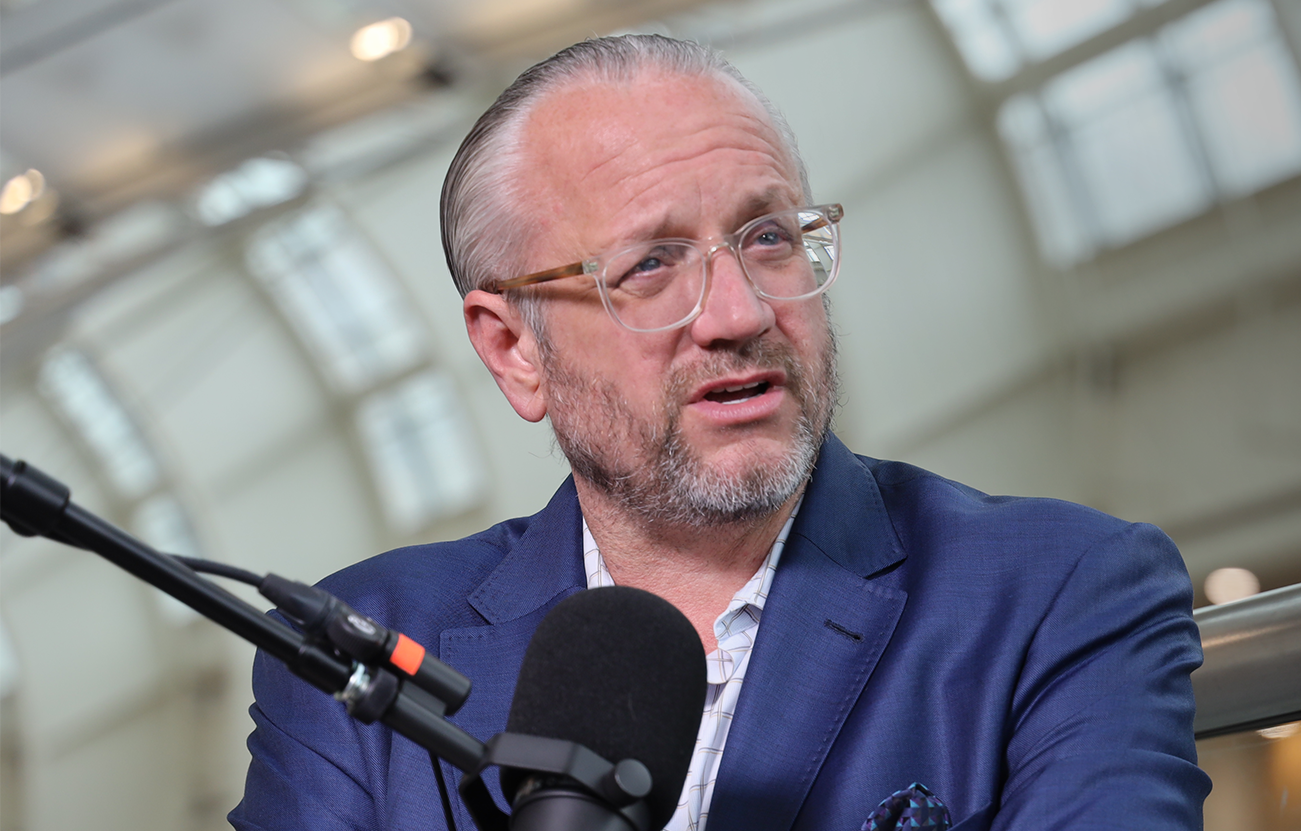
David L. Bahnsen is the managing partner of a wealth-management firm and a frequent writer and public commentator on matters of economics, faith and work, and markets. He is also a FreeCon signatory.
In a post-election piece for National Review, Bahnsen argued that the results ‘capture the very essence of the twin deficits in the Trump-era moment: a newfound contempt for both the free and the virtuous society.”
While the administration’s trade policies, government stakes in private companies, and rampant public corruption reflect both forms of contempt, for freedom and for virtue, he observed that virtue can also be “as simple as basic character and morality. No exit poll asked about the president’s tweet celebrating the gruesome murder of Rob Reiner and his wife at the hands of their own deranged son, but any movement that can’t condemn that is a movement that has lost moral authority in the quest for a virtuous society.”
Fundamentally, he continued, “conservatives seek to promote a free and virtuous society. The policy portfolio of the administration and the personal character and behavior of the movement’s major evangelists have undermined both. On these two fronts, the throttling the GOP took was neither a surprise nor something to bemoan.”
“The framework of Burkean conservatism is under assault in this new right, populist, Trumpian, Vanceguard moment, and the election results reflect this internal right-wing implosion,” Bahnsen wrote. “My contention is that a lack of focus on the free and virtuous society cost the GOP dearly in 2026 and will cost the GOP dearly until that framework is recovered.”
Post-MAGA Christianity
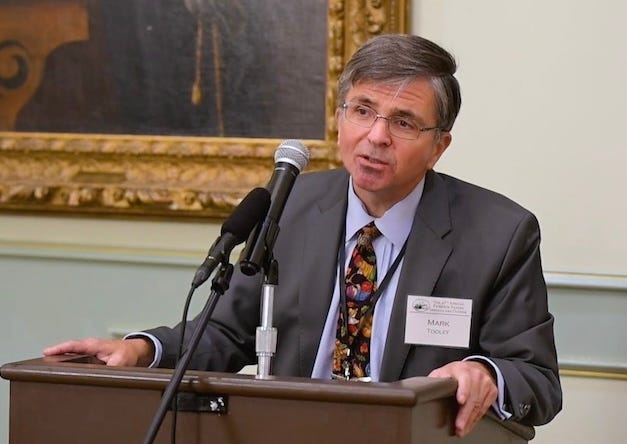
Mark Tooley is president of The Institute on Religion & Democracy and editor of its foreign policy and national security journal, Providence. He is also a FreeCon signatory.
In a post-election piece for The Dispatch, Tooley discussed the possibilities of “post-MAGA Christian activism and identity.”
“While evangelical voters were just as supportive of MAGA and the GOP in this year’s midterm elections,” he wrote, “their falling from 23 to 17 percent of the electorate implies an ebbing enthusiasm. Whether evangelical support for Trump stays level or declines over the next two years, MAGA Christianity will have to adapt to a post-Trump era. Will its indifference to personal faith and morals in favor of a strong, dramatic personality continue and attach to a new leader?”
“Arguably, evangelicals have never been demographically stronger or more influential politically,” Tooley continued. “Yet, by aligning enthusiastically with MAGA, they subordinated their identity to a wider, mostly secular movement that relied on their votes and allowed them Oval Office meetings but that did not substantively advance evangelical concerns.”
He advised evangelicals to have more confidence in their theological identity and divine providence, to embrace Christian realism rather than utopianism, to recover their “stewardship of liberty, both political and economic,” and to “steadfastly reject Christian nationalism and postliberal authoritarianisms that often include unsavory stances toward non-whites and Jews.”
“Christian nationalists fantasize about an American confessional state that punishes blasphemy and apostasy while legally restricting non-Christians, consigning Jews and others to their social ghettoes. These fantasies are not just implausible; they are dangerous and corrupting even to contemplate. They are also off-putting to nearly all wider society, fulfilling the worst stereotypes about evangelicals.”
“MAGA Christianity will end,” he concluded. “Historians, and God, will judge whether it had constructive accomplishments that compensate for the dangers to which it contributed. Evangelicals who supported it will decide what replaces it. If they are wise, they will side with historical patience, liberty for all, limited expectations of politics, providential hope, and Christian realism. How they choose will help decide the fate of the nation.”
Left conservatism
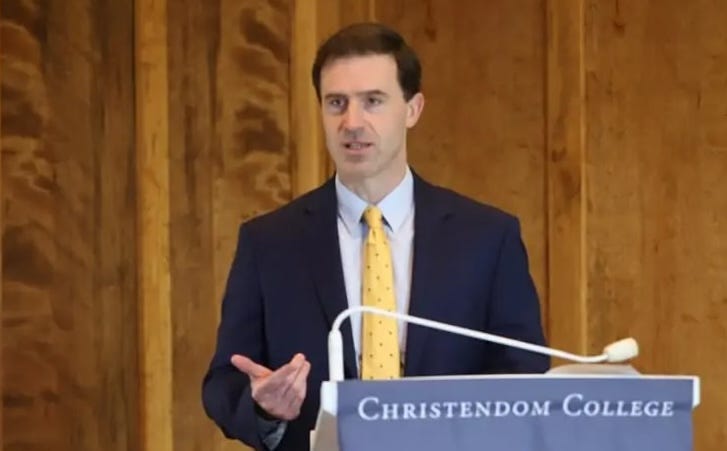
Richard M. Reinsch II is editor in chief of Civitas Outlook, published by the Civitas Institute at the University of Texas at Austin. He is also a FreeCon signatory.
In a post-election essay, Reinsch predicted that “conservatism in America will undergo further evolution after its recent seismic election defeat.” Whether it becomes a healthy movement again depends in part on understanding the causes of that defeat and the concerns of the voters who delivered it.
“Left conservatism” is Reinsch’s term for the vision offered by nationalists and populists. While appealing in some respects, its fate in the second Trump administration was to founder “on the bumpy wheel of big government.” While the movement pursued wrongheaded tariffs and overly aggressive enforcement of immigration law, its “religious and cultural conservatism have never seen the light of day” in an administration that, practice, offered “much vice, little virtue.”
“This is to say nothing of the self-dealing and corruption inside the administration regarding payments for pardons and mega business deals for family members of the president and the cabinet. Trump’s personal worth is estimated to have grown by two billion during his term in office.”
“The left conservative revolution of the Republican Party has been tried in many respects, and implemented by an agent of chaos, the president, their great champion. But with the clock running on this presidency, it seems that the good times will no longer roll, if they ever did.”
On the calendar
Freedom Conservatism‘s three regional summits — FreeCon Phoenix on November 16, FreeCon Philadelphia on November 17, and FreeCon Raleigh on November 18 — are already at capacity. But you may still be able to register today for the 2026 Freedom & Progress Conference, to be held on November 18 in Washington, D.C. Hosted by FREOPP, it will feature lots of FreeCon speakers and content. Click here for more information.
In the mix
• At the Washington Examiner, columnist and FreeCon signatory David Harsanyi observed that GOP candidates running on protectionism and other populist nostrums got punished by voters.
“Affordability was a driving reason Trump was elected in 2024,” he wrote. “But what was the first big economic policy of Trump’s second go-around? Unilaterally slapping taxes on products from virtually every country and territory in the world. The president never made his case to Congress or the electorate, which means he never had any consensus or buy-in.”
“if Republicans get into an arms race over who can redistribute wealth better or send out more checks or prop up more dying industries or punish more corporations, voters will have an easy choice,” Harsanyi concluded. “If they want endless class war and ‘industrial’ social engineering and state ownership of private companies, a party already exists to do all of that for them.”
• At Law & Liberty, its newest contributing editor, George Hawley, wrote that the American Right’s “recent populist phase brought with it many intellectual debates that have been waged in think tanks and op-ed pages. But Trump’s personal popularity meant that they were not debates that had to be resolved as a practical matter. That is no longer the case. What comes after Trump remains unclear, however, and the struggle for the American right in the post-Trump era will be brutal.”
Hawley, a FreeCon signatory and political-science professor at the University of Alabama, argued that “conservatives who opposed the Right’s complete embrace of populism” were vindicated by the 2026 midterms, as “as the most entertaining performance will eventually grow stale.”
“At some point, substance matters as much as style.”
• At The Wall Street Journal, FreeCon signatory Vincent Vernuccio criticized a ruling by the National Labor Relations Board that has the effect of limiting employer access to employee feedback.
When T-Mobile set up a way for its workers to gather information from colleagues about job challenges and recommendations, a labor union successfully challenged it. The NLRB decided the program was an illegal “labor organization” supported by the company.
The ruling “stifles corporate experimentation to find other collaborative approaches,” wrote Vernuccio, president of the Institute for the American Worker. “Once a group of employees start suggesting changes to their working conditions, employers are banned from providing a space for such discussions, inviting workers to participate, or otherwise telling them about the opportunity. That’s an attack on workers’ ability to shape their own futures and likely a First Amendment violation.”
• At The American Spectator, FreeCon signatory Aidan Grogan analyzed a 38-point swing of young male voters toward Democrats from 2024 to 2026.
“Young men’s departure from the GOP coalition and openness to “Barstool socialism” indicates that they are a moderate, highly persuadable demographic whose top concern is the economy,” wrote Grogan, an associate editor at City Journal. “Even if they remain skeptical of left-wing culture war issues, they will not support policies that make life less affordable.”
“Though the GOP suffered a humiliating defeat on Nov. 3, it’s not too late to make amends,” he concluded. “If JD Vance, in particular, wants to restore his ‘bro’ status among young men, he ought to build a platform distant from both MAGA populism and his own post-liberal proclivities, especially protectionism.”