

What are Freedom Conservatives really up to?
We get that question a lot. Some believe the FreeCon project is a vehicle for some future political campaign. Others deem it a cynical power play between rival organizations, or a stealth operation by left-wing or right-wing donors, or a publicity stunt.
Freedom Conservatism is none of these things. Our project is precisely what we said it was in our 2023 announcement: a network of leaders who affirm the fundamental principles of American conservatism and seek to apply them to today’s biggest challenges “in order to ensure that America’s best days are ahead.”
Many FreeCons have direct experience in policymaking as elected officials, staffers, consultants, or policy analysts. Others are journalists, litigators, scholars, educators, or civic leaders. Nearly all continue to work in their chosen fields while offering some of their time, resources, and expertise to Freedom Conservatism programs.
What are those programs? In addition to this Substack, there are regular FreeCon briefings on Capitol Hill for congressional staffers and other policy professionals. There are regular meetups at conservative gatherings and conferences. FreeCon signatories routinely work together on policy papers, articles, presentations, and other collaborations. And FreeCons are in constant online and offline conversation — sharing ideas, promoting each other’s work, and planning future projects.
We held the first Freedom Conservatism Conference last year. In 2026, you’ll get invitations to multiple FreeCon events.
Politics matters. Public policy matters. Freedom Conservatives necessarily spend much of our time on politics and public policy. But we also recognize that building an effective conservative movement is a long-term effort requiring significant investment in parenting, educating, and inspiring future generations to cherish the principles of the American founding and defend them from progressive and populist assault.
Today, we feature the work of FreeCons who recognize the critical role played by art, literature, and popular entertainment in acculturating Americans — either for good or for ill.
Redemption and genius

Bradley J. Birzer is a professor of history and the Russell Amos Kirk Chair in American Studies at Hillsdale College. He is also a FreeCon signatory.
The co-founder of The Imaginative Conservative and a frequent writer for publications such as Law & Liberty, Modern Age, and the Claremont Review of Books, Birzer is the author of such books as Russell Kirk: American Conservative (2015), Neil Peart: Cultural (Re)Percussions (2015), and J.R.R. Tolkien’s Sanctifying Myth (2003).
In a recent Wall Street Journal review of the finale of the Netflix series Stranger Things, he argued that the show served to “mythologize” the 1980s.
“If any decade of recent history should be mythologized, it’s the 1980s,” Birzer wrote. “In terms of reputation, culture and wealth, the U.S. had achieved its greatest victories since the ages of Washington and Lincoln.”
Stranger Things “excels at demonstrating the redemption and genius of people,” he continued. “Even those who have been torn apart by life or who experienced actual abuse and torture find themselves whole and healthy again. Though not without great struggles and never without friendship and sacrifice. The Duffer Brothers have created something meaningful and real. And people have responded.”
Here’s another cultural take by Birzer: in a recent review of fellow FreeCon Joe Loconte’s new book on J.R.R. Tolkien and C.S. Lewis, he wrote that Loconte “might be the first to examine the influence of the interwar years, the Depression years, or the Second World War on the Inklings.
“He does so brilliantly and with a beautiful narrative flow. The reader experiences nothing short of a sense of awe as Loconte poetically interweaves the story of Western civilization with the personal stories of Lewis and Tolkien.”
Theater with teeth

Grace Salvatore is the director of the Dissident Project, a visiting fellow at the Independent Women’s Forum, and a FreeCon signatory.
As a professional actor, Salvatore’s credits include HBO’s High Maintenance and stage appearances in Romeo + Juliet, The Winter’s Tale, and James the Many. She also contributes regularly to such outlets as National Review, The Daily Wire, and the New York Sun.
In a recent Dispatch piece, she reviewed the new play Slam Frank, a musical satire that depicts a progressive community theater troupe attempting to de-center “privileged, straight, white Europeans (who also happened to be hiding from the Nazis).”
“Those who have accused the show of punching down at minority groups misunderstand the mechanics of satire,” Salvatore wrote. “In fact, Slam Frank punches up at tribalism taken to its logical extreme and the absurdities of identity-driven thinking — ideas that have long infected and de-fanged American theater.”
The show has built a bona fide cult following, she continued. “Nightly lines stretch around the block. Turns out, audiences and critics alike are starved for theater with teeth.”
Collectivism’s bane
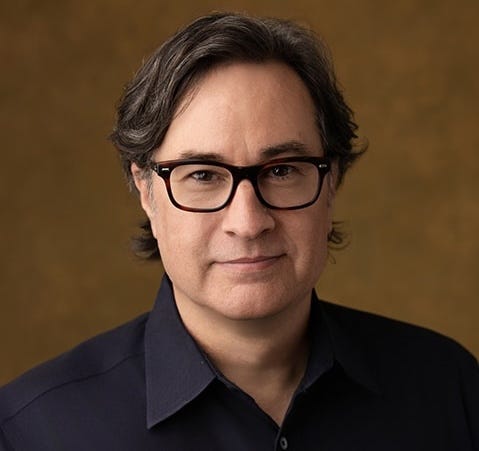
Christian Schneider is op-ed editor at the Pacific Legal Foundation, a columnist for National Review, and a FreeCon signatory.
A former staff columnist for USA Today and the Milwaukee Journal Sentinel, Schneider is the author of a humorous novel, 1916: The Blog, and host of Wasn’t That Special, a podcast about the TV show Saturday Night Live.
In a recent National Review column, he described Apple TV’s hit science-fiction show Pluribus as a “direct refutation” of the “hot new collectivism trend” represented by New York City Mayor Zohran Mamdani and his newly appointed tenant advocate Cea Weaver, who advocates seizing private property and calls homeownership a tool of “white supremacy.”
Vince Gilligan’s show “cuts sharply the other way, demonstrating what happens when both physical and intellectual egalitarianism are forced on the populace,” Schneider wrote.
“When everyone is compelled to think and act the same, individual creativity dies. Like Team Mamdani, the new collectivists shun private property, so the citizens all sleep together on the floor of a local arena. They refuse to kill animals or even plants, so the world is wracked with hunger, leading to predictably horrifying results.”
Just because collectivism has become the “ideology du jour for Democrats,” Schneider continued, doesn’t mean the American Right can’t learn lessons from Pluribus.
“When a Republican president vows to commandeer 50 million gallons of foreign oil to distribute as he sees fit, or begins using taxpayer money to buy stakes in private businesses, or tells Americans how many dolls or pencils they need, or threatens to pull broadcast licenses for television networks he doesn’t like, it smacks of the same collectivist impulses currently animating Democrats.”
Wicked scar
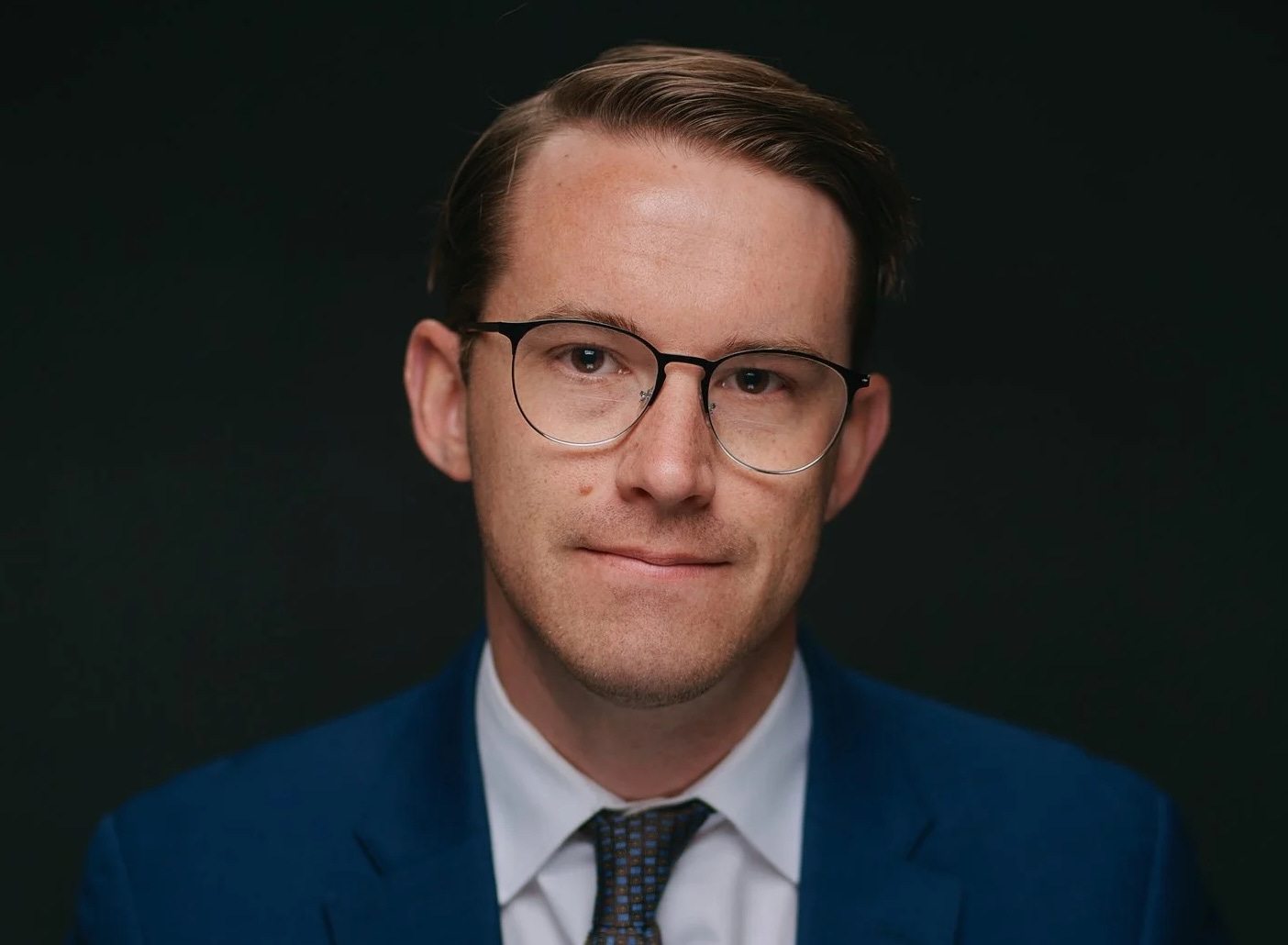
Stephen Kent is media director at the Consumer Choice Center and a FreeCon signatory.
Author of the Star Wars-themed book How The Force Can Fix The World: Lessons on Life, Liberty and Happiness from a Galaxy Far, Far Away, Kent hosts the GeekyStoics podcast and writes frequently on both public policy and cultural topics.
In a recent Washington Examiner piece, he compared the socialist mayor Zohran Mamdani to the character Scar from Disney’s The Lion King.
Both are “privileged, well-fed, exceptionally smart, and deeply annoyed,” Kent wrote.
“Resentment and scorn are the marks of the scavenger, nothing more. The almost immovable problem for New York City is that as a one-party metropolis in a one-party state, there is no clear avenue for a lion to emerge and take back what was just given away. The heart of the Democratic Party would have to change, and every available piece of social science on the entrenchment of political views suggests that Mamdani’s voters will only dig deeper into the the socialist pit in search of the promised cure for human nature.
“They won’t find it, and the Pride Lands will most likely fade. The only hope for NYC may be a J.R.R. Tolkien truism: ‘The burned hand teaches best. After that advice about fire goes to the heart.’”
Facing justice

Mark Tooley is president of the Institute on Religion and Democracy and editor of Providence: A Journal of Christianity & American Foreign Policy. He’s also a FreeCon signatory.
Author of such books as The Peace That Almost Was: The Forgotten Story of the 1861 Washington Peace Conference and the Final Attempt to Avert the Civil War (2015) and Methodism and Politics in the Twentieth Century (2012), Tooley writes frequently for other outlets and worked for the Central Intelligence Agency for eight years.
In a recent blog post, he reflected on the recent Russell Crowe film Nuremberg and its relevance to today’s war crimes and their perpetrators.
“The International Criminal Court has an arrest warrant for Vladimir Putin, which, barring his overthrow, likely will never be enforced,” Tooley wrote.
“Ethiopian dictator Mengistu Haile Mariam, infamous for the Red Terror of the 1970s and 1980s that murdered thousands, now age 88, has enjoyed a comfortable exile in Zimbabwe since 1991. Serbian dictator Slobodan Milosevic, charged with war crimes and genocide by the International Criminal Court, was arrested in 2001 and died before his two-year trial concluded in The Hague.
“But the standards of international law are still important as reminders that murderous despots and their agents, who operate lawlessly under their own regimes, still potentially face international justice. These standards point to natural and divine law, which no gross criminal will ever ultimately evade, if not in this world, then in the next.”