
Among the hundreds of signatories to the Freedom Conservatism Statement of Principles are former elected officials and government staffers, influential policy analysts and think tankers, high-profile journalists and broadcasters, and grassroots activists from every corner of our great country.
Dismayed by the twin threats of nationalist populism on the Right and socialist progressivism on the Left, more and more leaders are joining our ranks every week. Among them are professors at American colleges and universities who teach undergraduate and graduate students, write books and monographs, testify before congressional and legislative bodies, and pen commentaries for newspapers, magazines, and online outlets.
FreeCon signatories currently hold positions on such campuses as Stanford, Duke, Berkeley, North Carolina State, Princeton, Florida State, Tennessee, Tulane, Cornell, Clemson, George Washington, Southern Methodist, Alabama, Arkansas, West Virginia, Western Carolina, Ball State, William & Mary, Liberty, Catholic, George Mason, Ave Maria, Hillsdale, and Grove City.
Today we spotlight new signatories who bring their own distinctive voices, experience, and expertise to the Freedom Conservatism movement.
Extraordinary danger
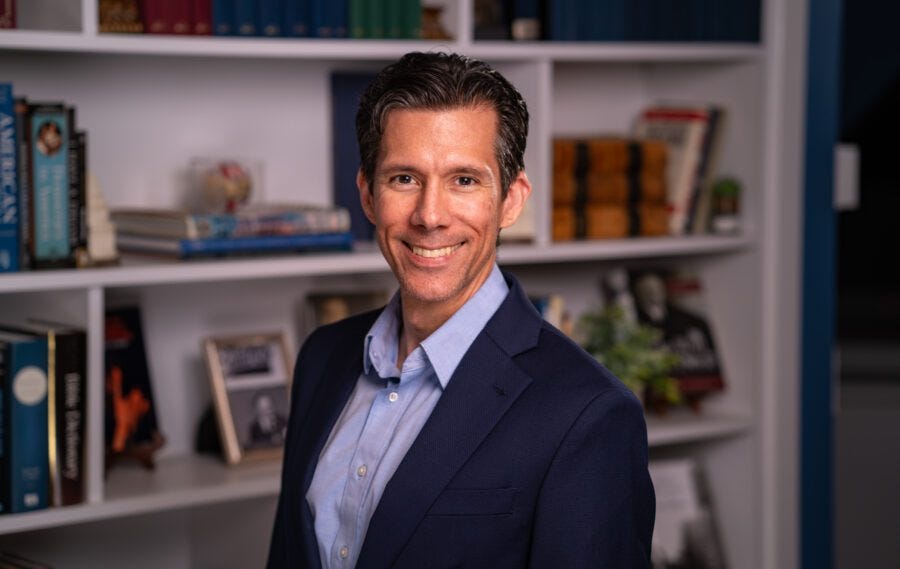
Paul D. Miller is a professor of the practice and co-chair for Global Politics and Security at Georgetown University’s School of Public Service. He is also the General Hugh Shelton Visiting Chair in Ethics at the US Army’s Command and General Staff College Foundation at Ft. Leavenworth, an editor-at-large for Providence, a research fellow with the Ethics & Religious Liberty Commission, a senior fellow with the Atlantic Council, and a FreeCon signatory.
Miller’s distinguished career in public service includes such roles as director for Afghanistan and Pakistan on the National Security Council staff, intelligence analyst for the Central Intelligence Agency, and military intelligence officer in the U.S. Army.
His books include Choosing Defeat: The Twenty-Year Saga of How America Lost Afghanistan, The Religion of American Greatness: What’s Wrong With Christian Nationalism, Just War and Ordered Liberty, and American Power and Liberal Order.
In a recent piece for The Dispatch, Miller discussed the origins and implications of “MAGA Christianity” and other uses of religious faith in nationalist-populist rhetoric and activism.
“MAGA Christianity is a political-religious movement with extraordinary power and appeal,” he wrote, “yet it is also a movement with a strong and rising chorus of critics from both within and outside professing Christianity. Though some do, not all critics argue in bad faith, from anti-religious bigotry, or from the progressive left. Some are coming from sincere love for fellow believers, and ‘faithful are the wounds of a friend.’”
“As a political scientist, I fear MAGA Christianity is a movement that holds extraordinary danger for the American republic. But more importantly, as a Christian, I fear that if you are in this movement and feel no discomfort whatsoever, it is a movement that holds extraordinary danger for your immortal soul.”
Tech dominance
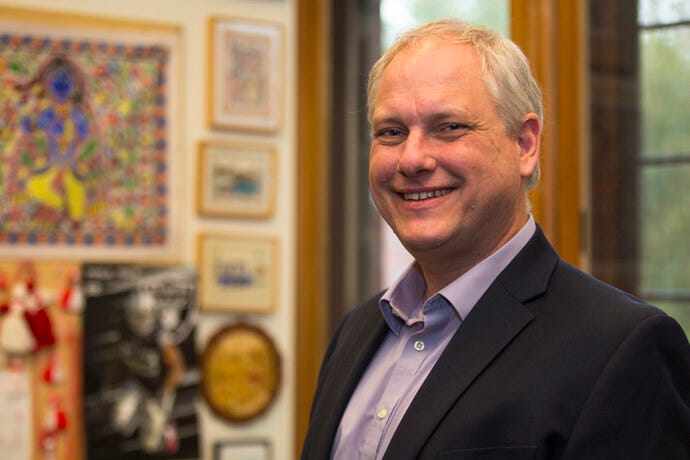
James Hartley is professor of economics at Mount Holyoke College and a FreeCon signatory.
At the college, he has served as interim executive director of its professional and graduate education division, the director of first year seminars, and chair of the economics department. His books include The Representative Agent in Macroeconomics, Real Business Cycles: A Reader and Mary Lyon: Documents and Writings.
In a recent Law & Liberty review of the book Why Democracy Needs the Rich, Hartley wrote that “the argument that the rich have too much political power is an argument that political power should instead be wielded by the influential people in the moral-cultural order who hold ‘correct’ views on the issues of the day.
“If George Soros funds my favorite ideas, there is no problem, but if Elon Musk funds ideas different from mine, it is an existential threat, not to democracy, but to achieving what I want to achieve. The New Right is falling into exactly the same pattern.”
In another book review, this one for Civitas Outlook, Hartley suggested that Mehran Gul’s The New Geography of Innovation should remind Americans that reports of the death of their country’s dominance in technological innovation have been exaggerated.
“In modern America, immigration and a cultural exaltation of risk-taking leading to high wealth are both under threat,” he wrote. “Will America continue to be willing to accept the large inflow of migrants hoping to make it big in Silicon Valley? Will America continue to celebrate the wealthy technological titans who have shaped the world?
“Given the critiques now coming from both sides of the political aisle on exactly these two things, it is not hard to imagine a future where America sacrifices its technological advantages in the service of reshaping society. But before destroying the sources of American technological dominance, perhaps we should consider what would happen if the U.S. finds itself envying technological advances happening elsewhere.”
Countering ambition
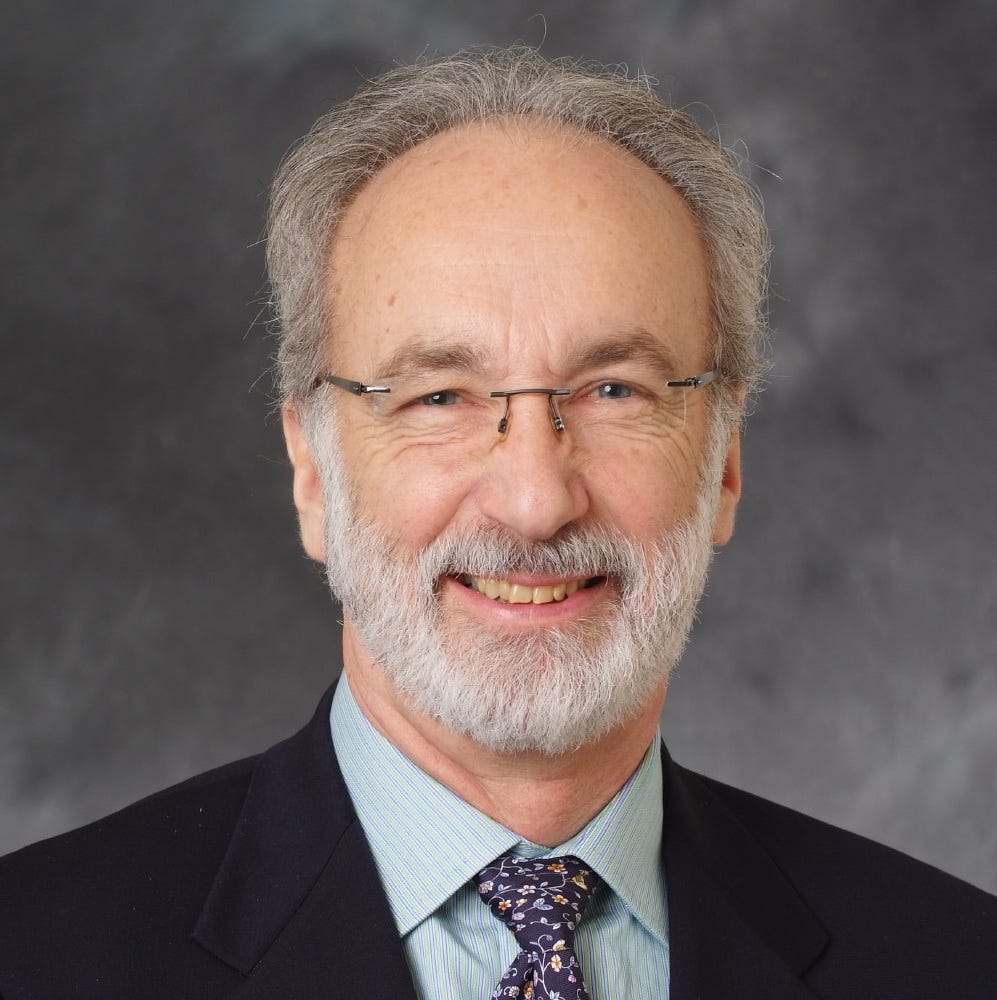
James Huffman is professor and dean emeritus at Lewis & Clark Law School. He is also a FreeCon signatory.
The author of American Factions: How the US Constitution Can End Extreme Partisanship, Huffman has served as a visiting professor at Auckland University in New Zealand, the University of Oregon, the University of Athens in Greece and Universidad Francisco Marroquin in Guatemala. He currently serves as a trustee of the Morris K. Udall and Stewart L. Udall Foundation and on the board of the Property and Environment Research Center.
In a recent essay for Law & Liberty, Huffman argued that while majority rule was a key principle for the American Founders, and continues to be an essential element of American self-government, democracy is a broader concept — and the Founders also established and defended counter-majoritarian institutions to guard against abuses.
“The founding generation aspired to a virtuous population of informed citizens who would be as concerned for their fellow citizens and the public good as for their own interests,” he wrote. “But they understood human nature and did their best to, in Madison’s words, write a Constitution in which ‘ambition … [is] made to counter ambition.’”
If at any given time a majority is empowered to rule “without constraint,” he continued, “Congress abandons compromise, judicial invalidation of liberty-infringing legislation becomes abuse of judicial power, the president claims unlimited authority as if he were a king, dissent becomes un-American, and everything can be turned upside down at the next election.
“The democracy of the US Constitution is not one of simple majority rule. Rather, it is designed to protect liberty and prevent tyranny by making it difficult for a minority or a majority to abuse the powers of government.”
Extraordinary liberty
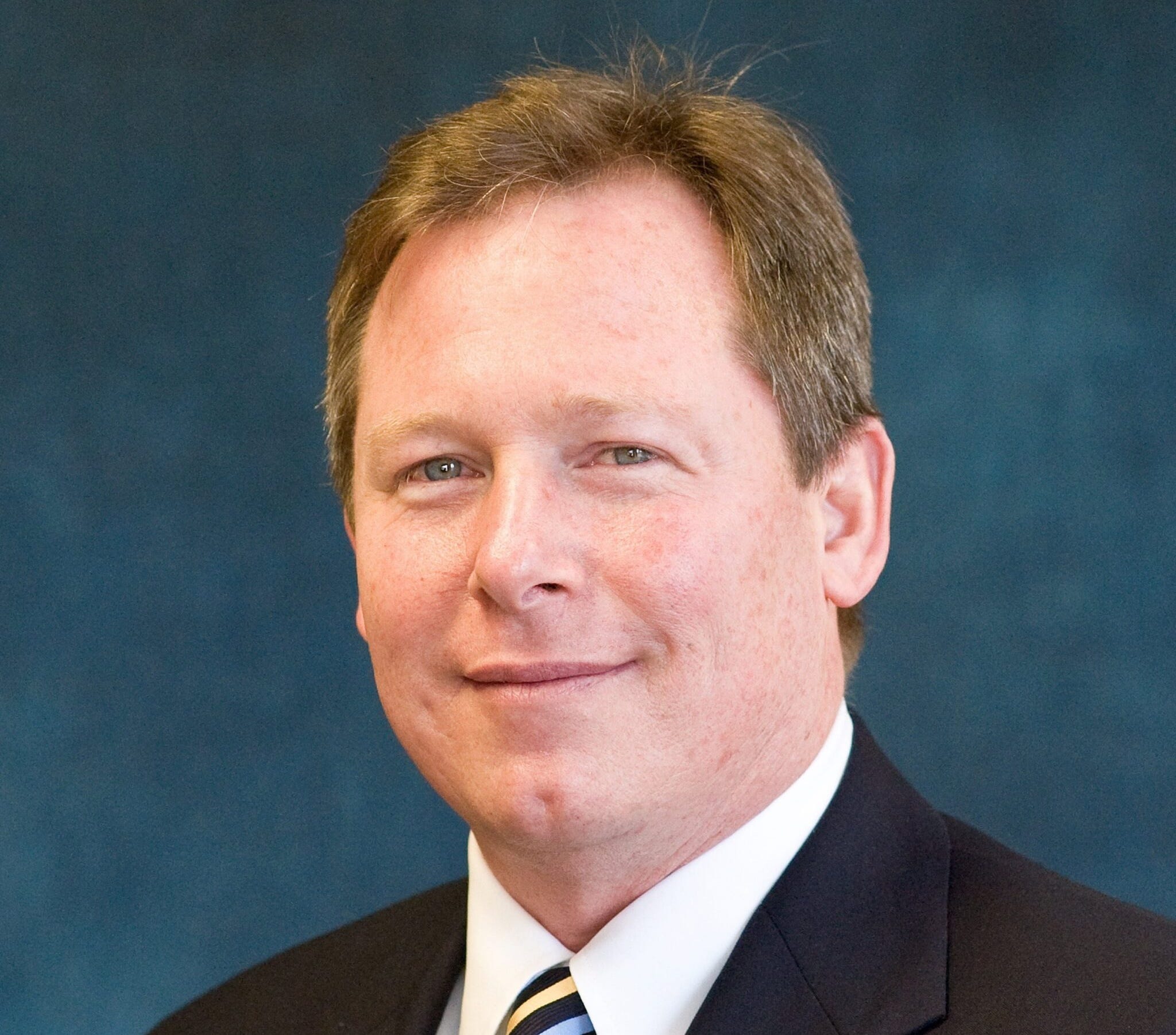
David C. Rose is CEO of The American Civics Academy and a professor emeritus of economics at the University of Missouri-St. Louis. He is also a FreeCon signatory.
Author of The Moral Foundation of Economic Behavior and Why Culture Matters Most, both from Oxford University Press, Rose writes frequently on such topics as behavioral economics, political economy, and organization theory.
In a recent piece for Civitas Outlook, he described the origins of the “extraordinary level of liberty” enjoyed by American colonists on the eye of the Revolution — and why they were so passionate about defending and expanding it.
“From the founding of the first permanent settlement at Jamestown in 1607 until the end of the Seven Years’ War in 1763, sheer distance and frequent wars with France left the colonies very lightly governed by the crown,” Rose wrote. “Colonists, therefore, got used to not being told what to do and to speaking their minds with little fear.”
Moreover, “a few particularly brilliant citizens were strongly influenced by the wisdom of the ancients, English common law, new ideas in political philosophy, and the unprecedented rise of liberty in the American colonies,” he argued.
“This was their frame of mind when they drafted, debated, and approved the Declaration of Independence. It was also their frame of mind when they created the Constitution, a formula for government devised to ensure it did not erode the liberty it was created to protect.”
In the mix
• In the New York Post, FreeCon signatory David Harsanyi urged Alexandria Ocasio-Cortez to stop blaming Boomers for the challenges facing young Americans today.
“The notion that Millennials and Gen Z are toiling in a uniquely grueling economic era” is “utterly delusional,” wrote Harsanyi, whose latest book is entitled The Rise of BlueAnon: How the Democrats Became a Party of Conspiracy Theorists.
He argued that “convincing young people they’ve been handed a broken world only fostered an unprecedented sense of hopelessness.”
“Boomers have failed on plenty of fronts, but being on the hook for a ridiculously expensive student loan on a useless degree isn’t one of the great tragedies to have befallen mankind. It’s just the consequence of choices. And most progressives want other people to pay for their choices.”
• At The Hill, FreeCon signatory Aidan Grogan argued that J.D. Vance’s positions on economic policy would not make America greater or its families stronger.
“Contrary to Vancenomics, entrusting the federal government, specifically the executive branch, with the power to reward concentrated interests through tariffs, tariff exemptions and subsidies at the expense of small entrepreneurs and everyday consumers doesn’t promote the dignity of the human person,” wrote Grogan, an associate editor at City Journal and senior contributor with Young Voices. “It makes Americans of all stripes less able to support their families, serve their communities and enjoy leisure time.
“Conservatives rightfully mourn the decline of family values and the loss of faith and community, but a remedy won’t be found in the Harmonized Tariff Schedule or at the Federal Trade Commission. The path to human dignity and cultural renewal will be charted when Americans are empowered to innovate, compete and flourish in a free economy and civil society — without federal bureaucrats standing in their way.”
• At National Review, FreeCon signatory Christian Schneider described the Democratic Party as responding to the MAGA era not by recruiting appealing candidates but by emulating the worst characteristics of their political adversaries.
“So far,” wrote Schneider, it appears Democrats see an unprincipled, unserious president who is out of his depth — and want to start a new era with Democrats who are unprincipled, unserious, and out of their depth.”
“One need only gaze upon the embers of the fraudulent Graham Platner Senate campaign to see this plan in action. Trump’s phony populism has pushed Democrats to boost unproven self-described socialists into public life, thinking buffoonery on the right deserves equal but opposite extremism on the left.”
• In The Wall Street Journal, FreeCon signatory Jack Butler ridiculed CNBC for using “quality of life” measures in its state-by-state ranking that reflect ideological positioning on social issues and economic issues, not real-world conditions for human flourishing.
“The 10-worst quality-of-life states are all red: Arkansas, Oklahoma, Alabama, Missouri, Utah, Georgia, Louisiana, Indiana and Texas,” wrote Butler, deputy editor of the Journal’s opinion newsletter Free Expression. “Tennessee is last.”
“I haven’t been to all of these places, but I’ve visited some and enjoyed them. I know people in all of them. If they’re suffering, they hide it well. What’s up?”