
The hundreds of conservative leaders who’ve signed the Freedom Conservatism statement — as well as thousands of other conservative activists and millions of American voters who share our FreeCon principles — have a common commitment to individual liberty, free enterprise, civic virtue, and constitutionally limited government.
We also share a common commitment to three pressing priorities: 1) reducing the cost of living, 2) closing the federal deficit, and 3) expanding opportunity for more of our fellow Americans to achieve the American Dream.
FreeCons do not, however, agree on every detail of public policy. On foreign affairs, for instance, some of us emphasize engagement with the wider world, especially with longtime allies and areas of particular economic or strategic importance, while others lean more towards restraint. FreeCons also differ on some aspects of constitutional interpretation, fiscal policy, and immigration enforcement.
Last week produced another example. The Trump administration floated a trial balloon, proposing that married couples with stay-at-home parents be made eligible for federal child-care subsidies. Some FreeCons questioned the efficacy and fiscal prudence of the proposal. “Giving people money so they’ll have more children isn’t a new idea,” wrote FreeCon signatory Noah Rothman at National Review. “Indeed, for over a decade, those who favor top-down social engineering to boost population rates have pointed to Viktor Orbán’s Hungary as a model. Well, the results of that experiment are in, and they’re not impressive.”
In response, National Review editor and fellow FreeCon signatory Ramesh Ponnuru suggested that even if the policy didn’t significantly increase birth rates, it might still be justified on fairness grounds, as removing a preexisting government nudge in favor of mothers working outside the home. “I don’t think any appreciable number of pro-natalists just want bigger government as an end in itself,” Ponnuru argued. “The proponents of the idea currently under discussion, the change to a childcare program, deny that it would expand government at all.”
Other FreeCons also debated the proposal via articles, broadcasts, podcasts, and social media. Writing in the Washington Examiner, Daniel Di Martino of the Manhattan Institute pointed to larger per-child tax credits as a superior alternative. “We can apply the lessons from the 1996 reform today by entirely ending childcare subsidies that have been corrupted and instead expanding the child tax credit so as to give parents money directly,” he wrote, arguing that conservatives should be wary of creating “a new way to game another government program.”
What distinguishes Freedom Conservatives from our rivals isn’t our stance on any particular issue but a deeper disagreement about what government is for, how it should be led, and by what criteria its consequences should be evaluated. Today we feature the work of FreeCons who contrast our answers to those questions with those of “postliberals” and others on the Dissident Right.
Redouble our commitment
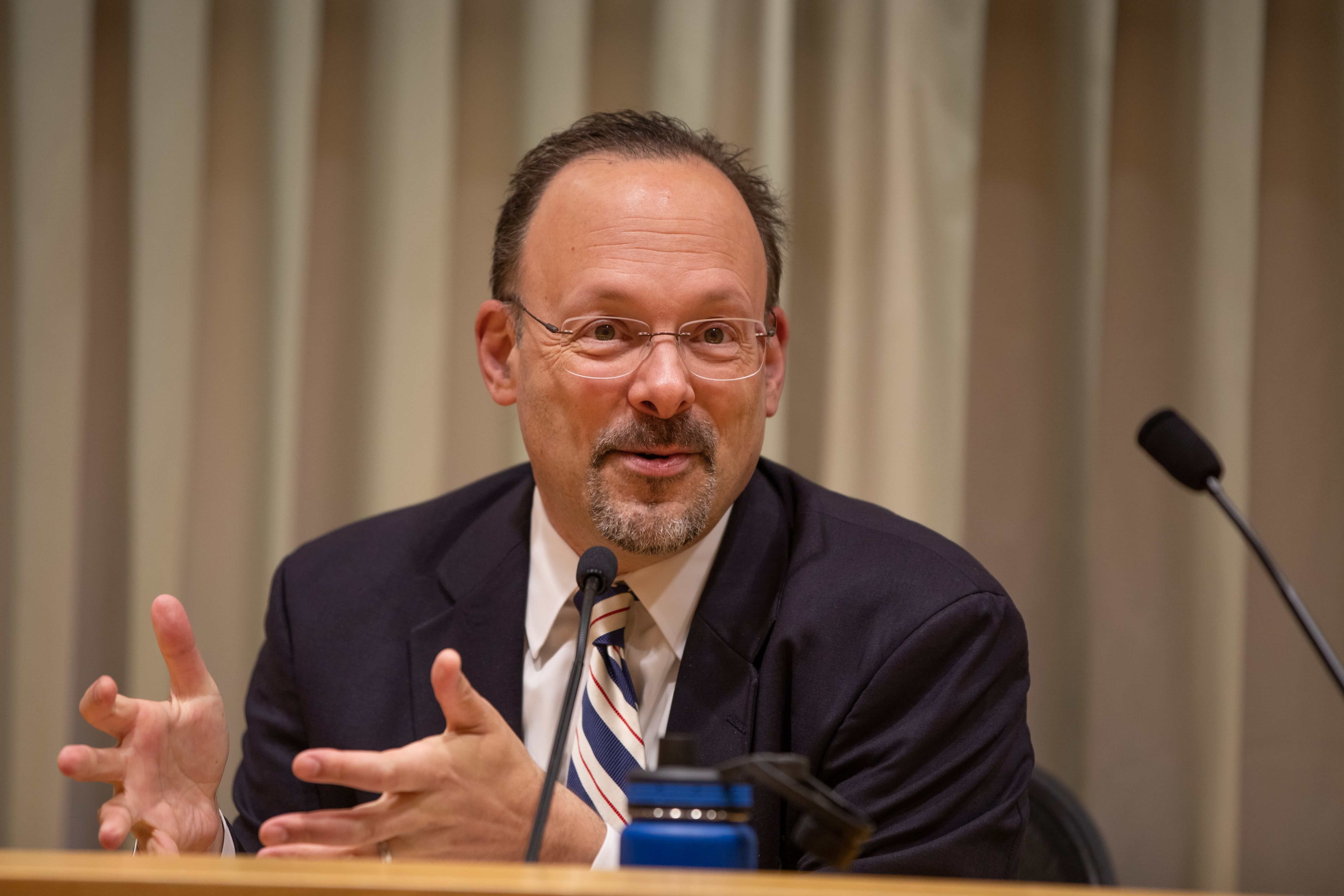
Jonathan H. Adler is the Tazewell Taylor Professor of Law at the William & Mary Law School. He is also a FreeCon signatory.
In a recent piece for Civitas Outlook, Adler explained that whether recognized by its adherents or not, the “postliberal indictment” of traditional conservatism “rehashes arguments and propositions made many times before and proposes a model of governance that has never delivered the moral state its proponents claim it seeks. This ground is well-trod, but not to good effect.”
“America is fortunate that advocates of postliberalism failed to find a following here,” he continued. “While some sought to import a reactionary European conservatism to these shores, they failed to dislodge the fusionist consensus that has defined the American conservative movement since World War II — a consensus committed to individual liberty and traditional morality within a constitutional order that limits and decentralizes government power.”
“American conservatism has not always successfully conserved the norms and institutions upon which liberty and virtue depend,” Adler concluded. “This is not because the conservative project was misconceived, but because such an order is always under threat and perpetually requires commitment and struggle to maintain. If the status quo is unsatisfactory — it is ever thus, and is but a call to redouble one’s commitment.
“To abandon the American project is, by definition, to conserve nothing.”
Time warped

Marcus Witcher is a teaching assistant professor of economic history at West Virginia University, where he serves as manager of undergraduate programs for the Knee Regulatory Research Center. Witcher is also a FreeCon signatory.
In a recent piece for The Daily Economy, he reviewed the book Furious Minds by Laura Fields, which he described as “a history of the intellectuals behind the conservative movement’s shift toward illiberalism.”
Witcher began his review by relating the story of a friend approaching him at a Philadelphia Society several years ago. “He identified as a National Conservative and believed that the Right needed to use the coercive power of the state to make the country more virtuous,” Witcher wrote. “He was mainly concerned about the supposed degradation of our culture and insisted that we needed a strong, authoritative leader to restore America to its former greatness.
“I adamantly disagreed, while conceding that we needed to work to restore the country’s institutions, including the balance of power through proper checks and balances.
“He laughed and asked me if I knew what time it was. I looked at my watch and told him the time. He laughed again. I didn’t know what time it was.”
The “only problem with embracing the New Right’s narrative about the economic decline of the United States,” Witcher continued, is that it is “completely wrong” and their big-government solutions would “make things worse for the very people they want to help.”
“It is no coincidence that the sectors where costs have risen fastest are often those dominated by services and characterized by heavy public provision and expansive government regulation. Additionally, a revitalization of American families and communities does not require federal government programs but a resurgence of civil society and voluntary associations.”
Doctrinal errors
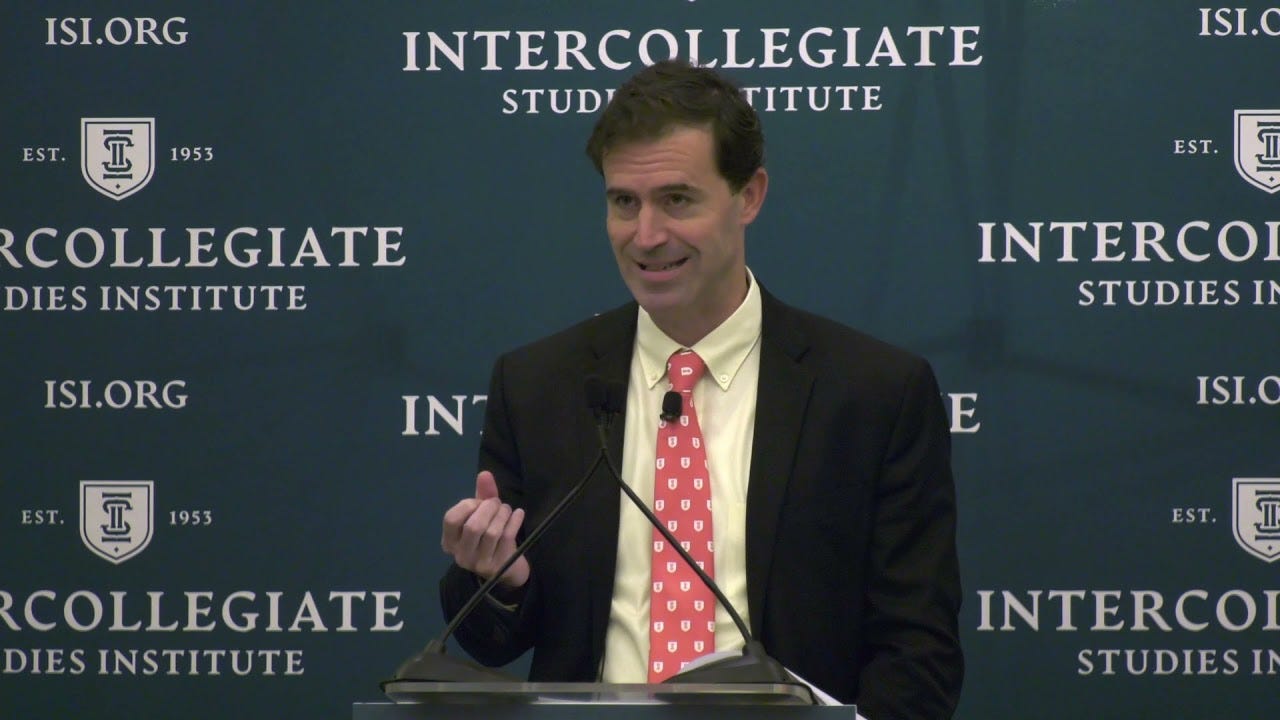
Richard M. Reinsch II is editor in chief of the Civitas Institute’s Civitas Outlook and a FreeCon signatory.
In a recent piece for Civitas Outlook, Reinsch discussed the book Why Postliberalism Failed by fellow FreeCons James Patterson and Thomas Howes. The authors “represent the movement as a theological, philosophical, and political effort to displace republican constitutionalism and its unwritten foundation of support in the separations and divisions of power, free markets, independent civil society, and the natural right philosophy that undergirds the self-governing person,” wrote Reinsch.
“Postliberalism proponents offer to replace the foregoing with an incredibly powerful, executive-led state that governs the people in the name of the common good” — albeit one that is “nowhere positively defined.”
Under postliberalism, he continued, “economics are decidedly left-wing, and government isn’t a steward of freedom but its arbiter. Government by representation is replaced by an incredibly unified, efficient managerial state. Religion is no longer the individual’s deepest choice, made prior to and above political allegiance, as James Madison and Thomas Jefferson articulated it, but the architectonic instrument of social and cultural control by the state.”
“Contemporary advocates of postliberalism consistently tell us they are returning to the foundations of Christianity, classical philosophy, natural law, and economic solidarity. But their moves are about power and control. In the first foreword of Why Postliberalism Failed, Archbishop Salvatore Joseph Cordileone of San Francisco notes the doctrinal errors in postliberal thinking and the incompatibility of their ideas with American government.”
In the mix
• At The Dispatch, FreeCon signatory Jonah Goldberg predicted that those expecting Vice President J.D. Vance to become something like the “Ronald Reagan” of the New Right are bound to be disappointed.
“Reagan was a kind and congenial president,” wrote Goldberg, editor-in-chief at The Dispatch and a CNN contributor. “His detractors often struggled to see it, but voters saw it fairly plainly. His sunny disposition and fundamental decency played a big part in how he earned the ‘Teflon president’ nickname. Reagan very occasionally had sharp elbows, but he didn’t believe in demonizing enemies or immigrants for political gain.”
By contrast, Vance’s “big tent” has “a large and welcoming opening for edgelord Twitter addicts, traffickers in antisemitic bilge, and other fever-swampers,” along with “postliberals and nationalists who applaud ‘anti-regime’ red meat.”
• At The Wall Street Journal, FreeCon signatory Jack Butler suggested that critics of the U.S. Space Force look past its origins to consider the 21st-century challenges America faces and how the new service might prove useful in meeting them.
“Most of the satellites that make modern life possible sit in low-Earth orbit, no more than 2,000 kilometers above the planet’s surface,” wrote Butler, deputy editor of the Journal’s Free Expression newsletter. “That’s only one of the reasons the U.S. and other countries, including our adversaries, are interested in space.”
The U.S. Space Force “is more than an aesthetic plaything for an addled second-term president,” he concluded. “It’s also far more important than the comedians appreciate. Give Space Force some space.”
• At the New York Post, FreeCon signatory David Harsanyi wrote that the city’s mayor, Zohran Mamdani, grossly misrepresented the nature and history of America’s military during an interview with Qatari state media. ““There always seems to be money for war,” Mamdani claimed, “but not to feed the poor.”
“The United States, in reality, spends immense amounts of money feeding and taking care of the poor — far more than it does on war,” Harsanyi pointed out.
“You can oppose war for a lot of reasons, but spending on defense is not a primary driver of debt, nor does it inhibit us from helping the needy.” Furthermore, “federal military spending is one of the few major budget categories that clearly falls under Congress’ enumerated powers.”