
The Trump administration’s attempts to renovate and keep clean the Lincoln Memorial Reflecting Pool in the nation’s capital have become fodder for countless news stories and social-media memes.
Was it symbolic of America’s fraught present and cloudy future? Not really. As Tanner Nau, an editorial fellow at The Free Press and a Freedom Conservatism signatory, reported more than a week before the Semiquincentennial celebrations, the pool’s problems were technical in nature, as were its remedies.
The challenges facing the United States of America aren’t primarily technical in nature. We can’t just hire a few knowledgeable experts and set them loose with the policy equivalents of skimmers, test kits, and buckets of chemicals. Societies are vastly more complicated than pools. Human beings aren’t mindless molecules. And the tools of government, while essential to human flourishing, are also inherently dangerous and easily abused by ambitious politicians, rent-seeking interest groups, and maniacal ideologues.
Ensuring a hopeful future for America means thoughtfully adapting and skillfully applying “the timeless principles of liberty,” as we observed in the Freedom Conservatism Statement of Principles. They include limited government, free enterprise, free speech, free trade, fiscal responsibility, equal opportunity, and the rule of law.
“More and more people on the Left and Right reject the distinctive creed that made America great,” we wrote, “that individual liberty is essential to the moral and physical strength of the nation.”
Today, we feature a range of reflections by FreeCons about the 250th anniversary of the Declaration of Independence and its implications for American politics and public policy.
Not blood and soil
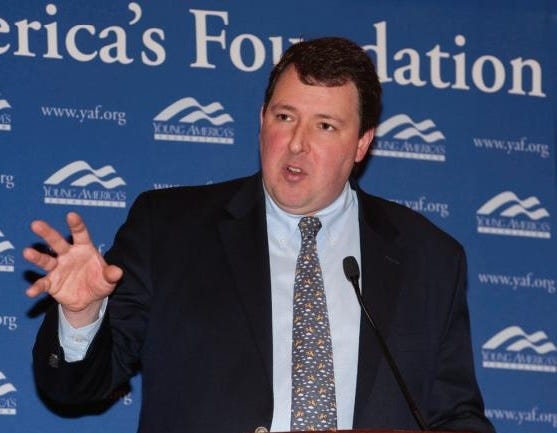
Marc Thiessen writes a column for The Washington Post on foreign and domestic policy. He is also a fellow at the American Enterprise Institute, a former chief speechwriter for President George W. Bush, a Fox News contributor, and a FreeCon signatory.
In a recent Post column, Thiessen urged his fellow Americans to reject the “blood and soil” nationalism of the Populist Right, who are attempting to graft “European-style” nationhood on “the American body politic” and thus “inadvertently making common cause” with socialists and progressives on the Left.
“We are the first nation in human history built not on blood and soil but on an idea: the idea of human freedom,” he wrote. “What unites us as a people is not a common bloodline, but our common creed.”
“Our creedal identity is precisely why we need not fear the rise of nationalism in America,” Thiessen continued. “In Europe, nationalism is based on ethnicity — and, in its most toxic form, pride in the superiority of a particular race. But our nationalism is a belief in the superiority of the American idea.
“European nationalism is inherently exclusive. But American nationalism is inherently inclusive, open to those who come here legally and accept our creed, our Constitution and our founding principles.”
Past that never was
Jonah Goldberg is editor in chief of The Dispatch and holds the Asness Chair in Applied Liberty at the American Enterprise Institute. He is also a columnist for the Los Angeles Times, a CNN contributor, host of “The Remnant” podcast, and a FreeCon signatory.
In a Times column, Goldberg observed that while Americans were in a “pretty foul mood” for the 250th anniversary of the Declaration of Independence, the country is better off many ways than it was during the prior Bicentennial celebrations.
“Fifty years ago, America was in many respects much more of a mess than it is today,” he wrote. “Inflation, gas lines, crime, unemployment, political violence, race relations, geopolitical tensions — including the just concluded Vietnam War — were not the stuff of a golden age.”
“Surveys routinely find that Americans think the country is in much worse shape than they are personally,” Goldberg explained. “Even when large majorities of Americans say the nation is in a bad way, equally large majorities say they’re personally doing OK. Last year, a Federal Reserve survey found that only about a quarter of Americans thought the economy was doing well. But about three-quarters said they were personally doing OK.”
“None of this is to say that Americans don’t have real problems,” he concluded. “I’m a conservative, so I’m the first to concede that the past is worth remembering and studying. But if all you do is cherry-pick the good — real or alleged — while blinding yourself to the bad, you’re not studying the past.
“You’re grading the present against a past that never was.”
Destructive cycle
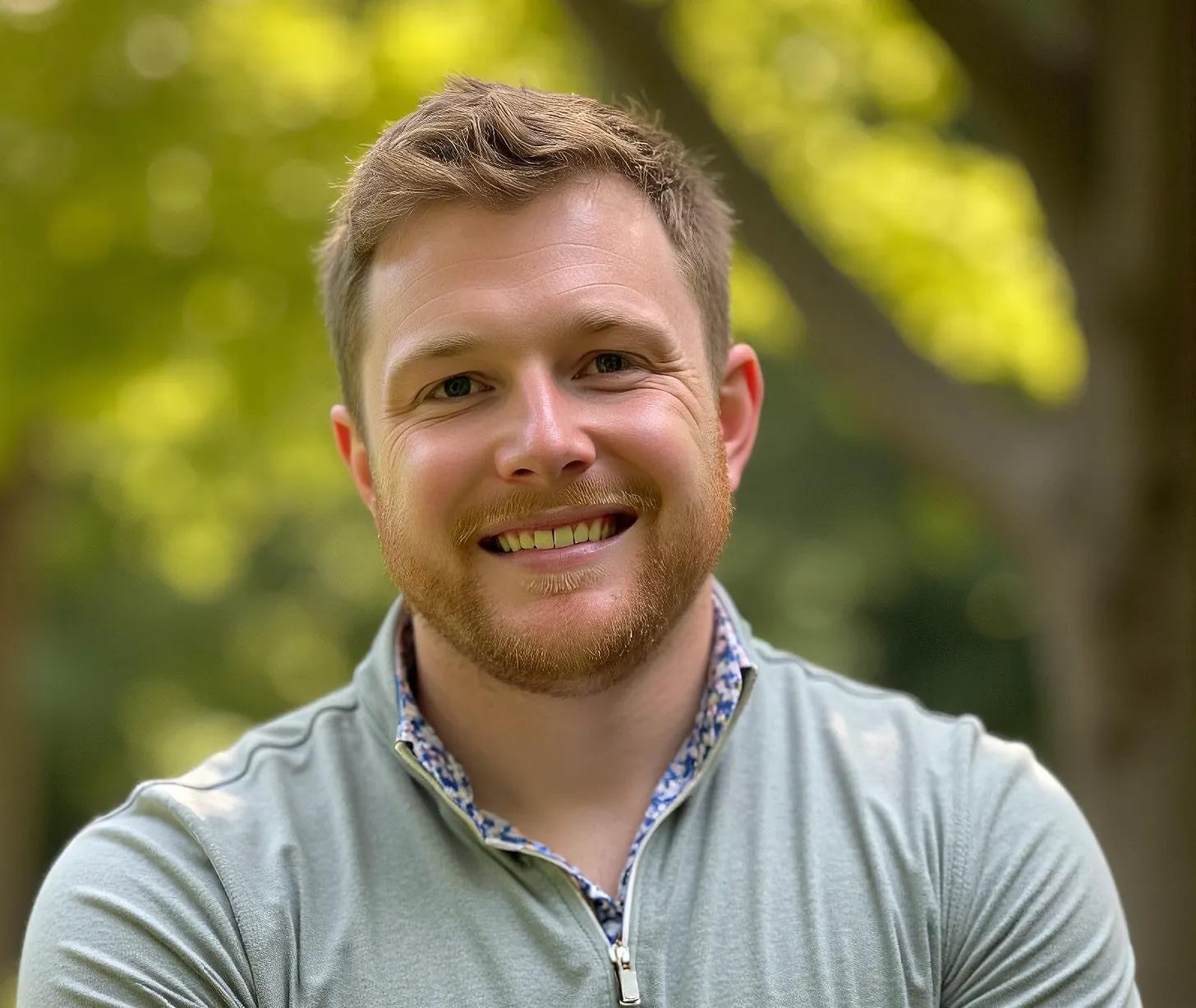
Karl Beckstein is a former GOP campaign strategist and conservative activist who works in the tech industry in North Carolina. He is also a FreeCon signatory.
In a recent piece for the North State Journal, Beckstein wrote that the very principles the inspired America’s founders in the 1770s can help today’s leaders address our country’s many political problems and policy challenges.
“Constitutional violations breed more constitutional violations,” he argued. “Every time we abandon our principles for a short-term win, we give the other side permission to do the same and we lose the moral authority to object when they do.”
American conservatives should be “setting the standard for constitutional governance, not racing to the bottom,” he continued.
“Our current dysfunction isn’t unprecedented. Politics has been dominated by cultural decadence and populist power grabs before. Our problems aren’t new. Neither are the solutions.”
In the mix
• At the Washington Examiner, FreeCon signatory Randolph May wrote that if America wants to enjoy another 250 years of self-government and prosperity, Americans must reject the siren song of socialism.
“Whether through outright seizure of private property for conversion to public use or through imposition of stringent regulatory controls that substantially diminish a property’s value, a lack of respect for private property rights remains a cornerstone of the socialist program,” wrote May, president of the Maryland-based Free State Foundation.
“This antipathy towards private property is directly contrary to the reverence for property rights embraced by our Founders, which they made manifest in the Declaration and Constitution.”
“The Founders understood that protection of property rights by the government is essential to the preservation of life and liberty. Freedom and property are inseparable.”
• At Newsmax, FreeCon signatory Merrill Matthews debunked the claim of progressives (and an increasing share of populists) that upper-income Americans don’t pay their fair share of taxes.
“In fact, the United States arguably has the most progressive tax system among developed countries,” wrote Matthews, the Texas state chair of Our Republican Legacy.
Including state and local taxes flattens the curve somewhat but doesn’t change the basic distribution: wealthy people pay much more than middle-income people, who in turn pay more than lower-income people. According to an index from the Fraser Institute, the average American living in California faces a more-progressive tax structure than the average resident of Canada, South Korea, Japan, or Australia. Even living in Texas doesn’t keep upper-income Americans from shouldering more of the tax burden than in most other developed countries.
• In Regulation magazine, FreeCon signatory Jonathan Adler reviewed Ezra Klein and Derek Thompson’s often-cited book Abundance and concluded that the two left-wing analysts stopped far short of the right destination.
Their “recognition that progressive legal institutions are obstacles to growth, innovation, and solving societal problems is welcome,” wrote Adler, the Tazewell Taylor Professor of Law at William & Mary Law School. “Yet they show little curiosity as to why they and their fellow-travelers had so many ‘blind spots’ for so long.”
“Klein and Thompson seem to think the failures of centralized government decision making can be repaired while maintaining centralized government decision making. They want a ‘liberalism that builds’ without thinking too deeply about what building requires. It would have helped had they consulted Mises or Hayek at least as much as they did Marx.”
• At National Review, FreeCon signatory Joe Loconte argued that Italy’s Giorgia Meloni has proved to be a “champion for Western unity.”
“The Italian prime minister has emerged as the most consequential European advocate for the ideals and institutions that have built Western civilization,” wrote Loconte, director of the Rivendell Center in New York City and a senior fellow at Sagamore Institute.
At a speech before the Atlantic Council, Meloni stated that the West “is a system of values in which the person is central, men and women are equal and free, and therefore the systems are democratic, life is sacred, the state is secular, and based on the rule of law.”
No Western leader “understands and embraces this cultural inheritance more fully than the Italian prime minister,” Loconte concluded.