
If you want to learn more about Freedom Conservatism, just study the list of signatories to the FreeCon Statement of Principles. But make sure you reserve enough time — there are now hundreds of conservative leaders on that list!
Many of these names will be familiar to you. They are former governors and members of Congress. They are longtime columnists for national newspapers and commentators on national networks. They are bestselling authors and popular podcasters. They are CEOs of prominent think tanks, activist group, and policy shops.
We’re proud to count them among our ranks. But Freedom Conservatism is a broad movement with goals that cannot be accomplished by a single election cycle, ballot referendum, or piece of legislation. Success will require building new institutions, reforming old ones, changing the incentive structure of politics and public policy, and revitalizing America‘s culture of freedom, virtue, community, and self-government.
It will, in short, take time. Fortunately, we also include among our ranks some of America’s most promising young activists, communicators, scholars, and leaders. FreeCons in their 20s, 30s, and 40s play key roles in our movement. They are challenging the socialist lurch among left-leaning young people as well as the populist lurch among right-leaning youth.
Today we feature some of their work.
Zoomer time
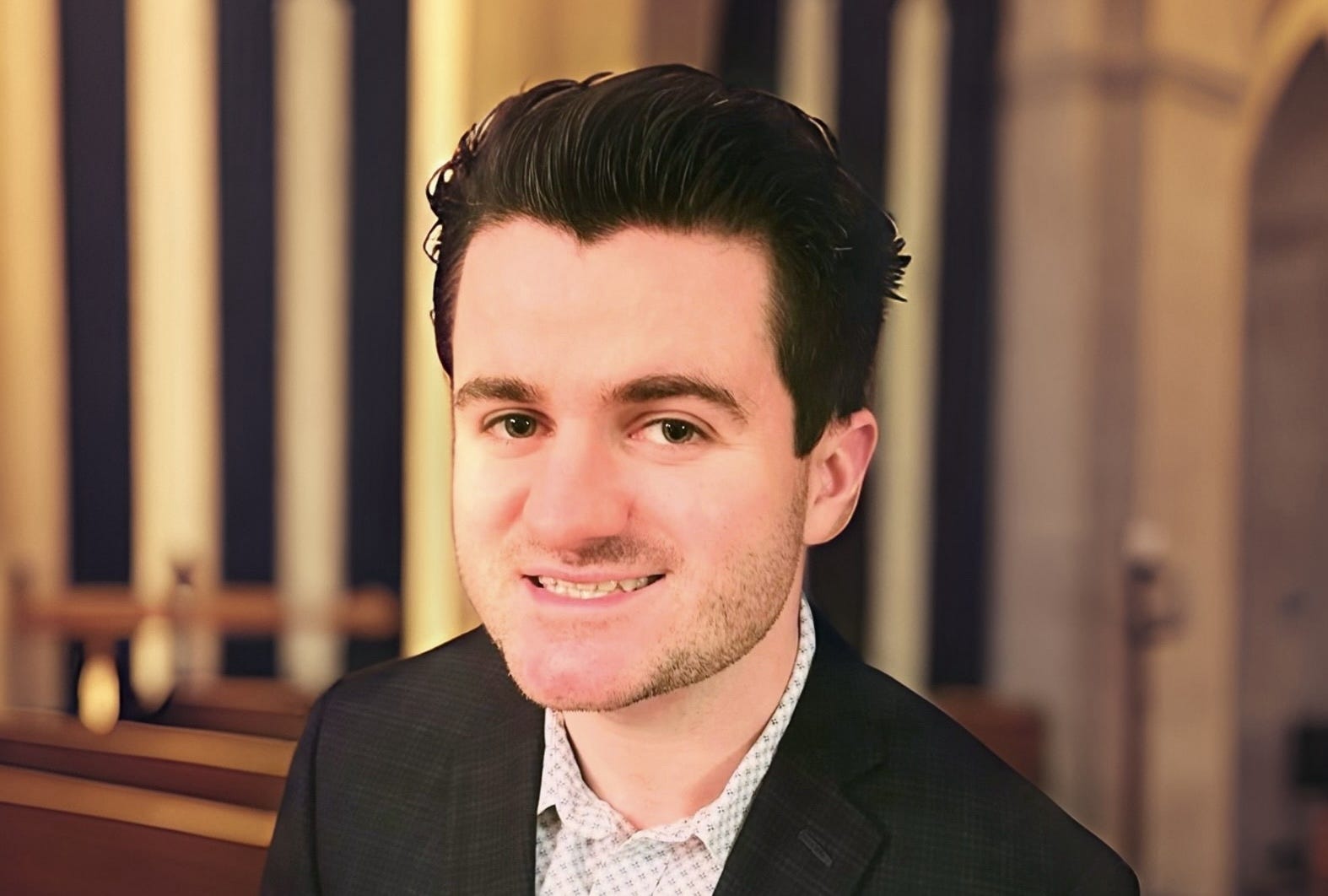
Aidan Grogan is an associate editor at City Journal, a senior contributor with Young Voices, and a FreeCon signatory.
In a recent piece for Civitas Outlook, Grogan argued that his fellow members of Generation Z cannot afford to damage their country’s institutions and squander its legacy by embracing authoritarianism.
“From the Mamdani Left to the Groyper Right,” he wrote, “a growing number of young Americans have an appetite for collectivism and would dispense with foundational American principles such as the rule of law and economic freedom to advance their ideological vision. But as the United States contemplates its next quarter millennium, Gen Z must not take for granted the self-evident truths of our nation’s founding, lest we forfeit the rights, liberties, and opportunities we enjoy and exercise daily.”
“Many young Americans aren’t interested in the of compromise or civil discourse either,” Grogan observed. “Around 18- to 29-year-olds describe themselves as ‘extremely ideological,’ far surpassing older age cohorts, and believe political violence is sometimes acceptable. About of college students think it’s at least sometimes okay to shout down a speaker on campus.”
“Despite its historical and present-day flaws, America is the last best hope for freedom and the dignity of the individual,” he concluded. “Gen Z should be grateful and patriotic that it will inherit this free, prosperous nation that remains the envy of the world.
“As Zoomers assume leadership positions in business and government, they will face unprecedented challenges which will strain economic systems built upon models of endless population growth, along with mounting geopolitical tensions and realignments that may jeopardize America and its allies’ wealth, security, and global prestige. Overcoming these obstacles and sustaining the American way of life will require Gen Z to abandon its ideological silos and reaffirm its robust allegiance to liberty, the rule of law, and human dignity.”
Suburbs are cool again
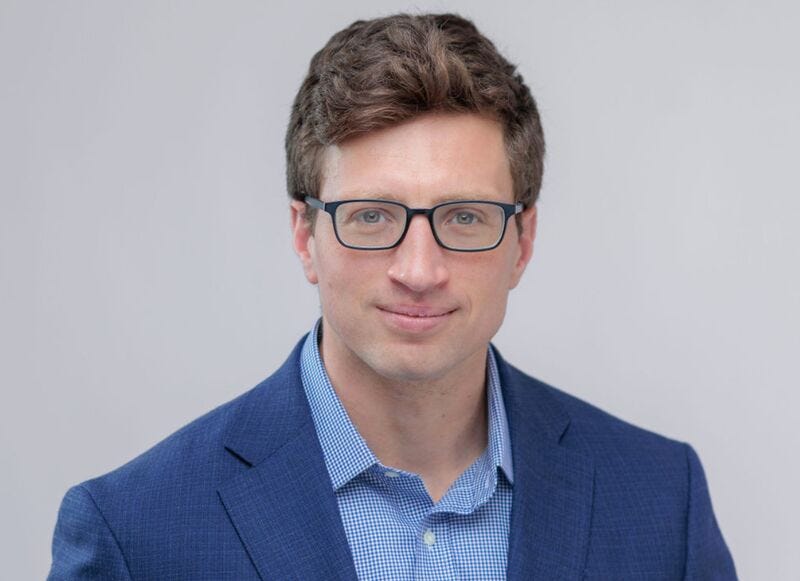
Russ Greene is senior advisor for public affairs and defense policy at Apex Path, executive director of the Prime Mover Institute, and a FreeCon signatory.
“Americans still believe the American dream is worth striving for,” Greene wrote in a recent article for The Free Press, “yet less than half believe that every American has the opportunity to achieve it.
He observed that many young Americans today “are trying to find their way toward a lifestyle their parents had that they took for granted and now feel they cannot reach as adults. That includes owning a home, having a good-paying job with benefits, and being able to afford some added comforts in addition to the necessities. In a word, suburbia.”
Greene called it an “extraordinary and ironic turn” that bourgeois suburban life has become the deepest desire of many young Americans. Still, if we want Americans to keep believing in the American dream, policymakers at all levels must “stop inhibiting young people’s suburban aspirations.”
“While Congress’s interest in housing reform this month is an encouraging sign, most of the regulations holding back the housing supply are imposed at the state and local level. Moreover, getting mortgage rates down sustainably will also require controlling the federal government’s deficit spending, for which Congress shows little appetite. And housing may even be a simpler problem to solve than modernizing the electrical grid or bringing down automobile costs.
“The Man once wanted to keep you locked in suburbia. Today, it feels like he’s locking you out.”
Entrepreneurs, leave!

Jon Hartley is a policy fellow at the Hoover Institution and an assistant professor of economics at the UT-Austin School of Civic Leadership. He is also a FreeCon signatory.
In a recent op-ed for the New York Post, Hartley that Democratic activists in California have gone all in on a billionaire wealth tax even though prominent party leaders such as Gavin Newsom and Xavier Becerra oppose it.
“California’s wealthiest residents already generate enormous amounts of income tax revenue year after year,” he wrote. “If a one-time wealth tax causes even a modest number of them to relocate (and it has), the state will lose them as taxpayers. The ‘net present value’ of those losses may exceed the revenue generated by the tax itself. A policy advertised as raising money could ultimately leave California’s finances worse off.”
There is also “a broader question about what message California wants to send,” Hartley continued. “For generations, the state attracted entrepreneurs, investors, engineers and innovators from around the world. Silicon Valley became the global center of technological innovation because talented people believed California was the best place to build ambitious companies.
“That competitive advantage should not be taken for granted. Other states actively compete for investment, headquarters and high-skilled workers.”
In the mix
• At National Review, FreeCon signatory Christian Schneider called Wisconsin Gov. Tony Evers an “electoral gangster” — and meant it as a compliment.
“Evers, a relatively moderate Democrat, stood up to the socialist wave overcoming his party, and he did so armed with only a soup ladle,” wrote Schneider. “Francesca Hong, a proud member of the Democratic Socialists of America and a backbencher in the state legislature, had shot to the front of the gubernatorial field, imperiling the Democrats’ chances of winning against Republican Representative Tom Tiffany in November.”
In order to stop Hong and face down the socialist wing of his party, Evers convinced Milwaukee County Executive David Crowley, who had dropped out of the race weeks before, to “reenter the contest and become the ‘establishment’ candidate.” Crowley then defeated Hong.
While “Republicans may be angry that the Democrats have a more viable candidate,” Schneider concluded, “there is something admirable in anyone who stands up to the creeping influence of socialism and expanded government control of our lives.”
• On Substack, FreeCon signatory Robert VerBruggen cited new research made possible by artificial intelligence that explores the relationship between shifts in cultural values and economic progress over the past millennium.
“The West — or at least the literate elite whose preoccupations are reflected in surviving, digitized books — gradually endorsed hierarchy and fear of the unknown less, and patience and autonomy more, over this time span,” Verbruggen wrote.
The study found that “as countries produced texts with a lower Innovation Wedge — less hierarchy and fear of the unknown, more patience and autonomy — they also tended to produce more future inventors and scientists” and predicted “nearby urbanization.”
• At The Wall Street Journal, FreeCon signatory David Hebert rebutted the often-repeated claim that imports are bad for economic growth. While the calculation of gross domestic product requires subtracting the value of imports from the total, that is simply an accounting adjustment to avoid double-counting.
“GDP tabulates domestic production, but because directly measuring every U.S. factory’s and office’s output is difficult, the government approximates it by counting expenditures,” explained Hebert, a senior research fellow with the American Institute for Economic Research. “This includes household consumption, private investment, government purchases and exports. All of these spending categories, aside from exports, include purchases of both American and foreign goods.”
“The next time someone says the trade deficit is weighing down American growth, ask why imports are subtracted. If he demurs, you’ll know you’re talking to someone who is reading the scoreboard upside down.”
• At the Washington Examiner, FreeCon signatory Philip Magness laid out the Trump administration’s new legal strategy for defending what is not, in reality, a significantly different strategy of levying punitive taxes on imports.
“Since ‘Liberation Day’ on April 2, 2025, the administration has pivoted from statute to statute for its tariff-of-the-month club to prolong its illegal regime of taxing imports,” wrote Magness, a senior fellow at the Independent Institute, with coauthor Marc Wheat of Advancing American Freedom. “Many of its claims have been inconsistent and contrary to well-established economic history.”
“If Congress or the courts do not reiterate that the power to tax, and therefore impose tariffs, belongs exclusively to Congress, the economy will suffer, and the public will continue to pay the costs.”