
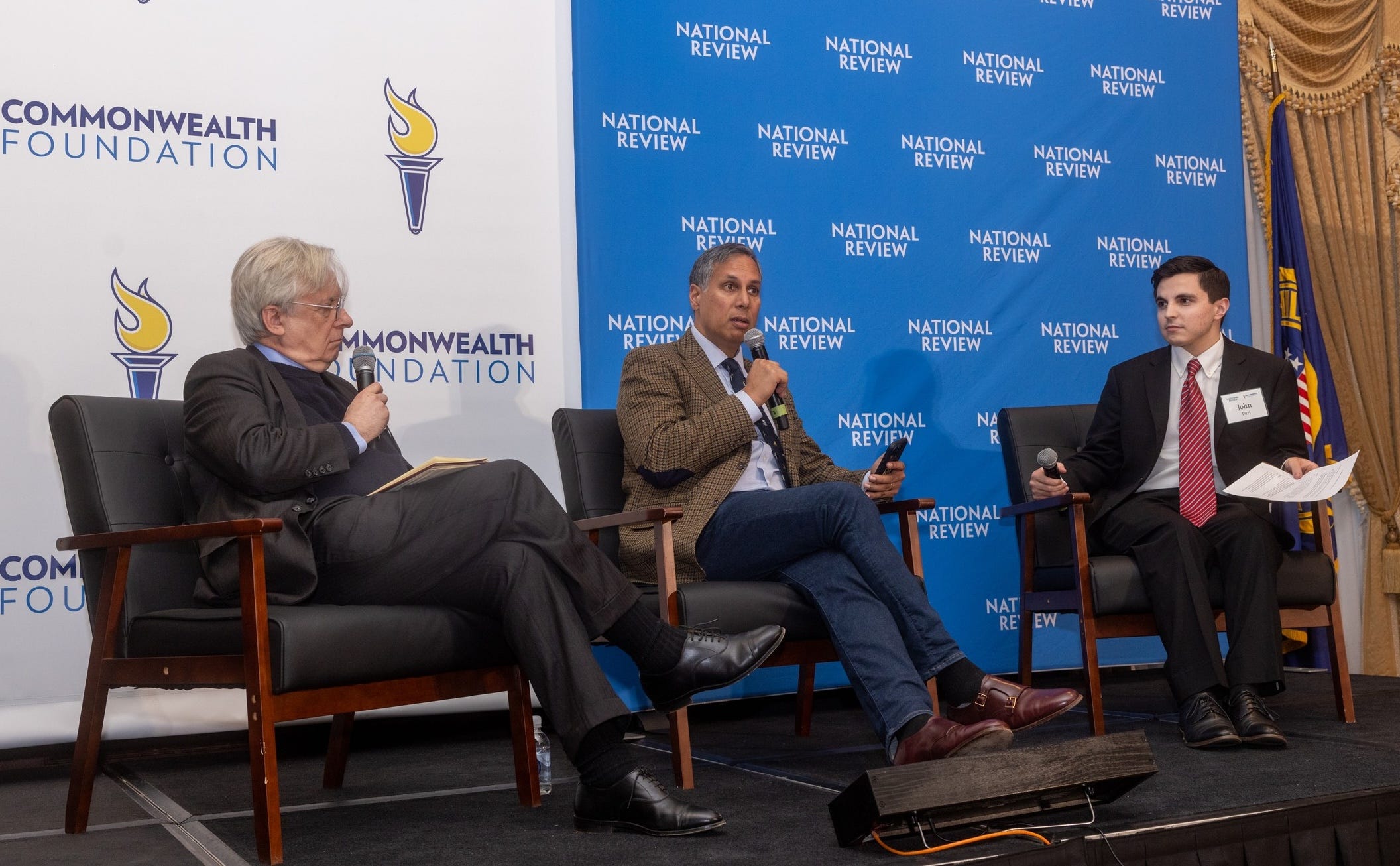
On Wednesday, November 18, Freedom Conservatives concluded a series of post-election events by staging a regional summit, FreeCon Raleigh, as well as FreeCon-themed sessions at the 2026 Freedom & Progress Conference in Washington.
At both meetings, FreeCon signatories and allies attributed the blue tsunami of 2026 to an abandonment of free enterprise, conservative reform, constraints on waste and corruption, and other commitments once seen as foundational to the American Right. Only by renewing these commitments and addressing public concerns about affordability, economic mobility, and fiscal responsibility can American conservatives hope to shape the future of our beloved country.
Opportunity for all
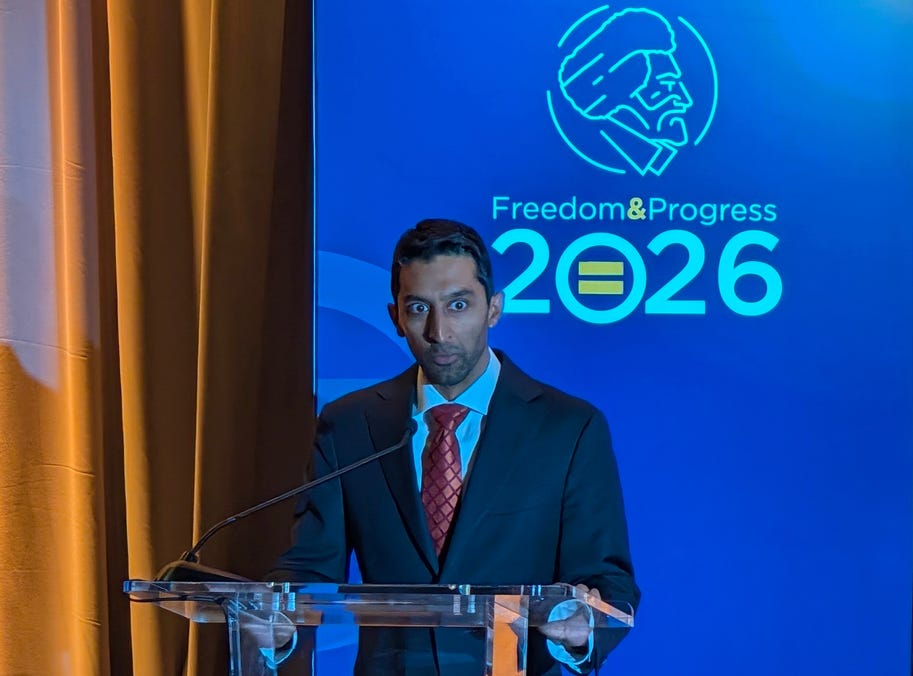
Akash Chougule, president of the Foundation for Research on Equal Opportunity and one of the leaders of the Freedom Conservatism project, opened FREOPP’s Freedom & Progress Conference on Wednesday by calling on activists, scholars, policymakers, and engaged citizens to champion the cause of equal opportunity.
“Americans across the spectrum are losing patience with a system many believe has forgotten about them, and are increasingly willing to entertain solutions that would have been unthinkable a decade ago,” Chougule told the FREOPP gathering at Le Meridien Washington/The Madison. “If our nation’s leaders don’t get serious on reform, voters will continue to turn their backs.”
"Our desire for every American to prosper and flourish does not happen by racing the Left toward ever-more government, and it will not happen by lecturing anxious families about fiscal discipline while offering them nothing else. It happens by building a real, results-oriented alternative, one that takes the affordability crisis seriously, and answers it not with a bigger state, but with a freer one."
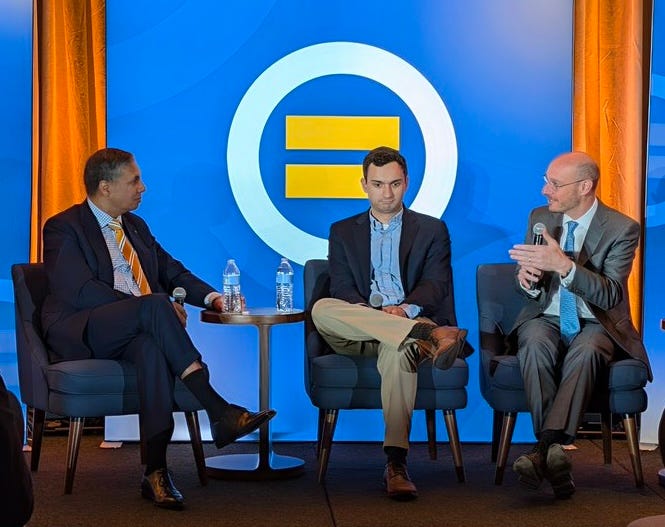
Over the course of the daylong Freedom & Progress Conference, other FreeCon signatories such as Tim Chapman (Advancing American Freedom), Dan Lips (FREOPP), Kurt Couchman (Americans for Prosperity), Scott Winship (American Enterprise Institute), Gregg Girvan (FREOPP), Laura Maristany (Katch Skills), and Brent Orrell (AEI) spoke on panels or joined a Freedom Conservatism working group to develop messages and strategies for 2027 and beyond.
Deep roots
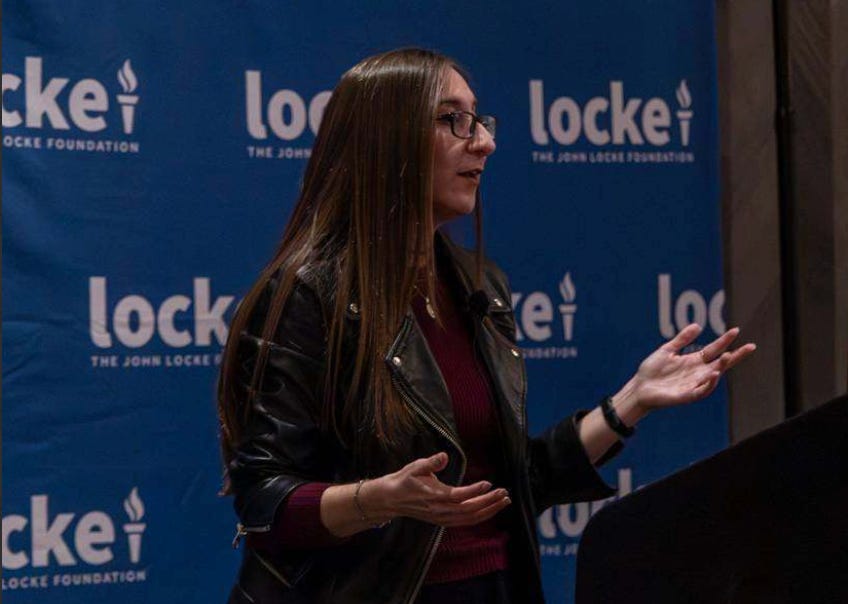
At the November 18 event in Raleigh, the City of Oaks, keynote speaker Stephanie Slade urged attendees to rediscover the roots of the American Right. Conservatives should “make liberty their priority” in public policymaking, she explained, while devoting most of their time and resources to the inculcation of virtue through families, congregations, community organizations, and other institutions of civil society.
Kent Lassman, CEO of the Competitive Enterprise Institute and one of the leaders of the FreeCon project, told the Raleigh gathering that over the past decade, too many conservative officeholders forgot the basic political truth that “every new project, legal authority, or application of government power will someday be used by their ideological antagonists.”
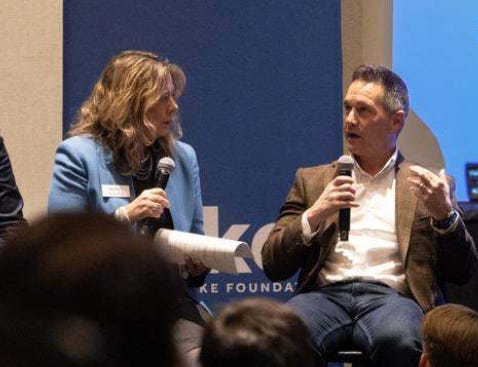
Another FreeCon Raleigh panelist, Cato Institute executive and Dispatch columnist Scott Lincicome, pointed to the Trump administration‘s disastrous and unpopular trade policies as a key factor in the 2026 midterms. He also cited a new study showing the local success of FreeCon-aligned policy on housing. After Raleigh loosened its zoning and parking requirements, the subsequent increase in housing supply from 2022 to 2025 caused average rents to fall.
FreeCon signatory Karl Beckstein previewed FreeCon Raleigh in a Carolina Journal op-ed. “Voters spoke loudly enough that they can’t be ignored,” wrote Beckstein, a former GOP campaign strategist and conservative activist who works in the tech industry in North Carolina. “Good governance won’t generate as many clicks as the next culture war, but it’s what voters want and what our country deserves.”
“And now the battle for the future of conservatism begins. Freedom Conservatives believe that the path forward involves lowering the cost of living through competitive markets and free trade. They believe in fiscally responsible government and in a nation of laws, not men, with a Congress that does the job the founders gave it. They believe politics should prioritize results over winning the next argument on social media.”
Apply now
The Raleigh and Washington meetings on November 18 followed prior ones on November 16 (FreeCon Phoenix) and November 17 (FreeCon Philadelphia). At each event, Freedom Conservatism signatories and allies championed the timeless principles of the American Right — individual liberty, limited government, family, virtue, federalism, free enterprise, free trade, free speech, and the rule of law — and explored how best to apply them to America’s current challenges.
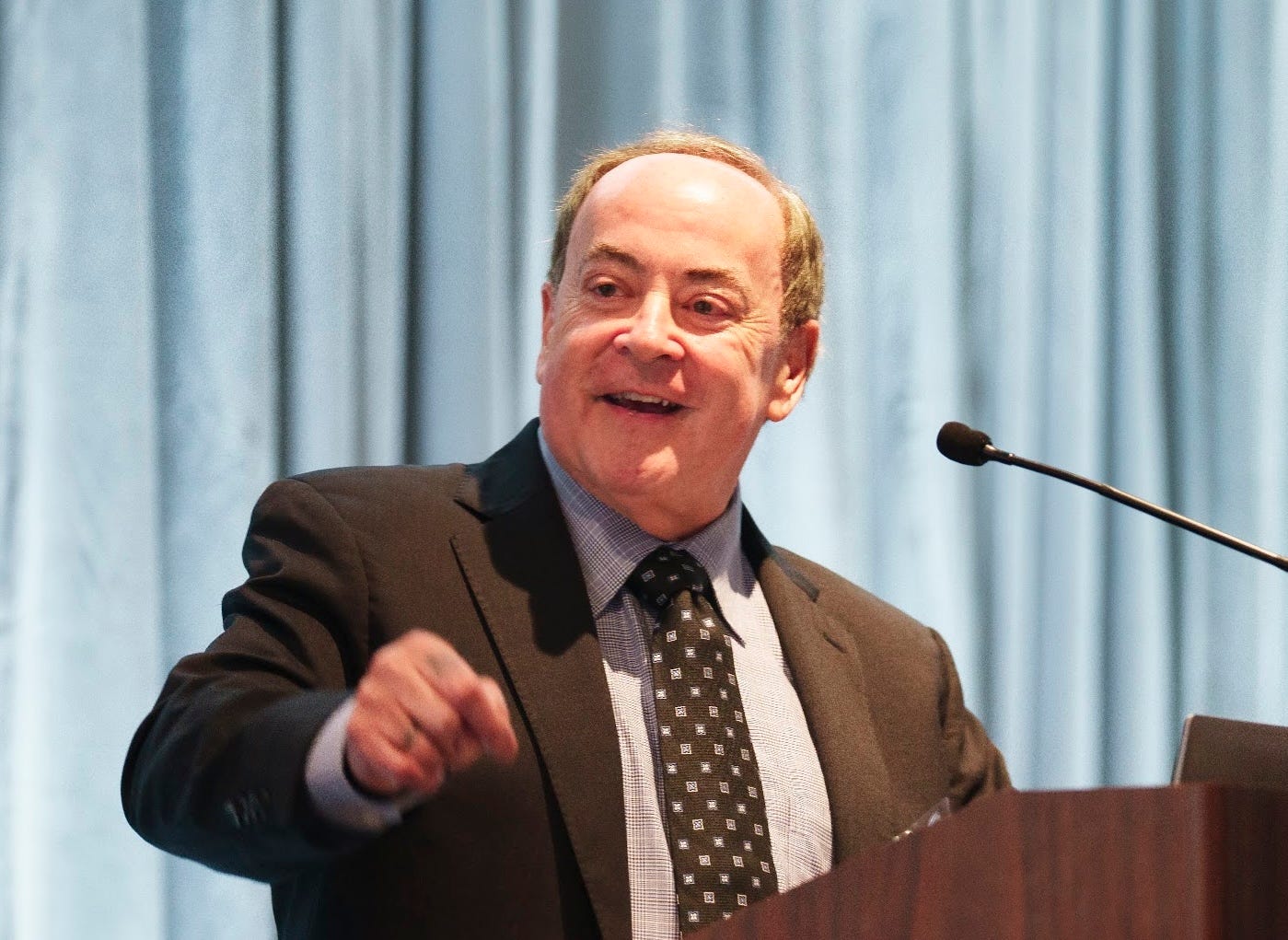
In Phoenix, for example, keynote speaker Clint Bolick, co-founder of the Institute for Justice and current justice on the Arizona Supreme Court, discussed what he called “four constitutional firewalls against tyranny.”
Bolick explained that due process, federalism, freedom of speech, and separation of powers were “essential to protecting freedom from government overreach” and that, in the aftermath of the midterms, FreeCons have “a real opportunity” to win people over with their ideas.
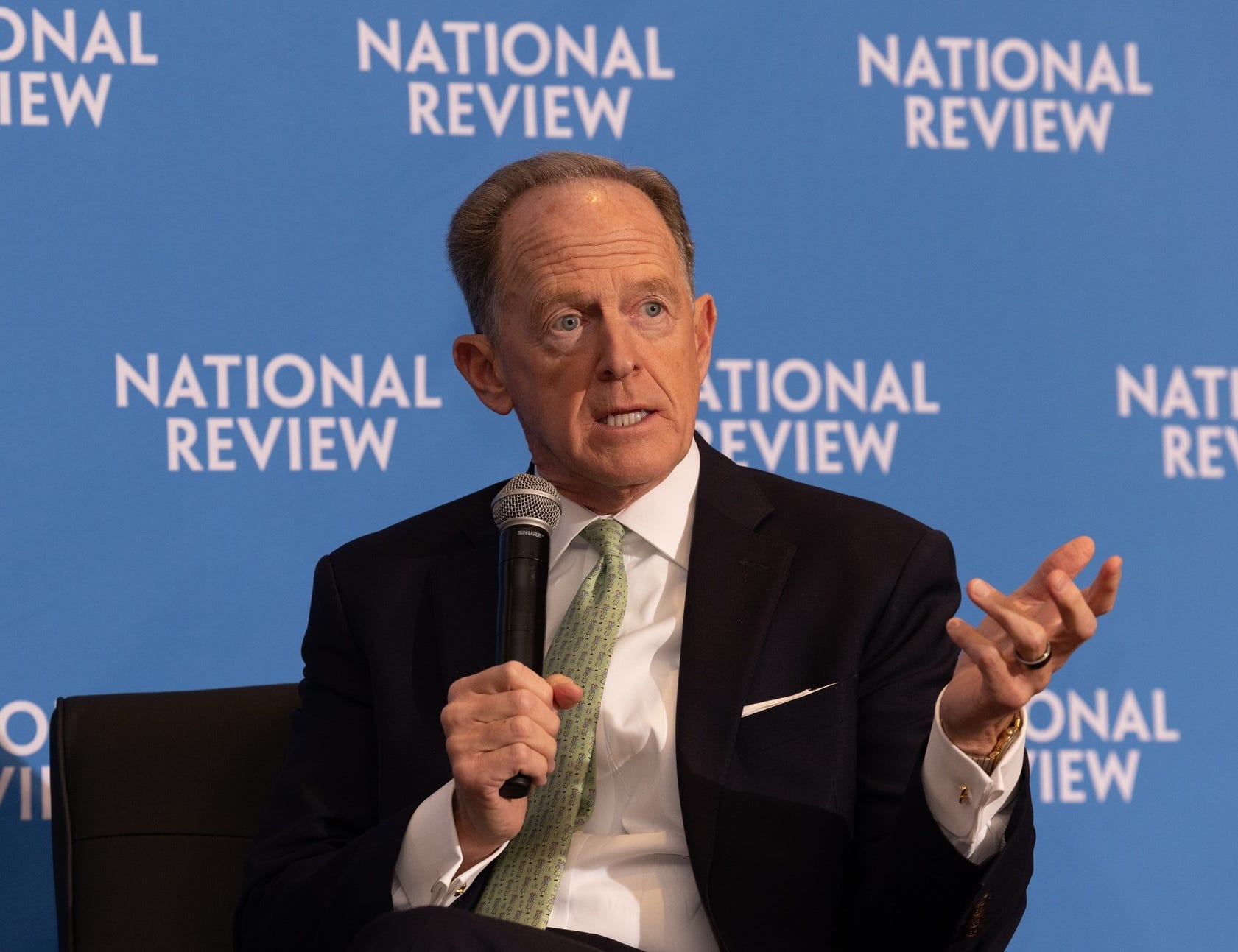
In Philadelphia, former U.S. Sen. Pat Toomey analyzed the electoral earthquake of 2026 and its implications for future politics and policy.
“We all seem to oppose government-owned grocery stores,” Toomey said right after the election. “But are we OK with government ownership of semiconductors companies and rare earth miners? We oppose rent controls. But do we support price controls on medicines and credit cards?”
“The bigger question is does the Republican party now agree with the Left that we need a large, powerful central government to run the economy, allocate capital and control prices? Or, do we believe that free men and women should be able to engage in commerce as they see fit and that a free enterprise system will create a higher standard of living and the greatest opportunities for the most people as it always has?”
Over the course of the four events held this week, Freedom Conservatism attracted more than 500 attendees to witness and participate in critical conversations about the future of the American Right. In future updates, we will offer more photos, excerpts, and reactions from these meetings as well as information about FreeCon events already being planned for 2027.
In the mix
• At The Wall Street Journal, FreeCon signatory Jack Butler praised a new academic initiative at the University of Texas-Austin.
“It is unusual,” Butler wrote, for “a school that welcomes about 10,000 freshmen a year to experiment on them. “But the university’s ongoing implementation of a new core curriculum for each class may be its most promising endeavor of all.”
“Critics have already accused UT-Austin of politicizing the curriculum. But understanding the foundations of Western civilization isn’t indoctrination. Great thinkers in that tradition have been arguing with each other since it began. The goal of a core is to provide a broader base of knowledge enabling critical discussions to take place, though not to begin such discussions without foundational knowledge.
• At The Washington Post, FreeCon signatory Andrew Cline argued that one of the greatest economic challenges facing New England is a dearth of starter homes across the region.
“Zoning ordinances typically mandate that homes are built on lots larger than a certain size, often 40,000 feet, called a ‘builder’s acre,’” wrote Cline, president of New Hampshire’s Josiah Bartlett Center for Public Policy. “This is a nationwide problem, but New England showcases how these minimum lot sizes have changed communities and sent home prices surging.”
“Zoning has valid uses, but eliminating minimum lot sizes would allow builders to offer starter homes in many places where they are illegal.”