
Since the Freedom Conservatism project was founded nearly three years ago to reaffirm and reapply the timeless principles of liberty, limited government, and human dignity to the challenges of our time, we have reached several important milestones.
So far, we’ve hosted two Freedom Conservatism Conferences in Washington as well as dozens of other events, meetups, and Capitol Hill briefings for members of Congress, staffers, journalists, and other policy professionals.
We’ve done dozens of media interviews and placed more than a hundred articles in newspapers, magazines, and online media to describe the FreeCon Statement of Principles and explain their continuing importance in modern politics and public policy.
And we’ve continued to expand our ranks! When we announced the Freedom Conservatism project on July 13, 2023, there were dozens of signatories to the FreeCon statement, including former elected officials, prominent communicators, distinguished scholars, grassroots activists, think tank presidents, and other leaders of right-of-center organizations and causes.
As of early July 2026, the FreeCon statement has more than 400 signatories — representing a wide variety of professional backgrounds, institutions, expertise, locations, and leadership roles. If you are aligned with Freedom Conservatism, work in the movement in some formal capacity, and would like to be considered for signatory status, please fill out this form and tell us why you support the Statement of Principles.
Today, we profile several new FreeCon signatories and the work they do to promote our timeless principles and apply them to present-day issues.
Unleash American workers
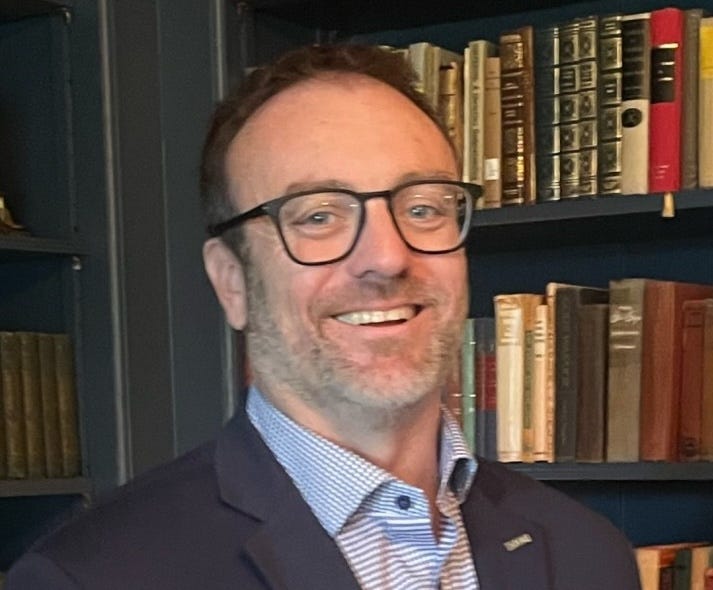
Dave Hebert serves as director of economics & economic freedom at the American Institute for Economic Research. He’s also a FreeCon signatory.
A former professor at Aquinas College, Troy University, and Ferris State University, Herbert has worked at the U.S. Senate Committee on the Budget and the U.S. Joint Economic Committee. His articles have appeared in academic journals such as Public Choice and Constitutional Political Economy as well as popular outlets such as The Wall Street Journal and The New York Times.
In a recent piece for AIER’s The Daily Economy, Hebert described as “neo-mercantilism” the policy approach of the Trump administration and its secretary of the treasury, Scott Bessent.
They would “would have us believe that American manufacturers have been competing in a game rigged by Chinese state subsidies and that we are ‘losing,’” Hebert wrote, that American communities have been hollowed out by cheap imports and the offshoring of jobs, and that American manufacturing is in decline.
“And they blame economists for naively supporting free trade when, in the words of Scott Bessent, ‘the warning lights were glaring all around us.’”
But American manufacturing is “not in decline because of free trade,” he continued. “In fact, it could hardly be described as ‘in decline’ to begin with. The truth is that manufacturing output in the US is quite high” but comprises a smaller share of the economy because other sectors have grown even more rapidly. And lower employment in manufacturing is the result of productivity gains, not international trade.
“It’s time to end the experiment with tariffs once and for all,” Hebert concluded. “We need to be tearing down barriers to trade, not erecting new ones. Doing so would unleash the American worker on the rest of the world. Doing so will not only make us wealthier, it’ll make us safer, too.”
Moving the needle
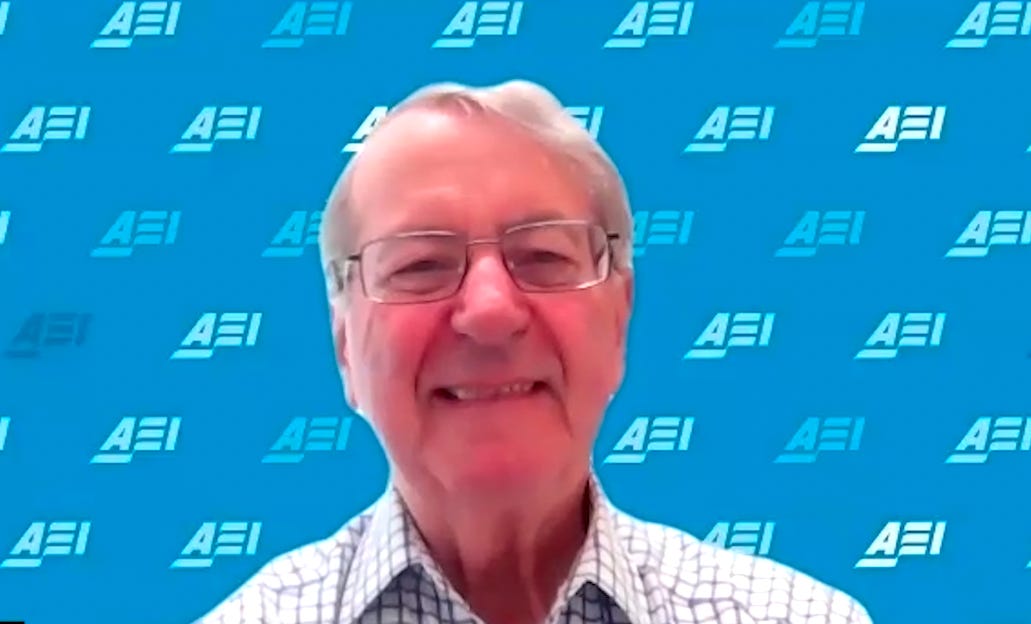
Edward J. Pinto is a senior fellow and co-director of the AEI Housing Center at the American Enterprise Institute. He’s also a FreeCon signatory.
A former executive vice president and chief credit officer for Fannie Mae, Pinto is frequently interviewed on radio and television and often testifies before Congress. His writings have been published in trade publications and the popular press, including in the American Banker, The Hill, RealClearPolitics, and The Wall Street Journal.
In a recent piece for Barron’s, Pinto and co-author Arthur Gailes argued that the housing bill recently passed by Congress and sent to the president will, unfortunately, do little to help Americans buy homes.
“It eliminates an expensive requirement to build manufactured housing on permanent steel frames, streamlines environmental reviews, and incentivizes cities to provide pre-approved home designs, which will simplify things for governments, regulators, and builders,” they wrote. “Beyond that, it likely won’t change the homeownership equation for Americans.”
“The House managed to undo most of the damage the Senate’s earlier version of the bill would have done through its misguided crusade against institutional investors. But, at the end of the day, most of the bill’s provisions won’t move the supply or affordability needle.”
The real action in housing reform is at the state and local level.
“Fortunately, state legislatures are already passing bills to boost supply,” wrote Pinto and Gailes. “According to our State Housing Supply Legislation Tracker, state-level laws are on track to produce roughly 280,000 new homes a year, which could halve the national housing shortage within a decade.”
Staggering debt load
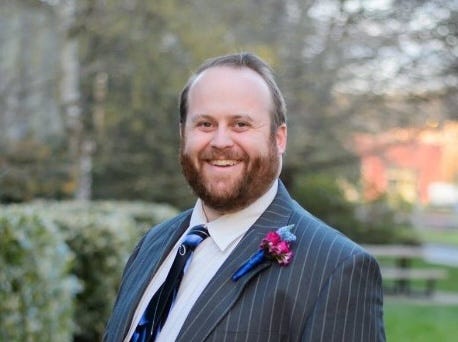
Jeremy Lott is a regular contributor to the Washington Examiner and a FreeCon signatory.
A former editor at The Center Square and the Competitive Enterprise Institute, Lott has written for hundreds of media outlets. His books include The Warm Bucket Brigade: The Story of the American Vice Presidency (2008), In Defense of Hypocrisy: Picking Sides in the War on Virtue (2006), and William F. Buckley: A Biography of a Conservative American Icon and the Founder of National Review Magazine (2010).
In a recent Washington Examiner piece, Lott noted that the “last time the U.S. federal government had a balanced budget was in fiscal 2001, when it recorded a surplus of about $130 billion.”
The sums required to service the national debt “are not lunch money,” he pointed out. “Over $2.8 billion in interest is paid out every day. For the fiscal 2025, debt service cost taxpayers about $970 billion. That was close to one-seventh of all expenditures and slightly more than the federal government spent on the military that year.”
Neither Democratic nor Republican presidents have made fiscal responsibility a priority.
President Trump, for example, “has occasionally paid lip service to the problem of the U.S.’s mounting debt. Yet he has left things off the table that might slow the accumulation, such as entitlement reform and reductions in military spending.
“His initiatives to address the problem, such as attempting to tariff most countries and one island populated entirely by penguins, have proved to be mostly beside the point.”
Activism over outreach
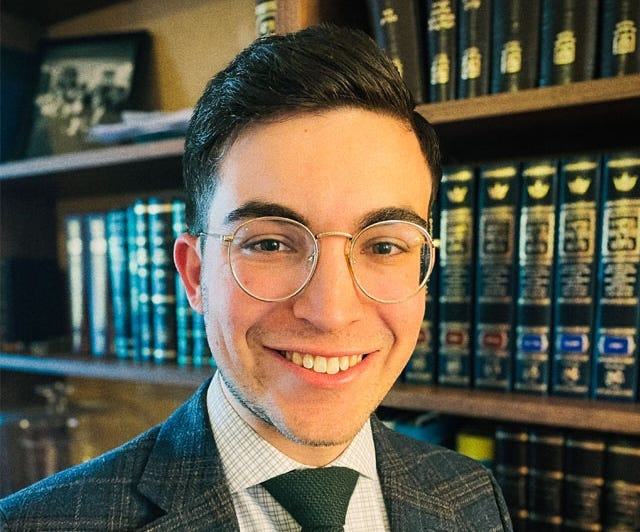
Josh Appel is a policy analyst at the Manhattan Institute and a FreeCon signatory.
A graduate of Yeshiva University and the Rabbi Isaac Elchanan Theological Seminary, Appel has written for such publications as The Wall Street Journal, The New York Post, Public Discourse, Law & Liberty, Commentary, and National Review.
In a recent City Journal piece, he profiled New York City Mayor Zohran Mamdami’s pick for “faith liaison” to the Jewish community, Rabbi Miriam Grossman, whom Appel described as “more interested in radical activism than Jewish tradition.”
Grossman’s activism “harmonizes neatly with Mamdani’s progressive politics,” he reported. “In April 2025, Jews for Racial and Economic Justice — for which Grossman serves as a member-leader — held a ‘Seder in the Streets’ protest against Donald Trump’s election. The ‘seder,’ marking the Jewish exodus from Egypt, was held outside the traditional date of Passover and likened Trump to the biblical Pharaoh, who enslaved the Jewish people and cast their children into the Nile. Mamdani made an appearance.”
Jews continue to top the list of victims of religiously motivated hate crimes, he concluded, yet at “a time of heightened fear among them, Mamdani chose as a taxpayer-funded ‘faith liaison’ someone whose background makes her a dubious choice to serve as a genuine advocate for the community.”
In the mix
•At The Free Press, FreeCon signatory Ilya Shapiro praised the U.S. Supreme Court for “standing up for girls” in its latest decision on transgender students in sports.
“Sex categories in sports exist for a reason, and neither the Constitution nor federal law requires schools to pretend otherwise,” wrote Shapiro, director of constitutional studies at the Manhattan Institute.
“The Court properly emphasized that no student-athlete deserves ostracism or vilification. None of this requires denying anyone’s humanity, good faith, or personal distress. But law requires categories, and fair competition requires categories that track reality. In sports, sex matters.”
• At The Dispatch, FreeCon signatory Gil Guerra argued that the principle of birthright citizenship just upheld by the Supreme Court makes America stronger — and its absence in the legal framework of America’s enemies makes them weaker.
“Birthright citizenship is among the most effective instruments of assimilation we have at our disposal,” Guerra wrote. “It takes the children of immigrants, including immigrants from the countries the United States most needs to understand and compete with, and makes them Americans without qualification or delay, which is a large part of why they have filled the ranks of the institutions that defend the country.”
“Our ability to absorb and assimilate the children of immigrants is one that China lacks and cannot hope to build,” he continued. Indeed, because of our country’s relative freedom, economic dynamism, and openness to immigration, “America has helped to accelerate China’s demographic decline by taking many of its most productive and liberty-minded citizens.”
• At National Review, FreeCon signatory John Puri bemoaned the Trump administration’s practice of demanding “golden shares” in private firms.
“The federal government had not made an indefinite, non-crisis investment in a healthy private company since at least the 1950s,” wrote Puri, the Thomas L. Rhodes Fellow at NR. “The Trump administration has now taken more than 20 such stakes, targeting a range of industries from minerals and semiconductors to nuclear energy and quantum computing.”
It is a “scheme that progressives can fall in love with,” he wrote, noting that “Bernie Sanders is now clamoring to take government stakes in artificial intelligence companies.”
“There are ways for government to secure critical supply chains without constructing a corporate patronage network. Indeed, that was the intent behind many of the programs that Trump is using to extract equity. But so long as the state is taking stakes in private companies, there can be no neutrality. The paper profits may be sweet, but the losses will be booked against sound governance and economic dynamism.”
• At the Washington Examiner, FreeCon signatory Jay Cost observed that if Americans are as dissatisfied with the quality of major-party candidates as polls and media commentaries suggest, they should vote accordingly.
“If average Americans are not insisting on wise and prudent leaders to go into government, the whole process of representation malfunctions,” wrote Cost, the Gerald R. Ford nonresident senior fellow at the American Enterprise Institute and assistant professor at Geneva College.
“The government stops reflecting our best virtues and instead represents our worst impulses. That means we should be supporting candidates that are not just principled, but also exhibit some of the qualities leaders should possess.”