
When Freedom Conservatives published our Statement of Principles three years ago this month, the document discussed a wide range of philosophical ideas and policy domains.
FreeCons defend free enterprise, free trade, and limited government. We champion fiscal responsibility, the rule of law, equal protection, and the federalist principle of devolving as much power as possible to states, localities, communities, and families. We oppose business subsidies, oppressive regulation, and the administrative state. On potentially divisive issues such as foreign policy and immigration, we advocate prudence and constructive engagement.
The final plank of the FreeCon statement discusses freedom of conscience. “Essential to a free society,” we wrote, “is the freedom to say and think what one believes to be true. Under the First and Fourteenth Amendments to the Constitution, federal and state governments have a legal obligation to uphold and protect these freedoms. Private institutions have a moral obligation to do the same.”
Conservatives have long rebutted attacks on free speech, religious liberty, and other fundamental rights from the Progressive Left. Increasingly, we are now compelled to fend off similar attacks from the Populist Right.
Peter Biles, an author and Young Voices contributor currently pursuing a doctoral degree in English at Oklahoma State University, clarified the stakes in a recent Washington Examiner op-ed.
Given abuses by both the Biden and Trump administrations — in the latter case using subpoenas, licensing regulations, antitrust actions, and other means to retaliate against unfriendly media — Biles urged conservatives to remind their fellow Americans that “free speech is a non-negotiable for a thriving republic. The Freedom Conservatism statement, supported by many prominent signatories, makes a point of prioritizing our cherished First Amendment, offering a tangible path to first principles that both address contemporary concerns and uphold timeless American ideals.”
Conservatives “shouldn’t unilaterally submit to a charismatic leader or a single political party,” he concluded. “We should strive to conserve the right for every citizen to speak their minds freely.”
Today we feature the work of Freedom Conservatives who seek to defend constitutional rights and freedom of speech.
Unnecessary choice
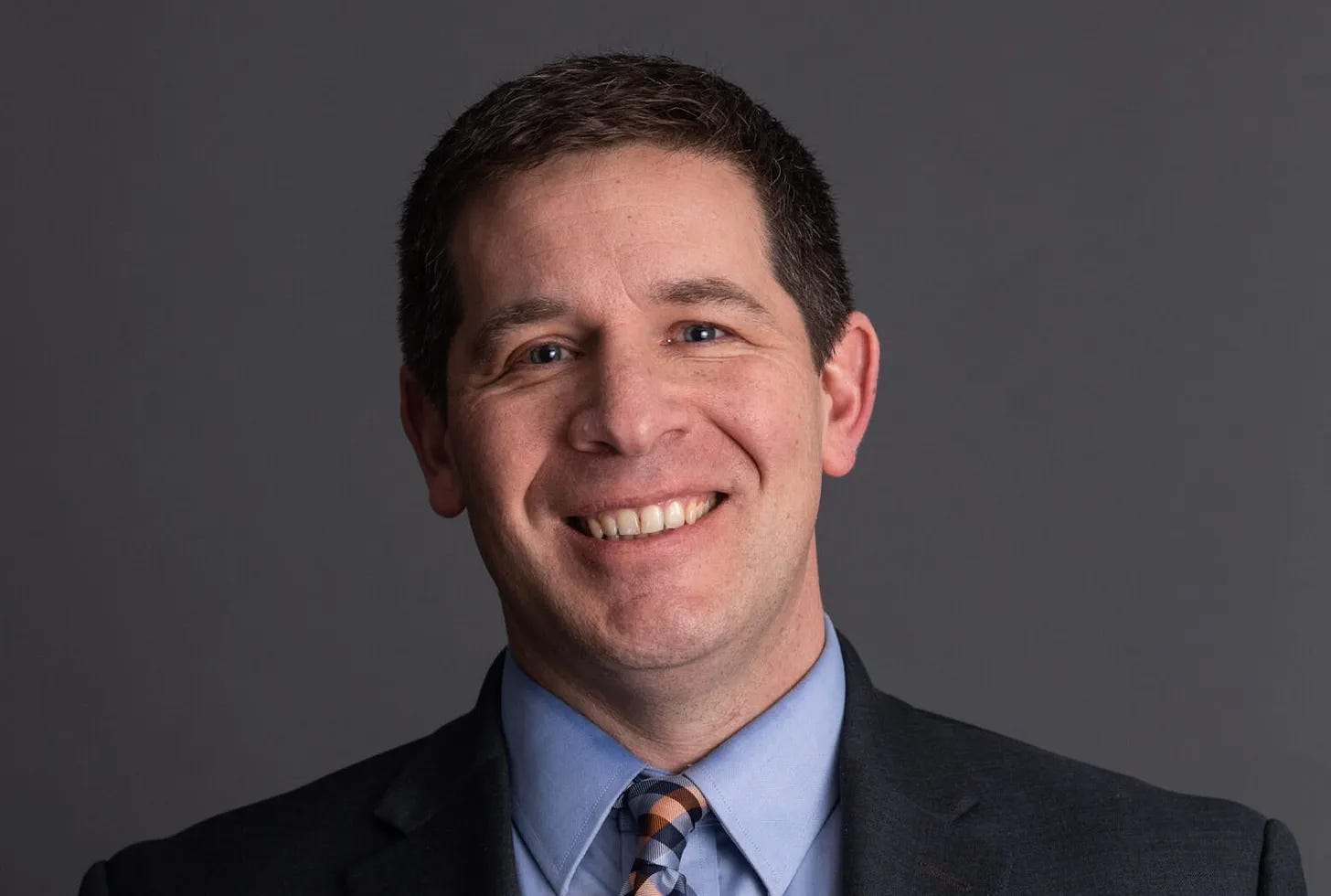
Casey Mattox is vice president for legal and judicial strategy at Stand Together and a FreeCon signatory.
Over his legal career, Mattox has focused on defending the First Amendment rights of students, faculty, families, healthcare workers and religious organizations. He has litigated in 35 states and also testified before congressional committees.
In a recent essay for the James G. Martin Center for Academic Renewal, he argued that colleges and universities are putting freedom of association in grave danger.
A 2010 decision by the U.S. Supreme Court treated this freedom as “a second-tier right,” Mattox wrote, forcing student groups to “choose between equal access to a university speech forum or their freedom of association.”
“If they want to speak like other groups on campus, the Court decided, universities can require student groups to give up the most essential aspect of freedom of association — the ability of a group to decide who speaks for it. Student groups could be forced to choose one First Amendment right or the other.”
In response, some administrators have “tried to use this new power against unfavored (often conservative and faith-based) student groups.” To prevent such crises, at least 16 states have enacted laws to protect student association on public university campuses. Congress should follow suit, Mattox concluded.
“From Samuel Adams and the Sons of Liberty, and for 250 years hence, Americans have worked with one another to improve their communities and keep the republic. Congress can help to insure this spirit remains alive on campus, inspiring the next generation to form their own communities and practice this distinctly American form of civic life.”
Enforce neutral rules
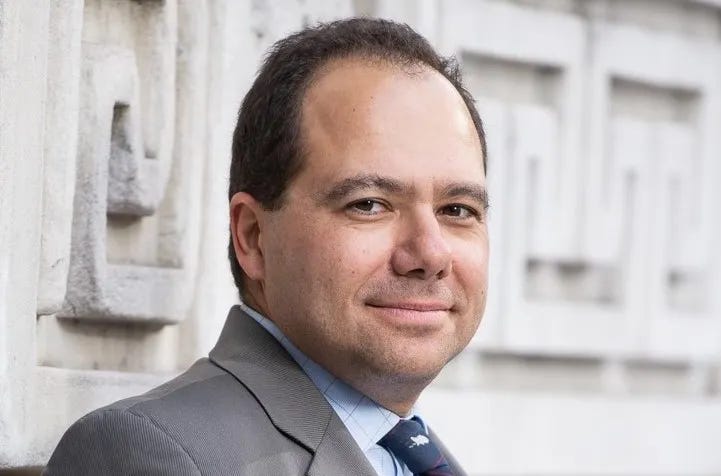
Ilya Shapiro is senior fellow and director of constitutional studies at the Manhattan Institute and a FreeCon signatory. He is also the author of, among other books, Supreme Disorder: Judicial Nominations and the Politics of America’s Highest Court and Lawless: The Miseducation of America’s Elites.
During recent testimony before the New York Advisory Committee to the U.S. Commission on Civil Rights, Shapiro chronicled the grotesque treatment of Jewish students on American campuses and explained the difference between protected speech and illegal conduct.
“The problem is selective rules enforcement,” he wrote. “I’ve spent my career defending offensive, unpopular, and even ugly speech. Students must be free to criticize Israel, U.S. foreign policy, or anything else. But there’s no First Amendment right to block Jewish students from campus spaces, urinate on Hillels, occupy buildings, shut down classes, vandalize property, or otherwise create a hostile educational environment based on shared ancestry.”
“Civil rights and free speech are not opposing values. Neutral rules, consistently enforced, protect both Jews and everyone else.”
“Antisemitism is the canary in the coal mine because it reveals which institutions still believe in their own rules,” Shapiro concluded. “A university that can’t condemn the slaughter of Jews without consulting an intersectional matrix has lost its moral bearings. A law school that can’t distinguish protected speech from targeted harassment has failed at its most basic pedagogical task. And a bureaucracy that sees Jews as too privileged to count has forfeited any claim to the word ‘inclusion.’”
Orwellian database
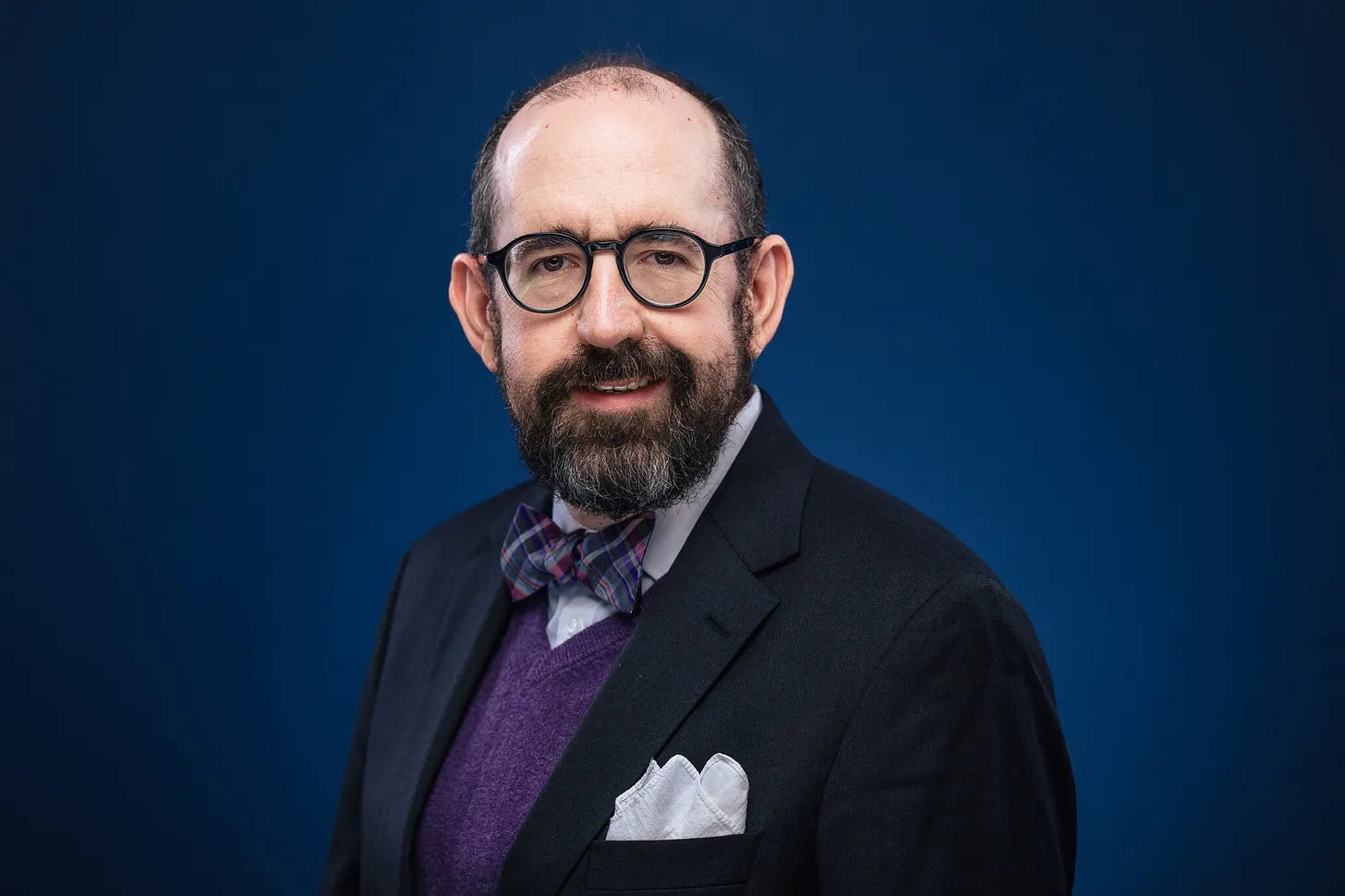
Richard Morrison is a senior fellow at the Competitive Enterprise Institute, host of the Free the Economy podcast, and a FreeCon signatory.
In a recent piece for National Review, Morrison warned that the Securities and Exchange Commission’s Consolidated Audit Trail, which he described an “Orwellian database of every stock and option transaction,” poses a significant threat to civil liberties protected by the First Amendment.
“Investment choices may not be as obviously expressive conduct as writing a newspaper op-ed or protesting in front of a government building,” Morris wrote, but an SEC commissioner has admitted that “economic transactions offer a window into a person’s deepest thoughts and core values” and “are a rich form of value expression.”
Moreover, “maintaining a giant database full of information on millions of presumptively innocent Americans” impinges on key Fourth and Fifth Amendment protections and “presents significant cybersecurity problems.”
The SEC staff has “now received hundreds of comment letters” to inform a “comprehensive review” of the Consolidated Audit trail,” Morrison explained. “When the staff is done with its analysis, they should do the right thing: Shut down CAT entirely.”
In the mix
• At the Orange County Register, FreeCon signatory Ed Tarnowski mourned the diminishing ranks of pro-tech Democrats who once served to promote the party’s “stated priorities” of job creation, infrastructure investment, and widespread prosperity.
Many of today’s Democratic leaders and activists express deep skepticism about artificial intelligence and the data centers required to fuel them, in ways that “threaten to smother most facets of the digital economy,” wrote Tarnowski, a resident fellow with the R Street Institute’s technology and innovation team, along with his R Street colleague Adam Thierer.
“Lawmakers in progressive states like California, New York, Illinois, Massachusetts and New Jersey are advancing heavy-handed AI regulations. If even a fraction of these bills become law, this growing regulatory patchwork will restrain innovation and tie smaller firms in red tape.”
• At Law & Liberty, Rachel Lu reviewed a recently released book, Why Postliberalism Failed, by fellow FreeCon signatories James Patterson and Thomas Howes.
“Postliberalism is unpromising for reasons that go far beyond the misbehavior of particular online influencers,” wrote Lu, a senior editor at Law & Liberty and a contributing writer at America magazine and National Review. “It seems to draw most of its energy from a kind of reactionary rage, directed indiscriminately at everything displeasing in modern life.”
“Contemporary postliberals both resemble, and draw extensive material from, historical movements that collaborated with brutally repressive twentieth-century regimes,” she continued. “Patterson and Howes show how postliberals have flirted with many of the same repressive ideas that these earlier groups embraced (for instance, wanting to punish Protestants for defying Church authority, or calling for the disenfranchisement of Jews, Muslims, and women).”
“The authors aren’t paranoid. Contemporary postliberalism really is drawing energy from the same wells that once watered clerical fascism, and for many, this appears to be a very intentional choice.”
• At Lyceum, FreeCon signatory Scott Rasmussen punctured the myth that large numbers of American voters are embracing socialism as a practical solution to the country’s problems.
“The political class and America are two nations separated by a common language,” wrote Rasmusssen, founder of the Napolitan Institute and co-founder of ESPN. “Socialism means one thing in the world of Bernie Sanders and AOC; it means something quite different among the nation’s voters.
“Among voters with a favorable view of socialism, 74% also have a favorable view of free markets. Not only that, but only a third — 34% — of those who say they like socialism think more regulation and government involvement are good for the economy.
“Those views make absolutely no sense to those who adhere to the textbook definition of socialism. However, in popular culture, the meanings of words often shift and bear little resemblance to textbook definitions.”