
Freedom Conservatives offer a substantive, compelling, and hopeful alternative to the false promises of the Progressive Left and the Populist Right. As our FreeCon Statement of Principles puts it, we can best “ensure that America’s best days are ahead” by applying “the timeless principles of liberty to the challenges of the 21st century.”
In other words, FreeCons don’t just focus on present controversies and future opportunities. We seek to put them in context, to understand their origins and consider a wider range of possible responses.
Among our hundreds of signatories are many teachers, scholars, and public intellectuals who see history as an indispensable source of insight and inspiration. Only by carefully studying all the “best which has been thought and said in the world”, as Matthew Arnold put it, can we hope to address modern problems effectively and prudently. And only by fully grasping and embracing the principles of the American Founding can we hope to conserve and expand American greatness.
Today we feature FreeCons with particular expertise in intellectual, political, and economic history.
Love of country
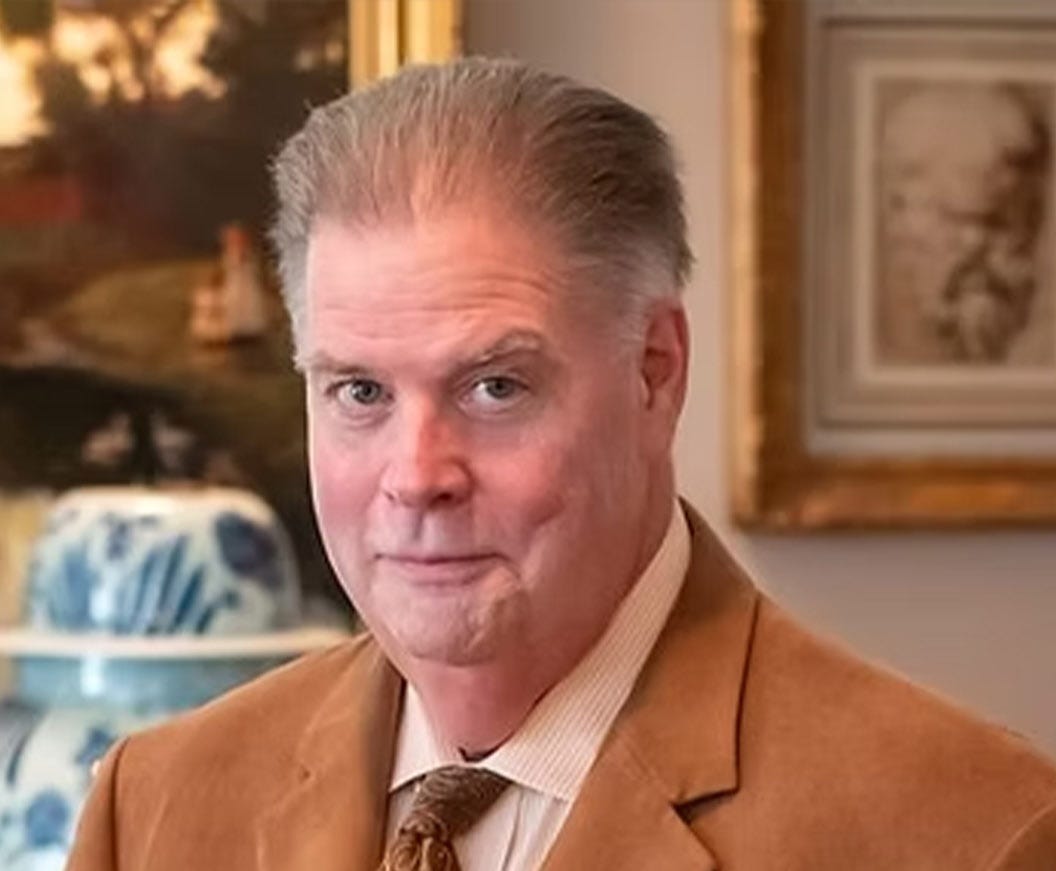
James Hankins is a professor of humanities at the University of Florida’s Hamilton School School for Classical and Civil Education. He is also a FreeCon signatory.
A former professor at Harvard University, Hankins is the founding editor of the I Tatti Renaissance Library (Harvard University Press) and associate editor of the Catalogus Translationum and Commentariorum (Union Académique Internationale). His books include Virtue Politics: Soulcraft and Statecraft in Renaissance Italy (2019), The Recovery of Ancient Philosophy in the Renaissance (2008), and the two-volume text The Golden Thread: A History of the Western Tradition, written with Allen Guelzo.
In a recent interview with The Wall Street Journal, Hankins discussed the abiding importance of studying the history of the West in general and of the United States in particular. “Patriotism is love of country,” he explained, and “you can’t teach a civilization without loving it.”
In their series The Golden Thread, Hankins and Guelzo are “trying to revive the original purpose of history, which is prudence or practical wisdom.”
“Thucydides will tell you the story of the Peloponnesian War as a tragedy and tell you about all the mistakes. And this is the kind of wisdom that we need. Unfortunately, thanks to Marxism and Hegelian historiography, that is no longer considered a valid use of history. Hegel and Marx both believed that the past is unusable, except as a whipping boy for projects of utopianism in the future. That’s a terrible way of studying history.”
“We have people who are completely disoriented,” Hankins concluded. “They don’t know where they stand, especially young men who don’t understand where they fit into a tradition. Their education is very piecemeal, bits of disconnected information. So, they’re easily misled by people who are passing out false information. When you don’t teach Western Civ, bad actors step in and tell you that everything about your civilization is evil, and you have nothing between your ears which enables you to say no to that.”
Lucky Americans
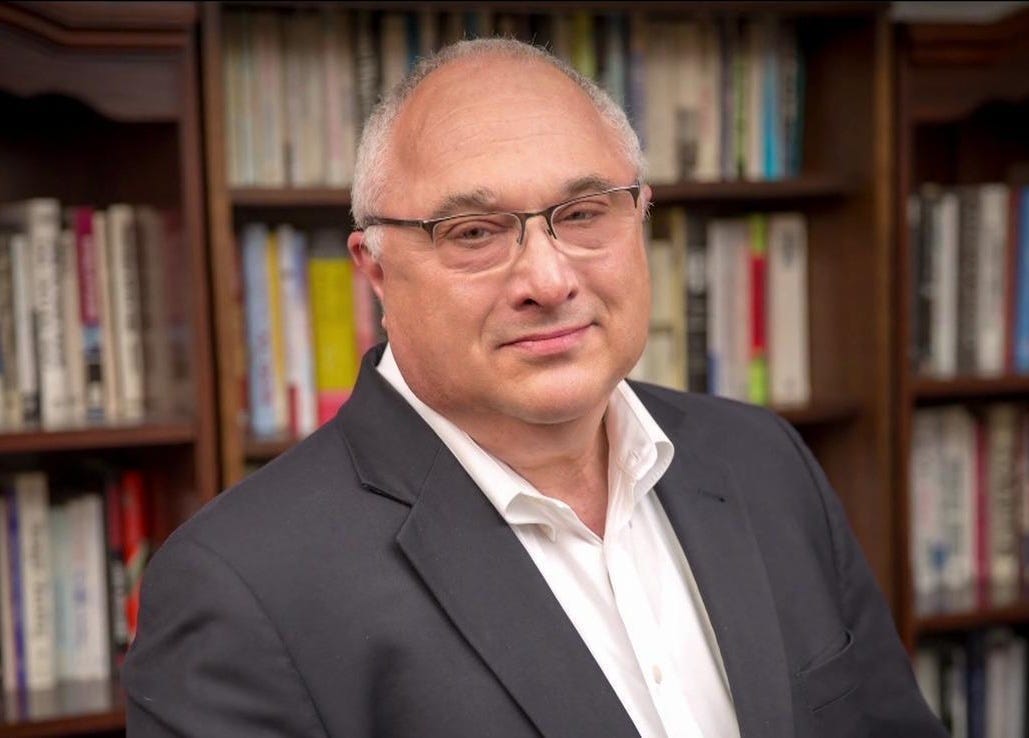
Mitch Pearlstein is founder emeritus of the Center of the American Experiment, a Minnesota-based think tank, and a former education official in the Reagan and Bush administrations. He is also a FreeCon signatory.
Pearlstein previously served as an editorial writer and columnist for the St. Paul Pioneer Press, policy aide to a former Minnesota governor, and a research fellow at the Hubert H. Humphrey Institute of Public Affairs at the University of Minnesota.
In a recent essay, he reflected on the phrase “only in America” and how the rich history of our country should engender gratitude among Americans today. Other countries, such as our neighboring Canada, have many wonderful attributes, Pearlstein argued. Still, America has welcomed strivers and refugees from around the world whose personal experience demonstrated the power of our country’s founding principles and institutions.
“I’m fully aware that the United States isn’t sui generis in all things good and wonderful,” he wrote, but “an American, I’ve been luckier than 99% of humans ever to walk the planet. And that won’t be changing.”
Mining insights

After 20 years of public service in the legislative and executive branches, Brent Orrell joined the American Enterprise Institute as a senior fellow to work on job training, workforce development, and criminal justice reform. He is also a FreeCon signatory.
In a recent article for National Affairs, Orrell applied the lessons of economic history to current debates about artificial intelligence and the future of the American worker. After the invention of the coal-fired steam engine in the early 1700s, waves of innovation dramatically increased its efficiency. While many observers expected the result to be declining demand for coal, its production actually exploded. The increasing productivity of the engines led both to more-efficient mining of coal and the application of steam to more and more industries.
“Today, code has reached its coal moment,” he wrote. “Thanks to artificial intelligence, code production is picking up speed, adding vast new supplies of a basic input in the same way technological change and demand interacted to increase coal supplies.”
How will these developments affect the labor market? No one knows for sure, Orrell concluded, but policymakers can still take prudent action to adjust to potential economic and political disruptions.
“If technological change continues at its current pace, training workers with specific technical skills and capacities — which are, by definition, more exposed to AI-driven automation — will produce diminishing returns. We should instead be cultivating the skills that give workers the capacity to learn new ones. These include reasoning skills, communication skills, collaboration skills, and the sort of judgment and prudence that enables a worker to decide what a problem requires before deciding which tool to apply.”
In the mix
• At the Washington Examiner, FreeCon signatory Tiana Lowe Doescher argued that the real risk to American interests and prosperity is not artificial intelligence becoming too powerful but rather AI not becoming powerful enough.
Donald Trump “is not a fiscal hawk and has never pretended to be,” she wrote. “But as a builder, he understands the general logic of bonds. If the United States is paying a real interest rate of 1% on its national debt but the economy is growing at a real rate of 2%, GDP expansion gradually erodes that debt. Reverse those figures, and we’re on the path to the sort of fiscal crisis that either ends with austerity or a total collapse of the U.S. government’s ability to borrow.”
“With over 1% of the population reaching retirement age each year and amid our largest-ever deportation operation, a shrinking labor supply requires a productivity multiplier to sustain an economic growth rate greater than the real interest rate on our national debt.”
• At National Review, FreeCon signatory Lathan Watts questioned the legality of government interference with the hiring practices of religious institutions.
“Faith-based charities operate roughly a third of the nation’s emergency shelter beds for families and single adults,” wrote Watts, vice president for public affairs at Alliance Defending Freedom, and “run over half the country’s food pantries and soup kitchens.”
Preventing such groups from hiring people who share their religious beliefs will do irreparable damage to them — which may, indeed, the intention of some politicians, he suggested.
“Every organization should be free to hire people who believe in its mission, and that is especially true for religious groups. When the government strips that right from them, no organization is safe, and ultimately, ‘We The People’ suffer.”
• At City Journal, FreeCon signatory Jordan McGillis praised a congressional vote this summer to clear away obstacles to builders adding more rental units. The new policy will “help reduce overall housing prices and give families the flexibility they need,” wrote McGillis, a fellow at the Economic Innovation Group.
“Homeownership is a cornerstone of American culture, but families often have good reasons to prefer renting,” he explained. “Even for a family with enough cash for a downpayment, renting can sometimes be the smarter financial play. And regardless of where you live, ownership comes with much higher variable maintenance costs. Some of that variability is embedded in rent, too—but not the headache that comes with it.
“Renting also enables flexibility in the national labor market. One of ownership’s virtues is that it ties a family intimately to a local community. But that attachment makes it harder to take advantage of work opportunities elsewhere.”
• At his Substack, FreeCon signatory Kevin Kosar reviewed a new George Washington biography that demonstrated how America’s first president “became who he was through self-directed effort, experience, and by bravely suffering life’s challenges.”
“Washington’s rise is a fascinating story and a very American one,” wrote Kosar, a senior fellow at the American Enterprise Institute. “Washington, in short, made himself, and his rise was not quick nor easy nor inevitable.”