
That’s a wrap!
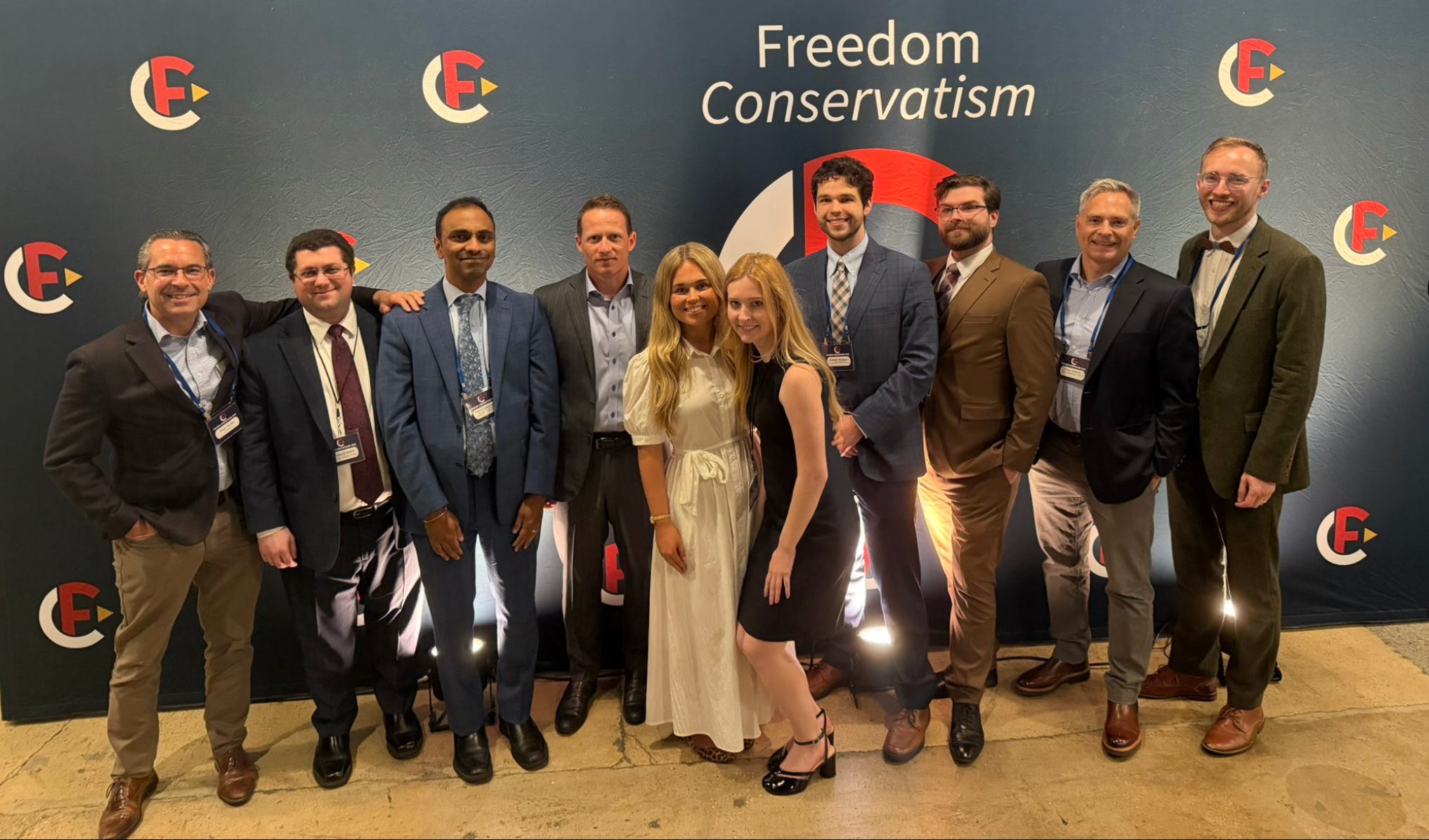
The 2026 Freedom Conservatism Conference, held May 20 in Washington, brought together some 240 FreeCon signatories and allies for a daylong discussion of our nation’s founding principles, the biggest policy challenges of the 21st century, and why we are rebuilding an American Right capable of inspiring, winning, and governing.
Prominent commentators such as Guy Benson, Erick Erickson, and Ramesh Ponnuru joined elected officials, scholars, journalists, and activists on the stage at Capital Turnaround, a beautifully restored historic property that once served as the last stop on Washington’s Red Line, repairing and rerouting streetcars for the Capital Transit Company.
FreeCon 2026 was, indeed, about repairing and rerouting the American Right — which, at its best, has always sought to conserve both the civic republicanism and the classical liberalism embraced by our Founders.
In future updates, we’ll publish excerpts from the conference’s keynote speeches and announce follow-up events to be held across the country in the coming weeks and months. Today, we offer some initial coverage of FreeCon 2026.
How we win
In its news story about FreeCon 2026, held May 20 at Capital Turnaround, the Washington Examiner quoted two featured speakers and leaders of the Freedom Conservatism movement: Avik Roy and Tim Chapman.
Roy, chairman of the Foundation for Research on Equal Opportunity, told the audience that broadening opportunity by advancing freedom is the best way to reduce the cost of living and restore the nation’s fiscal sustainability.
“That’s how we win,” he said. “The entire business model of our post-liberal compatriots on either side of the aisle is to exclude a giant chunk of Americans from our shared enterprise. They don’t believe it’s possible for all of us to achieve great things together. Instead, they believe in rewarding their friends and punishing their enemies.”
During his remarks at FreeCon 2026, Tim Chapman described American politics being in the 10th of 12 years dominated by “one central personality.”
“I think the influence of the president, even though it seems to be at its zenith — and in many ways you could argue it is, especially with the primaries this week and whatnot — but that influence will wane, and now it’s time for conservatives to think about building a post-Trump conservatism,” said Chapman, president of Advancing American Freedom.
Better path forward
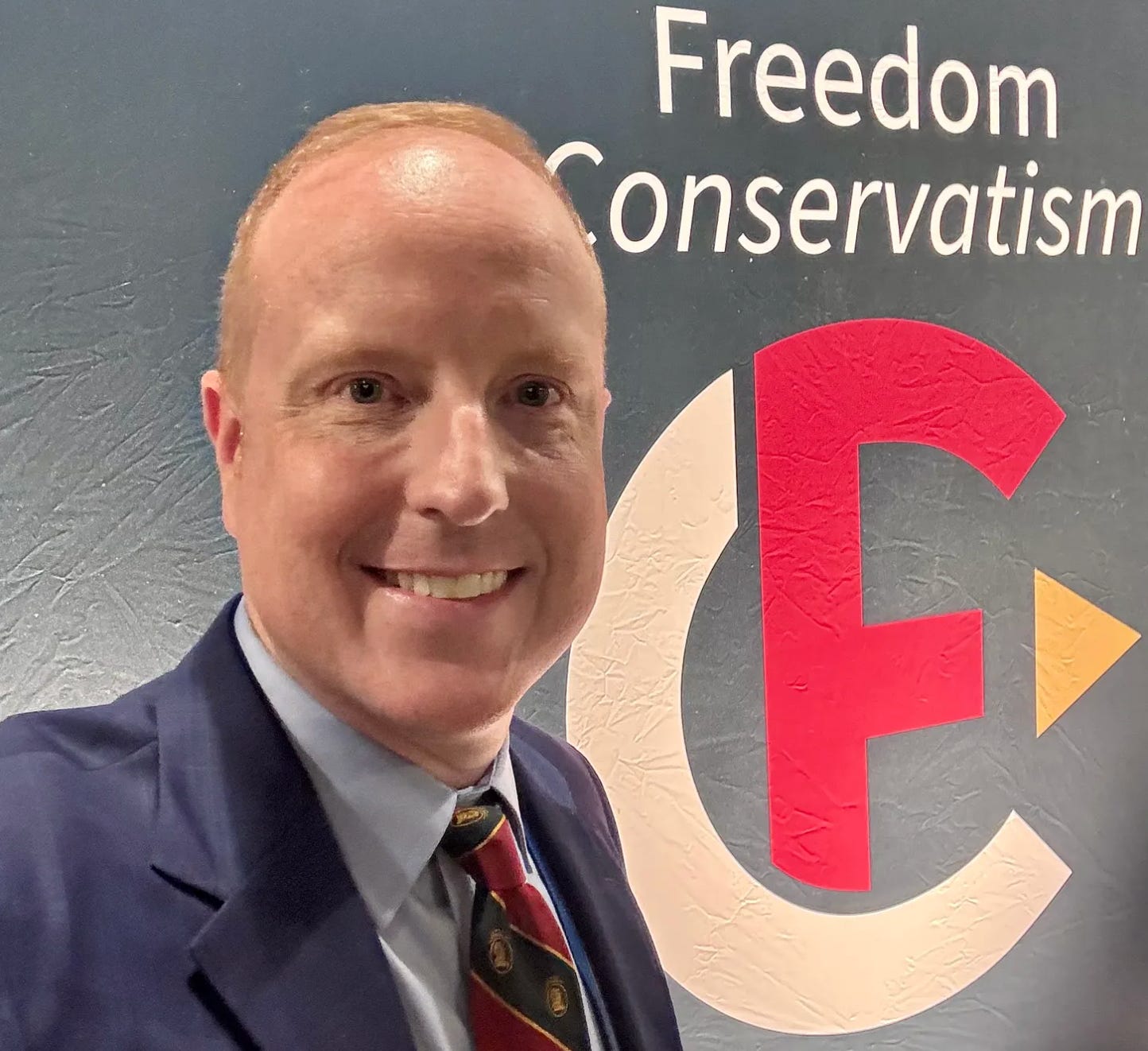
Vance Ginn is an economic consultant, host of the “Let People Prosper Show,” and former associate director for economic policy during the first Trump administration.
An original FreeCon signatory, Ginn attended FreeCon 2026 in Washington. D.C. and chronicled the experience on his Substack.
“The American political Right is in the middle of an identity crisis,” he wrote. “Many conservatives correctly see that progressive economics has failed. But too many are tempted to respond with a conservative version of the same mistake: more tariffs, more subsidies, more mandates, more industrial policy, more executive power, and more government management of private life.”
Freedom Conservatism matters, Ginn continued, “because it reminds the right what it should be conserving.
“Not state power.
Not political favoritism.
Not managed capitalism.
Not bureaucracy with a flag pin.
“We should conserve the American promise: liberty under law, strong families, free enterprise, property rights, personal responsibility, sound money, federalism, and civil society.”
Don’t outsource faith
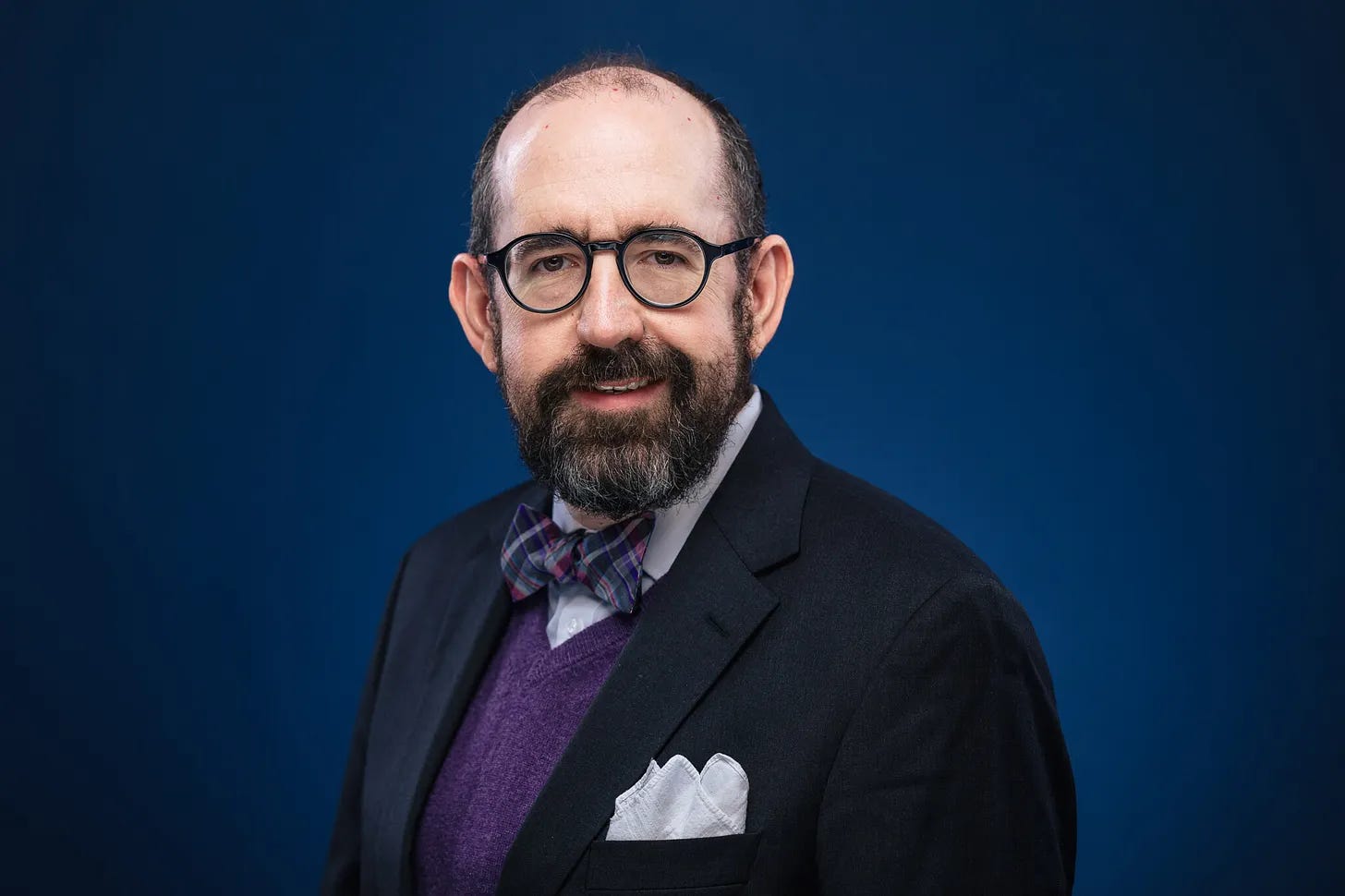
Richard Morrison is a senior fellow at the Competitive Enterprise Institute, host of the Free the Economy podcast, and a FreeCon signatory.
At his Substack Great Capitalism, Morrison offered his reflections on the 2026 Freedom Conservatism Conference, held May 20 in Washington. The first panel of the day featured a discussion of liberty, virtue, and the fusionist take on American conservatism.
“Yes, government economic policy should leave us free to work, employ, build, and invest with minimal interference from the state,” wrote Morrison, “but it is still incumbent upon us all to cultivate and encourage virtuous citizenship. In fact, it is only under a government with minimal state coercion that we can be free to organize our lives toward a maximally virtuous expression in the first place.
“The argument is not that spiritual virtues are too unimportant for the government to bother enforcing, it’s that they’re too important to allow the government to monopolize and pervert them.”
“The only practical off-ramp from greater conflict between religious and quasi-religious materialist beliefs,” he continued, “is exactly what the experts at the Freedom Conservative conference recommended – pluralism and maximum freedom of conscience for every person and family in America.”
In the mix
• Two FreeCon signatories have new books out this month. Pollster Scott Rasmussen — founder of the Napolitan Institute and, previously, Rasmussen Research — is the author of Out of Touch: The Elite One Percent and the Battle for America’s Soul, just published by Republic Books. While Americans across party lines still “agree on core values” of freedom, equality, and self-governance, he argued, the ruling political culture has “drifted far from those ideals.” The result is a nation trapped in manufactured conflict while decisions are quietly centralized in elite hands.
Noah Rothman, FreeCon signatory and senior writer at National Review, is the author of Blood and Progress: A Century of Left-Wing Violence in America. Just published by Center Street, the book seeks to “train American political observers to recognize left-wing violence and to apply the same scrutiny and foresight to it that they reserve for violence that comes from the Right.”
“We cannot arrest the trend toward political violence in America if we are focused on only one side of the equation.”
• In the Tampa Bay Times, FreeCon signatory Williamson M. Evers looks forward to a future in which the schools in Cuba are free to “replace nationalization with pluralism, ill-advised pedagogy with scientific methods, and indoctrination with liberalization.”
“Freedom is the liberty to do what you can without interference,” wrote Evers, senior fellow and director of the Center on Educational Excellence at the Independent Institute. “Free speech is speech not interfered with by the government. Cuba under Communism has enjoyed neither.”