
There is no faction of the American Right — or the American Left, for that matter — who denies the existence of a common good or considers it irrelevant to political action and policy debate.
Nor is there any significant faction who conceives of the common good in purely material terms. Yes, access to food, clothing, shelter, medical care, and other necessities of life makes human flourishing possible. Abundance made it likelier. But fulfillment, satisfaction, and happiness also depend on the intimacy of family, the vitality of community, and the practice of virtue.
Although self-styled “common good conservatives” may claim otherwise, we Freedom Conservatives are no less committed to the common good. “Neither individual liberty nor human flourishing is sustainable,” we say in our Statement of Principles, “outside a civil society of strong institutions that inculcate virtue, deter corruption, foster community, comfort the afflicted, and nourish the soul.”
The real distinction between FreeCons and our rivals is that, heeding the lessons of history and the wisdom of our Founders, we do not believe good intentions are a sufficient safeguard against the abuse of government power. Washington’s proper role is limited and constitutionally constrained. Even at the state and local level, government is best directed to protecting individual rights and financing public goods as traditionally defined — services that are non-exclusive and non-rivalrous — while enabling families, congregations, and private associations to perform their distinctive roles.
“Debates about the common good should not be framed as the common good versus the individual,” wrote our friend Dan Hugger of the Acton Institute. “Any honest grappling with the common good must include a serious commitment to the fundamental and inalienable rights of the human person as a part of and not an obstacle to the realization of the common good.”
Today we feature the work of Freedom Conservatives who embrace this conception of the common good and government’s proper role in advancing it.
Image of God
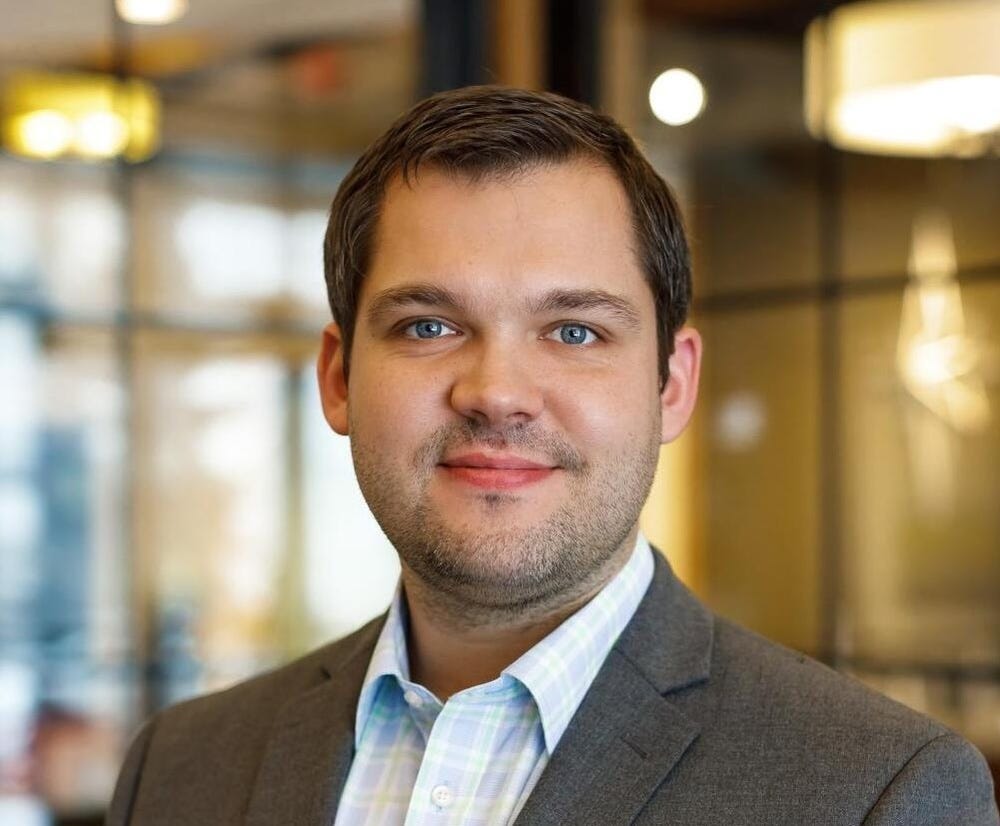
Vladimir Snurenco is a research fellow at the Center for Social Flourishing at the Acton Institute and teaches economics at Calvin University. He is also a FreeCon signatory.
In a recent piece for The Dispatch, Snurenco argued that even as academic institutions make a show of dismantling or trimming diversity, equity, and inclusion (DEI) programs, there remains a need to offer a coherent alternative: Imago Dei in Latin, the concept that all human beings are made “in the image of God.”
This concept “grounds human dignity in our shared nature of being created by God,” he wrote. “In contrast, DEI emphasizes differences and drives divisions. At its core, Imago Dei puts dignity before difference. It speaks to what all human beings are, not to which group they belong.”
“A society built on merit alone may be efficient, but it may not be humane,” Snurenco continued. “DEI promised unity through managed inclusion, but in reality, it often produced fragmentation by turning differences into identities.”
Even those who do not share its theistic worldview “should want a society shaped by this moral logic,” he concluded, “because it protects the weak, limits the powerful, and insists that human dignity does not depend on usefulness, identity, achievement, or social approval.”
Rank statism
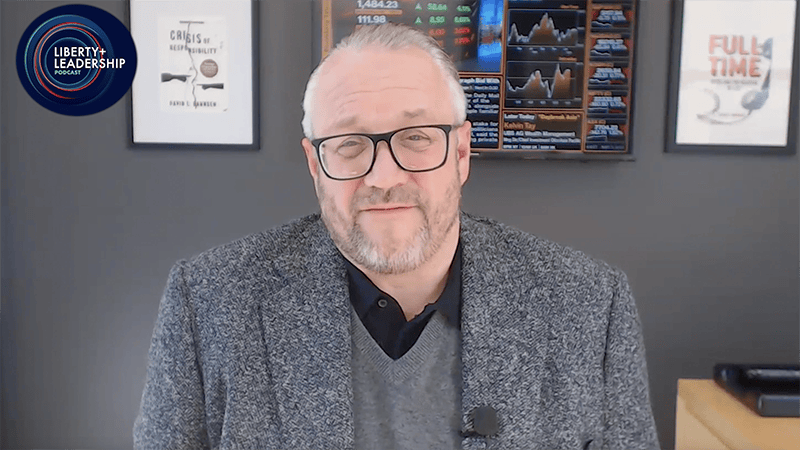
David L. Bahnsen is founder, managing partner, and chief investment officer of the Bahnsen Group, where he oversees the management of over $4.5 billion in client assets. He is also a FreeCon signatory.
In a recent National Review piece, Bahnsen reacted to online debates among conservatives about government and the common good by making some essential distinctions.
“Those beating the common-good drum in 2026 are not the writers of The Federalist Papers or founders of the American experiment,” he observed. “Rather, they are think-tankers and postliberals who have magically had nothing to say about adultery, vulgarity, business corruption, or a variety of other violations of the common good that inconveniently sit in the Oval Office. In other words, power appears to be more of the agenda than a reclamation of virtue. Who could’ve guessed?”
“Asking the federal government to take on the role of common-good morality, manners, and virtues,” Bahnsen continued, “is a grotesque violation of jurisdiction and suitable silo. Using common-good language to rationalize some state intervention in the marketplace must contain a limiting principle, or it is better referred to by its other name: rank statism.”
“Fusionism was, is, and will be the best framework for reconciling and holding the tension between the moral order we want and need and the liberty and freedom an individual is granted by his or her Creator.”
Material blessings
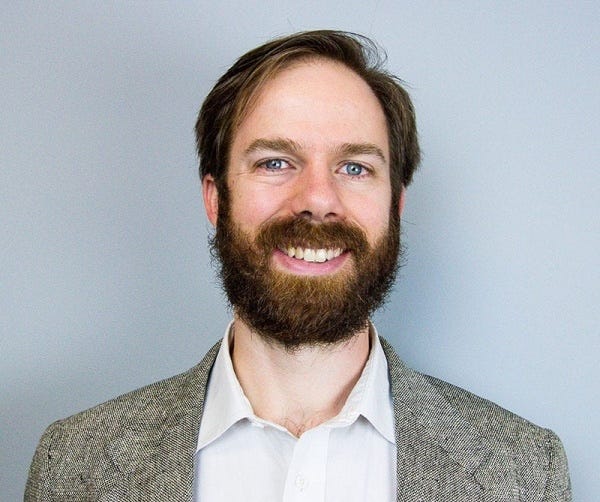
Paul D. Mueller is a senior research fellow at the American Institute for Economic Research as well as a research fellow and associate director of the Religious Liberty in the States project at the Center for Religion, Culture & Democracy. He is also a FreeCon signatory.
In a recent University Bookman review of a new work on Christian political economy co-written by fellow FreeCon Jordan J. Ballor, Mueller pointed out that “themes of wealth, poverty, and greed pervade early Christian writing about markets.”
“Some Christians see market activity as ancillary to the life of faith, others view it as deeply connected, even integral, to living faithfully,” he wrote. Ballor and coauthor Erik W. Matson have made a “valuable contribution” that “should be on any Christian’s shelf who wants to understand how Christians have thought about markets, trade, and wealth.
“Though no single or uniform view emerges, one finds that over time, Christians have largely embraced the insight that God extends material blessings far and wide through voluntary, decentralized exchange in the marketplace. This is not the sum of human flourishing, but it is a key component.”
In the mix
• At The Washington Post, FreeCon signatory Ramesh Ponnuru urged GOP candidates to capitalize on Democratic endorsements of Medicare-for-all.
“Americans, for all their complaints about the health care system, generally dread the prospect of Washington disrupting their insurance,” wrote Ponnuru, the editor of National Review and a fellow at the American Enterprise Institute.
“At the start of that campaign, a poll found that two-thirds of Medicare-for-all supporters believed it would let people keep the health insurance they already had. More recent polling has found that most Americans like the idea in broad outlines but that only 29 percent had “some” or “a lot” of confidence in the federal government’s ability to administer it. Seventy percent said they’d prefer to stay with their current insurance.
“Perhaps Republicans should inform them that they wouldn’t have the choice.”
• At The Washington Examiner, FreeCon signatory Kimberly Ross profiled Amy Coney Barrett, associate justice of the U.S. Supreme Court and someone political partisans seem desperate to mischaracterize and demean.
“Given her history so far, questions will linger as to whether she is conservative enough,” wrote Ross. “However, the real question should be whether she applies the law as written, even when doing so is politically inconvenient.
“Barrett’s legacy is likely to be mixed. She will certainly continue to surprise colleagues and Supreme Court observers alike going forward. But this is less about perceived failings or ideological pressures. The truth may be that onlookers of all political stripes seem to have forgotten what judicial independence is supposed to look like.”
• At Civitas Outlook, FreeCon signatory Steven Hayward analyzed progressive proposals to reform American government and concluded that they would “would likely cause greater instability in our already unstable politics.”
“To behold contemporary progressive attitudes toward the Constitution is to see what could be mistaken for clinical bipolar disorder,” wrote Hayward, a visiting professor at Pepperdine University. “On the one hand, a common refrain from the left today is that President Donald Trump is an existential threat to the Constitution. Yet in the very next breath, leading progressives will say: the Constitution stinks and should be changed wholesale.”
“Already there is great instability in four areas of policy directly traceable to our close partisan divide: energy policy, tax policy, and, to a lesser extent, health care policy and education policy. These four policy areas swing wildly today, depending on which party is temporarily ascendant. Let’s blow up the features that currently reflect, and protect, the undecided American mind and see how things go.”
• In the latest edition of Religion & Liberty, FreeCon signatory Brian Domitrovic reviewed a new Marxist-inflicted account of capitalism that “is not so much history but the arranging of history to fit a particular opinion about history.”
“Jeff Bezos’s building of Amazon from scratch gets half a sentence” in the book, wrote Domitrovic, a scholar at the Laffer Center. “With some other companies, it ‘arrived on the scene.’ We hear nothing of the new low-tax environment that enabled engineering talent to break away from legacy firms and create new enterprises that toppled old ones. This was the actual drama of capitalism in real life in the 1970s, 1980s, and 1990s.
“Instead of recounting such rich history, Capitalism gives us barbs about free-market theorists, which is to say merely an attempt at point-scoring in a professorial rivalry.”