
Freedom Conservatives share many common principles, values, and priorities. Many of them are described in the FreeCon Statement of Principles, including three firm commitments:
“Reducing the cost of living through competitive markets, greater individual choice, and free trade with free people.”
“Building a constructive reform agenda that can restore America’s fiscal sustainability, ensuring that future generations inherit a more prosperous and secure nation than the one we now inhabit.”
“Expanding opportunity for those who face challenges due to past government restrictions on individual and economic freedom.”
On other policy issues, Freedom Conservatives agree on the ends but not necessarily on the best means to pursue them. Among our hundreds of signatories, for example, you’ll find differences of opinion about child tax credits, monetary and crypto policy, Medicare and Medicaid reforms, and antitrust enforcement.
And on two potentially divisive subjects, immigration and foreign policy, the Freedom Conservatism statement explicitly recognizes inherent tensions and inevitable tradeoffs. “Immigration is a principal driver of American prosperity and achievement,” we wrote, while also observing that the United States “has the right to secure its borders and design a rational immigration policy—built on the rule of law—that advances the interests and values of American citizens.”
Regarding international affairs, we wrote that “American foreign policy must be judged by one criterion above all: its service to the just interests of the United States” and that “Americans are safest and freest in a peaceful world, led by the United States, in which other nations uphold individual liberty and the sovereignty of their neighbors.”
Not surprisingly, signatories express a range of opinions about how best to turn these statements into policy prescriptions. Today we feature several such FreeCon viewpoints.
Market-based system
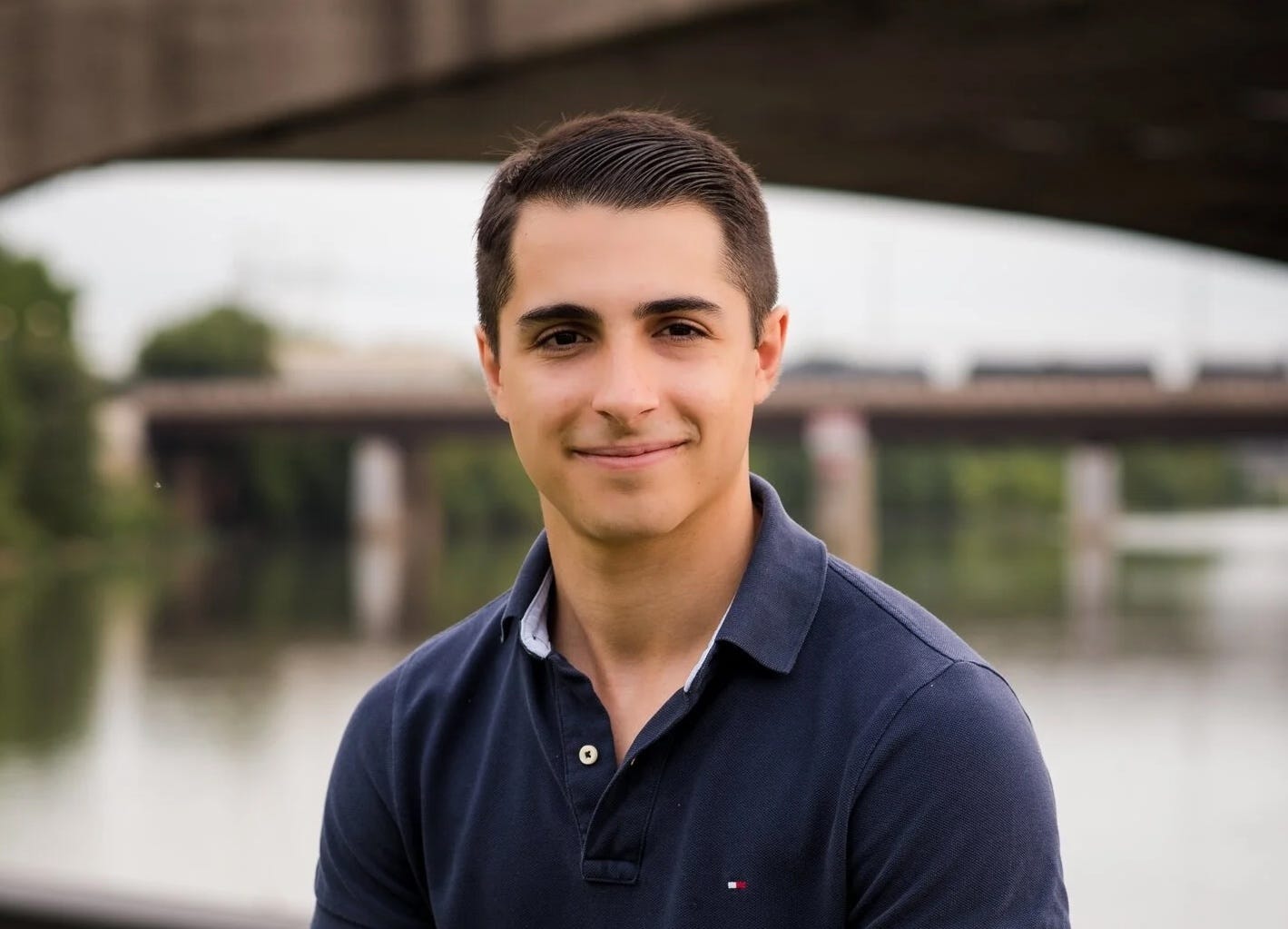
An immigrant from Venezuela, Daniel Di Martino is the founder of the Dissident Project and a Manhattan Institute fellow who writes for such publications as USA Today, Newsmax, the New York Post, and The Daily Wire. He is also a FreeCon signatory.
In a recent piece for the Washington Examiner, Di Martino offered a conservative case for using market mechanisms to reform U.S. immigration policy. Some key passages:
A serious conservative immigration agenda should do what we demand of every other sphere of public policy. This is what a market-based immigration approach would do: cut back on luck and family ties and instead prioritize the economic and cultural interests of the United States by selecting immigrants who would contribute most to the economy and who also happen to assimilate best into American culture.
***
The federal government issues approximately 1 million green cards to immigrants annually, giving them the right to reside here permanently and to apply for naturalization after five years. Over a third of green cards go to the spouses and children of citizens and permanent residents. Over 1 in 7 go to the aging parents of citizens, immigrants who arrive at the end of their working lives rather than the start, and with little education and English proficiency. The rest is dominated by extended relatives, refugees, and winners of a “diversity” lottery that selects for country of origin rather than contribution. Only roughly 1 in 8 immigrants are chosen on the basis of skills or a job, and that figure includes their own spouses and children.
A market-based conservative approach to immigration should look at this selection and see an enormous missed opportunity. We are running one of the most consequential selection systems on Earth almost on autopilot, letting family ties and luck do the choosing that merit and need should do. Imagine instead a system built to ask, for every visa, a simple question: Will this person, over a lifetime, add more to America than they take? Prioritize workers over dependents, the founders who build companies, the scientists and physicians, and tradespeople who pay far more in taxes than they draw in benefits, over adding more retirees or low-paid workers.
Dreamers and permits
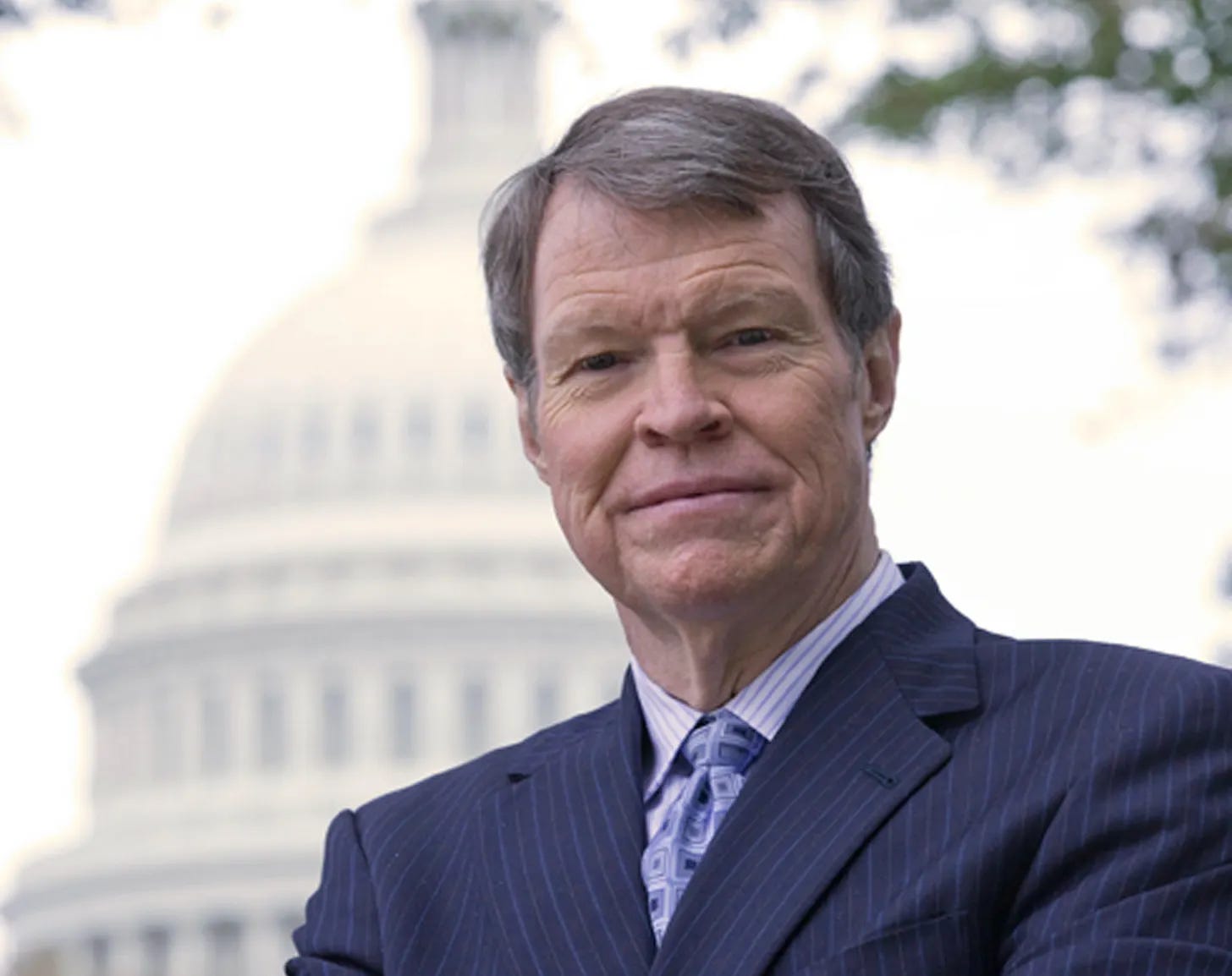
Merrill Matthews is an opinion contributor at The Hill, Texas state chair of Our Republican Legacy, and a FreeCon signatory.
He co-authored On the Edge: America Faces the Entitlements Cliff and contributed chapters to several books.
In a recent column for The Hill, Matthews laid out a conservative strategy for immigration reform. Some key points:
“Immigration reform needs to be bipartisan. The issue is too politically fraught to push through something every Democrat opposes. That means Democrats have to get something politically out of it, even if Republicans aren’t wild about the concessions.”
President Trump should “put on the table a path to citizenship for so-called ‘Dreamers’ — those who are part of the Deferred Action for Childhood Arrivals program. In his first term, Trump twice offered to create a path to citizenship for these residents, brought to the U.S. illegally as children, if Democrats would fund his border wall. Democrats said no both times.”
“Congress needs to create a functioning immigrant-worker program, where immigrants register and legally work. The country and especially the economy need them. Congress could start by creating a private or public-private organization charged with vetting and approving worker applicants. The organization could do the background checks and cover its costs by charging applicants several thousand dollars for, say, a two- or three-year work permit, allowing immigrants to fill jobs most citizens aren’t willing to do.”
“What about those who have been in the country illegally for years? Congress would have three choices: let them stay where they are and apply for the work permit, have them pay a fine in addition to the work-permit application fee, or make them leave the U.S. and then apply.”
Ideals are realistic
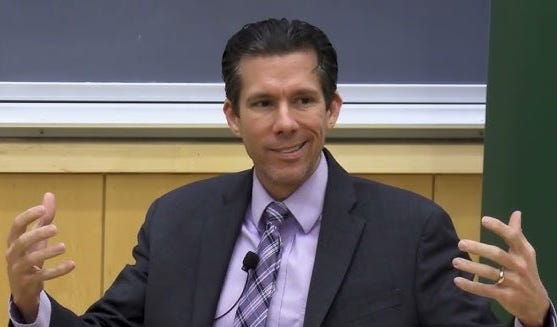
Paul D. Miller is a professor of the practice and co-chair for Global Politics and Security at Georgetown University’s School of Public Service. He is also the General Hugh Shelton Visiting Chair in Ethics at the US Army’s Command and General Staff College Foundation at Ft. Leavenworth, an editor-at-large for Providence, a research fellow with the Ethics & Religious Liberty Commission, a senior fellow with the Atlantic Council, and a FreeCon signatory.
His books include Choosing Defeat: The Twenty-Year Saga of How America Lost Afghanistan, The Religion of American Greatness: What’s Wrong With Christian Nationalism, Just War and Ordered Liberty, and American Power and Liberal Order.
In a recent essay for The Catalyst, Miller argued that any “America First” approach to foreign policy worth pursuing by conservatives must marry the judicious use of power with the country’s noblest ideas and aspirations. Here are the opening and closing passages of the piece:
The free world is the outer perimeter of American security, an engine of American prosperity, and a megaphone for American influence. U.S. foreign policy should aim to preserve, protect, and defend the free world.
That may sound obvious. That is because it was obvious to most U.S. voters and policymakers from 1945 to 2016. Even well before World War II, many American leaders envisioned the United States as an “Empire of Liberty” (in Thomas Jefferson’s phrase) and a proverbial city on a hill whose moral example meant something on the world stage.
That consensus has collapsed over the past decade. For the first time in generations, it is now necessary to make the case for U.S. leadership of the free world. Americans should still embrace a foreign policy that defends U.S. interests and U.S. values alike, that supports free trade with free nations and cooperative security with fellow democracies. U.S. foreign policy works best when it rests on the premise that American power and American idealism go hand in hand.
***
Democracies don’t fight one other, they don’t export terrorism, and they don’t conquer and annex territory. Instead, they free their people to innovate, trade, and prosper, and they trade together, collaborate together, and converge on a common view of the world. The most obvious truth of foreign policy, the one that should serve as the polestar for U.S. grand strategy, is that the spread of democracy is good for American interests.
The pro-democracy agenda is also achievable and realistic, despite what some self-styled realists say. When Jefferson wrote of “self-evident” truths, they were only evident to him and a select few elites in British and American society. Today, about half the world is governed by those ideals, and the rest wishes it was. The only people who dislike liberty and equality are the self-interested rich men who hail from a ruling tribe. Everyone else – women, the poor, ethnic and religious minorities, and rich ruling men with a conscience – understand that accountable governance is their best shot at decent government. There is nothing uniquely Western about not wanting to be oppressed. As President Reagan said in 1982, “Freedom is not the sole prerogative of a lucky few, but the inalienable and universal right of all human beings.”
That idea has foreign policy implications. The United States has been, and should remain, on the side of legitimate, accountable governments that respect human dignity and protect human liberty and equality. Washington should deal with everyone as necessary, but it should align itself and its power with those that see the world the way Americans do.
The highest calling of statesmanship, as the ethicist Paul Ramsey once wrote, is to align the national interest with the international common good, insofar as is possible. When the two align, there is no tradeoff between what is good and what is strategic, between what is just and what is pragmatic, or between what is right and what is selfish. Using American power to uphold ordered liberty among nations – democracy, capitalism, and collective security – is how the United States aligns its interests with the international common good. An unfree world is unsafe for the United States; an unfree world is a poorer world for the United States. If we truly want to put “America First,” the most effective way to do that is to preserve and uphold the free world that the United States built and from which all Americans benefit.
Limits are prudent

Henry Nau is professor emeritus at George Washington University’s Elliott School of International Affairs and a FreeCon signatory.
His books include Conservative Internationalism: Armed Diplomacy under Jefferson, Polk, Truman, and Reagan (2015) and Perspectives on International Relations: Power, Institutions, and Ideas (2018).
In the following piece written for FreedomConservatism.org, Nau argued that the Trump administration ought to adopt more limited objectives in Iran and the rest of the region:
There is no doubt that Trump has moved the conservative consensus on foreign policy to the right. President Reagan had to keep the Rockefeller and Goldwater Republicans on board, but he never had to deal with a “never Trumper” revolt on the left or a MAGA movement on the right.
After Reagan won the Cold War, America got “a brief holiday from history,” that is, until 9/11 sparked fear and forever wars. Afghanistan and Iraq then tested the limits of freedom in the Middle East and Southwest Asia. There were no limits. We aimed for “the ultimate goal of ending tyranny in our world.” And eventually we abandoned those interventions.
The same may happen again if we don’t set limits on America’s exceptionalism. Where do we see those limits? Henry Kissinger once asked, is Iran a cause or a country? But the same can be asked of any country that claims exceptionalism. Is the US or Israel a cause or a country?
The easy answer is both. The hard answer is in what measure. In Europe and a lesser extent Asia (Japan, South Korea, and Taiwan), we want a balance of power (country) “that advances freedom” (cause). Why? Because freedom is strong in these regions and has a reasonable chance of being strengthened and expanded.
The same is not the case in the Middle East. Israel is the only democracy in the region and freedom is not appealing to other societies. We have little chance of converting Persian Muslim zealots (Iran) to democracy.
If over the next several years we stabilize the region by a durable balance of power (Israel, US and moderate Arab states containing Iran and militant terrorism), maybe prospects for democracy will improve. But if in the meantime we lock horns indefinitely with Iran and retrench in Europe and Asia, those prospects clearly vanish.
Trump seems to be “all-in” in all three regions, except when he chastises allies and threatens to leave NATO. He will have to set priorities and define limits. In my view that means Ukraine first, China and South Korea/Taiwan second, and Iran/ME third.
Ironically, his nationalism has run amuck and become an “indiscriminate” internationalism. And I haven’t even mentioned Greenland.
In the mix
• At National Review, FreeCon signatory Noah Rothman observed that the problematic renovation of the Lincoln Memorial Reflecting Pool now qualifies as a “serious scandal.”
“The president’s critics were right all along,” wrote Rothman, “the pool wasn’t a victim of sabotage but, rather, a ‘botched installation.’ Now they tell us! Too late, however, to prevent innocent people from being prosecuted.”
“This isn’t just a political scandal. It’s a genuine controversy in which elementary good governance hangs in the balance. All and only so that Trump wouldn’t have to admit that the paint really was peeling.”
• At The Washington Times, FreeCon signatory Steve Moore took issue with Vice President J.D. Vance’s claim that “American economic policy on the right is now more Alexander Hamilton than it is Milton Friedman” and that “that’s obviously a good thing.”
“That is not so obvious to those who value limited government,” wrote Moore, the co-founder of Unleash Prosperity.
“What is so odd is that Mr. Vance wants more federal control at a time when the Republican model in red states is flourishing and blue states are melting down. The only way the Left can win with its set of invasive economic policies is to centralize the power structure and minimize the competition among states. The Vance model would enable that outcome.”
• In the latest edition of the journal Social Philosophy and Policy, FreeCon signatory Emmett McGroarty argued that “without democracy, capitalism’s inculcation of virtue in the person is incomplete.”
“Imbued with an outward-looking disposition, the market agent is encouraged to suppress individualism and selfishness and instead embrace a mission of service to society,” wrote McGroarty, executive director of Belmont Abbey College’s Belmont House on Capitol Hill, along with coauthor (and brother) Brendan McGroarty. “Government centralization, particularly the usurpation of local power, has negative consequences which affect commercial society, impairing the moral formation of the market agent and the worker.”